Category Archives: Contaminated water

Research – Legionella Occurrence beyond Cooling Towers and Premise Plumbing

MDPI

Legionella_Plate_01

Legionella is an environmental pathogen that is responsible for respiratory disease and is a common causative agent of water-related outbreaks. Due to their ability to survive in a broad range of environments, transmission of legionellosis is possible from a variety of sources. Unfortunately, a disproportionate amount of research that is devoted to studying the occurrence of Legionella in environmental reservoirs is aimed toward cooling towers and premise plumbing. As confirmed transmission of Legionella has been linked to many other sources, an over-emphasis on the most common sources may be detrimental to increasing understanding of the spread of legionellosis. This review aims to address this issue by cataloguing studies which have examined the occurrence of Legionella in less commonly investigated environments. By summarizing and discussing reports of Legionella in fresh water, ground water, saltwater, and distribution system drinking water, future environmental and public health researchers will have a resource to aid in investigating these pathogens in relevant sources. View Full-Text

USA – FSMA Proposed Rule on Agricultural Water

FDA

The FDA is proposing a revision to Subpart E of the FDA Food Safety Modernization Act (FSMA) Produce Safety Rule that would change the pre-harvest agricultural water requirements for covered produce (other than sprouts). The requirements in this proposed rule, if finalized, would replace the pre-harvest microbial quality criteria and testing requirements in the Produce Safety Rule with requirements for systems-based pre-harvest agricultural water assessments. These assessments would be used to identify conditions that are reasonably likely to introduce known or reasonably foreseeable hazards into or onto produce or food contact surfaces, and to determine whether corrective or mitigation measures are needed to minimize the risks associated with pre-harvest agricultural water.

These proposed requirements are intended to address stakeholder concerns about the complexity and practical implementation of certain pre-harvest agricultural water requirements in the Produce Safety Rule while continuing to protect public health. The requirements also are designed to be adaptable to future advancements in agricultural water quality science.

We are not proposing to change the requirements for harvest and post-harvest uses of agricultural water, or the agricultural water requirements for sprouts.  Sprouts are subject to specific pre-harvest agricultural water requirements, and the compliance dates for those sprouts requirements have passed.

Overview

1. Agricultural Water Assessment

The proposed rule, if finalized, would replace the pre-harvest microbial quality criteria and testing requirements in the Produce Safety Rule for covered produce (other than sprouts) with requirements for systems-based pre-harvest agricultural water assessments to be used for hazard identification and risk management decision-making (see the webpage for the final Produce Safety Rule for a description of the requirements as currently written).  Under the proposed requirements, covered farms would be required to conduct pre-harvest agricultural water assessments once annually, and whenever a change occurs that increases the likelihood that a known or reasonably foreseeable hazard will be introduced into or onto produce or food contact surfaces. As part of their pre-harvest agricultural water assessments, these farms would be required to evaluate certain factors (listed in the link above) that could impact produce safety.

Chad – Hepatitis E outbreak reported in Chad

Outbreak News Today

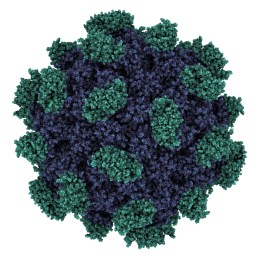
Hepatitis E virus capsid structure. HEV infection causes viral h

Hepatitis E virus capsid structure. HEV infection causes viral hepatitis. Atomic-level structure.

A Hepatitis E outbreak had been declared by Chadian health authorities in mid-November 2021 in Sategui health area, Lai health district in the Tandjile region.

As of November 20, there have been 377 suspected cases and 2 deaths (CFR 0.5%) reported. Among those affected, the majority have been men with 216 cases (57%) and the most affected age group has been less than 10 years of age with 90 cases (23.8%).

Hepatitis E is endemic in Chad, particularly in the Tangile region, which previously experienced large-scale outbreaks in 2017 and 2018. Poor hygiene and sanitation conditions coupled with limited access to safe water are risk factors for outbreaks in this region.

Singapore – Recall of raw Pacific oysters from the SA due to Vibrio parahaemolyticus contamination

SFA

Vibrio

SA Health* has issued an order to recall ready-to-eat raw Pacific oysters harvested from Coffin Bay from 4 September 2021 to 16 November 2021 due to Vibrio parahaemolyticus contamination.

2 As the implicated product harvested during the specified period was imported into Singapore, the Singapore Food Agency (SFA) has directed

3 importers, Angliss Singapore Pte Ltd, Evergreen Seafood Pte Ltd and Culina Pte Ltd to recall the product. The recall has been completed by Angliss Singapore Pte Ltd and Culina Pte Ltd while the recall is ongoing for Evergreen Seafood Pte Ltd. 3Vibrio parahaemolyticus is a species of bacterium normally present in raw seafood, such as crustaceans and molluscan shellfish, due to natural contamination from the aquatic environment in the ocean. Consumption of raw seafood with high levels of this bacteria can cause foodborne illnesses including fever, abdominal cramps and severe diarrhoea.

4 Consumers who have purchased the implicated product are advised not to consume it. Those who have consumed the implicated product and have concerns about their health should seek medical advice.

5 Details of the product are as follows. Implicated Product RTE Raw Pacific Oysters from Coffin Bay, South Australia Harvest dates: between 4 September 2021 and16 November 2021.Country of origin: Australia*SA Health is the brand name for the health portfolio of services and agencies under the Government of South Australia.

Issued by the Singapore Food Agency24 November 2021

India – Norovirus: Dakshina Kannada, Kodagu on high alert

The Hindu

In the wake of Norovirus cases being reported in 13 students of a veterinary college in Wayanad district of neighbouring Kerala, Karnataka has directed health officials in the border Dakshina Kannada and Kodagu districts to be on high alert.

In a circular issued on Tuesday, the State Joint Director (Communicable Diseases) has said people need to be vigilant about the contagious virus.

The Norovirus is a group of viruses that cause gastrointestinal illness. The virus causes inflammation of the lining of the stomach and intestines, as well as severe vomiting and diarrhoea, similar to cholera, the circular stated.

India – Operation Vibrio launched in Kozhikode to tackle waterborne diseases

The Hindu

Operation Vibrio, an action plan to tackle the recurring incidents of food poisoning and waterborne diseases, has been launched in Kozhikode. The Health Department has also issued an alert against cholera in the district.

District Medical Officer Ummer Farooque said on Tuesday that the effort was to detect diseases such as cholera, shigella, amoebiasis, typhoid and jaundice that spread through contaminated food and water. As many as 17 cases of food poisoning had been reported in the district between February and November this year. As many as 257 people were infected and two died. Family events and wedding receptions and the food supplied in shops and hostels were reported to be the source of the infection. Some others took ill through having ice cream and fruit juices. The presence of bacteria such as vibrio cholerae, coliform, and e-coli had been found in water sources in some parts of the district as well.

USA – Tainted oysters sicken more than 20 after warning lapse

The Washington Post

CALIFORNIA, Md. — A water utility warned last month that an overwhelmed sewage system sent more than 25,000 gallons of waste into a Potomac River tributary. But the Maryland Department of the Environment said it wasn’t until Virginia officials investigating a foodborne illness outbreak reached out two weeks later that officials closed an affected part of the St. Mary’s River, The Baltimore Sun reported.

Usually officials alert the public before shellfish are harvested or eaten. It’s not clear how it managed to occur, department spokesman Jay Apperson said, but the department is building redundancies into its process to keep it from happening again.

The illnesses were linked to a winery where Maryland oysters were served, Loudoun County Health Department environmental health manager George Khan said.

Hong Kong – Not to import and sell ready-to-eat raw oysters harvested in Coffin Bay in Australia – Vibrio parahaemolyticus

CFS

Food Illness

Issue Date 23.11.2021
Source of Information Centre for Food Safety
Food Product Raw Oysters
Product Name and Description Ready-to-eat Raw Oysters
Reason For Issuing Alert
  • The CFS noticed that Food Standards Australia New Zealand reported that ready-to-eat raw Pacific oysters harvested in Coffin Bay in Australia, which were suspected to be contaminated with Vibrio parahaemolyticus, were under recall.
  • According to the Department of Primary Industries and Regions of the Government of South Australia, the Coffin Bay growing area includes four harvesting areas, namely the Port Douglas harvesting area, the Mt Dutton Bay harvesting area, the Kellidie Bay West harvesting area and the Kellidie Bay East harvesting area.
Action Taken by the Centre for Food Safety
  • The CFS immediately conducted investigation and contacted local major importers for follow-up.
  • The CFS has immediately instructed the trade to suspend the import into and sale within Hong Kong of all ready-to-eat raw oysters from the Coffin Bay growing area.
  • The CFS has instructed the importers concerned to stop sale of, remove from shelves and recall the affected products, and is tracing the distribution of the products concerned.
  • The CFS will inform the Australian authorities and will also notify the local trade. It will continue to follow up on the incident and take appropriate action to safeguard food safety and public health. Investigation is ongoing.
Advice to the Trade
  • The trade should stop using or selling the products concerned immediately should they possess them.
Advice to Consumers
  • Do not to consume the affected product if they have bought any.
  • Enquiries about the recall can be made to the two importers – Worldwide Seafood Limited (hotline: 2911 4989) and Diligence Marine Products Limited (hotline: 6732 0690).
Further Information The CFS press release

Spain – Legionellosis outbreak reported in Montmeló and Montornès del Vallès

Outbreak News Today

Legionella_Plate_01

Health officials in Spain are reporting a legionellosis outbreak in the municipalities of Montmeló and Montornès del Vallès in the Vallès Oriental region.

To date, 26 cases have been detected. The cases have started symptoms between November 5 and 15. And, of the 26 cases, 10 did not require hospital admission, 2 cases required admission but have already been discharged and 14 cases are still hospitalized.

Those affected are 19 men and 7 women between 37 and 92 years old. And all the cases have had exposure in the municipalities of Montmeló or Montornès del Vallès.

Australia – Raw Pacific oysters produced in Coffin Bay, SA – Vibrio parahaemolyticus

FSANZ

​Date published: 19 November 2021

Product information

SA Health has issued an emergency order to recall raw Pacific oysters (Magallana gigas) produced in Coffin Bay, SA, including fresh and frozen products.

The oysters have been available for sale direct from farms, seafood outlets, grocery stores and supermarkets in SA, NSW, ACT, QLD, VIC, NT and WA.

Date markings

All production dates from and including 4 September 2021 up to and including 16 November 2021.

Raw Pacific oyster

Problem

The recall is due to microbial (Vibrio parahaemolyticus) contamination.

Food safety hazard

Food products contaminated with (Vibrio parahaemolyticus) may cause illness if consumed.

Country of origin

Australia

What to do​

Consumers are advised not to eat raw Pacific oysters ​from Coffin Bay, including fresh and frozen products. Any consumers concerned about their health should seek medical advice. Consumers should dispose of the oysters or return the oysters to the place of purchase for a full refund.

For further information please contact:

SA Health
(08) 8226 7100
healthfood@sa.gov.au
 The FSANZ webpage for the incident associated with this recall can be viewed​ ​here.
​​Related links: