Category Archives: CFS

Hong Kong – Not to consume a kind of cheese from Italy with possible Shiga toxin-producing E. coli contamination

CFS

Issue Date 2.11.2020
Source of Information Centre for Food Safety
Food Product Cheese
Product Name and Description Product name: FONTINA D.O.P.

Place of origin: Italy

Producer: COOPERATIVA PRODUTTORI LATTE E FONTINA SOC. COOP.A.R.L.

Importer: Bravo Fine Foods Limitedand New Food Project Limited

Lot: LOTTO C261

Best-before date: November 19, 2020

Reason For Issuing Alert
  • The CFS received a notification from the Rapid Alert System for Food and Feed (RASFF) of the European Commission that the above-mentioned product might have been contaminated with Shiga toxin-producing Escherichia coli (STEC) and is being recalled.
  • Preliminary investigation found that two local importers, Bravo Fine Foods Limited and New Food Project Limited, had imported some of the affected product into Hong Kong.
  • People will contract STEC-causing gastro-intestinal disease through consumption of contaminated water or undercooked and contaminated foods. Intestinal bleeding and serious complications such as hemolytic uraemic syndrome may also develop in some people.
Action Taken by the Centre for Food Safety
  • The CFS immediately contacted local major importers and retailers for follow-up.
  • The importers have initiated a recall according to the CFS’ instructions.
Advice to the Trade
  • The trade should stop using or selling the product concerned immediately if they possess it.
Advice to Consumers
  • Consumers should not consume the affected batches of the product if they have bought any.
  • Enquiries about the recall can be made to the hotlines of Bravo Fine Foods Limited and New Food Project Limited at 3528 0348 and 5248 8527 respectively during office hours.
Further Information The CFS press release

Hong Kong – Test results of seasonal food surveillance project on mooncakes (first phase) all satisfactory

CFS

The Centre for Food Safety (CFS) of the Food and Environmental Hygiene Department (FEHD) today (September 2) announced the results of a seasonal food surveillance project on mooncakes (first phase). The results of 137 samples tested were all satisfactory.

A spokesman for the CFS said that samples covering traditional, snowy, ice-cream and other types of mooncakes had been collected from various retailers (including online retailers) and food factories for chemical and microbiological tests and nutrition content analysis.

The chemical tests covered colouring matters, preservatives, aflatoxins and metallic contaminants. Microbiological tests covered different pathogens. For nutrition content analysis, the contents of sodium and total fat of the samples were tested to see if they were consistent with the declared values on the nutrition labels.

Hong Kong – CFS announces food safety report for July

CFS

The Centre for Food Safety (CFS) of the Food and Environmental Hygiene Department today (August 31) released the findings of its food safety report for last month. The results of about 15,200 food samples tested were satisfactory except for seven samples that were announced earlier. The overall satisfactory rate was 99.9 per cent.

A CFS spokesman said about 1,400 food samples were collected for microbiological tests, some 3,600 samples were taken for chemical tests and the remaining 10,200 (including about 9,800 taken from food imported from Japan) were collected to test radiation levels.

The microbiological tests covered pathogens and hygiene indicators, while the chemical tests included pesticides, preservatives, metallic contaminants, colouring matters, veterinary drug residues and others.

The samples comprised about 3,600 samples of vegetables and fruit and their products; about 800 samples of cereals, grains and their products; about 700 samples of meat and poultry and their products; about 1,300 samples of milk, milk products and frozen confections; about 1,300 samples of aquatic and related products; and about 7,500 samples of other food commodities (including beverages, bakery products and snacks).

The seven unsatisfactory samples comprised three grass carp samples detected with trace amounts of malachite green, a sample of frozen green wrasse fillet found to contain excessive methylmercury, a sample of canned fried fish fibre detected with excessive mercury, a frozen confection sample found to contain excessive counts of hygiene indicator organisms and a vegetable sample detected with excessive pesticide residue.

Hong Kong – CFS announces results of targeted surveillance on Bacillus cereus and Clostridium perfringens in ready-to-eat food

CFS

The Centre for Food Safety (CFS) of the Food and Environmental Hygiene Department today (July 17) announced the results of a recently completed targeted food surveillance project on Bacillus cereus and Clostridium perfringens in ready-to-eat food. None of the samples taken were found to be unsatisfactory, according to the Microbiological Guidelines for Food.

“A total of 300 samples of ready-to-eat food were collected from different retail outlets including online retailers and food factories for testing of Bacillus cereus and Clostridium perfringens this year. The samples included dim sum, rice, noodles, pastries, soya products, stewed meat and meat sauce,” a spokesman for the CFS said.

Bacillus cereus is commonly found in the environment. It can form spores which are able to resist heat and survive cooking temperatures. Bacillus cereus can produce different toxins causing two types of food poisoning, with emetic intoxication (causing vomiting) being caused by heat-stable toxins in food, and diarrhoeal being caused by ingestion of a large amount of Bacillus cereus that can produce toxins in the intestine. As the production of preserved bean curd requires fermentation, Bacillus cereus will multiply when production is not hygienic or storage is not proper.

Cooking heat can activate the germination of Clostridium perfringens spores, which survive in anaerobic conditions like inside internal cavities, rolls of meat, stuffed poultry, or gravies. The organism can then multiply in the area where the oxygen level is low. Cooling of food at ambient temperature for a long period also allows rapid multiplication of the bacterium. Hence, foods prepared in bulk, especially cooked meat, poultry dishes and juices, which are stored at ambient temperatures with a long cooling period after cooking are at high risk. In food poisoning caused by Clostridium perfringens, common symptoms include sudden abdominal pain, nausea and diarrhoea.

The spokesman reminded the trade and the public not to take the risk lightly. They should always maintain good personal and food hygiene to ensure food safety. When handling food that is not to be consumed immediately, keep it at a safe temperature (above 60 degrees Celsius or at 4 degrees C or below). Consume perishable prepackaged food and beverages promptly after opening or reheating and avoid prolonged storage at ambient temperatures. Reheat food thoroughly with the core temperature at 75 degrees C or above. If cooked foods are to be cooled, the trade should adopt measures to shorten the required cooling time to restrict the growth of Bacillus cereus and Clostridium perfringens in heat treated food. For example, install specific rapid chilling equipment, divide food into smaller portions and place it in shallow containers and in an ice bath. They should also closely monitor the refrigerator temperature and maintain a temperature log. Cross-contamination of food during cooling and storage should be prevented. The trade should also observe the Good Hygienic Practices in each stage of production to ensure safe and proper processing of the food and to comply with the limits stipulated in the Microbiological Guidelines for Food.

Ends/Friday, July 17, 2020


Hong Kong -CFS urges public not to consume two kinds of prepackaged cheese spread that may be contaminated with Clostridium botulinum

CFS

The Centre for Food Safety (CFS) of the Food and Environmental Hygiene Department today (June 19) urged the public not to consume two kinds of prepackaged cheese spread imported from the United Kingdom (UK) due to possible contamination with Clostridium botulinum. The trade should also stop using or selling the products concerned immediately if they possess them.

Product details are as follows:

Product name: Original Cheese Spread
Brand: Primula
Place of origin: UK
Importer: CitySuper
Packing size: 150 grams per tube
Best-before dates: December 29, 2020; January 7, 2021; January 12, 2021; and January 14, 2021

Product name: Cheese Spread with Chives
Brand: Primula
Place of origin: UK
Importer: CitySuper
Packing size: 150g per tube
Best-before dates: December 29, 2020; January 5, 2021; January 12, 2021; and January 19, 2021

A CFS spokesman said, “The CFS, through its Food Incident Surveillance System, noted notices issued by the UK Food Standards Agency that the manufacturer of the products is recalling the above-mentioned batches of the products which may be contaminated with Clostridium botulinum due to a production fault.”

Upon learning of the incident, the CFS immediately followed up with major local importers and retailers. Preliminary investigation found that the above-mentioned importer had imported the above batches of the products which were sold in its retail outlets. Upon notification by the UK manufacturer earlier, the importer concerned had already stopped sale, removed from shelves the affected products and initiated a recall. Members of the public may call the importer’s hotline at 2736 3866 during office hours for enquiries about the recall.

“Foodborne botulism is caused by ingestion of food containing very potent neurotoxin produced by Clostridium botulinum. Symptoms of intoxication include marked fatigue, weakness and vertigo, often followed by blurred vision and difficulty in speaking and swallowing. The toxin may paralyse the breathing muscles and cause death. Onset of symptoms is usually around 18 to 36 hours after the ingestion of the toxin, but may range from four hours to eight days,” the spokesman said.

The spokesman urged consumers not to consume the affected batches of the products if they have bought any. The trade should also stop using or selling the products concerned immediately if they possess them.

The CFS will alert the trade to the incident, continue to follow up and take appropriate action. Investigation is ongoing.

Ends/Friday, June 19, 2020


Hong Kong – Food Alert Not to consume a batch of bottled fruit juice drink contaminated with patulin

CFS

Issue Date 8.4.2020
Source of Information Routine Surveillance Programme
Food Product A bottled fruit juice drink imported from New Zealand
Product Name and Description Product name: 100% Raw Apple Juice with Manuka Honey, Lemon & Ginger

Country of origin: New Zealand

Manufacturer: The Homegrown Juice Company

Importer: The Dairy Farm Company Limited

Volume : 1 litre per bottle

Best-before date: June 21, 2020

Reason For Issuing Alert
  • The test result showed that the sample contained patulin at a level of 150 parts per billion (ppb), exceeding the action level of 50ppb adopted by the CFS.
  • Patulin mostly occurs in rotten apple and its products. Generally speaking, apple juice with a low level of patulin will not cause acute intoxification. However, studies have shown that gastrointestinal hyperaemia, distension, haemorrhage and ulceration could be resulted if animals are exposed to high levels of patulin over a short period of time.
Action Taken by the Centre for Food Safety
  • The CFS has informed the importer concerned of the irregularity, and the importer has stopped sale and removed from shelves the affected batch of the product and initiated a recall according to the CFS’ instructions.
  • Prosecution will be instituted should there be sufficient evidence.
Advice to the Trade
  • Stop using or selling the affected products immediately if they possess them.
Advice to Consumers
  • Not to consume the affected products.
Further Information The CFS press release


Members of the public may call the company’s hotline at 2299 1133 for enquiries about the recall during office


Hong Kong -Review of Food Incidents in 2019

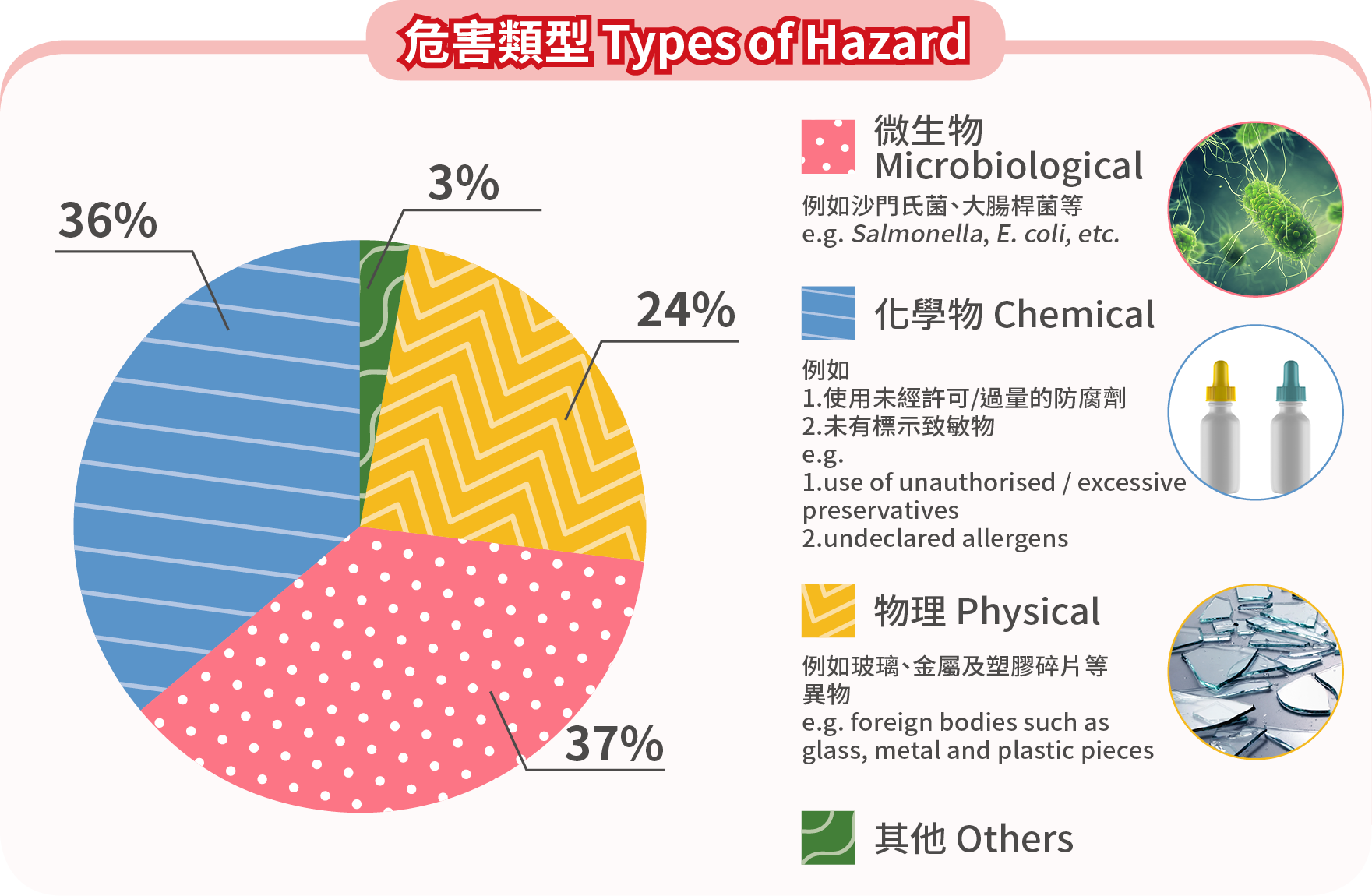
Review of Food Incidents in 2019


CFS

Highlight of ways to prevent cross-contamination.

Hong Kong – Review of Food Poisoning Outbreaks Related to Food Premises and Food Business in 2019

CFS

Food Safety Focus Banner

Food poisoning is a statutory notifiable disease in Hong Kong.  The Centre for Food Safety (CFS) of the Food and Environmental Hygiene Department, in collaboration with the Department of Health (DH), is responsible for the investigation and control of food poisoning outbreaks related to local food premises and food business.  In this article, we will review the food poisoning outbreaks reported to the CFS in 2019.

Hong Kong – Import and sale of shellfishes harvested in production areas 35.11 and 35.06 in France suspended

CFS

Issue Date 10.1.2020
Source of Information Centre for Food Safety
Food Product Shellfishes
Product Name and Description Shellfishes harvested in production areas 35.11 and 35.06 in France
Reason For Issuing Alert
  • The CFS received a notification from the Rapid Alert System for Food and Feed (RASFF) of the European Commission that shellfishes harvested in the abovementioned areas which were suspected to be contaminated with norovirus were under recall.
  • The CFS immediately followed up with major local importers and retailers. Preliminary investigation found that a local importer had imported not ready-to-eat mussels from the abovementioned areas into Hong Kong which were on sale in its supermarkets.
Action Taken by the Centre for Food Safety
  • For the sake of prudence, the CFS has immediately suspended the import into and sale within Hong Kong of all shellfishes harvested in the two areas concerned.
  • The importer concerned had already voluntarily stopped sale and removed from shelves of the affected product for the sake of prudence.
  • The CFS is tracing the distribution of the affected product.
  • The CFS has informed the French authorities of the import suspension and will also notify the local trade.
  • The CFS will continue to follow up on the incident and take appropriate action to safeguard food safety and public health.
Advice to the Trade Stop using or selling the affected product harvested in the abovementioned areas concerned immediately.
Advice to Consumers
  • One may be infected by norovirus or other pathogenic microorganism if consuming undercooked shellfish which is contaminated. So, shellfish should be thoroughly cooked before consumption.
  • Young children, elderly people, pregnant women and others with weakened immune systems should pay special attention when consuming shellfish.
Further Information The CFS press release

Hong Kong – Food Safety App

CFS Food Safety App

Food Safety App is developed by the Centre for Food Safety to provide mobile device users an easy access to food safety information.

Google play App Store

Features

  1. Obtain notifications of food alerts, food safety news and publications.
  2. Download food safety information to create user’s own archive.
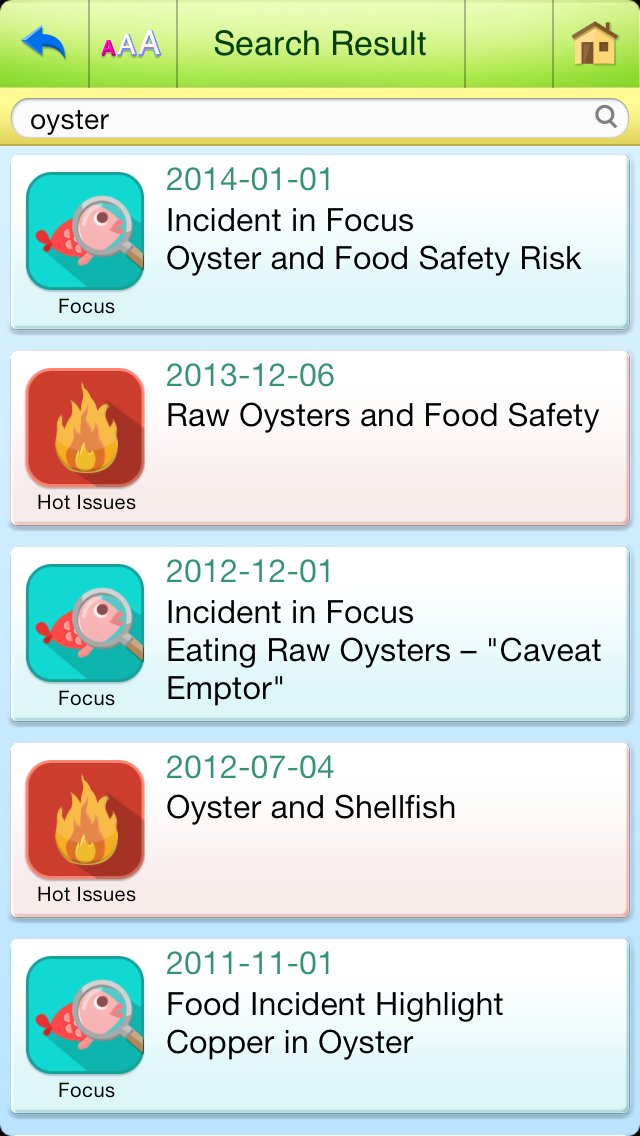
  3. Retrieve food safety topics of interest by searching keywords.
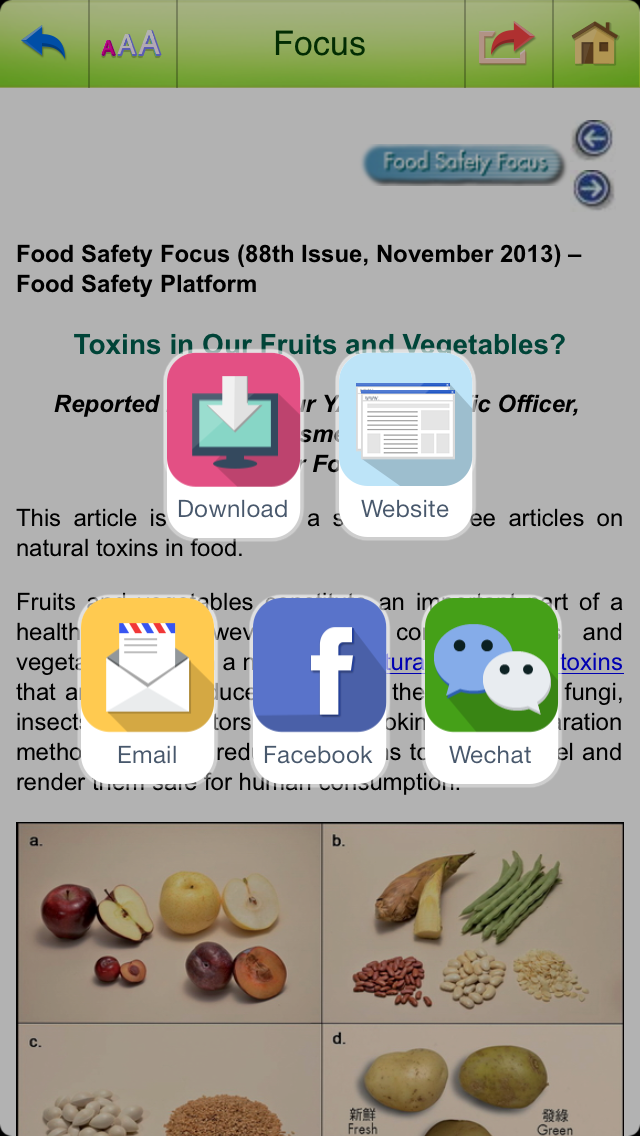
  4. Share food safety information via email and online social media.

Screenshots

Home
Home
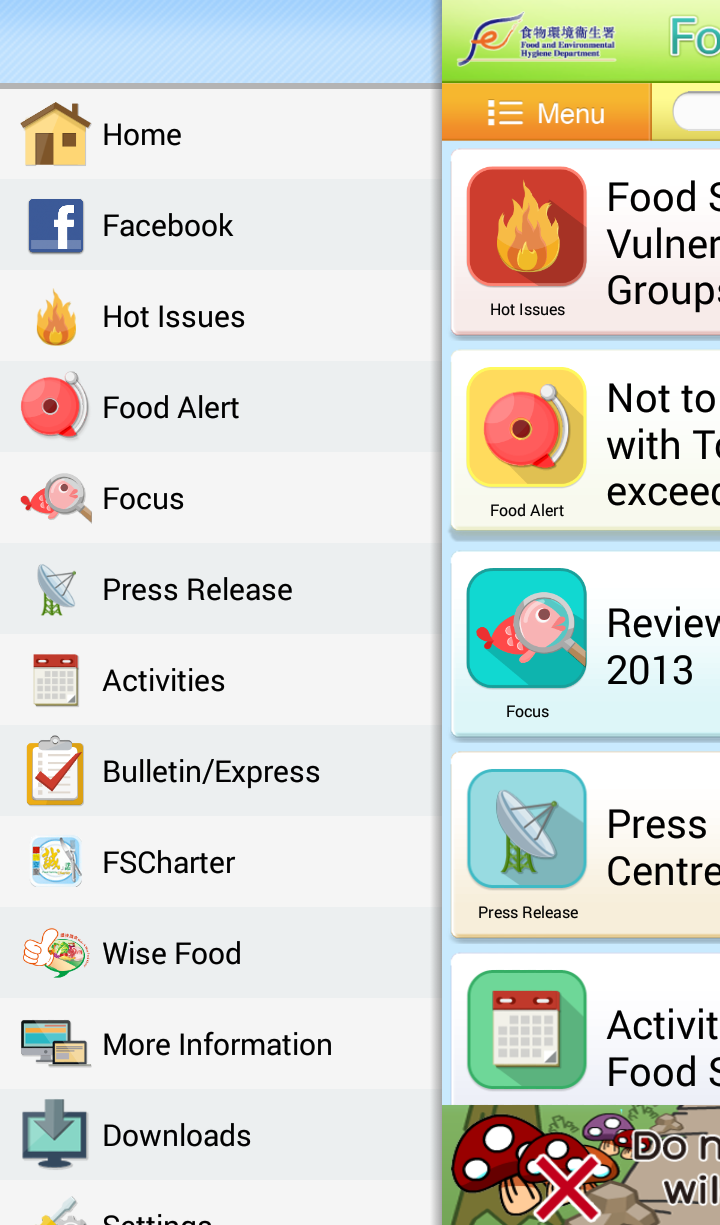
Menu
Menu
Search function
Search function
Download and Share
Download and Share