
Category Archives: Campylobacter jejuni

Estonia – Imported chicken linked to Campylobacter cases in Estonia

Science Direct

CDC Campy

Since 2005 campylobacteriosis has been the most commonly reported gastrointestinal infection in humans in the European Union with more than 200,000 cases annually. Also Campylobacter is one of the most frequent cause of food-borne outbreaks with 319 outbreaks reported to EFSA, involving 1,254 cases of disease and 125 hospitalizations in EU in 2019. Importantly poultry meat is one of the most common source for the sporadic Campylobacter infections and for strong-evidence campylobacteriosis food-borne outbreaks in EU.

 In present study, 429 fresh broiler chicken meat samples of Estonian, Latvian, and Lithuanian origin were collected from Estonian retail level and analyzed on a monthly basis between September 2018 and October 2019. Campylobacter spp. were isolated in 141 (32.9%) of 429 broiler chicken meat samples. Altogether 3 (1.8%), 49 (36.8%), and 89 (66.9%) of Estonian, Latvian, and Lithuanian origin broiler chicken meat samples were positive for Campylobacter spp. Among Campylobacter-positive samples, 62 (14.5%) contained Campylobacter spp. below 100 CFU/g and in 28 (6.5%) samples the count of Campylobacter spp. exceeded 1,000 CFU/g. A high prevalence of Campylobacter spp. in fresh broiler chicken meat of Lithuanian and Latvian origin in Estonian retail was observed. Additionally, 22 different multilocus sequence types were identified among 55 genotyped isolates of broiler chicken meat and human origin, of which 45 were Campylobacter jejuni (C. jejuni) and 10 were Campylobacter coli (C. coli). The most prevalent multilocus sequence types among C. jejuni was ST2229 and among C. coli ST832, ST872. C. jejuni genotypes found in both broiler chicken meat and human origin samples were ST122, ST464, ST7355, and ST9882, which indicates that imported fresh broiler chicken meat is likely the cause of human campylobacteriosis in Estonia.
Research – Introduction to the Special Issue: Microbiological Safety and Quality of Foods

MDPI

Recent shifts in food production, processing and distribution, linked to the globalization of the food trade and the need to meet new consumers habits, are continuously challenging global food systems. Every effort is being made to ensure healthy and safe, food that is crucial to guarantee public health and wellbeing.
Despite the advancements in food safety management, foodborne diseases (FBD) still remain an important problem worldwide, with a significant negative impact on human health and countries’ economies and development. It has been determined that food unsafe for consumption causes 600 million cases of FBD every year, and 25% of all foods produced globally are lost due to microbial spoilage. Serious outbreaks have occurred, involving both developing and industrialized countries, showing how food safety is a transnational challenge and that a strong joint commitment between food safety authorities is needed.
Despite this awareness, the full extent of the impact of food contamination is still unknown. Foodborne contaminants are numerous, including viruses and bacteria, parasites, chemicals, toxins and allergens that cause a wide range of conditions. Globally, FBD caused by bacteria are more common than those caused by viruses and parasites. [1]. Moreover, between one-third and one-half of all human infectious diseases have a zoonotic origin. Among bacteria, Campylobacter, followed by Salmonella, are the major etiological agents of FBD, while, among viruses, norovirus is the foremost enteric pathogen of foodborne disease worldwide [2].
The most common foodborne parasites instead are protozoa such as Cryptosporidium spp., Giardia intestinalis and Toxoplasma gondii; roundworms such as Trichinella spp. and Anisakis spp.; and tapeworms such as Diphyllobothrium spp. and Taenia spp. [3]. In particular, Anisakiasis is an emerging zoonosis caused by the fish parasitic nematode Anisakis. Humans are accidental hosts that become infected by eating raw or undercooked fish that contain viable Anisakis spp. larvae.
The major determinants for the incidence of FBD are unsafe raw food, abused temperature, inadequate storage, improper handling, undercooking and cross contamination [4]. Food from animal sources, fresh produce and ready-to-eat (RTE) foods are the most at risk. In particular, RTE foods are an emerging issue concerning food safety. Furthermore, they have been demonstrated to contain antimicrobial-resistant strains. Since these products are consumed without any further treatment, they could serve as a vector for the spread of antibiotic-resistant microorganisms, posing a significant threat to public health [5].
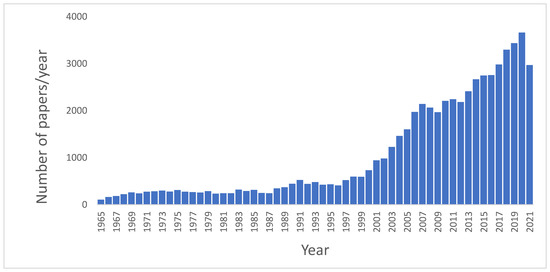
The importance of these topics is documented by the increasing number of papers published related to Food Safety. In a basic search using PubMed database, from 1945 to 2021, selecting as the search topic “Microbiological food safety”, a total of 54,210 results were obtained.
Although the first articles concerning microbiological food safety date from 1946, and since then a dozen articles appear in the following years, it is not until 1965 that a significant number of articles are published every year. Figure 1 shows the evolution of the number of papers per year (from 1965 to 2021) published regarding Microbiological food safety. As can be seen in this figure, approximately 80% of these papers have been published in the last 20 years, and the number continues to rise, revealing an increasing and ever-present interest towards the topic addressed in this Special Issue.
Foods 11 00673 g001 550

Research – Denmark – New Methods to Reduce Campylobacter on Chicken Meat

Food DTU

Campylobacter kswfoodworld

Researchers and businesses will use a GUDP grant to develop new ways to prevent campylobacter bacteria from ending up on chicken meat and to ensure that fewer consumers get sick.

The greater focus on more sustainable diets may increase demand for chicken, which is the meat with the lowest carbon footprint. However, chicken is also the food source that most frequently gives Danes and Europeans campylobacter infections, which is a major challenge for the food industry.

Because chicken may become an even more popular food in future, it is important to gain more knowledge about and develop more solutions for reducing the presence of campylobacter bacteria in broiler chickens. By 2025, chicken producers will also have to comply with stricter EU rules on preventing campylobacter in chicken meat.

Moreover, free-range flocks of broiler chickens are far more often campylobacter-positive than conventional flocks. This is because they roam outside, where the bacterium occurs naturally. Existing measures used for conventional broilers such as increased biosecurity and fly nets are therefore not practical for free-range and organic broiler chickens.

Promising methods to be tested on a larger scale

In the SafeChicken project, researchers from DTU National Food Institute and DTU’s Department of Chemical Engineering will work with the Danish chicken producer Danpo and the Icelandic company Thor Ice Chilling Solutions to develop and test ways of producing chicken meat containing fewer campylobacter bacteria.

The project will test methods in different parts of the food chain in the production of both organic and conventional broiler chickens by: adding selected substances to the chickens’ feed and water which have the potential to prevent the growth of campylobacter bacteria in the chickens; reducing the prevalence of the bacteria in the environment with a new decontamination technology; and reducing bacteria on the carcasses by using a special cooling technology.

Some of the methods have already been tested and have shown promising results on a small scale under controlled conditions. To ensure that they are applicable in practice, also for free range and organic chicken production, the project partners will investigate and document the methods’ effectiveness under normal production conditions. They will also assess the extent to which each measure can help lower the risk of humans becoming infected and sick from campylobacter bacteria.

Combatting campylobacter from a ‘green’ perspective

The fewer bacteria chicken meat contains, the longer the meat can stay fresh. This will also result in fewer withdrawals of goods that have to be destroyed due to unacceptable levels of campylobacter. This will help to achieve the UN Sustainable Goal no. 12 concerning responsible consumption and production.

As part of the Green Development and Demonstration Programme (GUDP), the Danish Ministry of Food, Agriculture, and Fisheries has allocated DKK 7.4 million for the three-year project, which is led by DTU National Food Institute.

About campylobacter

Campylobacter infection is the most frequently occurring foodborne disease in the EU and Denmark. According to the official statistics, the bacterium makes approximately 4,500 Danes ill each year. However, many cases are never reported, and researchers believe the real number is about ten times higher.

The more campylobacter bacteria a food contains, the greater the risk that it will make people ill when they ingest it. Therefore, Danish authorities have initiated national action plans with the aim of reducing the risk of contracting campylobacter infection. The target for 2018-21 was a 50% reduction compared to 2013—and this goal has not yet been reached.

RASFF Alert -Campylobacter – Polish Chicken

RASFF

Salmonella group CO and Campylobacter in chicken neck skin samples from Poland in the Netherlands and Croatia

Research – Boy, 4, Paralyzed Over a Matter of Hours Diagnosed With Rare Disorder – Campylobacter

Newsweek

4-year-old boy from Sydney who went to bed happy and healthy woke up unable to move his legs, telling his mom: “Mummy I can’t feel my legs.”

Oliver Davis’ mother, Bel, took her son to a local doctor who called him an ambulance, beginning the search for the cause of the boy’s sudden and mysterious paralysis, Australia’s 7News reported.

As the next 48 hours progressed, Oliver Davis’ condition worsened, leaving him unable to move from the shoulders down. Five days later he lost his ability to speak and swallow, lost control of his bladder, and had to begin being fed via a feeding tube.

Following a barrage of tests, including an MRI and a lumbar puncture, the 4-year-old was diagnosed with Guillain-Barré syndrome (GBS), a rare autoimmune disorder that occurs when a person’s own immune system damages their nerves, causing muscle weakness and sometimes paralysis.

The CDC says that several things are known to trigger GBS, two-thirds of people who suffer from the condition have had diarrhea caused by a bacteria called Campylobacter jejuni several weeks before developing symptoms. Infection with this bacteria seems to be one of the most common risk factors of GBS.

Research – Binational outbreak of Guillain–Barré syndrome associated with Campylobacter jejuni infection, Mexico and USA, 2011

Cambridge Org

In June 2011, a cluster of suspected cases of Guillain–Barré syndrome (GBS), which can follow Campylobacter jejuni infection, was identified in San Luis Río Colorado (SLRC), Sonora, Mexico and Yuma County, Arizona, USA. An outbreak investigation identified 26 patients (18 from Sonora, eight from Arizona) with onset of GBS 4 May–21 July 2011, exceeding the expected number of cases (n = 1–2). Twenty-one (81%) patients reported antecedent diarrhoea, and 61% of 18 patients tested were seropositive for C. jejuni IgM antibodies. In a case-control study matched on age group, sex, ethnicity, and neighbourhood of residence, all Arizona GBS patients travelled to SLRC during the exposure period vs. 45% of matched controls (matched odds ratio 8·1, 95% confidence interval 1·5–∞). Exposure information and an environmental assessment suggested that GBS cases resulted from a large outbreak of C. jejuni infection from inadequately disinfected tap water in SLRC. Binational collaboration was essential in investigating this cross-border GBS outbreak, the first in mainland North America since 1976.

Research – Wildlife Waterfowl as a Source of Pathogenic Campylobacter Strains

MDPI

Background: The aim of the study was to determine whether free-living birds belonging to game species whose meat is used for human consumption can constitute a reservoir of pathogenic Campylobacter strains, spreading these bacteria to other hosts or directly contributing to human infection. Methods: A total of 91 cloacal swabs were taken from different species of wildlife waterfowl to estimate the Campylobacter prevalence, the genetic diversity of the isolates, and the presence of virulence genes and to evaluate the antimicrobial resistance. Results: The presence of Campylobacter spp. was confirmed in 32.9% of samples. Based on flaA-SVR sequencing, a total of 19 different alleles among the tested Campylobacter isolates were revealed. The virulence genes involved in adhesion were detected at high frequencies among Campylobacter isolates regardless of the host species. The highest resistance was observed for ciprofloxacin. The resistance rates to erythromycin and tetracycline were observed at the same level. Conclusions: These results suggest that wildlife waterfowl belonging to game species may constitute a reservoir of Campylobacter, spreading these bacteria to other hosts or directly contributing to human disease. The high distribution of virulence-associated genes among wildlife waterfowl Campylobacter isolates make them potentially able to induce infection in humans.

Sweden – Report on food poisoning in Sweden during 2020. 

Livsmedelsverket

The report describes how many people become ill from the food, which are the most common infectious agents and foods that cause the disease cases, where in the food chain the designated foods are contaminated, which countries of origin were indicated for the designated foods, what contributing factors were identified, seasonal variation and changes in recent years. The results from the report provide information to those who have an interest or need for this type of knowledge in their profession and not least to show and give feedback on the valuable work performed by those who investigate, report and otherwise study food poisoning.

Summary Reported Foodborne Illness in Sweden 2020
This Report compiles food poisonings reported to the Swedish Food Agency in 2020. A new online form for submitting reports to the Swedish Food Agency was launched in January 2020, aiming to raise the quality of reported data. In 2020, the Covid-19 pandemic was ongoing also, which affected the number of food poisoning outbreaks during the year.
By food poisoning is meant here an illness caused by eating food containing harmful bacteria, parasites, viruses or toxins. The main purpose of the compilation is to support food poisoning investigations in several ways:
by giving the present position of the most recent food poisonings;
by presenting data that can be used to connect different pathogens to different kinds of foods.by making it possible to follow the development of different combinations;
by making it possible to implement risk management measures as effectively as possible.
The Swedish Food Agency regulation LIVSFS 2005:7 instructs municipal control authorities, in co-operation with health professionals, the County Administrative Board and the Public Health Agency of Sweden, to conduct epidemiological investigations of foodborne outbreaks.
The results must be reported to the Swedish Food Agency without delay. Health Agency and Swedish Food Agency in consultation supplement the control authorities’ reports with reports on local and national outbreaks.
The Report is based on 173 reported events of suspected or confirmed food poisoning with a total of 1,314 cases of illness. In 160 of the reports it was stated that two or more persons were infected from the same source. When compared to the 2019 compilation, we can note that both the number of reports and cases of illness were almost halved in 2020.
This reduction may be due to the restrictions and recommendations introduced in connection to Covid-19 pandemic. For example, there were fewer people using restaurant services, better hand hygiene among people handling food and the cancellation of major public events where food may have been served.
Most reports indicated that the cause was unknown (71%), however for 44% of the reported cases virus was cited as the cause. This is due to 23 outbreaks with 571 cases of illness where the cause was virus. Norovirus continues to cause major outbreaks (22 food poisoning outbreaks with a total of 513 cases), followed by campylobacter which was reported in 4 outbreaks with 158 cases, Vibrio parahaemolyticus, an unusual foodborne pathogen in Sweden, was associated with one outbreak of 50 cases of illness.
The food categories that had the most reported cases of illness were bakery products (210 cases), chicken (155 cases) and foods from the sea (164 cases).Bakery products were a source of infection in outbreaks where norovirus and STEC (Shigatoxin-producing E. coli) were the cause -200 cases and 10 cases, respectively.

Chicken was a source of infection in outbreaks where Campylobacter was the cause -155 cases.
When the source of infection was food from the sea, norovirus in oysters was the cause most cases of illness (124 cases), followed by Vibrio parahaemolyticus in seagrass (50 cases) and histamine in fish (34 cases).
The number of food poisoning reports was highest during the first quarter: between January to March there were 63 reports in, with a total of 634 cases of illness. This is due to both a number of oyster-related outbreaks early in the year and fewer outbreaks occurred during the rest of the year due to restrictions and hygiene recommendations during the covid-19 pandemic. For almost 65% of the disease cases, the source of contamination was food contaminated early in the production chain, e.g. industrial facilities, from which the food was then widely distributed (industry 30 %, primary production 3% and other 31.5%). In order to reduce the number of food poisonings, it is therefore important to have good systems for food safety in primary production and such facilities.
The most commonly mentioned contributing factor was incorrect storage with respect to time and temperature. This factor was listed in 21 reports. For example, this may refer to inappropriate temperature when keeping food heated, or not low enough temperature in cold storage. The second most common factor was “a contaminated ingredient”, as stated in 11 reports.
There is often no information about the country of origin of the implicated food products. This may be due to the fact that this information is optional in the reporting form. It can be also difficult to know in which country viruses or bacteria contaminated a food product.
The reporting authority usually does not have access to information about whether patients have received hospital care. However in 5 reports, it was stated that a total of 7 people received hospital care. No deaths were reported.

Click to access l-2021-nr-23-rapporterade-misstankta-matforgiftningar-2020.pdf

CPS – Funded Projects 2022 –

CPS

Towards a holistic assessment of the food-safety risks imposed by wild birds

Birds introduce complex food-safety risks, as they carry multiple pathogens, are difficult to exclude from farms, and regularly defecate on crops. Yet very few wild bird species have been studied, and those that have form a minority of farm bird communities. Moreover, existing studies stop at examining pathogen prevalence in birds and do not holistically assess foodsafety risk. For a species to pose a significant risk, it must carry pathogens, visit fields, defecate on crops, and produce feces that support pathogen survival. Here, we propose to first identify species that carry pathogenic E. coliSalmonella, and Campylobacter by coupling existing studies with assays of field-collected feces. Second, we will survey birds and collect feces on 15-20 farms near rangeland, natural habitats, or produce farms to determine which species enter farms and defecate on crops and in which contexts. Third, we will compare E. coli survival between feces placed on different substrates (crops, organic/conventional soils, plastic mulch) and between feces from different species. Finally, we will compile holistic risk assessments for >50 species into a photographic guide to help growers identify and manage birds. Ultimately, we hope to help growers implement practices that bolster beneficial species without compromising food safety.

Research -A trait-based framework for predicting foodborne pathogen risk from wild birds

Wiley Online

Recent foodborne illness outbreaks have heightened pressures on growers to deter wildlife from farms, jeopardizing conservation efforts. However, it remains unclear which species, particularly birds, pose the greatest risk to food safety. Using >11,000 pathogen tests and 1,565 bird surveys covering 139 bird species from across the western U.S.A., we examined the importance of 11 traits in mediating wild bird risk to food safety. We tested whether traits associated with pathogen exposure (e.g., habitat associations, movement, and foraging strategy) and pace-of-life (clutch size and generation length) mediated foodborne pathogen prevalence and proclivities to enter farm fields and defecate on crops. Campylobacter spp. were the most prevalent enteric pathogen (8.0%), while Salmonella and Shiga-toxin producing E. coli (STEC) were rare (0.46% and 0.22% prevalence, respectively). We found that several traits related to pathogen exposure predicted pathogen prevalence. Specifically, Campylobacter and STEC-associated virulence genes were more often detected in species associated with cattle feedlots and bird feeders, respectively. Campylobacter was also more prevalent in species that consumed plants and had longer generation lengths. We found that species associated with feedlots were more likely to enter fields and defecate on crops. Our results indicated that canopy-foraging insectivores were less likely to deposit foodborne pathogens on crops, suggesting growers may be able to promote pest-eating birds and birds of conservation concern (e.g., via nest boxes) without necessarily compromising food safety. As such, promoting insectivorous birds may represent a win-win-win for bird conservation, crop production, and food safety. Collectively, our results suggest that separating crop production from livestock farming may be the best way to lower food safety risks from birds. More broadly, our trait-based framework suggests a path forward for co-managing wildlife conservation and food safety risks in farmland by providing a strategy for holistically evaluating the food safety risks of wild animals, including under-studied species.