Category Archives: Bacterial Toxin

Research – Can bacterial viruses improve the microbiological safety of raw milk cheeses?

Harper Adams

Harper Adams University research is exploring a biological control method to improve the safety of popular Egyptian cheeses produced from raw cows’ milk.

The work is being conducted by Sherif Kandil, a PhD student and scholar sponsored by the Newton Mosharafa Fund. Sherif is in the final year of a three-year study, directed by Dr Lynn McIntyre, Senior Lecturer in Food Safety in the Department of Food Technology and Innovation.

Dr McIntyre explained: “The project was prompted by a number of foodborne outbreaks and prevalence data showing high levels of Staphylococcus aureus (S. aureus) and Escherichia coli (E. coli) in raw milk in Egypt.

“Cheeses made from raw cows’ milk, such as Karish, Domiatti and Ras, are popular in Egypt and Arab countries. Their strong flavour is produced by naturally occurring microorganisms in raw milk rather than the deliberate addition of starter culture organisms. However, their production also relies on smallholders in rural areas who make and store cheese under potentially uncontrolled hygiene and temperature conditions’’ Sherif added. Therefore, the growth of a variety of disease-causing (pathogenic) bacteria such as S. aureus and E. coli can be a real problem.

“These pathogens are also developing some resistance to antibiotics, but pasteurisation, normally used to kill pathogenic bacteria in raw milk, would also kill the desirable microorganisms and alter the flavours, which may be unacceptable to the consumer.”

Bacteriophages are highly specific viruses, which, unlike antibiotics, can selectively kill target bacterial species without affecting the desirable microorganisms. These could therefore have potential to target and control the disease-causing bacteria in raw cows’ milk cheeses, “an area that has not received much attention to date” according to Sherif.

For his study, Sherif collected 100 raw cows’ milk samples and processed them using a standard method to isolate and identify strains of S. aureus and E. coli in the Princess Margaret Laboratories, at Harper Adams University.

Karish, Domiatti and Ras cheeses have been successfully produced from raw cows’ milk on a small-lab-scale using traditional production methods, and their properties characterised during manufacture and storage.

A range of conditions, based on these data, has also been tested to understand how the bacteriophages behave under conditions they will be exposed to during cheese production. The last phase this year will evaluate how effective these phages are at controlling S. aureus and E. coli in milk and during further lab-scale cheese manufacture and storage.

“There is increasing interest in controlling pathogenic bacteria in food using natural non-thermal approaches without compromising the manufacturing process and product quality,” Dr McIntyre added. “We are not immune to these food safety challenges in the UK, and much of what we’ve been investigating in this project could also be applied to raw milk cheese production here.”
RASFF Alert – STEC E.coli – Chilled Beef Rump Tails

European Food Alerts

RASFF

shigatoxin-producing Escherichia coli (O26 stx+ eae+ /25g) in chilled beef rump tails from Argentina in Germany

Denmark – Risk of bacterial toxin in red beetle roe – Clostridium botulinum

DVFA

Agustson A / S – Nora recalls a batch of NORA SEAFOOD Red beet roe 60g with best-before date 23/10/2021. There is a risk that some glasses from the batch contain toxins from the bacterium Clostridium botulinum, which can cause the disease botulism.

Recalled Foods , Published: March 19, 2021

And

What food:
NORA SEAFOOD Red beetle roe (see picture here )
Net weight: 60 grams
Production date: 23/04/2020
Best before date: 23/10/2021
EAN barcode no .: 5709505840030
Lot number: L0114
Sold in:
Net stores throughout the country
Company recalling:
Agustson A / S – Nora, Lundahl Nielsens Vej 2, 7100 Vejle
Cause:
The Statens Serum Institut has detected the presence of toxin from the bacterium Clostridium botulinum (called botulinum toxin) in an opened glass with beetroot roe from the above batch. The Danish Veterinary and Food Administration has therefore justified suspicion that the source of an outbreak of a disease at a private company is due to beetroot roe from the above party. Botulinum toxin is not suspected in other batches from the same supplier.
Risk:
If botulinum toxin is present in the catfish roe, you can get sick with the serious disease botulism (“sausage poisoning”).
The symptoms of the disease botulism usually start from a few hours up to 36 hours after eating food with the toxin in. The symptoms can include. be nausea, vomiting and possibly diarrhea, then visual disturbances and muscle paralysis.
Read more about botulism and food here .
Advice for consumers:
Consumers who have purchased beetroot roe from the above lot should discard them or deliver them back to the store where they were purchased.
See also related news on the Statens Serum Institut’s website here .

Denmark – Three suspected cases of botulism in Denmark

SSI

kswfoodworld

An outbreak of disease with suspected botulism has occurred among the participants in a private company in the region of Southern Denmark. The Danish Veterinary and Food Administration, Fødevareinstituttet DTU and Statens Serum Institut are working to identify the source of the infection, which is presumed to be limited to a single company.

Following a private party held on Friday, March 5, 2021, three adults have been hospitalized on suspicion of having botulism.

They are being treated with botulism antitoxin and are improving. The Statens Serum Institut (SSI) is now examining samples from the patients to find out if there was actually botulism.

SSI is also in the process of analyzing the ingredients and leftovers of the food that has been eaten by that company. No other patients with botulism are known outside the company that has been affected.

RASFF Alerts – STEC E.coli – Veal Meat – Chilled Fillet Americain

European Food Alerts

RASFF

shigatoxin-producing Escherichia coli in veal meat from the Netherlands in the Netherlands

RASFF

shigatoxin-producing Escherichia coli (O26 stx2+ eae+ /25g) in chilled filet americain from Belgium in Belgium

RASFF Alert – Staphylococcus aureus – Chilled Black Ham

European Food Alerts

RASFF

coagulase-positive Staphylococcus (500 CFU/g) in chilled black ham from Germany in Austria

RASFF Alert – Bacillus cereus Enterotoxin – Salad

European Food Alerts

RASFF

Bacillus cereus enterotoxin (250000 CFU/g) in salad from Italy in Italy

RASFF Alert – Staph Enterotoxin – Chilled Cured Sheep Cheese

European Food Alerts

RASFF

Staphylococcal enterotoxin (presence /25g) in chilled cured sheep cheese from Portugal in Portugal

France – PREMIUM prepared from the Traiteur Pierrot brand -STEC E.coli

AFSCA

Recall of Euro-Délices Distribution
Product: PREMIUM prepared from the Traiteur Pierrot brand.
Problem: Possible presence of E. coli STEC.


In agreement with the AFSCA, Euro-Délices Distribution is withdrawing from sale the “Prepared PREMIUM” products of the Traiteur Pierrot brand and is recalling them to consumers because of the possible presence of STEC.

Euro-Délices Distribution asks its customers not to consume these products and to bring them back to the point of sale where they were purchased, where they will be reimbursed.

Product description Product

name: Prepared PREMIUM TP
Brand: Traiteur Pierrot Use by
date (DLC): 29/01/2021
Batch number: 105201
Sales period: from 07/01/2021 to 21/01/2021
Type of packaging: plastic jar with lid
Weight: 180g – 0.5kg – 1.25kg


The product was sold through various supermarkets, retailers and food stores.

For any further information , contact:

Fabienne Cluts
Tel: 04 / 278.78.12
fabiennecluts@eurodelices.be

Research – High risk of potential diarrheagenic Bacillus cereus in diverse food products in Egypt

Journal of Food Protection

bacillus

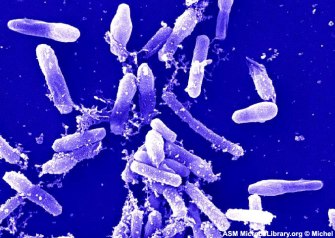
Bacillus cereus is one of the important foodborne pathogens that can be found in various foodstuffs; causing diarrheal and/or emetic syndromes. This study aimed to evaluate the prevalence, antimicrobial susceptibility profile, pathogenic potential, and genotypic diversity of B. cereus isolated from diverse food products from markets in Cairo, Egypt. A total of 39 out of 165 food samples were positive for B. cereus (detection rate of 24%) with a contamination level ranged from 2 to 6 log CFU/g and a higher incidence of > 3 log bacterial count. Antimicrobial susceptibility testing showed that B. cereus isolates were fully sensitive to all tested antimicrobial agents except β-lactams. The pathogenic potential of the 39 B. cereus isolates was assessed by detecting and profiling the secreted virulence or toxin encoding genes including the chromosomal-carried genes hblA , bceT , plc , sph , nheA , entFM , cytK associated with the diarrheal syndrome and the plasmid-carried ces gene associated with the emetic syndrome. The most frequently detected  genes were hblA , nheA and entFM . All isolates harbored more than one of the diarrheal enterotoxins encoding genes with the genetic profile hblA-bceT-nheA-entFM-cytK-plc-sph was the most prevalent (in 20/39 isolates). The emetic toxin ces was not detected at all. ERIC-based analysis of the 20 B. cereus isolates harboring the prevalent genetic profile revelated that they were genetically distinct. In conclusion, the findings of this study provide useful information for public health management and serve as a warning of the potential risk of diarrheagenic B. cereus in diverse food products. Therefore, the consideration to extensively study the epidemiology of this food pathogen in Egypt is warranted. Additionally, strict procedures should be applied to monitor, protect, and safely handle food products, particularly ready to eat foodstuffs that are usually consumed without heat treatment.