
KSWFoodWorld
Category Archives: Bacteria
Singapore – Recall of “Crab Brand” Black Pepper Seed Due to Presence of Bacillus cereus Exceeding Permitted Level
Posted in Bacteria, bacterial contamination, Bacterial Spores, food contamination, food handler, Food Hygiene, Food Inspections, Food Micro Blog, Food Microbiology, Food Microbiology Blog, Food Microbiology Testing, Food Pathogen, Food Poisoning, food recall, Food Safety, Food Safety Alert, Food Testing, Food Toxin, Spores, Uncategorized
Iceland – Christmas without foodborne infections
There is a lot of pressure on Icelanders’ kitchens during Christmas preparations in December and during the holidays. Hygiene, cooling and proper heating of food are extremely important in order to prevent guests and household members from getting foodborne illnesses and associated discomfort.
Disease-causing bacteria can enter the kitchen with meat and soil that comes with vegetables and from there into other foods on the kitchen table or in the refrigerator. They can also be obtained in food from the person handling the food and from the equipment and utensils used in the kitchen.
Noroviruses can spread rapidly at Christmas and it is important that people with symptoms of foodborne illness stay away from cooking. Regular hand washing reduces the risk of infection between persons or from contaminated food.
Keep in mind that:
- Raw meat and its juices should not come into contact with ready-to-eat foods
- Wash fruits and vegetables to prevent bacteria from entering ready-to-eat foods
- Wash hands before cooking and after contact with raw meat and unwashed vegetables
- Clean cutting boards and utensils immediately after use
- Let’s organize the fridge well and keep it clean to prevent cross-contamination
- We regularly change tablecloths, tea towels and hand towels
Bacteria multiply very rapidly under ideal conditions. At 37 ° C, one bacterium can multiply to 1000 in 3 hours and to 1 million in 6 hours. It is therefore important to store and handle food at a temperature that prevents the rapid growth of bacteria by limiting the time that sensitive foods, such as smoked and buried fish and cold cuts, are on the table at room temperature. The risk of bacterial growth is greatest when the temperature of the food is between 5 and 60 ° C. Adequate heat treatment kills bacteria and storage at refrigerated temperatures (0-4 ° C) limits their proliferation. If foodstuffs are to be kept warm, they should be kept at 60 ° C and when cooling heated foodstuffs, care should be taken to ensure that they reach 4 ° C in 3 hours.
Citizens are encouraged to practice hygiene, proper handling and cooling of food in the kitchen so that foodborne illnesses can be prevented from spoiling the Christmas spirit.
Posted in Bacteria, bacterial contamination, food contamination, food handler, Food Hygiene, Food Illness, Food Inspections, Food Micro Blog, Food Microbiology, Food Microbiology Blog, Food Microbiology Research, Food Microbiology Testing, Food Pathogen, Food Poisoning, Food Testing, microbial contamination, Microbiology
France – Product recall: Small ducks, tray of 12 pieces of the TLC brand – Listeria monocytogenes

ENCOUNTERED PROBLEM
Presence of Listeria monocytogenes
PROPOSED SOLUTION
People who hold this product are asked not to consume it and to return it to the point of sale where it was purchased for reimbursement.
People who have consumed this product and who have a fever, isolated or accompanied by headaches, are invited to consult their doctor, notifying him of this consumption.
Pregnant women should pay special attention to these symptoms, as well as immunocompromised people and the elderly. These symptoms may suggest listeriosis, a disease that can be serious and can take up to eight weeks to incubate.
FURTHER INFORMATION
▸ Barcode
3451950010408
▸ DLC
12/25/2020
▸ Lot
000020344
▸ Health stamp
FR 76 681 001 CE
▸ Marketing period
From 12/10/2020 to 12/14/2020
▸ Areas concerned
U EXPRESS BAYEUX – SUPER U IGOVILLE – HYPER U LE GRAND QUEVILLY – SUPER U SERQUEUX – SUPER U ST ROMAIN DE COLBOSC – SUPER U FRANQUEVILLE – SUPER U FERRIERES EN BRAY – U EXPRESS MARTAINVILLE EPREVILLE
▸ Consumer service contact
The TLC company is available to answer their questions on the telephone number: 02 35 66 42 50 or 02 35 66 83 37 (available during the day during office hours from 9:00 a.m. to
5:00 p.m.).
▸ Source
https://www.coursesu.com/
Posted in Bacteria, bacterial contamination, food contamination, Food Hygiene, Food Inspections, Food Micro Blog, Food Microbiology, Food Microbiology Blog, Food Microbiology Testing, Food Pathogen, food recall, Food Safety, Food Safety Alert, Food Testing, Listeria, Listeria monocytogenes, microbial contamination, Microbiology
Norway – Yersinia enterocolitica outbreak reported in Norway

The Norwegian Institute of Public Health has discovered an increased incidence of the gastrointestinal bacterium Yersinia enterocolitica O3. So far, infection has been detected in 10 people who live in several counties. Outbreak investigation has been initiated in collaboration with relevant municipal chief physicians, the Veterinary Institute and the Norwegian Food Safety Authority.
The National Institute of Public Health collaborates with the municipal health service, the Norwegian Food Safety Authority and the Norwegian Veterinary Institute to map whether patients can have a common source of infection. The patients are interviewed and the local Norwegian Food Safety Authority takes samples from food products in the homes of those who are infected, if residues are available, in order to identify the source of the outbreak if possible.
Posted in Bacteria, bacterial contamination, food bourne outbreak, food contamination, Food Hygiene, Food Illness, Food Inspections, Food Micro Blog, Food Microbiology, Food Microbiology Blog, Food Microbiology Testing, Food Pathogen, food recall, Food Safety, Food Safety Alert, Food Testing, Food Toxin, foodborne outbreak, foodbourne outbreak, outbreak, Yersinia, yersinia enterocolitica
Research – Special Issue: Shiga Toxin-Producing Escherichia coli
Globally, Shiga toxin-producing Escherichia coli (STEC) is an important cause of diarrheal disease, most notably hemorrhagic colitis, and post-diarrheal sequela, such as hemolytic-uremic syndrome (HUS) [1]. Cattle are a major reservoir of STEC, with approximately half of the cases in humans attributable to foodborne exposure [2]. Prevention of human illness has mainly been through food safety measures [2]. Despite extensive research, no other generally accepted and effective preventive measures or therapies for STEC infections in human patients are available [3]. Many questions remain about STEC virulence factors, pathogenesis, detection, and other aspects that necessitate a continuation of basic and applied research on a wide front. This Special Issue includes 14 papers (nine articles, two communications, one review, one comment, and one reply) that collectively provide novel information on the epidemiology [4,5,6,7], virulence factors [7,8,9,10], and pathogenesis [11,12,13] of STEC, and the molecular structure or toxicity [14,15,16] and immunodetection [17] of Shiga toxin.
Germany – Lünebest sweet wave raspberry with vanilla sauce / Lünebest sweet wave woodruff with vanilla sauce – Bacillus cereus
Warning type: Food
Date of first publication:December 19, 2020
Product name:Lünebest sweet wave raspberry with vanilla sauce / Lünebest sweet wave woodruff with vanilla sauce
Product pictures:

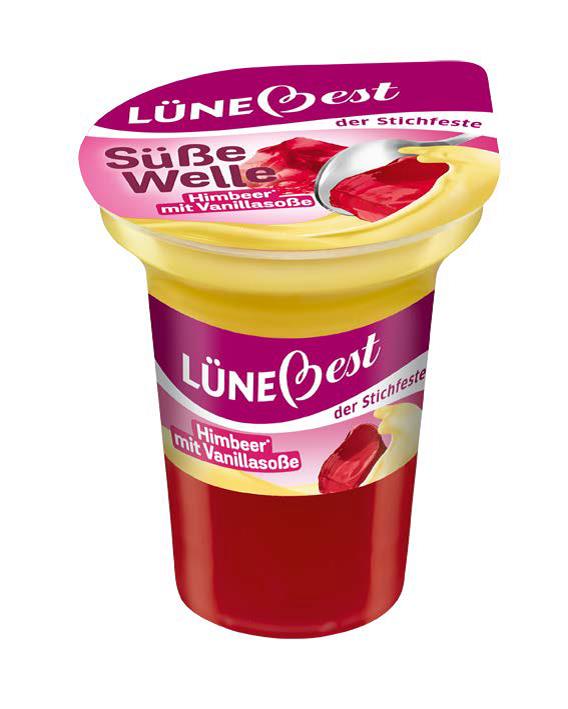
Hochwald Foods GmbH

Hochwald Foods GmbH
Manufacturer (distributor):
Hochwald Foods GmbH Lüner Weg 2-13 21337 Lüneburg
Reason for warning:
Bacillus Cereus was detected in the product
Packaging Unit:150g cup
Durability:Best before January 15, 2021
Lot identification:210115346, DE – NI 53053 EG
Further information:
Bacillus cereus
The pathogen Bacillus cereus can produce toxins. In this case, its intake usually
suddenly leads to nausea and vomiting or diarrhea and abdominal cramps within a few hours . The symptoms usually subside on their own within a day.
Infants, toddlers and seniors in particular can develop more severe disease courses.
People who have eaten this food and develop severe or persistent symptoms should seek medical attention and advise them of possible Bacillus cereus poisoning . Seeking preventive medical treatment without symptoms does not make sense.
Contact to the responsible authorities:
Brandenburg:
Konsumenterschutz@Msgiv.Brandenburg.de
Bremen:
Schnellwarnung@gesundheit.bremen.de
Hamburg:
poststelle@bgv.hamburg.de
Hesse:
Schnellwarnung@rpda.hessen.de
Mecklenburg-Western Pomerania:
poststelle@lm.mv-regierung.de
Lower Saxony:
poststelle@ml.niedersachsen.de
North Rhine-Westphalia:
poststelle@mulnv.nrw.de
Schleswig-Holstein:
poststelle@jumi.landsh.de
Posted in Bacillus, Bacillus cereus, Bacteria, bacterial contamination, food contamination, Food Hygiene, Food Inspections, Food Micro Blog, Food Microbiology, Food Microbiology Blog, Food Microbiology Testing, Food Pathogen, food recall, Food Safety, Food Safety Alert, Food Testing, Food Toxin, microbial contamination, Microbiology
Germany – FM Feinkost Manufaktur egg spread with bacon -Salmonella
Warning type:Food
Date of first publication:December 18, 2020
Product name:FM Feinkost Manufaktur egg spread with bacon
Manufacturer (distributor):Feinkostmanufaktur frisch & spracher GmbH, Pulsnitz / Saxony
Reason for warning:
Suspected contamination with salmonella
Packaging Unit:200 g and 750 g
Durability:12/30/2020
Lot identification:Batch 12.15
Further information:
The product was delivered to consumer markets in the city of Dresden as well as to REWE stores in Saxony and to Edeka stores in Saxony and Thuringia.
Homepage of the manufacturer:
Contact to the responsible authorities:
Saxony:
poststelle@sms.sachsen.de
Thuringia:
LM-Ueberendung@tlv.thueringen.de
Germany – FM Feinkost Manufaktur Colorful Pasta Salad – Salmonella
Warning type: Food
Date of first publication: December 18, 2020
Product name: FM Feinkost Manufaktur Colorful Pasta Salad
Manufacturer (distributor):
Feinkostmanufaktur frisch & spracher GmbH, Pulsnitz / Saxony
Reason for warning: Suspected contamination with salmonella
Packaging Unit: 200 g and 750 g
Durability: Best before: 01.01.2021 and best before: 06.01.2021
Lot identification: Batch 12.11 and Batch 12.16
Further information:
The product was delivered to consumer markets in the city of Dresden as well as to REWE stores in Saxony and to Edeka stores in Saxony and Thuringia
Homepage of the manufacturer:
Contact to the responsible authorities:
Saxony:
poststelle@sms.sachsen.de
Thuringia:
LM-Ueberendung@tlv.thueringen.de
Luxembourg – UPDATE: COLRUYT BRAND ORGANIC CHIPOLATA AND ORGANIC MINCED PORK RECALL – Salmonella
Colruyt recalls the following products:
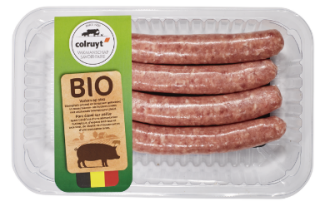
| Last name | Organic Chipolata |
| Mark | Colruyt |
| Unit | 280 g |
| Article number | 17959 |
| Best before date (DLC) | 12/18/2020 and 12/20/2020 |
| Sale period | from 12/9/2020 to 12/17/2020 included |
Colruyt recalls the following products:
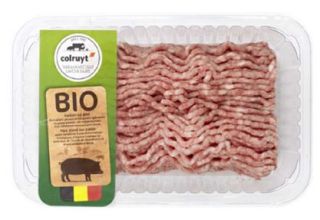
| Last name | Organic minced pork |
| Mark | Colruyt |
| Unit | 400 g |
| Article number | 17968 |
| Best before date (DLC) | 12/18/2020 |
| Sale period | from 12/9/2020 to 12/15/2020 included |
Danger : Presence of Salmonella
Salmonella can cause symptoms such as nausea, vomiting, abdominal cramps, diarrhea, fever and headache within 6 to 72 hours after consumption. These symptoms may be aggravated in young children, immunocompromised individuals and the elderly. People who have consumed these products and who present these symptoms are advised to consult a doctor, notifying him of this consumption.
RASFF Alerts – STEC E.coli – O26 – O103 – Chilled Beef – Cow Carcasses

shigatoxin-producing Escherichia coli (stx1+, stx2+, eae+, O26) in chilled beef from Belgium in Belgium
shigatoxin-producing Escherichia coli (stx+; eae+, O103) in cow carcasses from Belgium in Belgium
Posted in Bacteria, bacterial contamination, E.coli O103, E.coli O26, food contamination, Food Hygiene, Food Inspections, Food Micro Blog, Food Microbiology, Food Microbiology Blog, Food Microbiology Testing, Food Pathogen, Food Poisoning, food recall, Food Safety, Food Safety Alert, Food Testing, Food Toxin, O103, RASFF, STEC, STEC E.coli

 FoodWorld