Monthly Archives: February 2023

Ireland – Precautionary Extended Recall of Some Western Brand Raw Chicken Products Due to Possible Presence of Salmonella

FSAI

The Food Safety Authority of Ireland (FSAI) today advises that a precautionary extended food recall is underway by Western Brand of a number of specific raw chicken products due to the possible presence of Salmonella. This recall is linked to the ongoing investigation by the Department of Agriculture, Food and the Marine into incidences of Salmonella infection in a number of broiler flocks. To date, there have been no confirmed cases of human illness linked to this investigation. The FSAI is warning consumers who may have the affected chicken products at home not to eat them.

The products being recalled are listed in the food alert.

Dr Pamela Byrne, Chief Executive, FSAI has warned consumers not to eat the affected chicken products.

“If anyone has any of the affected chicken product at home, we are advising them not to eat it. To date, there have been no confirmed cases of human illness linked to this investigation. Just as a reminder to consumers, raw chicken should always be handled hygienically to prevent cross contamination with ready-to-eat food and raw chicken should never be washed. Always wash your hands after handling it and always wash any utensils you’ve used to prepare it. Raw chicken should always be cooked thoroughly before eating it.”

The FSAI is liaising with the Department of Agriculture, Food and the Marine in its ongoing investigation into broiler flocks and additional testing continues.
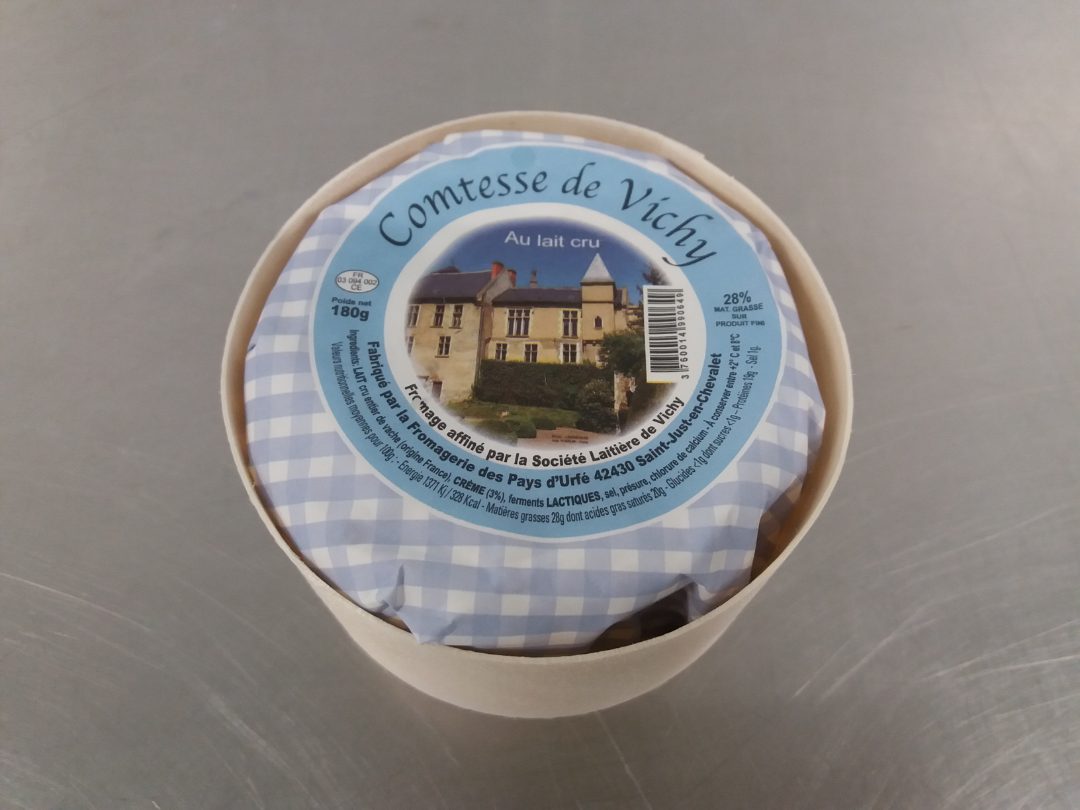
France – COMTESSE DE VICHY 180G RAW MILK – Listeria monocytogenes

Gov france

Identification information of the recalled product

  • Product category Feed
  • Product subcategory Milk and dairy products
  • Product brand name VICHY DAIRY SOCIETY
  • Model names or references COMTESSE DE VICHY 180G RAW MILK
  • Identification of products
    GTIN Batch Date
    3760014990649 009 Use-by date 03/01/2023
  • Marketing start/end date From 01/26/2023 to 02/03/2023
  • Storage temperature Product to be stored in the refrigerator
  • Health mark EN 03.094.002 CE
  • Geographic area of ​​sale Regions: Auvergne-Rhône-Alpes
  • Distributors CARREFOUR MARKET (03 – COMMENTRY) PIERRE CHEESE CELLAR (63 PUY GUILLAUME) DESCHAMPS CHEESE FACTORY (03 VICHY – 63 ST AMAND TALLENDE) OUVERNIA CHEESE FACTORY (63 PUY GUILLAUME) COLD FARM (03 ST REMY EN ROLLAT)

Practical information regarding the recall

  • Reason for recall Presence of listeria monocytogenes
  • Risks incurred by the consumer Listeria monocytogenes (causative agent of listeriosis)

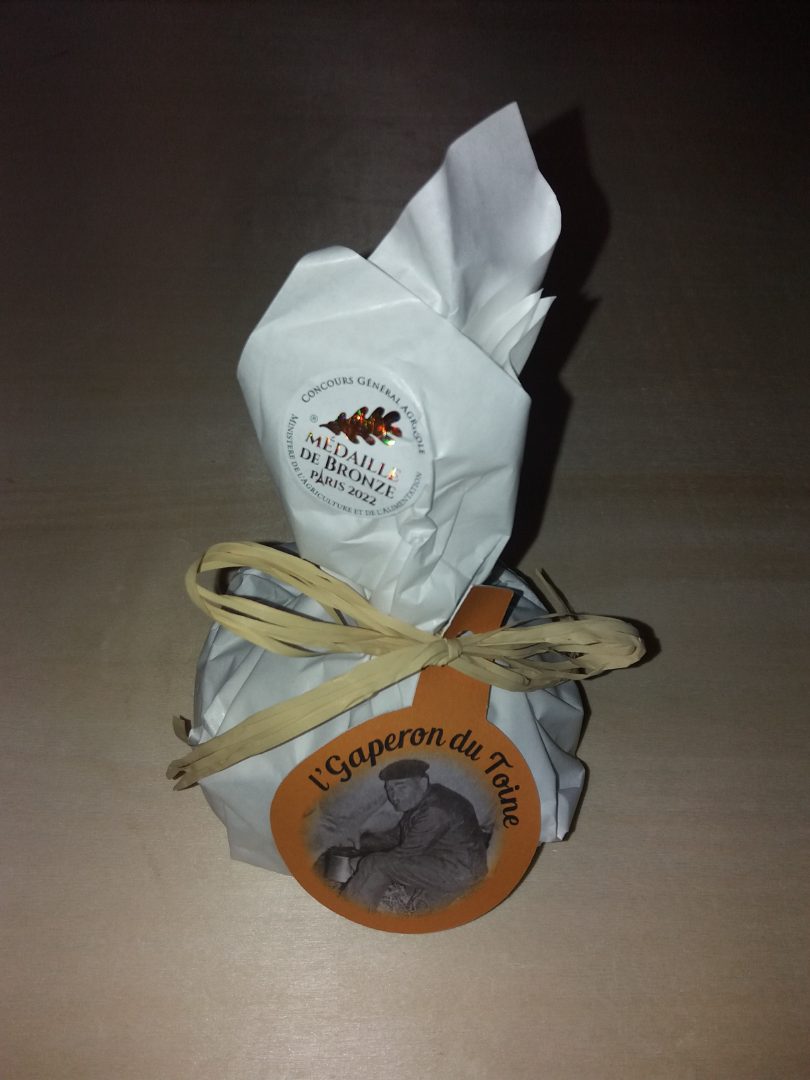
France – Cheese – GAPERON DU TOINE 300G – Listeria monocytogenes

Gov france

Identification information of the recalled product

  • Product category Feed
  • Product subcategory Milk and dairy products
  • Product brand name VICHY DAIRY COMPANY
  • Model names or references GAPERON DU TOINE 300G
  • Identification of products
    GTIN Batch Date
    3760014991127 009 Use-by date 03/15/2023
  • Marketing start/end date From 01/24/2023 to 02/03/2023
  • Storage temperature Product to be stored in the refrigerator
  • Health mark EN 03.094.002 CE
  • Geographic area of ​​sale Regions: Auvergne-Rhône-Alpes
  • Distributors POM BANANA (63 – THIERS) POM BANANA (03 – YZEURE)

Practical information regarding the recall

  • Reason for recall Presence of listeria monocytogenes
  • Risks incurred by the consumer Listeria monocytogenes (causative agent of listeriosis)

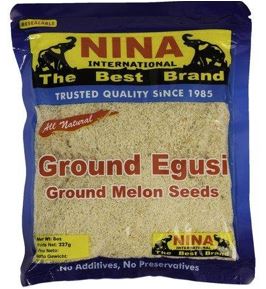
Germany – NINA International Egusi Ground – Ground Melon Seeds ground melon seeds – Salmonella and Aflatoxin

LMW

Alert type: Groceries
Date of first publication: 02/03/2023
Product name:

NINA International Egusi Ground – Ground Melon Seeds ground melon seeds

Product images:

Ground Egusi.JPG

Letter from the company AsiaExpressFood

Manufacturer (distributor):

Sahara Pioneer Ltd. 14 Labor Street Accra Ghana

Reason for warning:

salmonella, aflatoxins

Packaging Unit: 227g
Durability: 01/01/2024

USA -Fresh Ideation Food Group LLC Recalls Sandwiches and Other Products Because of Possible Health Risk – Listeria monocytogenes

FDA

Summary

Company Announcement Date:
FDA Publish Date:
Product Type:
Food & Beverages
Reason for Announcement:
Potential Listeria Monocytogenes contamination
Company Name:
Fresh Ideation Food Group
Brand Name:
Multiple brands
Product Description:
Ready to Eat Sandwiches, Salads, Yogurt, Wraps and related products

Company Announcement

Fresh Ideation Food Group LLC of Baltimore, MD is recalling products sold from January 24, 2023 through January 30, 2023 because the products have the potential to be contaminated with Listeria monocytogenes an organism which can cause serious and sometimes fatal infections in young children, frail or elderly people, and others with weakened immune systems. Although healthy individuals may suffer only short-term symptoms such as high fever, severe headache, stiffness, nausea, abdominal pain and diarrhea, Listeria infection can cause miscarriages and stillbirths among pregnant women.

Products have been distributed in Connecticut, District of Columbia, Maryland, Massachusetts, New Jersey, New York, North Carolina, Pennsylvania, South Carolina, and Virginia. Recalled Products were sold in retail locations, vending machines, and during travel with transportation providers.

The products include sandwiches, salads, snacks, yogurt, wraps and related products. A listing of the relevant product information is provided at the bottom of this press release.

All recalled products have a Fresh Creative Cuisine label and/or identifier on the bottom of the label with the Fresh Creative Cuisine name and a fresh through or sell through date ranging from January 31, 2023 through February 6, 2023.

The recall was initiated after the company’s environmental samples tested positive for Listeria monocytogenes.

No illnesses have been reported to date.

Consumers who have purchased the products are urged to contact the company, Fresh Ideation Food Group LLC, at 855-969-3338, Monday through Friday, 8am to 4pm EST.

USA – FSIS Issues Public Health Alert for Ready-To-Eat Stuffed Chicken Product that May Be Undercooked Due to A Processing Deviation

FSIS USDA

WASHINGTON, February 3, 2023 – The U.S. Department of Agriculture’s Food Safety and Inspection Service (FSIS) is issuing a public health alert for ready-to-eat (RTE) stuffed chicken product because the product may not be fully cooked due to underprocessing. FSIS is issuing this public health alert to ensure that consumers are aware that this product should not be consumed. A recall was not requested because the product is no longer available for consumers to purchase.

The RTE broccoli stuffed chicken breast product was produced by Vanguard Culinary Group, LTD, a Fayetteville, N.C. establishment, on December 3, 2022. The following product is subject to the public health alert [view labels]:

  • 16 oz (1 lb.) vacuum sealed trays containing “PARK STREET DELI Broccoli Stuffed Chicken BONELESS SKINLESS CHICKEN BREAST HAND STUFFED WITH BROCCOLI & CHEDDAR AU GRATIN” with a use by date of 1/30/2023.

The product subject to this public health alert bears establishment number “P-8334” inside the USDA mark of inspection. This item was shipped to retail locations in Alabama, Florida, New York, Pennsylvania, and Virginia.

The problem was discovered when consumers reported to FSIS that the product labeled as fully cooked appeared to be raw.

There have been no confirmed reports of adverse reactions due to consumption of these products. Anyone concerned about an injury or illness should contact a healthcare provider.

Research – Antibacterial and Anti-Biofilm Properties of Diopside Powder Loaded with Lysostaphin

MDPI

Abstract

Background: Diopside-based ceramic is a perspective biocompatible material with numerous potential applications in the field of bone prosthetics. Implantable devices and materials are often prone to colonization and biofilm formation by pathogens such as Staphylococcus aureus, which in the case of bone grafting leads to osteomyelitis, an infectious bone and bone marrow injury. To lower the risk of bacterial colonization, implanted materials can be impregnated with antimicrobials. In this work, we loaded the antibacterial enzyme lysostaphin on diopside powder and studied the antibacterial and antibiofilm properties of such material to probe the utility of this approach for diopside-based prosthetic materials. Methods: Diopside powder was synthesized by the solid-state method, lysostaphin was loaded on diopside by adsorption, the release of lysostaphin from diopside was monitored by ELISA, and antibacterial and anti-biofilm activity was assessed by standard microbiological procedures. Results and conclusions: Lysostaphin released from diopside powder showed high antibacterial activity against planktonic bacteria and effectively destroyed 24-h staphylococcal biofilms. Diopside-based materials possess a potential for the development of antibacterial bone grafting materials.

Research – Microbiological, Physicochemical and Nutritional Properties of Fresh Cow Milk Treated with Industrial High-Pressure Processing (HPP) during Storage

MDPI

Abstract

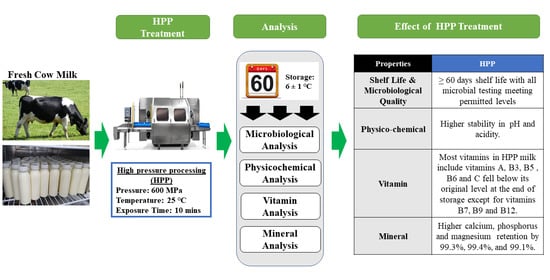
The safety, shelf life, and quality of fresh cow milk treated using industrial High-Pressure Processing (HPP) treatment at 600 MPa for 10 min was studied to identify the novelty of this non-thermal technology in milk processing. Changes in microbiological and physicochemical properties, including nutritional values of vitamins and amino acid profiles, were measured for a 60-day storage period at 6 °C +/− 1 °C. The HPP treatment produced milk that met all microbial safety requirements and exhibited a shelf life beyond 60 days in a hot and humid region. High physicochemical stability was achieved, with consistent pH and undetectable titratable acidity. The HPP treatment successfully retained all vitamins and minerals, including calcium (99.3%), phosphorus (99.4%), and magnesium (99.1%). However, the 60-day storage caused some degradation of Vitamin A (25%), B3 (91%), B5 (35%), B6 (80%), and C (85%), and minerals, including potassium (5%) and zinc (18%) when compared with fresh milk. This research has shown that the adoption of advanced treatment with HPP is very beneficial to the dairy industry in preserving milk quality in terms of its physicochemical and nutritional properties and extending its storage shelf life beyond 60 days.

Research – Far-UVC Radiation for Disinfecting Hands or Gloves?

MDPI

Abstract

(1) Background: Far-UVC radiation in the spectral range 200–230 nm has, according to previous findings, a strong antimicrobial effect on pathogens, but exhibits hardly any harmful effect on human skin. Therefore, the present study will discuss whether such radiation could also be suitable for hand disinfection in the healthcare sector. (2) Methods: Hands and gloves were microbially contaminated and exposed to radiation from a 222 nm krypton-chloride-excimer lamp. The applied doses were 23 mJ/cm2 and 100 mJ/cm2, respectively. Irradiated and non-irradiated hands and gloves were pressed onto agar plates and colonies were counted and compared after 24 h of incubation. For comparison, we also treated hands and gloves with a commercial liquid alcohol-based disinfectant. (3) Results: On the hand, the 23 mJ/cm2 resulted in the reduction of the observed colonies on the agar plates by one log level. For the gloves irradiated with 100 mJ/cm2, a colony reduction of 1.3 log levels was recorded. In the comparative experiments with the commercial disinfectant, a colony reduction of 1.9 and approximately one log level was observed on hand and gloves, respectively. (4) Conclusion: In both cases, far-UVC radiation provided a considerable reduction in microorganisms. However, compared to published far-UVC irradiation results in suspensions, the disinfection success on hands and gloves was rather low. With regard to the irradiation limits currently existing in the European Union, multiple daily hand disinfection with far-UVC radiation is actually legally not possible at present, but the thresholds are currently under discussion and could change in the future. Far-UVC disinfection of hands in gloves seems theoretically possible if attention is paid to potential perforations in the gloves.

Research – The Occurrence of Cryptosporidium spp. in Wild-Living Carnivores in Poland—A Question Concerning Its Host Specificity

MDPI

Abstract

Cryptosporidium is an apicomplexan protozoan parasite that primarily infects the gastrointestinal epithelium in humans and domestic and wild animals. The majority of studies have been focused on human, livestock, and pet infections. Hence, Cryptosporidium spp. in wildlife, including wild carnivores, remained neglected. There are several studies reporting the occurrence of Cryptosporidium spp. in wild foxes, but these are only a few molecular surveys; no data is available concerning the occurrence of this parasite in raccoon dogs and martens in Europe, and to the best of our knowledge to date, only one study has reported Cryptosporidium from badgers in Spain. Therefore, we used molecular analyses to identify and genotype Cryptosporidium spp. in wild-living mesocarnivores in Poland. A total of 322 individual fecal samples from six carnivore species, i.e., raccoon, raccoon dog, red fox, European badger, pine, and beech martens were collected and then analyzed for the presence of Cryptosporidium spp. using the nested PCR method. The appearance of PCR products in the reaction with Cryptosporidium-specific primers against the 18S rRNA and actin genes demonstrated that Cryptosporidium spp. occurred in 23.0% of all examined species of animals. Performed sequence analyses showed the presence of the Cryptosporidium skunk genotype, Cryptosporidium vole genotype II, Cryptosporidium canis dog and fox genotypes, as well as Cryptosporidium erinaceiCryptosporidium ditrichiCryptosporidium suis, and Cryptosporidium alticolis, in these hosts. Molecular data presented here indicate that examined mesocarnivores may be a significant reservoir of specific and non-specific Cryptosporidium species, including those with zoonotic potential. Most studies of carnivores have described the presence of non-specific Cryptosporidium spp. in carnivore hosts, and this is probably the result of the transfer of these parasites from prey species through the digestive tract or the transfer of the parasite from a contaminated environment.