Monthly Archives: March 2022

Ireland – Further Recall of Some Coleslaws and Other Products Containing Shredded Cabbages or Carrots due to the Possible Presence of Listeria monocytogenes

FSAI

Summary
Category 1: For Action
Alert Notification: 2022.16 (Update 1)
Product: Please see table below.
Batch Code: Please see table below.
Country Of Origin: Ireland

Message:

Further to the FSAI Food Alert 2022.16, specific batches of Butlers Coleslaw, Egg Mayonaise and Lite Coleslaw are being recalled.  This recall is taking place following a voluntary withdrawal of some shredded cabbages and carrots by Milnes Foods Ltd. due to the possible presence of Listeria monocytogenes in products made with the shredded cabbages and carrots.  Please see the table below for details of the affected batches subject to recall.  Point-of-sale recall notices will be displayed in stores supplied with the implicated products.

Nature Of Danger:

Symptoms of Listeria monocytogenes infection can include mild flu-like symptoms, or gastrointestinal symptoms such as nausea, vomiting and diarrhoea.  In rare cases, the infection can be more severe, causing serious complications. Some people are more vulnerable to Listeria monocytogenes infections, including pregnant women, babies, and people with weakened immune systems, including the elderly.  The incubation period (time between initial infection and first symptoms appearing) is on average 3 weeks but can range between 3 and 70 days.

Action Required:

Consumers:

Consumers are advised not to eat the implicated batches.

Butlers Table
Butlers coleslaw

Research – Don’t take a risk with food safety during and after floods

Medical Express

Following extensive flooding in eastern Australia the Food Safety Information Council is warning people not to take food safety risks during and after flood.

Lydia Buchtmann, the Council’s Communication Director, said that floodwater can be contaminated with sewage, agricultural and , and other substances that can cause illness so there is a danger that any food, surfaces and cooking utensils that have come into contact with floodwater might be contaminated.

“Spills and sewage discharges can also contaminate  and food gardens. If in doubt throw out any food that might not be safe to eat and follow these simple steps:

  1. Throw out food that has come into contact with floodwater or has an unusual odor, color or texture. Do not taste or cook it.
  2. Check canned and unopened bottled food and throw out any cans that are dented, swollen or damaged. For  that appear useable remove the label and thoroughly wash the outside of the can with drinking-quality water, sanitize the can in bleach for 1 minute, then rinse in drinking-quality water re-label the can with a waterproof pen.
  3. Carefully check dishes, pots, pans, cutlery and kitchen equipment that might have been in contact with floodwater. Throw away damaged or cracked items, items made from porous material such as wood, plastic or rubber including wooden chopping boards as they cannot be adequately sanitized.
  4. Wash utensils and surfaces in hot, soapy, drinking-quality water. Take apart and clean the non-electrical pieces of any kitchen equipment that can be safety taken apart and then rinse in clean, hot water.
  5. Sanitize silverware, metal utensils, pots, pans and kitchen equipment in pieces by boiling in water for 10 minutes. Sanitize dishes by immersing glass, porcelain, china and enamel-ware for 10 minutes in a disinfecting solution of 1 tablespoon of chlorine bleach per 2 liters of warm water. Clean cupboards and counters with hot soapy water then rinse with a chlorine bleach solution before storing dishes or food.
  6. Air dry items because towels might have been splashed with contaminated water.
  7. Commercial and most domestic dishwashers are capable of sanitizing all eating and cooking utensils as part of their normal cycle
  8. Vegetable gardens can take a month to become suitable for harvest after flood or sewage discharge. Discard all leafy green produce or damaged vine or dropped tree fruits. After 1 month, wash other vegetables then sanitize in a weak bleach solution of 1 tablespoons bleach to 2 liters of water. Then rinse in drinking-quality water, peel and use.

“Finally, after a flood tap water and private water supplies such as from tanks, wells and bores sometimes might not be safe to drink and use for cooking and cleaning so monitor public announcements and those from the local water supplier to know if tap water is safe to use. If the water is unsafe, use only bottled, boiled or treated —in that order of preference—for drinking, cooking or preparing , washing utensils and surfaces, brushing teeth, hand washing, making ice, and bathing,” Ms Buchtmann concluded.


Explore further

Proper handling of fresh produce can reduce risk of foodborne illness

Ireland – Recall of Some Coleslaws and Other Products Containing Shredded Cabbages or Carrots due to the Possible Presence of Listeria monocytogenes

FSAI

Summary
Category 1: For Action
Alert Notification: 2022.16
Product: Please see table below.
Batch Code: Please see table below for further details.
Country Of Origin: Ireland

Message:

Following a voluntary withdrawal of some shredded cabbages and carrots by Milnes Foods Ltd., a range of retail products are being recalled due to the possible presence of Listeria monocytogenes in products made with the shredded cabbages and carrots.  Please see table below for details of the affected batches.  Point-of-sale recall notices will be displayed in stores supplied with the implicated products.

Nature Of Danger:

Symptoms of Listeria monocytogenes infection can include mild flu-like symptoms, or gastrointestinal symptoms such as nausea, vomiting and diarrhoea.  In rare cases, the infection can be more severe, causing serious complications. Some people are more vulnerable to Listeria monocytogenes infections, including pregnant women, babies, and people with weakened immune systems, including the elderly.  The incubation period (time between initial infection and first symptoms appearing) is on average 3 weeks but can range between 3 and 70 days.

Action Required:

Consumers:

Consumers are advised not to eat the implicated batches.

Table of products
DS products
Hannifys

Belgium – Geay brand oysters – Norovirus

AFSCA

Product: Geay brand oysters.
Problem: presence of Norovirus.
Following a notification via the RASFF system (European Food and Feed Rapid Alert System), the presence of Norovirus was detected in oysters (12 or 24 pieces) of the Geay brand.

The FASFC has therefore decided to withdraw this product from sale and to recall it from consumers.

The AFSCA asks not to consume this product and to bring it back to the point of sale where it was purchased.

Product Description :

– Product: Oysters (12 or 24 pieces)
– Brand: Geay
– Batch numbers/product code: 21/02/2022 to 28/02/2022

The product was distributed via several points of sale in Belgium.

For any additional information, you can contact the FASFC contact point for consumers: 0800/13.550 or pointdecontact@afsca.be .

Belgium – White log from the Le Pic brand Goat Cheese – Listeria monocytogenes

AFSCA

Recall from Le Marché des Chefs
Product: white log from the Le Pic brand.
Problem: presence of Listeria monocytogenes.

In agreement with the FASFC, Le Marché des Chefs is withdrawing the “bûchette blanche” goat cheese from the Le Pic brand from sale and recalling it from consumers due to the presence of Listeria monocytogenes.

The Marché des Chefs asks its customers not to consume this product and to return it to the point of sale where it was purchased against reimbursement.

Description of the product

– Product name: white log of raw milk goat cheese
– Brand: Le Pic
– Expiry date (DDM): 03/26/22
– Batch number: 18012224
– Sale period: from 02/11/2022 to 02/28/2022
– Type of packaging: wooden box
– Weight: 150g each

The product was distributed by the store Le Marché des Chefs (Lensstraat 38, 1050 Brussels).

For any additional information , contact:

Mesdames Christelle Delbart and Valérie Mailian
02 647 40 50
marchedeschefs@skynet.be

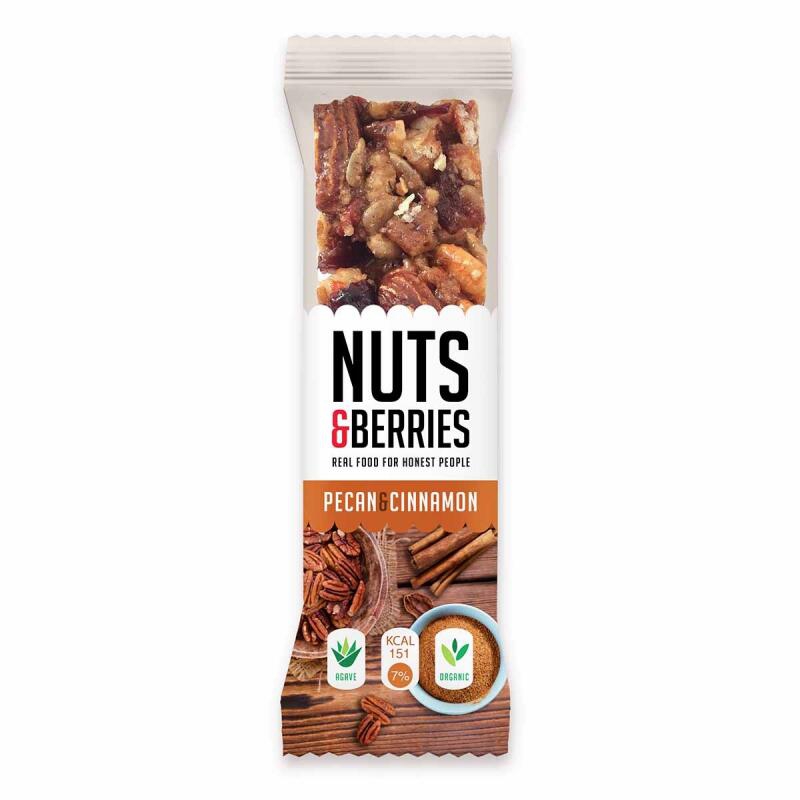
Netherlands – Safety Warning Pecan Cinnamon Nut Bar, Nuts & Berries – Aflatoxin

NVWA

Recall Nuts & Berries Pecan Cinnamon nut bar 30gr

Safety Warning Pecan Cinnamon Nut Bar, Nuts & Berries

The company Nuts & Berries is carrying out a recall for the product: pecan cinnamon nut bar 30 g. This is because too high a level of Aflatoxin has been found in it. 

Which product is it?

  • Brand : Nuts & Berries 
  • Product: pecan cinnamon nut bar 30 g 
  • THT: 12-10-2022 and 29-12-2022 or LOT no 21302 
  • Ean barcode: 5425036870635
  • art. no. Odin: 25028

See Odin .’s website

Yours sincerely

The Dutch Food and Consumer Product Safety Authority

Estonia – Imported chicken linked to Campylobacter cases in Estonia

Science Direct

CDC Campy

Since 2005 campylobacteriosis has been the most commonly reported gastrointestinal infection in humans in the European Union with more than 200,000 cases annually. Also Campylobacter is one of the most frequent cause of food-borne outbreaks with 319 outbreaks reported to EFSA, involving 1,254 cases of disease and 125 hospitalizations in EU in 2019. Importantly poultry meat is one of the most common source for the sporadic Campylobacter infections and for strong-evidence campylobacteriosis food-borne outbreaks in EU.

 In present study, 429 fresh broiler chicken meat samples of Estonian, Latvian, and Lithuanian origin were collected from Estonian retail level and analyzed on a monthly basis between September 2018 and October 2019. Campylobacter spp. were isolated in 141 (32.9%) of 429 broiler chicken meat samples. Altogether 3 (1.8%), 49 (36.8%), and 89 (66.9%) of Estonian, Latvian, and Lithuanian origin broiler chicken meat samples were positive for Campylobacter spp. Among Campylobacter-positive samples, 62 (14.5%) contained Campylobacter spp. below 100 CFU/g and in 28 (6.5%) samples the count of Campylobacter spp. exceeded 1,000 CFU/g. A high prevalence of Campylobacter spp. in fresh broiler chicken meat of Lithuanian and Latvian origin in Estonian retail was observed. Additionally, 22 different multilocus sequence types were identified among 55 genotyped isolates of broiler chicken meat and human origin, of which 45 were Campylobacter jejuni (C. jejuni) and 10 were Campylobacter coli (C. coli). The most prevalent multilocus sequence types among C. jejuni was ST2229 and among C. coli ST832, ST872. C. jejuni genotypes found in both broiler chicken meat and human origin samples were ST122, ST464, ST7355, and ST9882, which indicates that imported fresh broiler chicken meat is likely the cause of human campylobacteriosis in Estonia.

Italy – Vannamei Shrimp – Listeria monocytogenes

Salute

Brand : SHIRAKIKU

Name : Vannamei Shrimp – SUSHI EBI 4L – Frozen tropical shrimp –

Reason for reporting : Recall due to microbiological risk

Publication date : 4 March 2022

Click to access C_17_PubblicazioneRichiami_1667_azione_itemAzione0_files_itemFiles0_fileAzione.pdf

USA – Boyd Specialties, LLC Recalls Jerky Products Due to Possible Listeria Contamination

FSIS USDA

WASHINGTON, March 4, 2022 – Boyd Specialties, LLC, a Colton, Calif. establishment, is recalling approximately 1,634 pounds of ready-to-eat (RTE) jerky products that may be adulterated with Listeria monocytogenes, the U.S. Department of Agriculture’s Food Safety and Inspection Service (FSIS) announced today.

The multiple jerky products were produced on February 23, 2022. The products subject to the recall can be found here, and the labels can be found here.

The products subject to recall bear establishment number “EST. 40269” inside the USDA mark of inspection. These items were shipped to retail locations in Alabama, California, Connecticut, Michigan, New Jersey, North Carolina, Pennsylvania, and Texas.

The problem was discovered by FSIS during follow-up procedures after a routine FSIS product sample confirmed positive for Listeria monocytogenes.

There have been no confirmed reports of adverse reactions due to consumption of these products. Anyone concerned about an injury or illness should contact a healthcare provider.

Consumption of food contaminated with Listeria monocytogenes can cause listeriosis, a serious infection that primarily affects older adults, persons with weakened immune systems, and pregnant women and their newborns. Less commonly, persons outside these risk groups are affected.

Listeriosis can cause fever, muscle aches, headache, stiff neck, confusion, loss of balance and convulsions sometimes preceded by diarrhea or other gastrointestinal symptoms. An invasive infection spreads beyond the gastrointestinal tract. In pregnant women, the infection can cause miscarriages, stillbirths, premature delivery or life-threatening infection of the newborn. In addition, serious and sometimes fatal infections in older adults and persons with weakened immune systems. Listeriosis is treated with antibiotics. Persons in the higher-risk categories who experience flu-like symptoms within two months after eating contaminated food should seek medical care and tell the health care provider about eating the contaminated food.

FSIS is concerned that some product may be in consumers’ pantries. These products should be thrown away or returned to the place of purchase.

FSIS routinely conducts recall effectiveness checks to verify recalling firms notify their customers of the recall and that steps are taken to make certain that the product is no longer available to consumers. When available, the retail distribution list(s) will be posted on the FSIS website at www.fsis.usda.gov/recalls.

Media and consumers with questions regarding the recall can contact Anthony Middleton, Production Manager at Boyd Specialties, at (909) 219-5120.

Consumers with food safety questions can call the toll-free USDA Meat and Poultry Hotline at 888-MPHotline (888-674-6854) or live chat via Ask USDA from 10 a.m. to 6 p.m. (Eastern Time) Monday through Friday. Consumers can also browse food safety messages at Ask USDA or send a question via email to MPHotline@usda.gov. For consumers that need to report a problem with a meat, poultry, or egg product, the online Electronic Consumer Complaint Monitoring System can be accessed 24 hours a day at https://foodcomplaint.fsis.usda.gov/eCCF/.

Company Information

Colton, CA

ESTABLISHMENT ID

M40269+P40269+V40269

PROCESSING CATEGORY

Heat Treated – Shelf Stable

Company Contact Information

COMPANY MEDIA CONTACT
Boyd Specialties
Anthony Middleton, Production Manager

Austria – ZZU BIO Mini Poultry Sausages – Listeria monocytogenes

AGES

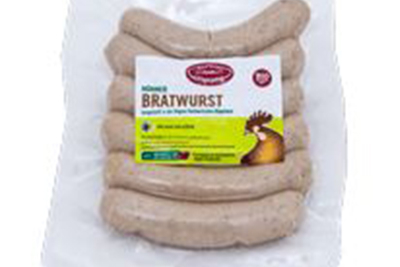
Pack of fried sausages

AGES informs about a recall of the company HOFER KG. On March 5th, 2022, the company recalled the product ZZU BIO Mini Poultry Bratwurst:

Product recall
ZZU BIO Mini Poultry Bratwurst Type of
chicken bratwurst

Dear customers,

The article ZZU BIO Mini Poultry Bratwurst – Chicken Bratwurst variety from the supplier LUGITSCH U.SOEHNE GMBH is being recalled by the supplier and HOFER KG for reasons of precautionary consumer protection.

Listeria was detected in a sample of the article mentioned. The product must not be consumed. Listeria can cause gastrointestinal diseases and flu-like symptoms. Serious illnesses can occur as a result of consumption, especially in pregnant women, small children and people with a weakened immune system.

We would like to point out that other varieties and other products from the supplier are not affected.

The product was on sale in HOFER branches in parts of Vienna, Lower Austria, Burgenland, Styria, Salzburg and Upper Austria. The sale stopped immediately.

The affected product can be returned to all HOFER branches. Of course, customers will also be reimbursed the purchase price without proof of purchase. This warning does not imply that the hazard was caused by the producer, manufacturer or distributor.

If you have any questions, the HOFER customer service center can be reached by telephone on (+43) 5 70 30 355 00 (Mon-Fri 7:15 a.m. to 8:00 p.m. and Sat 7:15 a.m. to 6:00 p.m.).

original recall