Monthly Archives: February 2022

Research – Prevalence of Mycobacterium bovis in milk on dairy cattle farms: An international systematic literature review and meta-analysis

Science Direct

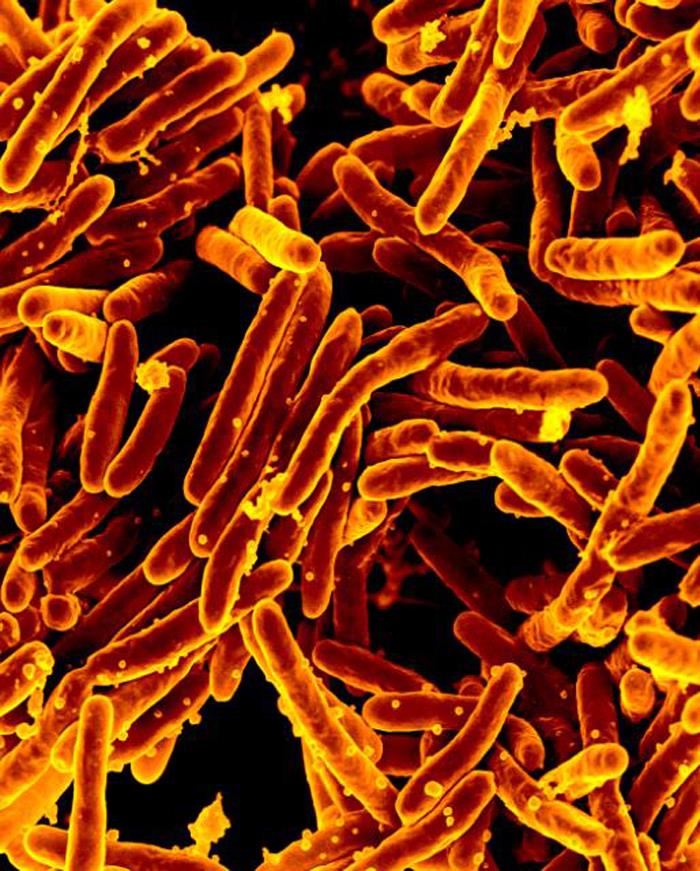
Bovine tuberculosis, caused by Mycobacterium bovis (M. bovis), is a globally distributed chronic disease of animals. The bacteria can be transmitted to humans via the consumption of unpasteurised (raw) milk, thus representing an important public health risk. To investigate the risk of zoonotic transmission of M. bovis via raw milk, this study systematically reviewed published studies to estimate the prevalence of M. bovis in on-farm bulk-tank milk (BTM) and individual cow’s milk (IM) by meta-analysis.

In total, 1,339 articles were identified through seven electronic databases and initially screened using titles and abstracts. The quality of 108 potentially relevant articles was assessed using full texts, and 67 articles comprising 83 studies (76 IM and 7 BTM), were included in the meta-analysis. The prevalence of M. bovis in IM and BTM was summarised according to the diagnostic test used, and the tuberculin skin test (TST) infection status of the individual cows (for IM) or herds (for BTM). Heterogeneity was quantified using the I-squared statistic. Prediction intervals (95% PIs) were also estimated.

For IM, the overall prevalence was summarised at 5% (95%CI: 3%–7%). In TST positive cows, prevalence was summarised at 8% (95%CI: 4%–13%). For BTM, the overall prevalence independent of individual herd TST infection status was summarised at 5% (95%CI: 0%–21%).

There was considerable heterogeneity evident among the included studies, while PIs were also wide. Inconsistency in the quality of reporting was also observed resulting in missing information, such as the TST infection status of the individual animal/herd. No study reported the number of M. bovis bacteria in test-positive milk samples. Several studies reported the detection of M. tuberculosis and M. africanum in milk.

Despite international efforts to control tuberculosis, this study highlights the risk of zoonotic transmission of M. bovis via unpasteurised milk and dairy products made using raw milk.

Research – Microbial safety and sanitary quality of strawberry primary production in Belgium: risk factors for Salmonella and Shiga toxin producing Escherichia coli (STEC) contamination.

AEM

Hepatitis A kswfoodworld

Strawberries are an important fruit in Belgium both in production and consumption, but little information is available about the presence of Salmonella and STEC in these berries, the risk factors in agricultural production and possible specific mitigation options. In 2012, a survey was undertaken of three soil and three soilless cultivation systems in Belgium. No Salmonella spp. was isolated. No STEC was detected in the strawberry samples (0 out of 72), but STEC was detected by qPCR in 11 out of 78 irrigation water and 2 out of 24 substrate samples.

Culture isolates were obtained for 2 out of 11 qPCR positive irrigation water samples and 2 out of 2 substrate samples. Multivariable logistic regression analysis revealed elevated generic E. coli numbers (odds ratio (OR) for 1 log increase being 4.6) as the most important risk factor for STEC, together with the berry picking season (elevated risk in summer).

Presence of generic E. coli in the irrigation water (≥ 1 cfu per 100 ml) was mainly influenced by the type of irrigation water (collected rainfall water stored in ponds was more often contaminated than ground water pumped from boreholes (OR = 5.8)) and the lack of prior treatment (untreated water versus water subjected to sand filtration prior to use (OR = 19.2)).

The follow-up study in 2013 at one of the producers indicated cattle as the most likely source of STEC contamination of the irrigation water.

Research – Vacuum-Packed Steak Tartare: Prevalence of Listeria monocytogenes and Evaluation of Efficacy of ListexTM P100

MDPI

Steak tartare is a raw, ready-to-eat meal popular in European countries, the safety of which is often discussed due to the risk of foodborne illness. The aim of this study was to determine the prevalence of Listeria monocytogenes in vacuum-packed steak tartare from retailers in the Czech Republic, characterize the strains obtained by typing methods and to evaluate the efficacy of ListexTM P100 against L. monocytogenes artificially inoculated into steak tartare samples. The prevalence of L. monocytogenes was 55% and 17 isolates belonging mostly to serotype 1/2a were obtained. Altogether 11 sequence types and 11 clonal complexes were assigned based on the whole genome sequencing (WGS) signifying the high diversity of L. monocytogenes isolates obtained. Core genome multi-locus sequence typing (cgMLST) did not confirm an epidemiological connection with human cases of listeriosis. The efficacy of ListexTM P100 treatment at concentrations of 108 and 109 PFU/g on artificially inoculated beef steak tartare samples was not efficient. Based on the results of this study, steak tartare from retailers can be considered as a source of L. monocytogenes that remains a challenge to the food industry. View Full-Text

Netherlands – Safety warning Organic Chicken shoarma strips, Organic Chicken stir-fry meat and Organic Chicken thigh skewers Sate Huis Ter Mee – Salmonella

NVWA

Safety warning Organic Chicken shoarma strips, Organic Chicken stir-fry meat and Organic Chicken thigh skewers Sate Huis Ter Mee

Odin Groothandel BV warns against Bio Chicken shoarma bars, Bio Chicken stir-fry meat and Bio Chicken thigh skewers Satay of the Huis Ter Mee brand. The products may contain salmonella. Do not eat these products.

See Odin .’s website

Which products are involved?

  • Organic Chicken shoarma strips 250 grams (brand Huis ter Mee), with batch code B933 M257 42, best before 23-2-22
  • Organic Chicken stir-fry 250 grams (brand Huis ter Mee), batch code B933 M257 41, best before 23-2-22
  • Organic Chicken thigh skewers Sate 200 grams (brand Huis ter Mee), batch code B933 M257 44, best before 18-2-22
  • Organic Chicken thigh skewers Satay 200 grams (brand Huis ter Mee), batch code B933 M257 45, best before 2/19/22
  • Organic Chicken thigh skewers Satay 200 grams (brand Huis ter Mee), batch code B933 M257 41, best before 22-2-22

Sincerely

The Dutch Food and Consumer Product Safety Authority

Netherlands – Safety warning Bio+ chicken thigh fillet 220 grams – Salmonella

NVWA

Safety warning Bio+ chicken thigh fillet 220 grams

Bio+ warns against Bio+ chicken thigh fillet 220 grams. The product may contain salmonella. Do not eat the product.

Which product is it?

  • Organic+ chicken thigh fillet 220 grams
  • Best before date 21-02-2022
  • Barcode: 8710624301569
  • The product was delivered to the Boon, Coop and Poiesz . supermarkets

read more

Sincerely

The Dutch Food and Consumer Product Safety Authority

Netherlands – Safety warning Jumbo organic chicken thighs 220 grams – Salmonella

NVWA

Safety warning Jumbo organic chicken thighs 220 grams

Jumbo is immediately removing the Jumbo organic chicken thighs from the shelves. Salmonella bacteria may be present in this product. Do not eat this product.

See the Jumbo website

Which product is it?

  • Jumbo organic chicken thigh steaks 220 grams
  • Barcode: 2348736000000
  • Best before: 19-02-2022 and 21-02-2022

Sincerely

The Dutch Food and Consumer Product Safety Authority

Belgium – Jumbo organic chicken leg (Jumbo biologische kipdijlapjes) – Salmonella

AFSCA

Jumbo recall
Product: Jumbo organic chicken leg (Jumbo biologische kipdijlapjes).
Problem: Possible presence of salmonella bacteria.
In agreement with the AFSCA, Jumbo withdraws from sale the ” organic chicken thigh ” with EAN 2348736000000 and expiry dates (DDM) 19-02-2022 and 21-02-2022 of the Jumbo brand and recalls it to consumers due to this the product may contain salmonella bacteria.

Jumbo asks its customers not to consume this product and to return it to the point of sale where it was purchased, where they will be reimbursed.

Product description Product

name: Jumbo biologische kipdijlapjes (Jumbo organic chicken leg)
Brand: Jumbo
EAN: 2348736000000 Best before
dates (BDD): 19-02-2022 and 21-02-2022
Sale period: From 11-02-2022 to 17-02-2022
Nature of packaging: Plastic packaging
Weight: 220 g

The product was distributed through Jumbo subsidiaries in Belgium.
For more information
 , customers can contact customer services on 0800-98998 or Jumbo.com .
Our apologies for the inconvenience caused.

Belgium – Basmati rice “Basmati rijst Aromatisch” from the AH brand – Ochratoxin

AFSCA

Recall by Albert Heijn
Product: Basmati rice “Basmati rijst Aromatisch” from the AH brand.
Problem: the product contains too high an ochratoxin content.

In agreement with the FASFC, Albert Heijn reminds consumers of the basmati rice “Basmati rijst Aromatisch” of the Albert Heijn brand with the expiry date 10/08/2023. The product contains too high an ochratoxin content. Consumption of this product may pose a health risk.

Albert Heijn asks its customers not to consume this product and to return it to the point of sale where it was purchased. The product will be refunded or exchanged there. Please contact a doctor in case of any health problem.

Product description

• Product category: rice
• Product name: Basmati rijst Aromatisch
• Brand: Albert Heijn
• Expiry date (BDD): 10/08/2023
• Sale period: from 11/08/2021, product no. is no longer on sale in stores
• Nature of packaging: cardboard
• Weight: 400 g

For any further information , please contact Albert Heijn via 0800 777 05.

Belgium – “Farinha de Milho Amarela” corn flour from the Matias brand – Mycotoxins – Fumonisin

AFSCA

FASFC recall
Product: “Farinha de Milho Amarela” corn flour from the Matias brand.
Problem: Exceeding the fumonisin standard.


The FASFC is today recalling consumers the corn flour “Farinha de Milho Amarela” (500g) of the Matias brand.

This recall follows a RASFF (Rapid Alert System for Food and Feed) concerning the exceeding of the fumonisin standard.

The AFSCA asks not to consume this product and to bring it back to the point of sale where it was purchased.

Product: “Farinha de Milho Amarela” corn flour
Brand: Matias
Batch number: 070621D2
Expiry date (BDD): 01/04/2022
Weight: 500g

This product was sold via various stores in Belgium including:

SPRL PORTUGAL MARKET CHAUSSÉE DE FOREST, 173 1060 SAINT GILLES
SPRL LUSOBEL RUE DE VERGNIES, 38 1050 BRUXELLES
SPRL A DESPENSA DE ATHUS 19, GRAND RUE 6791 ATHUS

For any additional information, you can contact the FASFC contact point for consumers: 0800/13.550 or pointdecontact@afsca.be .

Denmark – Fermentation in Delicato ketchup

DVFA

ALDI Denmark is recalling Delicato ketchup 500 ml, as there is a risk of fermentation in the product.

Recalled Foods , Published: February 18, 2022

What food:
Delicato Ketchup 500 ml ( see picture )
Best before date: 24.11.2022
EAN barcode: 25020267
Sold in:
ALDI stores throughout the country.
Company recalling:
ALDI Denmark, Herstedøstervej 27-29C, 2620 Albertslund
Cause:
There is a risk of fermentation in the product.
Risk:
Fermentation in the product makes it unsuitable as food.
Advice for consumers:
The Danish Veterinary and Food Administration advises consumers to deliver the product back to the store where it was purchased or to discard it.