29 sickened in US and Canada from Mexico Strawberries – Hepatitis A

Food Poison Journal

CDC, public health and regulatory officials in several states, the U.S. Food and Drug Administration, and the Canadian Food Safety Agency investigated an outbreak of hepatitis A linked to imported fresh organic strawberries. 

These potentially contaminated fresh organic strawberries were imported from Baja California, a state in northern Mexico, and branded as FreshKampo and HEB by a common supplier; they were purchased in the United States during March 5, 2022, through April 15, 2022. 

Traceback investigations showed that outbreak-associated cases in California and Minnesota purchased FreshKampo brand fresh organic strawberries prior to becoming ill. The Public Health Agency of Canada and the Canadian Food Inspection Agency also investigated an outbreak of hepatitis A; imported FreshKampo brand fresh organic strawberries were identified as the likely source of that outbreak.

EFSA – Salmonella – Story Map

EFSA

Salmonella is a genus of highly diverse bacteria that live in the intestinal tract of humans and animals and are widespread in the environment thanks to their ability to survive and adapt even under extreme conditions.

The more than 2,600 Salmonella  serovars  are divided into typhoidal and non-typhoidal serovars and all of them are potentially harmful and can cause diseases in humans with different level of severity. Typhoidal serovars (S. Typhi and S. Paratyphi) are highly adapted to the human host, which constitutes their exclusive reservoir, so they are transmittable only through human-to-human contact, causing a potentially life-threatening syndrome known as typhoid or paratyphoid fever. Their prevalence is very low in high-income countries, and the few European cases that occur generally involve people returning from trips to low- or middle-income countries.

Non-typhoidal serovars are zoonotic agents. They are transmittable from animals and foods to humans, but also through human-to-human contact, and they can cause various syndromes, most of which are gastrointestinal. Due to its adaptability, Salmonella is widely prevalent in the environment and can infect animals and contaminate food.

The majority of circulating serovars are non-typhoidal and are the subject of this story map.

Research – Unwelcome gifts: food poisoning unwrapped

EFSA

Are you looking forward to the holiday season to savour the finest traditional dishes with your friends and loved ones? The second episode of our podcast “Science on the menu” is the perfect soundtrack. Valentina Rizzi, Head of EFSA’s Biological Monitoring team, walks us through the risks linked to food contamination and the rules we should follow to make sure the food we prepare and eat is safe. We will also discuss how EFSA deals with foodborne outbreaks in Europe in collaboration with other European institutions, such as the European Centre for Disease Prevention and Control (ECDC). If after this second episode you would like to know more on foodborne outbreaks, visit our dedicated story map and the interactive dashboard. If you are curious about the work of ECDC, listen to their podcast “ECDC: On Air” 

Pathogens dominate Swiss alerts in 2021

Food Safety News

The number of recalls went up in 2021 but public warnings dropped in Switzerland, according to recently published figures.

The Federal Food Safety and Veterinary Office (FSVO) published 18 public warnings and 61 recalls for food in 2021 compared to 28 warnings and 49 recalls the year before. Recalls are published by companies and public warnings are made by Swiss authorities.

Most alerts this past year concerned pathogens such as Listeria nine times, Salmonella on six occasions, and Shiga toxin-producing E. coli (STEC) twice.

New Zealand – Countdown brand Bone-in New Zealand Free Farmed Half Leg Ham – Listeria monocytogenes

MPI

13 December 2022: Countdown is recalling a specific batch of its Countdown brand Bone-in New Zealand Free Farmed Half Leg Ham due to the possible presence of Listeria.

Product identification

Product type

Ready-to-eat meat

Name of product (size)

Countdown brand Bone-in New Zealand Free Farmed Half Leg Ham (various weights)

Batch and date marking

Product sold on 8 December until 12 December 2022 with a Use By of 27.02.23 is affected.

Package size and description

The product is vacuum packaged in various weights.

Distribution

The product is sold at Countdown Spotswood, Corner Manadon Street and South Road, New Plymouth.

The product is not exported.

Notes

This recall does not affect any other Countdown brand products.

Consumer advice

Customers are asked to check the date mark on the product.

Affected product should not be consumed. There have been no reports of associated illness, however if you have consumed any of this product and have any concerns about your health, seek medical advice.

Customers should return the product to their retailer for a full refund.

 Belgium – Traditional smoked bacon (English artisanal smoked bacon ½) from the Chimay brand Listeria monocytogenes

AFSCA

Product: Traditional smoked bacon (English artisanal smoked bacon ½) from the Chimay brand.
Problem: Presence of listeria monocytogenes.


In agreement with the FASFC, Chimay Tradition and Chasal srl are withdrawing the traditional smoked bacon (English artisanal smoked bacon ½) from the Chimay brand from sale and are recalling it from consumers due to the presence of listeria monocytogenes.

Chimay Tradition and Chasal srl ask their customers not to consume this product and to return it to the point of sale where it was purchased, where they will be reimbursed.


Product description:

– Product name: English artisanal smoked bacon ½ (trade name: old-fashioned smoked bacon)
– Brand: Chimay
– Use-by date (BBD) (“Use by”) 06/02/ 2023
– Batch number: 221118004
– Sales period: from 18/11/2022 to 28/11/2022
– Type of packaging: vacuum-packed
– Weight: +/- 2 kg


The product was distributed by Chasal srl (Rue Brisack 7, 6001 Marcinelle).


For any additional information , contact:

Chimay Tradition
CONTACT PERSON: Martial BONOU
ADDRESS: Zoning Industriel, 31, 6464 Baileux – Belgium
tel. 00 32 (0) 60 210 226
fax. : 00 32 (0) 60 210 221
Mobile: 0473/ 95 35 01
EMAIL ADDRESS: qualite@chimaytradition.be

Chasal srl
Rue Brisack, 7 6001 Marcinelle
CONTACT PERSON: Jean-Marc Claeys
ADDRESS: Rue Brisack, 7 B-6001 MARCINELLE
Phone. 00 32 (0) 71 44 85 52
fax. : 00 32 (0) 71 44 85 81
EMAIL ADDRESS: JM.Claeys@chasal.be

Belgium – Organic Alfalfa “Biologische Alfalfa” from the Albert Heijn brand.

AFSCA

In agreement with the FASFC, Albert Heijn withdraws from sale the organic alfalfa “Biologische Alfalfa” of the Albert Heijn brand with expiry dates (DLC) 16/12/22 and 17/12/22 and recalls it from consumers more to the possible presence of Salmonella. Consumption of this product can potentially cause food poisoning and therefore pose a health risk – especially to young children, the elderly, people with weakened immune systems and pregnant women.

Albert Heijn asks its customers not to consume this product and to return it to the point of sale where it was purchased. The product will be refunded or exchanged there. Please contact a doctor in case of any health problem.


Product Description

• Product category: raw vegetables
• Product name: AH Biologische Alfalfa
• Brand: Albert Heijn
• Date of minimum durability (DLC): 16/12/2022 and 17/12/2022
• Period of sale: until 12/12 /2022 included
• Type of packaging: plastic tray
• Weight: 40 g


For any further information , please contact Albert Heijn on 0800 777 05 .

EFSA – Listeria monocytogenes – Story Map

EFSA

Listeria bacteria are widespread in the environment and they are worldwide commonly found in soil and water, as well as in animal digestive tracts. There are more than 15  species  of bacteria in this genus, but human cases of Listeria infection are almost always caused by Listeria monocytogenes (L. monocytogenes) while Listeria ivanovii is pathogenic in animals but rarely in humans. The other species are not considered to be pathogenic in humans or animals.

L. monocytogenes are able to form communities of bacteria called biofilms and are therefore resistant to a wide range of stresses. This capacity varies among  genotypes . They can tolerate acidic, dry and salty conditions, in the presence or absence of oxygen. Moreover, unlike most pathogenic bacteria, they are able to survive and multiply in refrigerated foods, making ready-to-eat foods of particular concern.

Specific  strains  (identified by “ serogroups ” and “ serovars ”) are important for human health as they can differ in terms of geographical distribution and their ability to cause disease. Detection and isolation of Listeria strains, both by classic laboratory procedures and molecular and genomic methods, are therefore crucial to evaluate their relative presence in food, the environment and clinical settings, to address the  virulence  and to precisely trace  outbreaks , identifying the source of infection.

Research – Zoonotic diseases and foodborne outbreaks on the rise, but still below pre-pandemic levels

EFSA

In 2021 there was an overall increase in reported cases of zoonotic diseases and foodborne outbreaks compared to the previous year, but levels are still well below those of the pre-pandemic years, reveals the latest annual EU One Health zoonosis report released by EFSA and ECDC.

The general drop compared to pre-pandemic years in reported cases and outbreaks is probably linked to COVID-19 control measures, which were still in place in 2021. Among the few exceptions are the number of cases for yersiniosis and those of foodborne listeriosis outbreaks, which exceeded pre-pandemic levels.

Most foodborne outbreaks (773) were caused by Salmonella, which accounted for 19.3% of the total. Foodborne outbreaks differ from overall reported disease cases in that they are events in which at least two people contract the same illness from the same contaminated food. The most common sources of salmonellosis outbreaks were eggs, egg products, and “mixed foods”, which are meals composed of various ingredients.

The number of outbreaks caused by Listeria monocytogenes (23) was the highest ever reported. This might be linked to the increased use of whole genome sequencing techniques, which allow scientists to better detect and define outbreaks.

The report also covers overall reported zoonotic disease cases, which are not necessarily linked to outbreaks. Campylobacteriosis remains the most frequently reported zoonosis, with the number of reported cases increasing to 127,840 compared to 120,946 in 2020. Meat from chicken and turkeys was the most common source. Salmonellosis was the second most reported zoonotic disease, affecting 60,050 people compared to 52,702 in 2020. The next commonly reported diseases were yersiniosis (6,789 cases), infections caused by Shigatoxin-producing E. coli (6,084 cases), and listeriosis (2,183 cases).

The report also includes data on Mycobacterium bovis/caprae,Brucella, Trichinella, Echinococcus, Toxoplasma gondii, rabies, Q fever, West Nile virus infections and tularaemia.

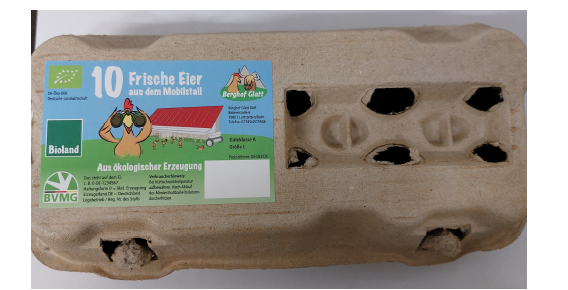
Germany – Eggs – Salmonella

LMW

Alert type: Food
Date of first publication: 12/12/2022
Product name:

Eggs with a best before date up to and including 21.12.2022

Product images:
Eggs.PNG


press release

Manufacturer (distributor):

Berghof Glatt Balmer Str.6 79807 Lottstetten Sales are limited to Baden-Württemberg

Reason for warning:

Salmonella were found in the eggs as part of regular self-monitoring.

Durability:

Best before date up to and including 21.12.2022

Further information:

Please refer to the company’s press release attached.

Click to access Salmonellen+Pressemitteilung+schwarz.pdf