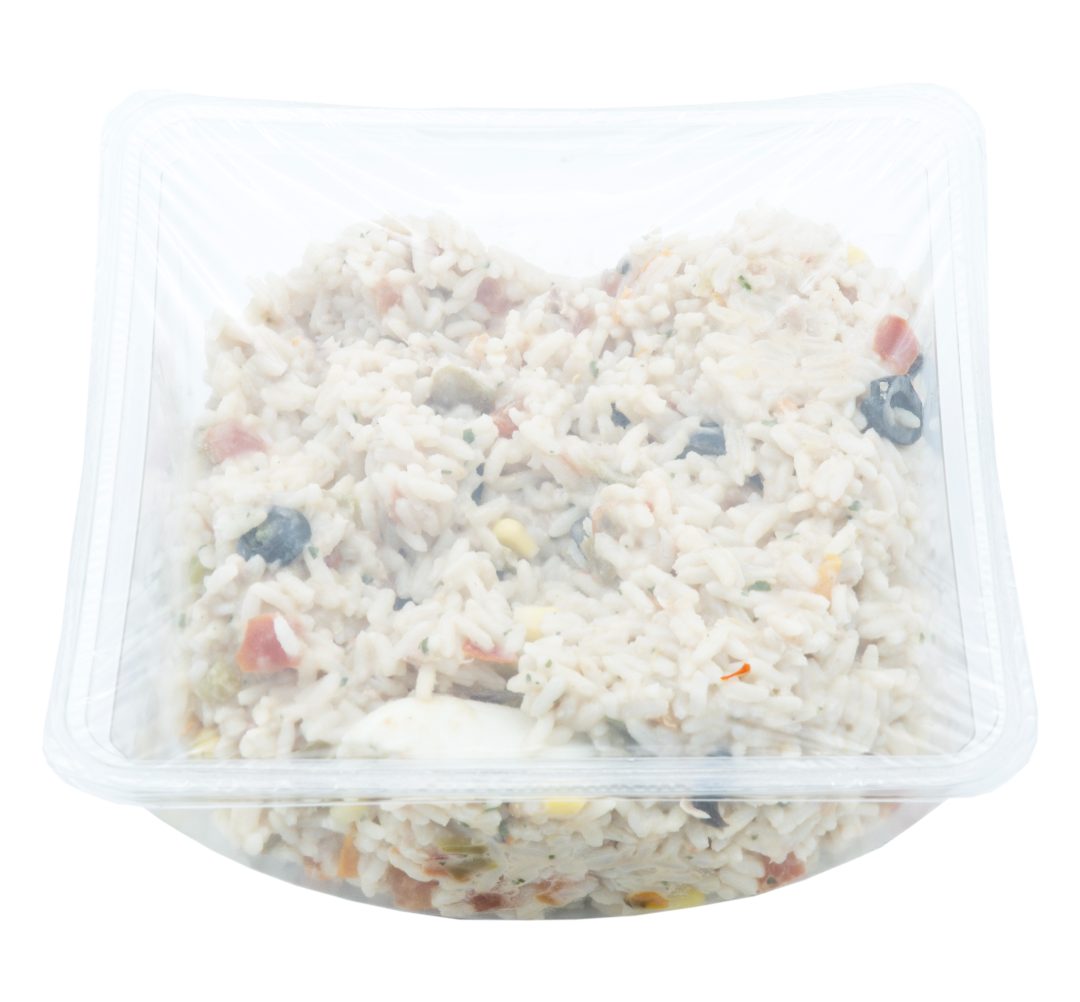
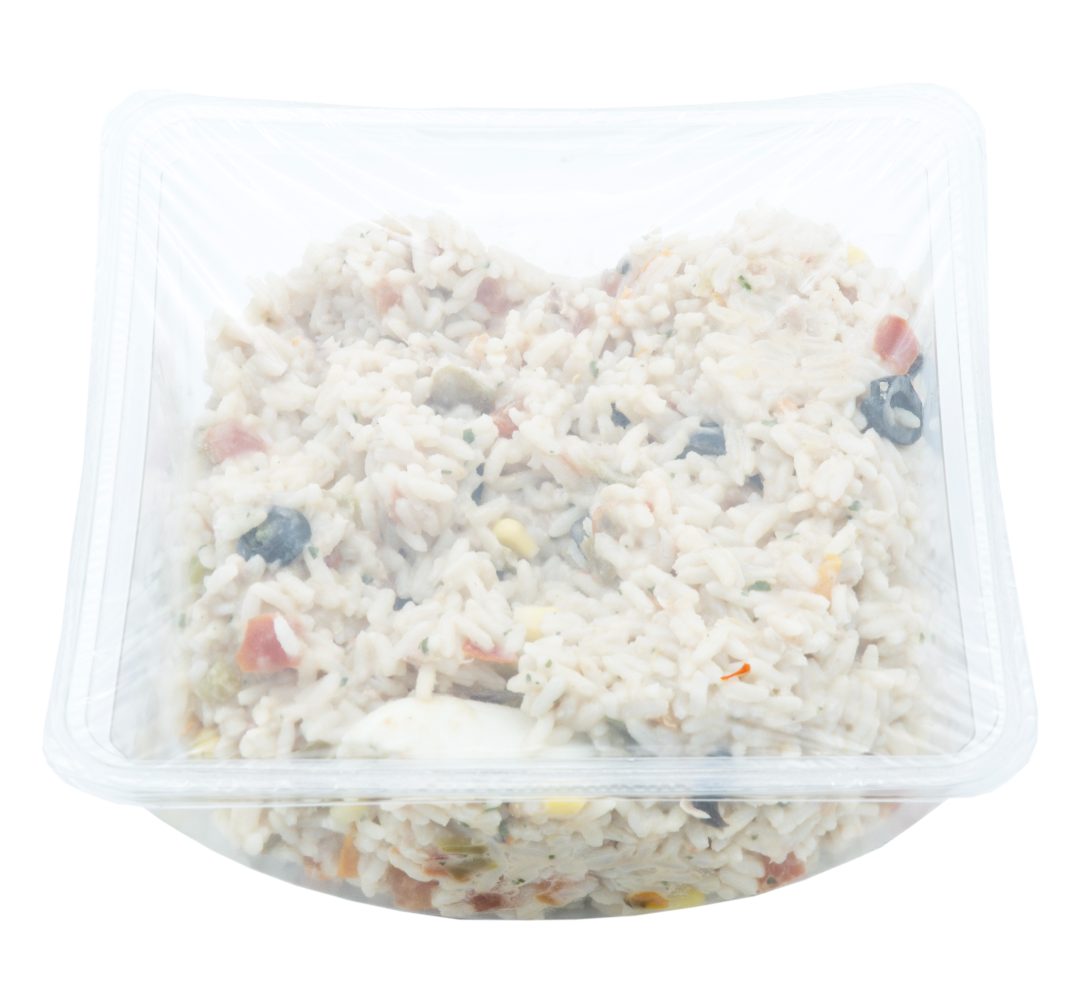
France – NICOIS RICE – Listeria monocytogenes

Gov France

  • Product category Food
  • Product subcategory Prepared meals and snacks
  • Product brand name Flavor of Antoine
  • Model names or references 800g
  • Product identification
    GTIN Batch Date
    3300842253549 From lots No. 332750000 to lot No. 333119999 Use-by date between 10/26/2023 and 12/01/2023
  • PackagingCapped tray under modified atmosphere
  • Start/end date of marketing From 09/10/2023 to 13/11/2023
  • Storage temperature Product to keep in the refrigerator
  • Health mark FR 71 388 002 EC
  • Geographical sales area Whole France
  • Distributors GMS, RHF, collective catering, wholesaler

France – NICOIS RICE – Listeria monocytogenes

Gov France

  • Product category Food
  • Product subcategory Prepared meals and snacks
  • Product brand name Flavors and Passion
  • Model names or references800g
  • Product identification
    GTIN Batch Date
    3300842253549 From lots No. 332750000 to lot No. 333119999 Use-by date between 10/26/2023 and 12/01/2023
  • Packaging Capped tray under modified atmosphere
  • Start/end date of marketing From 09/10/2023 to 13/11/2023
  • Storage temperature Product to keep in the refrigerator
  • Health mark FR 71 388 002 EC
  • Geographical sales area Whole France
  • Distributors GMS, RHF, collective catering, wholesaler

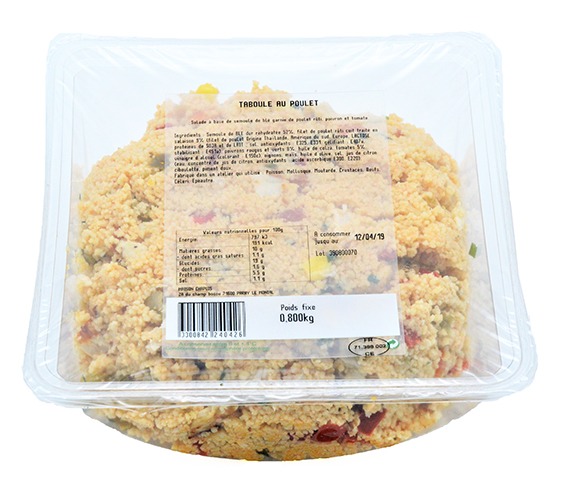
France – CHICKEN TABOULE – Listeria monocytogenes

Gov France

  • Product category Food
  • Product subcategory Prepared meals and snacks
  • Product brand name Chapuis House
  • Model names or referencesAll weights
  • Product identification
    GTIN Batch Date
    3300842270416 From lots N°332750000 to lot N°333119999 Use-by date between 10/26/2023 and 12/01/2023
    3300842240426 From lots N°332750000 to lot N°333119999 Use-by date between 10/26/2023 and 12/01/2023
    3300842253587 From lots N°332750000 to lot N°333119999 Use-by date between 10/26/2023 and 12/01/2023
    3300841245514 From lots N°332750000 to lot N°333119999 Use-by date between 10/26/2023 and 12/01/2023
  • Packaging Capped tray under modified atmosphere
  • Start/end date of marketing From 09/10/2023 to 13/11/2023
  • Storage temperature Product to keep in the refrigerator
  • Health mark FR 71 388 002 EC
  • Geographical sales area Whole France
  • Distributors Supermarkets, wholesaler, bakery, independent store

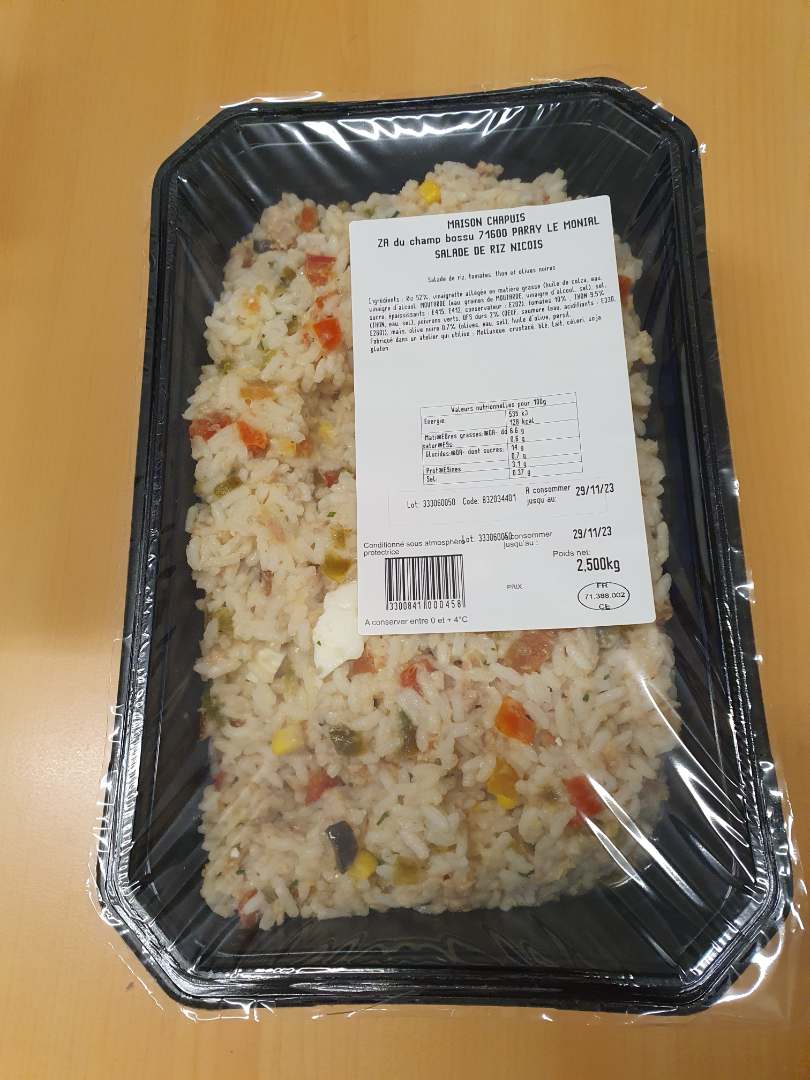
France – NICOIS RICE – Listeria monocytogenes

Gov France

  • Product category Food
  • Product subcategory Prepared meals and snacks
  • Product brand name Chapuis House
  • Model names or references All weights
  • Product identification
    GTIN Batch Date
    3300842274070 From lots No. 332750000 to lot No. 333119999 Use-by date between 10/26/2023 and 12/01/2023
    3300842240389 From lots No. 332750000 to lot No. 333119999 Use-by date between 10/26/2023 and 12/01/2023
    3300842253549 From lots No. 332750000 to lot No. 333119999 Use-by date between 10/26/2023 and 12/01/2023
    3300842253259 From lots No. 332750000 to lot No. 333119999 Use-by date between 10/26/2023 and 12/01/2023
    3300841246498 From lots No. 332750000 to lot No. 333119999 Use-by date between 10/26/2023 and 12/01/2023
  • Packaging Capped tray under modified atmosphere
  • Start/end date of marketing From 09/10/2023 to 13/11/2023
  • Storage temperature Product to keep in the refrigerator
  • Health mark FR 71 388 002 EC
  • Geographical sales area Whole France
  • Distributors Supermarkets, wholesaler, bakery, independent store

WHO unveils WGS guides to help tackle foodborne disease

Food Safety News

The World Health Organization (WHO) has released a guide for use of whole genome sequencing (WGS) in food safety.

The guidance comes in three parts. The first explains the minimum capacity requirements in the foodborne disease surveillance and response system prior to considering implementation of WGS.

The second discusses how WGS can help to support outbreak investigations and the third describes the usage of WGS in routine surveillance of foodborne diseases.

A related webinar was organized in June 2023 where lessons learned, opportunities, challenges and national examples were highlighted. The event featured Dr. Eric Brown, from the Center for Food Safety and Applied Nutrition (CFSAN), at the U.S. Food and Drug Administration.

WGS is useful for understanding foodborne diseases through enhancing routine surveillance, outbreak detection and response and for source identification, said WHO. It is hoped the technology will help reduce the burden of foodborne illness.

USA – FDA – Investigations of Foodborne Illness Outbreaks

FDA

What’s New

  • An investigation of illnesses (ref #1198) linked to apple cinnamon fruit puree pouches is now being managed by FDA’s Coordinated Outbreak Response & Evaluation (CORE) Network and has been added to the table. These illnesses are due to elevated lead levels in the products, which can be particularly harmful to children. FDA has issued an advisory with advice for consumers, has initiated traceback, sample collection and analysis, and onsite inspections. WanaBana has issued a voluntary recall of all apple cinnamon pouches. Updates will be provided as they become available.
Date
Posted
Ref Pathogen
or
Cause of
Illness
Product(s)
Linked to
Illnesses

(if any)
Total
Case
Count

Status
11/8/

2023

1198 Elevated Lead
Levels
Apple
Cinnamon
Puree
See

Advisory

Ongoing
11/1/

2023

1195 E. coli
O121:H19
Not
Yet
Identified
37 Active
10/4/

2023

1190 Salmonella
Thompson
Onions See

Advisory

Active

Research – Toxoplasmosis: Epidemiology, Prevention and Control

MDPI

Book cover: Toxoplasmosis: Epidemiology, Prevention and Control

Summary

Scientific motivation to publish this book comes from the increased interest in the study of toxoplasmosis, showed all over the world. Though the Toxoplasma gondii infection was first discovered in 1908, toxoplasmosis remains a today’s research topic, a realm of questions and dilemmas that interest both the veterinarians and the human doctors. Studies in the field are directed to the epidemiology of the disease, the sources of infection, epidemiological chains, being underlined the important feature in the transmission of this parasite: the ability to pass from one intermediate host to another intermediate host without passing through the final host – felids. An increased prevalence of toxoplasmosis in humans and animals, as well as the difficulty of coproscopic diagnosis of toxoplasmosis in cats, expensive serological examinations in both animals and humans, lack of diagnostic methods accessible to veterinarians in slaughterhouses, cultural and culinary differences of human patients, which can influence the prevalence of the disease, motivate the scientific and practical importance of the proposed book and reveal the importance of this topic for animal and human health. So, the proposed book will contain informations regarding the etiology and history of Toxoplasma gondii infection and also the parasite’s morphology and biology. This work will contain a very detailed epidemiology of the toxoplasmosis from all over the world and for all species of animals. This chapter will include also personal findings of the authors about the Toxoplasma gondii seroprevalence in domestic animals from Romania. In the last part of the book we will present the main methods for toxoplasma diagnosis. At the end of the book we will synthesize the main routes for T. gondii infection and the recommendations for reducing toxoplasmosis seroprevalence.

Research – From field to plate: How do bacterial enteric pathogens interact with ready-to-eat fruit and vegetables, causing disease outbreaks?

Science Direct

Abstract

Ready-to-eat fruit and vegetables are a convenient source of nutrients and fibre for consumers, and are generally safe to eat, but are vulnerable to contamination with human enteric bacterial pathogens. Over the last decade, Salmonella spp., pathogenic Escherichia coli, and Listeria monocytogenes have been linked to most of the bacterial outbreaks of foodborne illness associated with fresh produce. The origins of these outbreaks have been traced to multiple sources of contamination from pre-harvest (soil, seeds, irrigation water, domestic and wild animal faecal matter) or post-harvest operations (storage, preparation and packaging). These pathogens have developed multiple processes for successful attachment, survival and colonization conferring them the ability to adapt to multiple environments. However, these processes differ across bacterial strains from the same species, and across different plant species or cultivars. In a competitive environment, additional risk factors are the plant microbiome phyllosphere and the plant responses; both factors directly modulate the survival of the pathogens on the leaf’s surface. Understanding the mechanisms involved in bacterial attachment to, colonization of, and proliferation, on fresh produce and the role of the plant in resisting bacterial contamination is therefore crucial to reducing future outbreaks.

Research – Characterization of the Toxigenic Potential of Bacillus cereus sensu lato Isolated from Raw Berries and Their Products

MDPI

Abstract

Bacillus cereus is estimated to be responsible for 1.4–12% of all food poisoning outbreaks worldwide. The objective of this study was to investigate the toxigenic potential of 181 isolates of B. cereus previously recovered from different types of berries and berry products (strawberries, raspberries, blackberries, and blueberries) by assessing the presence of enterotoxin genes (hblA, hblC, hblD, nheA, nheB, nheC, and cytK) and an emetic toxin cereulide synthetase gene (ces). The cytotoxic activity on Caco-2 cells was also evaluated for the two isolates containing the gene cytK. Twenty-three toxigenic profiles were found. The nheABC (91.7%) and hblACD (89.0%) complexes were the most prevalent among the isolates, while the cytK and ces genes were detected in low percentages, 1.1% and 3.3%, respectively. In addition, the nheABC/hblACD complex and ces genes were detected in isolates recovered throughout the production process of blackberries and strawberries. The cytotoxic activity on Caco-2 cells was also observed to be greater than 60% for isolates containing the cytK gene.

Sweden – Plivit Trade recalls Klas corn flour and corn grits – Mycotoxins – Aflatoxin and Ochratoxin

Livsmedelsverket

Plivit Trade is recalling Klas finely ground cornmeal and polenta cornmeal with best-by dates 2024-03-13 and 2024-04-28.