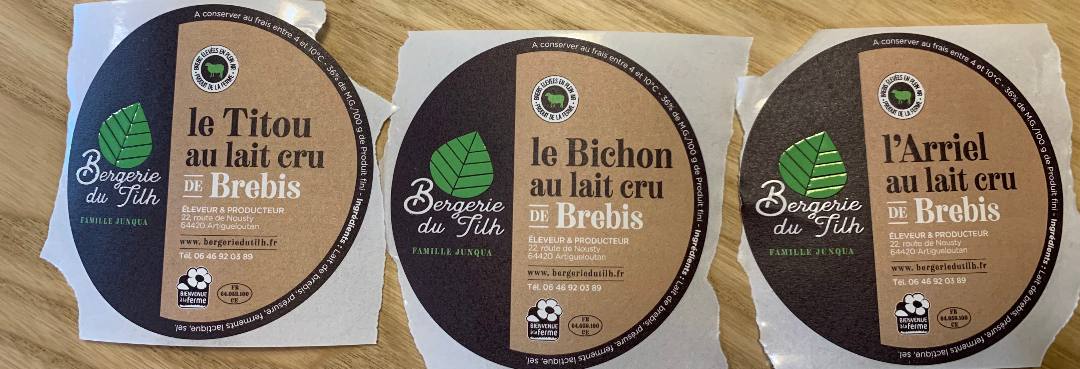
Foie gras “Espinasse caterer”

Country pâté “Espinasse caterer”

Melsat “Espinasse caterer”

Rabbit pâté “Espinasse caterer”

Jambonneau “Espinasse traiteur”

Foie gras “Espinasse caterer”

Country pâté “Espinasse caterer”

Melsat “Espinasse caterer”

Rabbit pâté “Espinasse caterer”

Jambonneau “Espinasse traiteur”
Posted in Clostridium, Clostridium perfringens, food contamination, food handler, Food Hazard, Food Hygiene, Food Inspections, Food Micro Blog, Food Microbiology, Food Microbiology Blog, Food Microbiology Testing, Food Pathogen, Food Poisoning, Food Quality, food recall, Food Safety, Food Safety Alert, Food Safety Management, Food Safety Regulations, Food Testing, Food Toxin

Product category
Food
Product subcategory
Meats
Product brand name
ORIENTAL KITCHEN
Model names or references
NEM CHUA and NEM CHUA La Tam Ruot
Product identification
GTIN Batch Date
3447574603003 300g fillet with expiry date: 01/24/2024 Use-by date 01/24/2024
3447574603102 300g fillet with expiry date: 01/24/2024 Use-by date 01/24/2024
3447574603003 300g fillet with expiry date: 01/28/2024 Use-by date 01/28/2024
3447574603102 300g fillet with expiry date: 01/28/2024 Use-by date 01/28/2024
Packaging
Net of 10 units (300g)
Start/end date of marketing
From 01/04/2024 to 01/11/2024
Storage temperature
Product to be stored at room temperature
Health mark
FR 94.022.001 CE
Geographical sales area
Whole France
Distributors
Asian supermarkets and grocery stores
Posted in food contamination, food handler, Food Hazard, Food Hygiene, Food Inspections, Food Micro Blog, Food Microbiology, Food Microbiology Blog, Food Microbiology Testing, Food Pathogen, Food Quality, food recall, Food Safety, Food Safety Alert, Food Safety Management, Food Safety Regulations, Food Testing, Listeria, Listeria France, Listeria monocytogenes, Staphylococcal Toxin, Staphylococcus aureus
The microbial diversity of rose jam was analyzed by high-throughput sequencing, along with functional prediction of the bacterial community. The results indicate that Pseudomonas, Pantoea, and Burkholderia emerged were the top three dominant bacterial groups. Proteobacteria was particularly abundant in R4 (99.1%) and R6 (96.12%).
The microbial diversity of rose jam was analyzed by high-throughput sequencing, along with functional prediction of the bacterial community. The results indicate that Pseudomonas, Pantoea, and Burkholderia emerged were the top three dominant bacterial groups. Proteobacteria was particularly abundant in R4 (99.1%) and R6 (96.12%). Zygosaccharomyces, unclassified fungi, and Botrytis constituted the top three fungal groups. The presence of unclassified OTUs was observed in all samples, particularly in R6 (52.36%), R8 (45.28), and R9 samples (39.57%). Gene prediction using PICRUSt revealed the existence of multiple KEGG functional modules associated with human metabolism in each rose jam sample. The presence of a high abundance of functional genes indicated the microbial community’s diverse wide range of microgenetic resources that can be further explored for research purposes. The microbial community found in rose jam exhibits remarkable diversity and encompasses valuable functional information relevant to human health.
, unclassified fungi, and Botrytis constituted the top three fungal groups. The presence of unclassified OTUs was observed in all samples, particularly in R6 (52.36%), R8 (45.28), and R9 samples (39.57%). Gene prediction using PICRUSt revealed the existence of multiple KEGG functional modules associated with human metabolism in each rose jam sample. The presence of a high abundance of functional genes indicated the microbial community’s diverse wide range of microgenetic resources that can be further explored for research purposes. The microbial community found in rose jam exhibits remarkable diversity and encompasses valuable functional information relevant to human health.
Posted in Burkholderia, Burkholderia cepacia, Food Microbiology Research, Pantoea, Pseudomonas, Research
Tagged Zygosaccharomyces
| Date Posted |
Ref | Pathogen or Cause of Illness |
Product(s) Linked to Illnesses (if any) |
Total Case Count |
Status |
| 1/24/
2024 |
1214 | Listeria monocytogenes |
Not Yet Identified |
26 | Active |
| 12/6/
2023 |
1205 | Listeria monocytogenes |
Not Yet Identified |
3 | Active |
| 11/15/
2023 |
989 | Listeria monocytogenes |
Peaches, Plums, and Nectarines |
See Advisory |
Active |
| 11/8/
2023 |
1198 | Elevated Lead Levels |
Apple Cinnamon Puree |
See Advisory |
Active |
An estimated 1,600 people in the U.S. contract a serious infection from Listeria bacteria in food each year, and of those individuals, about 260 people die, according to the Centers for Disease Control and Prevention. Penn State researchers may now better understand how the bacteria, called Listeria monocytogenes, survive and persist in fruit-packing plants by evading and surviving sanitizers.
According to their study, which is now available online and will be published in the June issue of the journal Biofilm, biofilms—containing otherwise harmless microorganisms that attach to each other and the food surface—result in a kind of shield that surrounds and protects the Listeria. The findings may result in changes to sanitation protocols in food-processing facilities that promise to diminish contamination of food with Listeria, the researchers said.

Mold colonies were present on the surface of the food in all the inspected packages. Food is not considered safe if it shows signs of spoilage.
Unsuitable storage temperatures for this food were not detected during the inspection.
| Batch: | L23 326-11 |
| Expiration date: | 21/12/2023 and 22/12/2023 |
| Packaging: | foam polystyrene tray and food foil |
| Quantity of the product in the package: | 0.296 kg |
| Date of sample collection: | 20/12/2023 |
| Reference number: | 24-000033-SZPI-CZ |
Posted in food contamination, food handler, Food Hazard, Food Hygiene, Food Inspections, Food Micro Blog, Food Microbiology, Food Microbiology Blog, Food Microbiology Testing, Food Quality, food recall, Food Safety, Food Spoilage, Food Testing, Mold/ MouldAscospores, Mould/Mold, Moulds, Visible Mould/Mold
FOR IMMEDIATE RELEASE – January 24, 2024 – Warren, NJ, Haleon is voluntarily recalling eight lots of Robitussin Honey CF Max Day Adult and Robitussin Honey CF Max Night time Adult to the consumer level. The product is being recalled due to microbial contamination.
In immunocompromised individuals, the use of the affected product could potentially result in severe or life-threatening adverse events such as fungemia or disseminated fungal infection. In non-immunocompromised consumers, the population most likely to use the product, life-threatening infections are not likely to occur. However, the occurrence of an infection that may necessitate medical intervention cannot be completely ruled out.
To date, Haleon has not received any reports of adverse events related to this recall.
Robitussin Honey CF Max Day and Nighttime are cough syrups indicated for the temporary relief of symptoms occurring with cold or flu, hay fever, or other respiratory allergies. This recall covers only the following lots:
| Product | Lot Number | Expiry Date |
|---|---|---|
| ROBITUSSIN HONEY CF MAX DAY ADULT 4OZ |
T10810 | 31OCT2025 |
| ROBITUSSIN HONEY CF MAX DAY ADULT 8OZ |
T08730 T08731 T08732 T08733 T10808 |
31MAY2025 31MAY2025 31MAY2025 31MAY2025 30SEP2025 |
| ROBITUSSIN HONEY CF MAX NT ADULT 8OZ |
T08740 T08742 | 30JUN2026 30JUN2026 |
Haleon is notifying its distributors and customers directly and has provided them with instructions for the return of all recalled products. Consumers that have purchased the product listed should stop consumption immediately. Please call our Consumer Relations team at +1-800-245-1040 (Monday through Friday 8 AM to 6 PM Eastern Time) or reach out via email to mystory.us@haleon.com.
Consumers should contact their physician or healthcare provider if they have experienced any problems that may be related to taking or using this product.
Posted in FDA, food contamination, food handler, Food Hazard, Food Hygiene, Food Inspections, Food Micro Blog, Food Microbiology, Food Microbiology Blog, Food Microbiology Testing, Food Quality, food recall, Food Safety, Food Safety Alert, Food Safety Management, Food Safety Regulations, fungi, microbial contamination, Microbial growth, Microbial Spoilage, Mold/ MouldAscospores, Mould Toxin, Mould/Mold, Moulds, product recall, Recall
Pathogen genomics is an important tool in our mission to prepare for and respond to infectious disease threats as well as food safety.
Our new 5-year Pathogen Genomics Strategy will establish a unified programme to enhance and expand our excellence in this field. Using pathogen genomics, we will increase our understanding of infectious disease risks, and enable effective evaluation of interventions to mitigate them.
In this blog post at the above link, we will explore the role of pathogen genomics in UK biosecurity and how we are developing our genomic systems to better protect public health in the UK.
Posted in Biofilm, Food Microbiology Research, Research, STEC, STEC E.coli
Highlights
Y. enterocolitica was isolated from chicken (74%), pork (80%), salmon (80%) and leafy green (10%) samples
Up to five Y. enterocolitica sequence types (STs) were isolated from the same food sample
Isolates from the same sample and ST differed by 0-74 single nucleotide polymorphisms (SNPs)
Almost all (99%) food Y. enterocolitica isolates were biotype 1A
Around half (51%) of food samples contained an ST previously isolated from UK human sources.
Yersinia enterocolitica is an underreported cause of foodborne gastroenteritis. Little is known of the diversity of Y. enterocolitica isolated from food and which food commodities contribute to human disease. In this study, Y. enterocolitica was isolated from 37/50 raw chicken, 8/10 pork, 8/10 salmon and 1/10 leafy green samples collected at retail in the UK. Up to 10 presumptive Y. enterocolitica isolates per positive sample underwent whole genome sequencing (WGS) and were compared with publicly available genomes. In total, 207 Y. enterocolitica isolates were analyzed and belonged to 38 sequence types (STs). Up to five STs of Y. enterocolitica were isolated from individual food samples and isolates belonging to the same sample and ST differed by 0–74 single nucleotide polymorphisms (SNPs). Biotype was predicted for 205 (99 %) genomes that all belonged to biotype 1A, previously described as non-pathogenic. However, around half (51 %) of food samples contained isolates belonging to the same ST as previously isolated from UK human cases. The closest human-derived isolates shared between 17 and 7978 single nucleotide polymorphisms (SNPs) with the food isolates. Extensive food surveillance is required to determine what food sources are responsible for Y. enterocolitica infections and to re-examine the role of biotype 1A as a human pathogen.