USA – After U.S. recall, firm initiates nationwide Canadian recall of cat food because of Salmonella concerns

Food Safety News

Natural Balance Pet Foods Inc. is recalling certain cat food products in Canada because of possible Salmonella contamination, which can be dangerous to pets and people who handle the food.

The company reported that 378 units of the affected product were sold in Canada from February to April 2021.

As of June 2, the company had not received any reports of illness, complaints or injuries in Canada.

The products are the same that were recalled in the United States in May.

In the U.S. the issue was found by the Minnesota Department of Agriculture during a routine state surveillance sample.

UK – UK patient count in Salmonella melon outbreak doubles.

Food Safety News

The number of people sick in the United Kingdom in an outbreak linked to melons has almost doubled.

The Food Standards Agency (FSA) and Public Health England (PHE) are investigating the incident with 99 people sick since April. It was previously known that 52 people were ill in the UK.

Those more than 70 and less than 9 years old are the age groups mostly affected. Investigations are focusing on the supply chain of galia, cantaloupe and honeydew melons from Honduras and Costa Rica.

FSA is working with trade associations and retail businesses to get information relevant to the outbreak. A quick rise in confirmed infections occurred in the week commencing May 24.

Research – Prevalence of Listeria species and Listeria monocytogenes on Raw Produce Arriving at Frozen Food Manufacturing Facilities

Journal of Food Protection

Ubiquity of Listeria monocytogenes in the environment impacts the food industry and presents concerns for frozen food facilities. This study determined the prevalence and numbers of Listeria species and L. monocytogenes on raw produce arriving at frozen food facilities. Raw produce was collected using multi-level blinding protocols to ensure anonymity of participants and avoid traceback. Five raw vegetables were selected: corn, carrots, green beans, peas, and spinach. Raw products were collected after arrival at the facilities but before any cleaning or other pre-processing steps that are typically performed inside the facility. The FDA BAM method for detection of Listeria spp. and L. monocytogenes was followed, with PCR screening followed by selective plating methods. Listeria numbers were estimated from positive samples using MPN methodology. A total of 290 samples were collected, with 96 and 17 samples positive for Listeria spp. (33.1%) and L. monocytogenes (5.9%), respectively. Enumeration data for the 96 Listeria spp. samples indicated 82 samples had greater than 100 MPN Listeria spp./g and 14 samples less than 100 MPN Listeria spp./g. The prevalence of Listeria spp. varied by commodity: spinach (66.7%), peas (50%), corn (32.2%), green beans (22.2%), and carrots (13%). L. monocytogenes prevalence was determined in corn (13.6%), peas (6.3%), and green beans (4.2%) arriving at processing facilities. Such data was previously unavailable to frozen vegetable processors and is valuable in implementing process control standards. The prevalence and pathogen concentration data from raw commodities found in this study can provide the industry information to conduct more accurate quantitative risk assessments and provide a baseline to model and target appropriate pathogen reduction steps during processing.

New Zealand – Real Milk Timaru brand raw (unpasteurised) drinking milk – Listeria monocytogenes

MPI

Product identification
Product type Raw (unpasteurised) drinking milk
Name of product (size) Real Milk Timaru brand raw (unpasteurised) drinking milk (1L)
Date marking Use by date: 17/06/21, 18/06/21 and 19/06/21
Batch marking Purchased on and between 13 and 15 June 2021.

Lot numbers: 210613, 210614 and 210615

Package size and description The product is sold in a 1L glass bottle.
Distribution The product was sold via a vending machine at 22 Fairview Road, Timaru. The product was also available via home deliveries in the South Canterbury area and online at:

The product has not been exported.

Notes This recall does not affect any other batches of Real Milk Timaru brand raw (unpasteurised) drinking milk.

Consumer advice

Customers are asked to check the lot number, use by date written on the product and date of purchase.

If you have purchased any of the affected product listed on this notice, do not consume it. Customers should return the product to Real Milk Timaru for a full refund. Alternatively, consume after heating to 70°C and holding at this temperature for one minute. If you don’t have a thermometer, heat the milk until it nearly reaches a boil (or scald the milk) before drinking it.

There have been no reports of associated illness in New Zealand. If you have consumed any of this product and have any concerns about your health, seek medical advice.

MPI’s advice on how to reduce the risk of illness if you drink raw unpasteurised milk

More information on Listeria

Who to contact

If you have questions, contact Real Milk Timaru:

  • Phone: ​027 221 4552
  • Address: 22 Fairview Road, Timaru.

Belgium – “Seafood” brand 150g Zeelandia’s garnalen – Listeria monocytogenes

AFSCA

Recall Levenstond NV Seafood
Product: “Seafood” brand 150g Zeelandia’s garnalen.
Problem: possible presence of Listeria monocytogenes.


In consultation with the AFSCA Levenstond Seafood NV has decided to withdraw the Seafood (150g) of the brand “Zeelandia’s garnalen” from the sale.

This following a press release from the supplier of this product, in which he informed us of the possible presence of Listeria monocytogenes.

This product is being withdrawn from sale and is being recalled from consumers.

Levenstond Seafood NV asks consumers not to use the product and to return it to the point of sale.

Product description:

Name: Zeevruchtenmix, Fruits de Mer, Meeresfrüchte Lot
numbers – expiry dates (
BBD ): lot 260521 –
06/16/2021
lot 010621 – 06/22/2021 lot 040621 – 06/25/2021
Weight: 150 g

This product has been distributed by the following points of sale in Belgium:

De Vis Factorij Riemst – Allewijstraat 1, 3770 Riemst
Agora Culinair Seafood – Atealaan 21, 2200 Herentals
Carrefour market Diepenbeek – Wijkstraat 37, 3590 Diepenbeek
Carrefour market Houthalen – Weg naar Zwartberg 75 , 3530 Houthalen-Helchteren
Carrefour market Terbiest – Hasseltsesteenweg 39, 3800 Sint-Truiden

For more information , you can contact the contact point of Levenstond Seafood NV (012 / 42.01.10, marieke@levenstondseafood.be ).

USA – Yogurt E. coli Outbreak: What is a Secondary Food Poisoning Infection?

Food Poisoning Bulletin

In the Pure Eire yogurt E. coli outbreak that has sickened at least 16 people in Washington and Arizona, some of the patients have contracted secondary food poisoning infections. This term may not be familiar to everyone. So what is this type of infection?

A secondary food poisoning infection occurs when someone gets sick from contact with another person, not by eating contaminated food or drinking contaminated water. Many pathogens can be spread person-to-person, by direct contact and common contact with fomites (surfaces), both through the fecal-oral route.

Ireland – Boil water notice issued for Clare Island public water supply

Con-telegraph

crypto

FOLLOWING advice from the Health Service Executive, Irish Water and Mayo County Council have issued a boil water notice for the area supplied by the Clare Island public water supply to protect approximately 165 people following a recent drinking water quality test.

The notice has been put in place due to the detection of cryptosporidium in the Clare Island public water supply.

Cryptosporidium is a tiny parasite found in human and animal waste. If it is swallowed (ingested), it can cause a disease called cryptosporidiosis. The symptoms of cryptosporidiosis include fever, stomach upset, weight loss and diarrhoea.

Cryptosporidium may be found in water if it has been contaminated or if there has been a problem with water treatment.

France – Product recall: LE PERE CHAMPAIN brand traditional ham with rind

Oulah

ENCOUNTERED PROBLEM

Presence of Listeria monocytogenes

PROPOSED SOLUTION

People who may have this product are asked not to consume it and to return it to the point of sale where it was purchased.

People who have consumed this product and who present with fever, isolated or accompanied by headaches, are invited to consult their attending physician, notifying him of this consumption.
Pregnant women should pay special attention to these symptoms, as well as immunocompromised people and the elderly. These symptoms may suggest listeriosis, a disease that can be serious and can take up to eight weeks to incubate.

FURTHER INFORMATION

▸ Model names or references
Traditional ham with LE PERE CHAMPAIN brand rind cut in the charcuterie department


▸ Barcode
2135821088055


▸ Lot
21122


▸ DLC – DDM
07/15/2021


▸ Packaging
WHOLE HAM – 8.8 KG


▸ Start date / End of marketing
From 06/05/2021 to 06/10/2021


▸ Health mark
FR 37.276.031.CE


▸
Château Renault geographic sales area , 37110


▸
Intermarché Château-Renault distributors


▸ Consumer service contact
0247568718


▸ Source
SOCOCHARE INTERMARCHE

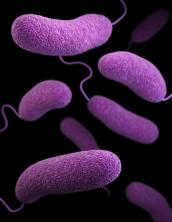
USA – Florida reports four Vibrio deaths year-to-date

Outbreak News Today

Food Illness

Through June 18, Florida state health officials have reported ten Vibrio vulnificus infections, including four deaths, according to the latest data update.

Cases were reported in Escambia (2), Lee (2), Santa Rosa (2), Hernando, Hillsborough, Manatee and Polk counties and death were recorded in Escambia, Lee, Manatee and Polk counties.

Last year, the Florida Department of Health recorded 36 Vibrio vulnificus cases and seven deaths.

Vibrio vulnificus can cause disease in those who eat contaminated seafood or have an open wound that is exposed to warm seawater containing the bacteria. Ingestion of Vibrio vulnificus can cause vomiting, diarrhea and abdominal pain. Vibrio vulnificus can also cause an infection of the skin when open wounds are exposed to warm seawater; these infections may lead to skin breakdown and ulcers.

Germany – Schärdinger roast and grill cheese, natural – Listeria monocytogenes

LMW

Warning type: Food
Date of first publication: 06/18/2021
Product name:

Schärdinger roast and grill cheese, natural,

Product pictures:

 Berglandmilch eGen
Manufacturer (distributor):

Berglandmilch eGen

Reason for warning: Listeria
Packaging Unit: 150g
Durability: 08/02/2021
Lot identification: 115890
Additional Information:

Reference is made to the following link from the  Austrian Agency for Health and Food Safety (AGES).

https://www.ages.at/produktwarnung/produktwarnung/schaerdinger-brat-und-grillkaese-natur-150g/

Contact to the responsible authorities:

Bavaria: poststelle@lgl.bayern.de