USA – Schoonover Farms recalls Raw Milk over E. coli concerns

Food Poison Journal

According to the Columbia Basin Herald, Odessa’s Schoonover Farms LLC on Thursday voluntarily recalled raw whole milk and cream because it might be contaminated with E. coli (Escherichia coli bacteria), according to a release from the company.

No known illnesses caused by E. coli were associated with the product as of Thursday, but routine sampling by the Washington State Department of Agriculture showed the presence of toxin-producing E. coli in retail raw cream dated Dec. 23.

So retail raw whole milk and cream with best by dates of Dec. 23 through Jan. 2 (“12-23” through “1-2”) were recalled. The product is in 8-ounce, quart, half-gallon and 1-gallon bottle containers and sold to consumers in Odessa and stores in the Spokane area.

USA- Raw Pet Food Recalled due to Salmonella

Food Poison Journal

Woody’s Pet Food Deli of Minneapolis, MN is recalling Raw Cornish Hen pet food “With Supplements” sticker due to a Salmonella health risk.

The product was distributed in the company’s retail stores in Minneapolis, Saint Paul, and Woodbury, Minnesota.

Salmonella can affect animals eating the product and there is risk to humans from handling contaminated products, especially if they have not thoroughly washed their hands after having contact with the products or any surfaces exposed to these products.

Belgium – Oysters hollow Britain N3 12P – Norovirus

AFSCA

reminder Aquamossel Triton
Product: Oysters hollow Britain N3 12P.
Problem: possible presence of Norovirus
As a precautionary measure, Aquamossel Triton recalls hollow oysters from Brittany. During a control, the presence of Norovirus was demonstrated.

The recall covers:

Product Nature: HOLLOW OYSTERS BRITTANY N3 12P
EAN: 8717931210607
Date conditioning: 12/13/2021
Use by date: 25.12.2021

These products have been sold in Intermarché stores between December 15 and December 23.

People who hold these products are asked not to consume them and to return them to the point of sale where they will be reimbursed.
People who have consumed the “oysters of Brittany” mentioned above and who present symptoms of gastroenteritis (vomiting, diarrhea frequently accompanied by a moderate fever), are invited to consult their doctor, notifying him of this consumption. .
Immunocompromised people should pay particular attention to these symptoms, which may suggest an infection with a virus (Norovirus), responsible for gastroenteritis, the incubation period of which can be up to 48 hours.

For more information , customers can contact itmai_be_recall@mousquetaires.com

We apologize for the inconvenience,
The Management

Belgium – Small jar of cream dessert “Swiss cherry” brand Crelem Bakeries – Listeria monocytogenes

AFSCA

Crelem Recall Bakeries
Product: Small jar of cream dessert “Swiss cherry” brand Crelem Bakeries.
Problem: possible presence of Listeria monocytogenes.

In consultation with the FASFC, Crelem Bakeries is withdrawing
the Crelem Bakeries brand “cherry Swiss” dessert cream jar from sale and is reminding consumers of it because of the possible presence of Listeria monocytogenes.

Crelem Bakeries asks its customers not to consume this product and to bring it back to the point of sale.

Product Description

Product name: Swiss cream
verrine with cherries Brand: Crelem Bakeries Best before
date (BBD): from 12/23/21 to 12/29/21 inclusive
Sales period: from 12/16/21 to 12/22/21 inclusive
Packaging type: Plastic
jar Weight: 100 g

The product was sold through several supermarkets and retail stores.

For more information , please contact:

Crelem Bakeries Quality Service

E-mail: Quality@crelembakeries.be

Research – Understanding and predicting food safety risks posed by wild birds

Centre For Produce Safety

Summary

Click to access SHARIAT_%20FINAL.pdf

Co-existence of fresh produce with animal agriculture has come under increased scrutiny, given multiple recent outbreaks where pathogen strains on produce have been linked to livestock. An important consideration in this co-existence is understanding how pathogens are vectored from animals and their environments to fresh produce. This proposal centers on understanding the risks posed by wild birds and how their fecal pathogen content is influenced by nearby animal agriculture. Previous studies examining wild birds have been focused in the western US, where ‘cattle is king’ in terms of animal agriculture. The southeast has a $4 billion fresh produce and nut industry and, while also having beef and dairy cattle, in this region, ‘poultry is king.’ Campylobacter and Salmonella are the top bacterial causes of foodborne illness in the US, are frequently isolated from food animals, and have been linked to outbreaks in fresh produce. This study will examine the role of poultry and cattle in influencing the pathogens deposited onto fresh produce by wild birds. Mapping and modeling technologies will be implemented to develop risk profiles resulting from links between integrated/proximal animal agriculture and wild bird feces containing viable pathogens that are deposited on produce foliage. High-resolution molecular tools will be used to generate pathogen population profiles and, alongside genomic analyses, will be used to attribute pathogen source to zoonotic reservoirs associated with animal agriculture.

Technical Abstract

There is abundant evidence that wildlife often carries potential foodborne pathogenic bacteria. Indeed, wildlife sources have been associated with several outbreaks, leading to calls to remove natural habitats from farms to discourage wildlife visits. Thus, it was surprising that a recent study found that the likelihood of produce contamination actually increased, rather than decreased, in leafy greens fields where natural habitats had been removed (31). Consistent with this, we found that wild bird feces collected from broccoli were more likely to carry Campylobacter when those fields were surrounded by intensified livestock and crop production, rather than more-natural habitats (52). Pathogens were associated with invasive starlings and house sparrows, known to frequent feedlots and other high-density livestock areas, but also with many native birds (e.g., American robins) that also are associated with pastures and cropping fields. Altogether, work to-date suggests three interacting links between wild bird-associated food safety problems: (i) intensive livestock production that provides a pathogen reservoir, (ii) heavily farmed landscapes that support large numbers of invasive birds, and (iii) simple on-farm habitats that draw livestock-associated birds to a particular field. However, thus far these links have been drawn from circumstantial, rather than direct, evidence of pathogen movement. This limits the ability of fresh produce growers to definitively assess food safety risks associated based on local and regional land-use patterns, or to manipulate on-farm habitats to mediate these risks.

Fortunately, recent advances in pathogen tracking, using fine-scale genetic differences in pathogen genomes, is providing a means to directly separate different animal agriculture, wildlife, and environmental pathogen sources. For example, Salmonella Typhimurium isolates have been attributed to different zoonotic sources based on their genome sequences (59). PI Shariat has been a leader in using next-generation sequencing approaches to assess pathogen populations, having developed CRISPR-SeroSeq as a tool to produce high-resolution population profiles of Salmonella serotypes. Here, we propose to definitively establish links between livestock/poultry pathogen reservoirs and pathogens in bird feces on produce foliage growing in the field. We will also examine how likely pathogens in bird feces are to move from deposition points to surrounding produce and plants. We propose two primary research objectives focusing on bird fecal samples collected directly from the fields of our cooperating growers: In Obj. 1 we will assess the risk posed by wild bird feces on fresh produce plants and the influence of proximal animal agriculture on pathogen presence in wild bird feces. In Obj. 2, we will determine the diversity, not just the dominant species or serotype, of Campylobacter and Salmonella in bird feces and perform fine-scale tracking and source attribution using whole genome sequencing. Both of these research objectives will be directly paired with outreach products/strategies that move our findings directly to the hands of growers, processors, and others in the industry that critically need this information. Altogether, we seek to provide produce growers with the science-based knowledge and tools to assess the risk that wild birds pose to food safety on their farms, based on farm-specific local and landscape farming practices.

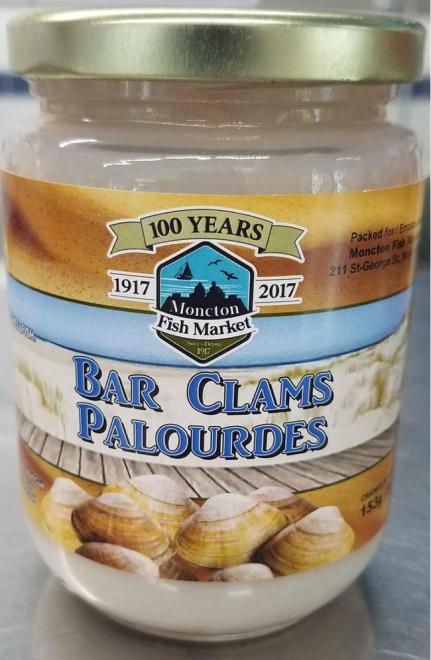
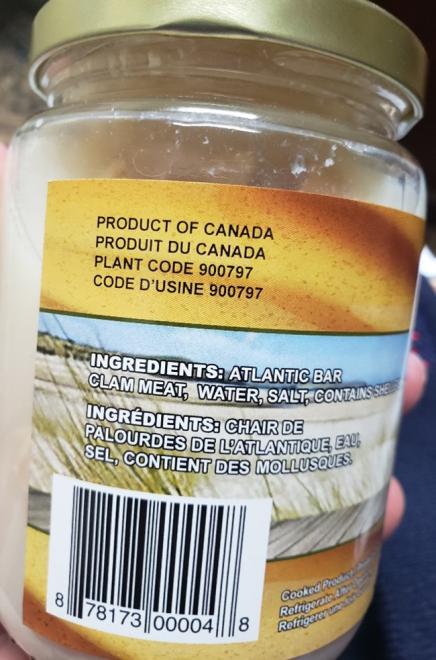
Canada – Moncton Fish Market brand Bar Clams recalled due to potential presence of dangerous bacteria – Clostridium botulinum

CFIA

Moncton Fish Market - Bar Clams: 153 g

Moncton Fish Market - Bar Clams: 153 g

Product
Bar Clams
Issue
Food » Microbial Contamination » Clostridium botulinum
What to do

Do not consume the recalled product

Affected products

Brand Product Size UPC Codes
Moncton Fish Market Bar Clams 153 g 8 78173 00004 8 All jars that were sold unrefrigerated

Issue

Moncton Fish Market Ltd. is recalling Moncton Fish Market brand Bar Clams that have been sold unrefrigerated from the marketplace because the product may permit the growth of Clostridium botulinum.

The recalled product has been sold at Moncton Fish Market, Moncton, New Brunswick.

What you should do

  • If you think you became sick from consuming a recalled product, call your doctor
  • Check to see if you have the recalled product in your home
  • Do not consume the recalled product
  • Recalled products should be thrown out or returned to the location where they were purchased

Food contaminated with Clostridium botulinum toxin may not look or smell spoiled but can still make you sick. Symptoms in adults can include facial paralysis or loss of facial expression, unreactive or fixed pupils, difficulty swallowing, drooping eyelids, blurred or double vision, difficulty speaking, including slurred speech, and a change in sound of voice, including hoarseness. Symptoms of foodborne botulism in children can include difficulty swallowing, slurred speech, generalized weakness and paralysis. In all cases, botulism does not cause a fever. In severe cases of illness, people may die.

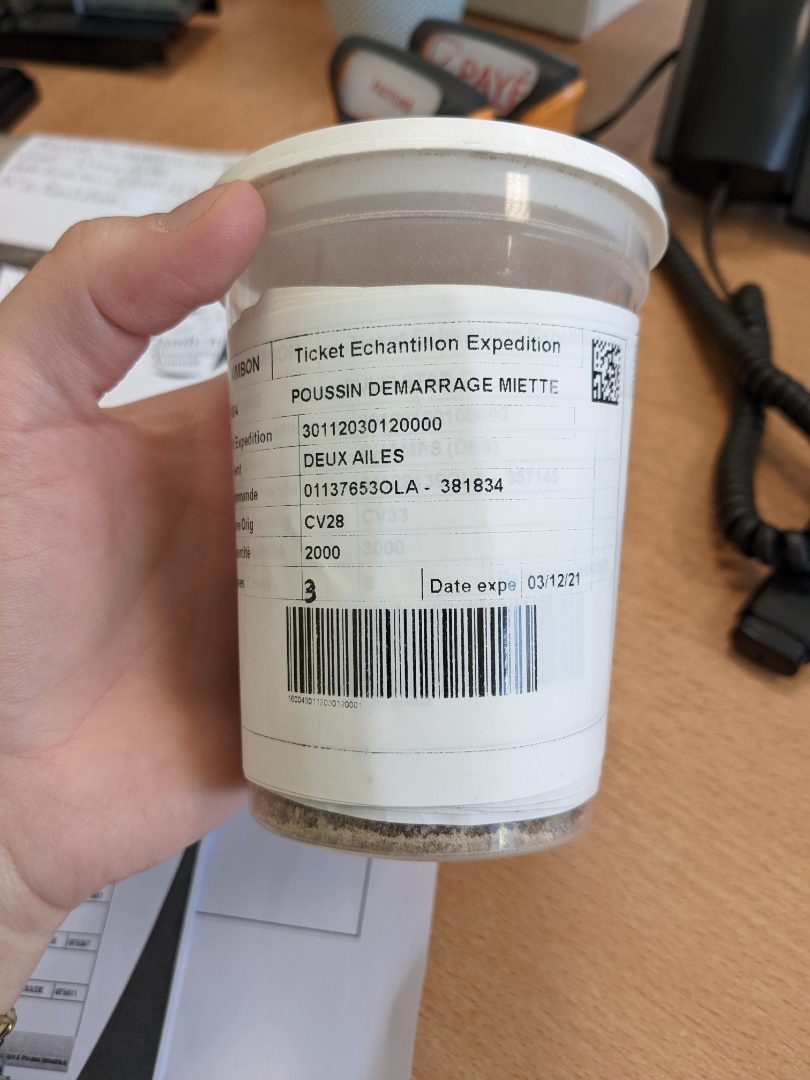
France – Poussin démarrage miette -Salmonella

Gov france

Identifying information for the recalled product

  • Product category Food
  • Product sub-category Food for farm animals
  • Product brand name Unbranded
  • Names of models or references Crumb boot chick
  • Product identification
    Lot Date
    301110501100

    /301111201100

    /301120201500/

    301121001000

    Recommended

    consumption date 06/01/2022

  • Products List affected_customers.pdf Attachment
  • Packaging Bulk 2 or 3 Tons
  • Start date / End of marketing From 03/11/2021 to 12/10/2021
  • Storage temperature Product to be stored at room temperature
  • Geographical sales area Whole France
  • Distributors poultry farmers

Practical information regarding the recall

  • Reason for recall Detection of a Salmonella Typhimurium on a raw material (standard soybean meal) composing the food likely to be contaminated
  • Risks incurred by the consumer Salmonella spp (causative agent of salmonellosis)

Italy – Sausage – Salmonella

Salute

Brand : Salumificio Bonalumi srl

Name : Sausage

Reason for reporting : Recall due to microbiological risk

Publication date : 24 December 2021

Click to access C_17_PubblicazioneRichiami_1619_azione_itemAzione0_files_itemFiles0_fileAzione.pdf

France – 160g superior knacks – Listeria monocytogenes

Gov france

Identifying information for the recalled product

  • Product category Food
  • Product sub-category Meats
  • Product brand name PIERRAT CHARCUTERIE
  • Names of models or references160g superior knacks
  • Product identification
    Lot Dated
    493 Use-by date 12/30/2021
  • Packaging160 g tray
  • Start date / End of marketing From 12/16/2021 to 12/23/2021
  • Storage temperature Product to be stored in the refrigerator
  • Health mark FR 88.470.033 CE
  • Geographical sales area Whole France
  • Distributors Fresh Stores and Savoyard Market (St Alban)

Practical information regarding the recall

  • Reason for recallDetection of Listeria monocytogenes
  • Risks incurred by the consumerListeria monocytogenes (causative agent of listeriosis)

Germany – Smoked gourmet goose breast – Salmonella

LMW

Goose Breast.jpg

Warning type:

Food

Date of first publication:

December 23, 2021

Product name:

Smoked gourmet goose breast – top quality

Product pictures:

Manufacturer

Manufacturer (distributor):

Klaas + Pitsch Fleisch- & Wurstwaren GmbH Industriestr. 51 57258 Freudenberg Sales via real and Metro

Reason for warning:

In the course of a self-monitoring test, Salmonella spp. positive / 25g detected.

Packaging Unit:

60 g, cut

Durability:

Best before date 05/01/2022 and 13/01/2022

Lot marking:

Lots L439 and L540

Further information:

For further information, please refer to the attached press release / the attached recall letter.