Germany – “Tahina” (sesame) – Salmonella

LMW

Alert type: Food
Date of first publication: 07/21/2022
Product name:

“Tahina” (sesame)

Product images:

Unnamed.PNG

customer information

Manufacturer (distributor):

Importer: E-Wah UG Robert-Bosch-Str. 19 71701 Schwieberdingen Manufacturer: AlBurj, Syria

Reason for warning:

Salmonella was found in the product with a pack size of 800 g.

Packaging Unit: 400g and 800g
Durability: MHD: 01/2023
Lot identification: Batch/lot number P: 09/2021
Further information:

Reference is made to the company’s attached customer information.

Click to access E-Wah+Pressemitteilung.pdf

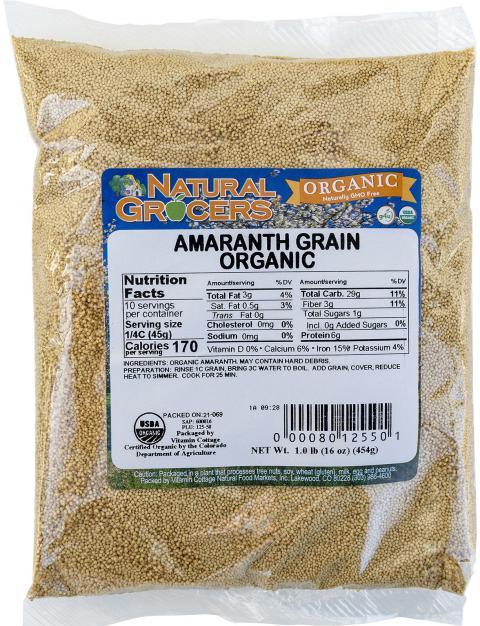
USA – Natural Grocers® Issues Voluntary Recall on Organic Amaranth Grain Due to Potential Presence of Salmonella

FDA

“Natural Grocers, Organic Amaranth Grain, 1.0 lb.”

LAKEWOOD, Colo. (July 22, 2022) – Vitamin Cottage Natural Food Markets, Inc., a Lakewood, Colorado-based natural grocery retailer, is voluntarily recalling Natural Grocers® Brand 1-pound Organic Amaranth Grain due to potential Salmonella contamination. Salmonella is an organism which can cause serious and sometimes fatal infections in young children, frail or elderly people, and others with weakened immune systems. Healthy persons infected with Salmonella often experience fever, diarrhea, nausea, vomiting and abdominal pain.

This recall was initiated when the company received a notification by its supplier of the potential presence of Salmonella in specific lots of Organic Amaranth.  The company has received no reports of illness or injury to date.

The recalled product is packaged in clear plastic bags weighing 1-pound and bearing the “Natural Grocers” label. Only packages bearing the following pack dates are being recalled at this time: 22-102, 22-103, 22-130, and 22-194. The pack date can be found on the lower left-hand side of the label near the USDA Organic seal.

UPC Code

Description

Packed on Dates

000080125501 Organic Amaranth Grain 1 LB 22-102, 22-103, 22-130, and 22-194

The recalled product was distributed to Natural Grocers’ stores located in Arkansas, Arizona, Colorado, Iowa, Idaho, Kansas, Louisiana, Minnesota, Missouri, Montana, Nebraska, Nevada, New Mexico, North Dakota, Oklahoma, Oregon, Texas, Utah, Washington and Wyoming. Consumers can find the specific locations of Natural Grocers’ stores in those states at: https://www.naturalgrocers.com/store-directoryExternal Link Disclaimer.

Consumers who may have purchased this product are advised to discontinue use immediately and discard or return the product for credit or refund. If a consumer experiences the symptoms listed above and believes they may have been exposed to Salmonella, they are urged to report to a medical provider.

  • Consumers who have questions may contact the company by calling Customer Service at 303-986-4600, ext. 80801, Monday through Friday 8:00 a.m. to 5:00 p.m. (MST).
  • Media Contact: Katie Macarelli / kmacarelli@naturalgrocers.com.

Company Contact Information

Consumers:
Customer Service
 303-986-4600, ext. 80801
Media:
Katie Macarelli
 kmacarelli@naturalgrocers.com

France- GROUND BEEF STEAK – Auchan super Perray Yvelines store -Salmonella

Gov france

Identification information of the recalled product

  • Product category Feed
  • Product subcategory Meats
  • Product brand name/
  • Model names or references GROUND STEAK SOLD IN THE TRADITIONAL BUTCHER DEPARTMENT (assisted sale) ON THE AUCHAN PERRAY YVELINES SUPERMARKET
  • Identification of products
    Batch
    GROUND STEAK sold at the butcher’s stand between 06/07/22 and 22/07/22
  • Products List Perray_ground_steak_reminder_poster.pdf Attachment
  • Packaging/
  • Marketing start/end date From 06/07/2022 to 22/07/2022
  • Storage temperature Product to be stored in the refrigerator
  • Health mark/
  • Further information/
  • Geographic area of ​​sale Auchan PERRAY supermarket store
  • Distributors Auchan supermarket PERRAY YVELINES

Practical information regarding the recall

  • Reason for recall Presence of Salmonella
  • Risks incurred by the consumer Salmonella spp (causative agent of salmonellosis)

France – Sea delight – Listeria monocytogenes

Gov france

Identification information of the recalled product

  • Product category Feed
  • Product subcategory Prepared meals and snacks
  • Product brand name UNBRANDED
  • Model names or references Sea delight
  • Identification of products
    GTIN Batch Date
    3261680714039 02219307 Use-by date 08/09/2022
    3261680714039 02219407 Use-by date 08/10/2022
  • Products List traça_pdf.pdf Attachment
  • Packaging2.2KG
  • Marketing start/end date From 07/13/2022 to 08/22/2022
  • Storage temperature Product to be stored in the refrigerator
  • Health mark YES
  • Geographic area of ​​sale Whole France
  • Distributors Pomona, Ste Ledelas, Ste nouvelle LKB Stains, Auribault, Maree 2m, Ste catering logistics, ITM Roullet, ITM Noyant food logistics, ITM bourges, ITM Louviers, ITM ST Die

Practical information regarding the recall

  • Reason for recall suspected listeria
  • Risks incurred by the consumer Listeria monocytogenes (causative agent of listeriosis)

News! – Man who ‘hasn’t stopped farting for five years’ sues food stall for €235k over ham roll -Salmonella

Irish Mirror

A dad who claims he hasn’t stopped farting since eating a ham sandwich five years ago is suing a food stall for €235,000.

He claims to have been bedridden for five weeks with salmonella as a result of eating the item.

The lawyers added that Mr Prades has had regular and uncontrollable flatulence ever since, embarrassing him in public and waking him up at night.

Research – From chicken to salad: Cooking salt as a potential vehicle of Salmonella spp. and Listeria monocytogenes cross-contamination

PubMed

Epidemiological studies show that improper food handling practices at home account for a significant portion of foodborne illness cases. Mishandling of raw meat during meal preparation is one of the most frequent hazardous behaviours reported in observational research studies that potentially contributes to illness occurrence, particularly through the transfer of microbial pathogens from the raw meat to ready-to-eat (RTE) foods. This study evaluated the transfer of two major foodborne pathogens, Salmonella enterica and Listeria monocytogenes, from artificially contaminated chicken meat to lettuce via cooking salt (used for seasoning) during simulated domestic handling practices. Pieces of chicken breast fillets were spiked with five different loads (from ca. 1 to 5 Log CFU/g) of a multi-strain cocktail of either S. enterica or L. monocytogenes. Hands of volunteers (gloved) contaminated by handling the chicken, stirred the cooking salt that was further used to season lettuce leaves. A total of 15 events of cross-contamination (three volunteers and five bacterial loads) were tested for each pathogen. Immediately after the events, S. enterica was isolated from all the cooking salt samples (n = 15) and from 12 samples of seasoned lettuce; whereas L. monocytogenes was isolated from 13 salt samples and from all the seasoned lettuce samples (n = 15). In addition, S. enterica and L. monocytogenes were able to survive in artificially contaminated salt (with a water activity of 0.49) for, at least, 146 days and 126 days, respectively. The ability of these foodborne pathogens to survive for a long time in cooking salt, make it a good vehicle for transmission and cross-contamination if consumers do not adopt good hygiene practices when preparing meals.

China – Mostly children sick in Chinese Salmonella egg outbreak – 2019

Food Safety News

A Salmonella outbreak that mainly sickened children in China was caused by contaminated kitchen-made mayonnaise used in egg sandwiches, according to a study.

In September 2019, the Shenzhen and Dongguan Centers for Disease Control and Prevention were notified of a large cluster of suspected gastroenteritis involving primarily children who sought medical care at hospitals in the two cities.

A total of 254 cases were reported in Shenzhen and Dongguan, Guangdong province, found the study published in the journal Frontiers in Microbiology.

Research – Public Health Risk of Foodborne Pathogens in Edible African Land Snails, Cameroon

CDC

In tropical countries, land snails are an important food source; however, foodborne disease risks are poorly quantified. We detected Campylobacter spp., Yersinia spp., Listeria spp., Salmonella spp., or Shiga-toxigenic Escherichia coli in 57%–86% of snails in Cameroon. Snail meat is a likely vector for enteric diseases in sub-Saharan Africa countries.

Research – A 3-year multi-food study of the presence and persistence of Listeria monocytogenes in 54 small food businesses in Ireland

Academia Edu

The problem of assessing the occurrence of the food-borne pathogen Listeria monocytogenes in the food chain, and therefore the risk of exposure of the human population, is often challenging because of the limited scope of some studies.

In this study the occurrence of L. monocytogenes in food from four major food groups, dairy products,
meats, seafood and vegetables, and associated food processing environments in Ireland was studied over a three-year period. Fifty-four small food businesses participated in the study and sent both food and environmental samples every 2 months between 2013 and 2015. L.monocytogenes was isolated using the ISO11290 standard method.

Confirmation of L. monocytogenes and identification of serogroups were achieved using a multiplex PCR
assay, and for some isolates serotype was determined using commercial antisera. Pulsed- field gel electrophoresis (PFGE) analysis was performed on all isolates allowing the relatedness of isolates from different food businesses
to be compared nationwide. In total, 86 distinct pulsotypes were identified. The overall occurrence of L.
monocytogenes in food samples was 4.2%, while in environmental samples it was 3.8%. In general, the occurrence of L. monocytogenes in food businesses decreased over the course of the study, presumably reflecting increased awareness and vigilance.

The majority of the pulsotypes detected were unique to a particular food group (63/
86), while only three pulsotypes were found in all four food groups investigated. The highest occurrence in food was found in the meat category (7.5%) while seafood had the lowest rate of occurrence (1.8%). Seventeen of the pulsotypes detected in the study were persistent, where persistence was defined as repeated isolation from a single facility with a minimum time interval of 6 months. Using PFGE, 11 of the pulsotypes identified in this study were indistinguishable from those of 11 clinical isolates obtained from patients in Ireland over the last 4 years, highlighting the fact that these pulsotypes are capable of causing disease.

Overall, the study shows the diversity of L. monocytogenes strains in the Irish food chain and highlights the ability of many of these strains to persist in food processing environments. The finding that a significant proportion of these pulsotypes are also found in clinical settings highlights the need for continued vigilance by food producers, including frequent sampling and typing of isolates detected.

Philippines – 1 dead, 15 hospitalized after alleged food poisoning in Tondo

Inquirer

MANILA, Philippines – A woman died while 15 others were rushed to a hospital following a suspected case of food poisoning in Tondo, Manila, the Manila Police District (MPD) reported , after reporting dizziness and vomiting hours after eating “mami” (noodle soup).