Category Archives: water microbiology

Ireland – E. coli found in 1 in 20 private water supplies, says EPA.

EPA

Key Findings for 2021

➤Compliance with drinking water standards in private supplies hasn’t improved in recent years. One in 20 supplies failed to meet the standard, compared to 1 in 200 for public water supplies.

➤Local authorities are not monitoring over a quarter of small private supplies for E. coli – and there may be many more supplies which need to be registered with the local authority.

➤Despite these shortcomings, over 60% of government funding available for infrastructural improvements went unused by water suppliers.

➤The timely completion of the Government review of rural water services will provide direction and support to water suppliers to address risks to public health.

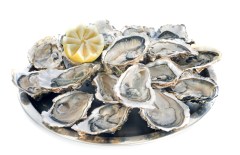
Research – Bacterial microbiota profile in gills of modified atmosphere-packaged oysters stored at 4 °C

Science Direct

french oysters

Abstract

As filter-feeding bivalves, oysters can accumulate microorganisms into their gills, causing spoilage and potential safety issues. This study aims to investigate the changes in the gill microbiota of oysters packed under air and modified atmospheres (MAs, 50% CO2: 50% N2, 70% CO2: 30% O2, and 50% CO2: 50% O2) during storage at 4 °C. The diversity of bacterial microbiota in oyster gills was profiled through polymerase chain reaction-denaturing gradient gel electrophoresis (PCR-DGGE) analysis on the 16S rRNA gene V3 region to describe the variation during the entire storage period. The DGGE profile revealed high bacterial diversity in the air- and MA-packaged oyster gills, and the spoilage bacterial microbiota varied in the MA-packaged oyster gills. Results indicated that CO2:O2 (70%:30%) was suitable for oyster MA packaging and that high bacterial loads in oyster gills need to be considered during storage. In addition, Lactobacillus and Lactococcus species were found to grow dominantly in fresh oyster gills under MA packaging, which supports the potential application of MA packaging for oyster storage.

Sweden – At least 100 ill in Swedish Cryptosporidium salad outbreak

Food Safety News

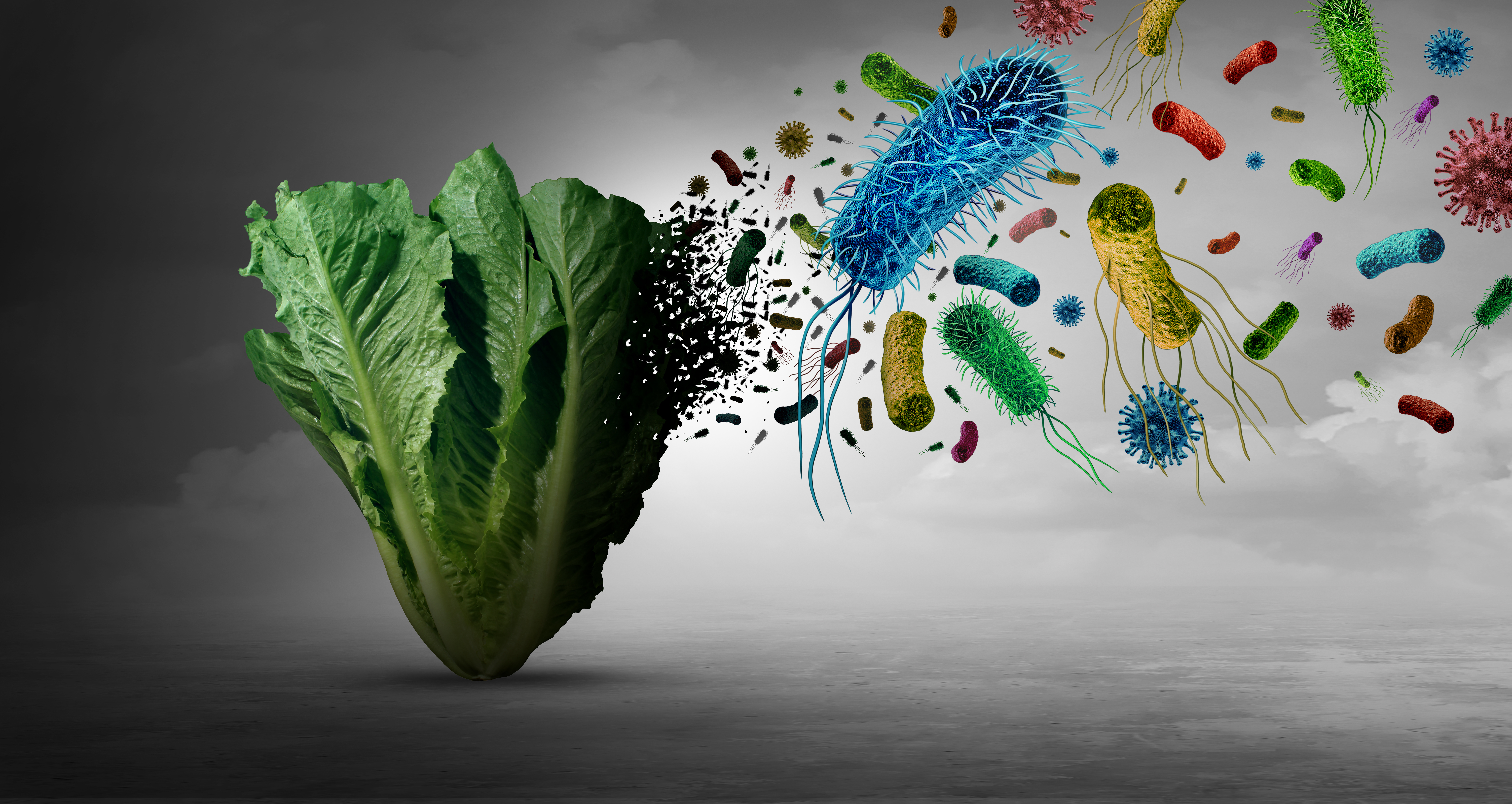
water contamination

A rise in Cryptosporidium infections in Sweden has been attributed to contaminated salad by public health officials.

The Public Health Agency of Sweden (Folkhälsomyndigheten) said 101 cases of a certain type of Cryptosporidium parvum had been confirmed in 13 regions of the country.

Patients fell ill from Sept. 25 to Oct. 15 this year and women were more affected than men. Cases range from 4 to 86 years old with an average age of 42.

Link to salad
The agency added there are another 99 potential cases being investigated. The type of Cryptosporidium parvum involved is common so there could be several possible sources.

Local infection control units, the Swedish Food Agency (Livsmedelsverket) and Folkhälsomyndigheten investigated the increase in infections to find a source.

Analysis of information from patients on what they had eaten before becoming ill shows they ate mixed or bagged salad more often than a control group.

Salad has a short shelf life so health officials don’t think it is still available for sale but no products have been sampled.

Livsmedelsverket has looked into possible producers and growers but has been unable to find the likely source of infection.

As reported cases of Cryptosporidium have decreased and are at similar levels to previous years, officials believe the outbreak is over.

Research – EU and UK record travel-related Shigella infections

Food Safety News

A multi-country Shigella outbreak in Europe has been linked to stays at some hotels in Cape Verde.

Confirmed Shigella sonnei cases have been reported in the Netherlands, Denmark, France, Germany, Portugal, and the United Kingdom.

The European Centre for Disease Prevention and Control (ECDC) said there is no information about the source of infection but given the increase in travel during the coming holiday season, new cases are likely.

However, Holiday Claims Bureau and Hudgell Solicitors in the UK have noted complaints of illness and poor hygiene standards from holidaymakers, suggesting the source could be contaminated food or water. Holiday Claims Bureau said it had been informed of sick people testing positive for Shigella.

Travelers have described symptoms such as diarrhea, vomiting, stomach cramps, and pains, which in some cases lasted until they returned home.

Anne ThomsonHudgell Solicitors’ travel litigation executive, said people can suffer as a result of a change in diet and climate.

“However, when we are alerted to situations where a number of holiday guests are affected by similar symptoms, particularly when they are not part of the same traveling group, we feel an investigation is needed to contain any wider outbreak and prevent future problems,” she said.

“Holidaymakers becoming ill having only ever eaten at the specific hotel they are staying at, and concerns raised by guests over standards of hygiene and cleanliness throughout premises, and not just in dining areas, are often red flags to potential underlying problems.”

Ireland – Wexford boil water notice impacting over 25,000 people could remain until middle of next week – Giardia

Independant

A boil water notice impacting over 25,000 people on the Wexford town public water supply could remain in place until the middle of next week.

Wexford County Council and Irish Water made the decision to implement the boil water notice with immediate effect on Wednesday evening, after samples taken from the Newtown Road Treatment Plant in town showed a detection of Giardia.

An emergency consultation with the HSE followed and the local authority took the decision to implement a boil water notice for an area covering the vast majority of Wexford town and right out as far as Taghmon.

The authorities say that they took the action “to protect the health of consumers” across Wexford. The consumption of water containing Giardia can cause diarrhoea, extreme abdominal cramps and gas. It is unclear if there’s been any official reports of people ill as a result of consuming the water, however, a few posted on social media complaining of these types of symptoms.

Research – Survey of the occurrence of Giardia duodenalis cysts and Cryptosporidium spp. oocysts in green leafy vegetables marketed in the city of Valencia (Spain)

Science Direct

Abstract

The role of vegetables usually consumed without prior culinary treatment is known to contribute to the prevalence of foodborne diseases. Cysts and oocysts can contaminate food, which can then be the source of infection in humans. The aim of the study was to assess the occurrence of Giardia duodenalis and Cryptosporidium spp. (oo)cysts in green leafy vegetables marketed in the city of Valencia (Spain) combining parasitological methods, two real-time qPCRs and light microscopy. An experimental field study was conducted on 129 vegetable samples, 64 from conventional farms and 65 from ecological (organic) farms. The samples were washed with water, and the resulting solution after removing the vegetables, was subjected to 24-hour sedimentation. The concentrated sediment was used for the search for protozoa. A positive result by both real-time PCRs, or a positive result by one qPCR and confirmation by microscopy was established as a positivity criterion. Giardia duodenalis was detected in 23.0 % of the samples, and Cryptosporidium spp. in 7.8 %. G. duodenalis (41.5 %) and Cryptosporidium spp. (20.0 %) were more frequent in ecological crops. The high level of contamination detected in organic vegetables may be due to the type of fertilizers and the quality of the water used for their irrigation and reinforces the need to take extreme hygiene measures in vegetables that are consumed raw.

Sweden – Sweden searches for the source of Crypto and Salmonella outbreaks

Food Safety News

Swedish officials are investigating a recent increase in reported cases of Cryptosporidium.

A total of 61 people have been confirmed as being infected by the same certain type of Cryptosporidium parvum. These people fell ill from Sept. 25 to Oct. 10 and live in 10 different regions of the country.

Of confirmed cases, 41 are women and 20 are men. They are aged between 11 and 86 years old with an average age of 44.

There are another 98 possible infections that have been reported within the same period and some of these may also belong to the outbreak.

The Public Health Agency of Sweden (Folkhälsomyndigheten) said the increase is under investigation but could be caused by food with wide distribution in the country.

Local infection control units, the Swedish Food Agency (Livsmedelsverket) and Folkhälsomyndigheten are investigating the outbreak to identify the source of infection.

Cryptosporidium is a parasite that, if ingested, can cause cryptosporidiosis. Transmission occurs mainly through contact with contaminated water but can be via food or exposure to infected animals or water contaminated by the feces of infected animals.

The main symptom is watery diarrhea, which can range from mild to severe. It is often accompanied by stomach pain, nausea or vomiting, fever, and sometimes dehydration and weight loss. Symptoms usually appear two to 10 days after infection and last one to two weeks.

USA – Michigan consumers warned of produce contaminated with human waste

Food Safety News

The Michigan Department of Agriculture and Rural Development (MDARD) is advising consumers not to eat any Kuntry Gardens produce or products containing produce from Kuntry Gardens of Homer, MI, because it may be contaminated with raw, untreated human waste.

All of the implicated products are expected to be labeled under the name Kuntry Gardens.

During a routine produce safety inspection, MDARD staff identified that Kuntry Gardens was using raw, untreated human waste on the fields where produce was grown for sale to local grocery stores and direct sale. The use of raw, untreated, human waste for growing commodities intended for human food is a violation of state and federal laws and regulations.

If not treated professionally, human waste and other body fluids can spread dangerous infectious diseases such as hepatitis A, Clostridium difficile, E. coli, rotavirus and norovirus.

The state health department has placed impacted product still on the farm under seizure and is working with the farm to oversee disposition and corrective action.

Research – Energy conservation can cause growth of Legionella in hot water systems

SSI

CDC legionella

Due to the current energy crisis, the authorities have various proposals for, and requirements for, saving on energy. Among other things, you can lower the temperature in hot water systems, and you can use less hot water by e.g. taking shorter baths, washing your hands in cold water and installing water-limiting measures, e.g. energy-saving showers.

However, both parts can contribute to increased growth of Legionella pneumophila in the water systems with a risk of infection and disease. It is therefore important that Danes think carefully before saving on energy.

Hot water systems can cause severe pneumonia

Most of our hot water systems contain Legionella pneumophila . The bacterium can cause a serious pneumonia called Legionnaires’ disease. Infection occurs by inhaling atomized water that is contaminated with the bacteria, e.g. while showering.

“The disease particularly affects elderly and debilitated people and causes up to 300 hospitalizations per year, but the bacterium is presumably the cause of far more mild cases of the disease, also in younger people. Since the bacteria are common in our hot water systems, it is important to limit their growth. This happens at home primarily by ensuring that cold water is no more than 20 °C and that hot water is at least 50 °C, as the bacteria cannot grow at these temperatures and begin to die at 50 °C,” says Søren Anker Uldum , who is head of department at the Statens Serum Institut.

Rinse through with very hot water

It is therefore important to continue to maintain at least 50 °C throughout the hot water system. The temperature must be reached at all tapping points after no more than 30 seconds. rinse and in the return water (before hot water tank or heat exchanger). In most cases, this can be achieved by heating the hot water to 55 °C in the hot water tank.

With reduced consumption of hot water, the water has longer residence times in the pipes and can have temperatures in the bacteria’s growth area for a longer period of time, so there must be a certain consumption of hot water.

Taps, such as faucets and showers that are rarely used, should be flushed with hot water at a minimum of 50 °C for a few minutes at least once a week.

When showering (which may well be short), it is also a good idea that at least once a week you first set the mixer to the maximum temperature and let the water run (to the drain) until it is as hot as it can be before setting it to bath water temperature (approx. 36 °C).

This advice applies especially if there are vulnerable people in the household or institution, such as the elderly or people with chronic illness or a weakened immune system.

Research -Microbial safety and sanitary quality of strawberry primary production in Belgium: risk factors for Salmonella and Shiga toxin producing Escherichia coli (STEC) contamination

Academia Edu

Hepatitis A kswfoodworld

ABSTRACT 
Strawberries are an important fruit in Belgium both in production and consumption, but little
information is available about the presence of Salmonella  and STEC in these berries, the risk
factor in agricultural production and possible specific mitigation options. In 2012, a survey
was undertaken of three soil and three soilless cultivation systems in Belgium.
No Salmonella spp. was isolated. No STEC was detected in the strawberry samples (0 out of 72), but STEC
was detected by qPCR in 11 out of 78 irrigation water and 2 out of 24 substrate samples.
Culture isolates were obtained for 2 out of 11 qPCR positive irrigation water samples and 2
out of 2 substrate samples. Multivariable logistic regression analysis revealed elevated generic  E. coli
numbers (odds ratio (OR) for 1 log increase being 4.6) as the most important risk factor for STEC, together with the berry picking season (elevated risk in summer). Presence of generic  E. coli in the irrigation water (≥ 1 cfu per 100 ml) was mainly influenced by the type of irrigation water (collected rainfall water stored in ponds was more often contaminated than ground water pumped from boreholes (OR = 5.8)) and the lack of prior treatment (untreated water versus water subjected to sand filtration prior to use (OR = 19.2)). The follow-up study in 2013 at one of the producers indicated cattle as the most likely source of 
STEC contamination of the irrigation water.