
norovirus (GI, GII) in oysters from France in Spain
withdrawal of live oysters harvested in France because of possible contamination with norovirus in France

norovirus (GI, GII) in oysters from France in Spain
withdrawal of live oysters harvested in France because of possible contamination with norovirus in France
Two outbreaks of hepatitis A virus (HAV) with 17 infections are under investigation in Ireland.
A total of 21 patients have been identified during a three-month period in Dublin, with 17 linked to the outbreaks that began in November 2020. One of the outbreak strains has genotype IA.
Some cases are associated with food premises
Posted in food bourne outbreak, food contamination, food handler, Food Hazard, Food Hygiene, Food Illness, Food Inspections, Food Micro Blog, Food Microbiology, Food Microbiology Blog, Food Microbiology Testing, food recall, Food Safety, Food Safety Alert, Food Virus, foodborne outbreak, foodbourne outbreak, Hepatitis A, Norovirus, outbreak, Virus


Several collective food poisoning infections possibly linked to the consumption of contaminated oysters have been reported since mid-February 2021 in several regions of France.
Since mid-February 2021, 46 mandatory declarations (DO) of collective food poisoning (TIAC) suspected of being linked to the consumption of oysters have been sent to Public Health France and / or to the General Directorate of food .
The meal dates at the origin of these toxi-infections are between 02/11/2021 and 02/25/2021 with a majority of meals reported on 02/14 (21 TIAC, 46%). All these TIACs took place in the context of a family meal with between 2 and 8 patients. A total of 164 patients were recorded and two people were hospitalized.
These TIACs mainly took place in New Aquitaine (23 in the department 33, 7 in the 17, 4 in the 40 and 2 in the 64), 5 in Pays de la Loire, 3 in Occitanie, 1 in Brittany and 1 in Bourgogne-Franche-Comté. For 36 of these TIACs, the origin of the oysters is known: Arcachon basin for 24 TIAC, Hossegor lake for 5, Marennes d’Oléron for 6 and Baie de Plouharnel for 1.
Stool analyzes carried out by the National Reference Center for Gastroenteritis Viruses in patients following 2 TIACs confirmed the presence of norovirus.
Shellfish collected from individuals who were sick after consuming oysters as well as from suppliers were analyzed by reference laboratories and laboratories approved by the Ministry of Agriculture and Food: noroviruses were identified . Noroviruses have also been detected in several production areas of consumed oysters.
The contamination of shellfish by norovirus for other TIACs is also suspected in view of the symptoms of sick people, mainly diarrhea and vomiting, and the incubation times between the consumption of shellfish and the onset of symptoms found during investigations of patients. TIAC. The torrential rains observed at the beginning of February may have favored the contamination of the environment / production areas and therefore of shellfish.
Four areas are currently closed by prefectural decrees temporarily prohibiting fishing, collection, transport, purification, shipping, storage, distribution, marketing and release for human consumption. shellfish following the discovery of the contamination of shellfish by noroviruses: the Arcachon basin (Gironde) since 02/18/2021, Hossegor lake (Landes) since 03/02/2021, the Chenaux du Payré (Vendée) since 25/02 and the bay of Plouharnel (Morbihan) since 03/03/2021.
Posted in food bourne outbreak, food contamination, Food Hazard, Food Hygiene, Food Illness, Food Inspections, Food Micro Blog, Food Microbiology, Food Microbiology Blog, Food Microbiology Testing, Food Pathogen, food recall, Food Safety, Food Safety Alert, Food Testing, Food Virus, foodborne outbreak, foodbourne outbreak, Norovirus, outbreak, Virus

The health authorities are sounding the alarm over norovirus-induced gastroenteritis, with cases soaring over the past week.
Taiwan recorded over 138,000 cases of diarrhea between Feb. 21 and 27, reflecting an uptick in stomach illnesses following the Lunar New Year. Over the past four weeks, 87 diarrhea clusters have been reported nationwide, and 97 percent of the 58 cases where pathogens were identified pointed to norovirus as the culprit, according to the Taiwan Centers for Disease Control (CDC).
Members of the public are urged to improve their hygiene, as the virus is transmitted via the fecal-oral route, which involves contaminated food or water or contact with infected persons.
Posted in food bourne outbreak, food contamination, Food Hazard, Food Hygiene, Food Illness, Food Inspections, Food Micro Blog, Food Microbiology, Food Microbiology Blog, Food Microbiology Testing, Food Pathogen, Food Safety, Food Safety Alert, Food Testing, Food Virus, Foodborne Illness, foodborne outbreak, foodbourne outbreak, Illness, Norovirus, outbreak, Virus, Water, water microbiology, Water Safety
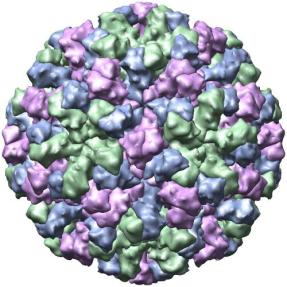
The norovirus is a foodborne illness that causes a variety of symptoms, including vomiting, diarrhea, and stomach pain. It does not cause a sore throat directly, but a sore throat could come as a result of vomiting or happen due to another condition altogether.


Hepatitis A virus (HAV) causes acute inflammatory hepatic infections in humans. Transmission occurs primarily via the faecal-oral route through contaminated food or water or person-to-person spread [1]. While the disease is often asymptomatic or mild in younger children, it can cause debilitating symptoms and fulminant hepatitis in adults. After an abrupt onset with fever, malaise and abdominal discomfort, jaundice is the predominant symptom. The average incubation period is 28 to 30 days (range: 15–50) with maximum infectivity during the latter half of the incubation period, i.e. while being asymptomatic [1]. HAV retains infectivity after freezing and can persist in the environment, being able to withstand food-production processes routinely used to inactivate bacterial pathogens [2].
Direct or indirect detection of HAV infection in humans is notifiable in Germany to local public health authorities (LPHA), which transmit case reports electronically via the state level to the national public health institute (Robert Koch Institute, RKI). The case definition of hepatitis A in place for surveillance purposes in Germany is: a symptomatic disease (defined as one or more of the following: fever, abdominal discomfort, increase of serum transaminases, jaundice), plus laboratory confirmation (i.e. detection of HAV nucleic acid or HAV-specific IgM or a distinct increase of HAV-IgG concentrations). Symptomatic cases with an epidemiological link to a laboratory-confirmed hepatitis A case also fulfil the case definition. Forwarding of HAV-reactive serum or stool samples from diagnosing laboratories to the National Consultant Laboratory for HAV for sequencing is voluntary, and is intensified during outbreaks.
In 2016, the European Union/European Economic Area (EU/EEA) incidence of hepatitis A was 2.4 cases per 100,000 population; the highest incidences were in eastern EU countries, while HAV infections in other EU/EAA regions were mostly associated with infections acquired abroad [3]. Like most high-income countries, Germany is a low-incidence country with a median hepatitis A incidence of 1.02 per 100,000 inhabitants between 2010 and 2018. The median hepatitis A incidence in Berlin, Germany is slightly higher (1.79/100,000 in 2010–2018). European outbreaks of hepatitis A among men who have sex with men caused higher case numbers in Berlin and the EU/EEA in 2017 [4,5]. Recently, several hepatitis A outbreaks associated with frozen berries have been described in Europe [6,7].
This HAV subgenotype IB strain has previously caused outbreaks in Sweden (June–July 2018) and Austria (July–September 2018) [8], comprising a total of 34 reported cases. Combined epidemiological and microbiological outbreak investigations identified imported frozen strawberries produced in Poland as the vehicle. In Sweden, the HAV outbreak strain was detected in frozen strawberries and the contaminated batch was withdrawn from the Swedish market. Trace-back investigations from both Sweden and Austria identified Polish producer Y as the source for the implicated frozen strawberries.
Shortly after outbreak control in both countries, cases with the identical virus sequence started to appear in Germany in October 2018. The Federal Office of Consumer Protection and Food Safety (BVL) and all federal public health authorities were informed about this by the RKI and sequencing of samples of autochthonous hepatitis A cases was intensified.
Here we describe the results of the epidemiological investigation of an outbreak of hepatitis A in Germany presenting in two waves, one in 2018 and another in 2019.
Posted in food contamination, food handler, Food Hazard, Food Hygiene, Food Illness, Food Inspections, Food Micro Blog, Food Microbiology, Food Microbiology Blog, Food Microbiology Research, Food Microbiology Testing, Food Pathogen, food recall, Food Safety, Food Safety Alert, Food Testing, Food Virus, Hepatitis A, Research, Virus
Background: Outbreaks of Hepatitis A virus (HAV) infection continue to be reported from India, that have transitioned from hyper-to-intermediate endemicity. Hepatitis A and Salmonella sp. share similar routes of transmission and may co-infect individuals at risk. We report here an outbreak of hepatitis A with concomitant Salmonellosis from an urban settlement of Vellore in south India between July and August 2019.
Our findings highlight that Hepatitis A infection can present as sporadic outbreaks in communities with sub-standard water and sewage systems, along with the co-infection of other enteric infections such as invasive Salmonellosis. Thus, population-based surveillance for Hepatitis A is required in India, to identify populations and geographical regions at risk, and thereby potentially plan implementation strategies for Hepatitis A vaccination.
In Schuyler County, New York, a Dunkin Donuts hepatitis A employee worked while infectious, according to a press release by the Chemung County Health Department. An investigation has been launched because that person worked at two area Dunkin Donuts locations.
Contaminated salted shellfish were a suspected cause of the 2019 hepatitis A outbreak in Korea; however, no virus was detected in the shellfish by the virus detection tests used. In this study, we investigated the shortcomings of these detection tests for identifying hepatitis A virus in salted shellfish to serve as a guide for improvement of these tests. Salted shellfish were washed and desalted before collecting the mid‐guts for testing. For verification of the method, the mid‐guts were first inoculated with norovirus and then RT‐qPCR was performed to determine the presence of norovirus genes. The norovirus gene was amplified normally along with an internal positive control; however, when the nucleic acid was extracted to be concentrated, gene amplification was inhibited. Since NaCl was the suspected contaminant, RT‐qPCR was then performed on samples that had been desalinated for 2 days, and hepatitis A virus genes were successfully detected. Gene amplification enabled analyzing the relationship between patients in the outbreak and the distributed salted shellfish. To detect viral contamination in salted and fermented specimens such as salted shellfish, it is imperative to extract the mid‐gut intestinal tract and remove any PCR inhibitors (e.g., excess salt). In this study, desalting salted shellfish using sterile distilled water before harvesting the mid‐gut was effective in facilitating hepatitis A detection. Development of future test methods requires accurately determining the effect of PCR inhibitors through the incorporation of an IPC in genetic detection tests.

 FoodWorld