Category Archives: Vibrio parahaemolyticus

Research – Attributing human foodborne diseases to food sources and water in Japan using analysis of outbreak surveillance data

JFP

In Japan, strategies for ensuring food safety have been developed without reliable scientific evidence on the relation between foodborne infections and foods. The aim of this research was to provide information on the proportions of foodborne diseases caused by seven major causative pathogens ( Campylobacte r spp., Salmonella spp., EHEC, V. parahaemolyticus , Clostridium perfringens , Staphylococcus aureus , and Norovirus) attributable to foods using analysis of outbreak surveillance data. For the calculation of the number of outbreaks attributed to each source, simple-food outbreaks were attributed to the single-food category in question, and complex-food outbreaks were classified under each category proportionally to the estimated probability. Between 2007 and 2018, 8.730 outbreaks of foodborne diseases caused by seven pathogens were reported and another 6,690 (76.6%) were of “unknown source”. We observed fluctuations in the sources of foodborne diseases caused by the seven pathogens from 2013 to 2018 as follows: chicken products (92.9%, CI 92.6–92.9) for Campylobacter spp., beef products (40.1%, CI 38.2–41.2) and vegetables (39.3%, CI 38.2–41.2) for EHEC, eggs (22.8%, CI 14.9–31.9), chicken products (13,3%, CI 6.4–21.3) for Salmonella spp., finfish (86.3%, CI 62.5–95.8) and shellfish (13.7%, CI 4.2–37.5) for V. parahaemolyticus, grains and beans (47.2%, CI 31.2–62.5) for S. aureus, vegetables (69.3%, CI 50.8–79.7) and beef products (13.1%, CI 10.2–15.3) and chicken products (10.0%, CI 1.7–27.1) for C. perfringens , and shellfish (74.7%, CI 73.1–75.9) for Norovirus. In this study, we provide the best currently available basis to evaluate the link between foodborne diseases and foods. Additionally, our results reflected the effect of strict health regulations for raw beef during a given time period, and demonstrate the importance of controlling the contamination rate of Campylobacter spp. in chicken products at each step of the food supply chain.
Research – Genomic epidemiology of domestic and travel-associated Vibrio parahaemolyticus infections in the UK, 2008–2018

Science Direct

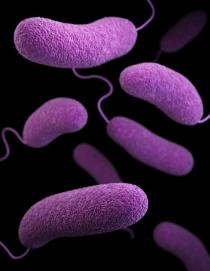
CDC Vibrio

Image CDC

Globally, V. parahaemolyticus is the most prevalent food-poisoning bacterium associated with seafood consumption. To date, the epidemiology of Vibrio parahaemolyticus infections in the UK has remained unexplored. Here we analysed archived V. parahaemolyticus strains isolated from domestic infections and travellers into the UK from 2008 to 2018 and who had submitted clinical samples to Public Health England (PHE)’s Gastrointestinal Bacteria Reference Unit. A total of 48 strains were retrieved from the PHE strain collection, confirmatory tested by PCR and analysed by genome-wide phylogeny using a global collection of genomes with representative strains from the major epidemic clones. Most reported infections entering the UK originated from travellers returning from Southeast Asia, however cases were also reported to have potentially originated from the USA, Cuba, India, Turkey, Caribbean, France, Slovenia and also within the UK, highlighting the wide geographical spread of infections. A large genetic diversity of V. parahaemolyticus strains was observed, with sequence type 3 (ST3; pandemic group) strains the most common sequence type (23 of the 48 analysed strains, 47.9%). The majority of strains were tdh positive (25/48, 71%), with 5 isolates positive for both haemolysin genes (tdh and trh), with 2 isolates trh positive only (5.7%). Six isolates did not possess either haemolysin gene. We demonstrate that whole genome sequencing can be effective to type certain human pathogens entering a traditionally considered “non-endemic” county and this was captured via passive epidemiological surveillance systems. Such approaches may potentially provide a useful snapshot of the diversity of a given pathogen group circulating worldwide.

Research – Effect of Ploidy on Vibrio parahaemolyticus and Vibrio vulnificus Levels in Cultured Oysters

JFP Vibrio_vulnificus_01

Vibrio parahaemolyticus and V. vulnificus are naturally occuring human pathogenic bacteria commonly found in estuarine environments where oysters are cultured. The use of triploid oysters has increased, due to their rapid growth rate and that they maintain a high quality throughout the year. Previous work suggested levels of Vibrio spp. may be lower in triploid oysters, as compared to diploids. Therfore, this study aimed to determine if there is a difference in the abundances of V. parahaemolyticus and V. vulnificus between half-sibling diploid and triploid oysters. In four trials, 100 individual oysters (either iced or temperature abused) were analyzed for V. parahaemolyticus and V. vulnificus using direct plating followed by colony hybridization. Mean levels of V. parahaemolyticus in iced and abused diploid oysters were 3.55 and 4.21 log CFU/g, respectively. Mean levels in iced and abused triploid oysters were 3.49 and 4.27 log CFU/g, respectively. Mean levels of V. vulnificus in iced and abused diploid oysters were 3.53 and 4.56 log CFU/g, respectively. Mean levels in iced and abused triploid oysters were 3.54 and 4.55 log CFU/g, respectively. The differences in Vibrio spp. abundances between diploid and triploid oysters was not significant (p>0.05). However, the differences across treatments were significant (p<0.05), with the exception of V. parahaemolyticus levels in trial 3 (p=0.83). Variation between individual oysters was also observed, with 12 of 808 measurements being outside of the 95 th percentile. This phenomenon of occasional statistical outliers (“hot” or “cold” oysters) has been previously described and supports the appropriateness of composite sampling to account for inherent animal variability. In summary, the data indicate that abundances of V. parahaemolyticus and V. vulnificus are not dependent on the ploidy of cultured oysters, but vary with the type of handling.


New Zealand -Vibrio parahaemolyticus infections linked to raw mussels in New Zealand

Outbreak News Today

CDC Vibrio

Image CDC

In New Zealand, officials are encouraging the public to ensure they cook raw mussels thoroughly after an increase in cases of food poisoning associated with commercially grown mussels from the Coromandel area.

“Testing is being done to confirm the type of Vibrio parahaemolyticus that has caused this illness. New Zealand Food Safety has an ongoing survey program to test mussels and growing waters to help us understand why this occurred.

“Until we have more information, New Zealand Food Safety is reminding consumers to take care when handling, preparing and consuming mussels. Our advice to consumers who are pregnant or have low immunity is to avoid eating raw shellfish,” says Paul Dansted.

New Zealand -Mussel warning after spike in food poisoning

New Zealand Herald 

A spike in cases of food poisoning has been linked to people consuming raw mussels from the Coromandel area.

New Zealand Food Safety is urging people to ensure they cook raw mussels thoroughly, as raw or undercooked mussels can make people sick.

Director of food regulation Paul Dansted said eating raw shellfish always carried a risk for food-borne illnesses.

“Cooking kills the marine micro organism Vibrio parahaemolyticus, which occurs naturally throughout the world,” he said.

Research – Effect of essential oils on pathogenic and biofilm-forming Vibrio parahaemolyticus strains

Tandfonline

In this study, the effect of three essential oils (EOs) – clove oil (CO), thyme oil (TO), and garlic oil (GO), which are generally recognized as safe – on the planktonic growth, minimum inhibitory concentration (MIC), minimum bactericidal concentration (MBC), motility, biofilm formation, and quorum sensing (QS) of Vibrio parahaemolyticus was investigated. All three EOs showed bacteriostatic activity, with MICs in the range 0.02%–0.09% (v/v). CO and TO completely controlled planktonic growth at 0.28% and 0.08% (v/v), which is four times their MIC (4 × MIC), after 10 min, whereas GO completely controlled growth at 0.36% (v/v) (4 × MIC) after treatment for 20 min. V. parahaemolyticus motility was significantly reduced by all three EOs at 4 × MIC (0.28% for CO, 0.08% for TO, and 0.36% for GO), whereas QS was controlled and biofilm formation reduced by all three EOs at 8 × MIC (0.56% for CO, 0.16% for TO, and 0.72% for GO) after 30 min of treatment. These results suggest that CO, TO, and GO have a significant inhibitory effect on V. parahaemolyticus cells in biofilm sand thus represent a promising strategy for improving food safety. These results provide the evidence required to encourage further research into the practical use of the proposed EOs in food preparation processes.

Research – The fate of cold‐stressed or tetracycline‐resistant Vibrio spp. in precooked shrimp during frozen storage

Wiley Online

CDC Vibrio

Image CDC

We compared the fate of cold‐stressed (CS) or tetracycline‐resistant (TR) Vibrio parahaemolyticus, Vibrio vulnificus , and Vibrio cholerae in precooked shrimp during frozen storage. The recovery ability of viable but nonculturable (VBNC) Vibrio cells was compared at 25°C. Each suspension of nonstressed (NS), CS, or TR Vibrio cells inoculated into cooked shrimps were subjected to frozen storage at −20°C or three freeze–thaw cycles. CS and TR cells were more rapidly converted to VBNC state than NS cells. Most of VBNC Vibrio cells were observed as viable cells after frozen storage. Although there were differences in the recovery extent of cells depending on the types of stress and strain, VBNC cells were resuscitated at 25°C. The most resistant to tetracycline and the lowest injury rate were observed in V. cholerae cells during frozen storage.

Research – Study reveals foodborne illness burden in Taiwan

Food Safety News

One in six Taiwanese people suffered from foodborne illness annually during a four year period studied by researchers.

From 2012 to 2015, almost 3.9 million foodborne illnesses and 50 deaths occurred annually in the country.

Scientists said the study, published in the Journal of the Formosan Medical Association, provided the first national estimates on the disease burden from foodborne illnesses in Taiwan.

Among just more than half of foodborne illnesses cases with identifiable causal microorganisms, non-typhoid Salmonella, norovirus, and Vibrio parahaemolyticus were leading pathogens.

Foodborne illnesses caused a substantial financial disease burden, with a medical cost up to NT $1.3 billion (U.S. $43,400) annually.

Research – Use of algal oil in shrimp diets shows sharp reduction in vibrio deaths, study finds

Under Current News

A study conducted by a team of shrimp disease experts from the US and Vietnam has found that the usage of algal oil in vannamei shrimp diets has a notable impact on survival rates among shrimp exposed to the bacterium vibrio, responsible for early mortality syndrome, or EMS, reports the Global Aquaculture Alliance.

Groups of specific pathogen-free 3-gram shrimp were fed different diets by the research team, before being exposed to shrimp broth inoculated with a consistently virulent strain of vibrio collected from a farm in Vietnam.

Research – The fate of cold‐stressed or tetracycline‐resistant Vibrio spp. in precooked shrimp during frozen storage

Wiley Online

We compared the fate of cold‐stressed (CS) or tetracycline‐resistant (TR) Vibrio parahaemolyticus, Vibrio vulnificus, and Vibrio cholerae in precooked shrimp during frozen storage. The recovery ability of viable but nonculturable (VBNC) Vibrio cells was compared at 25°C. Each suspension of nonstressed (NS), CS, or TR Vibrio cells inoculated into cooked shrimps were subjected to frozen storage at −20°C or three freeze–thaw cycles. CS and TR cells were more rapidly converted to VBNC state than NS cells. Most of VBNC Vibrio cells were observed as viable cells after frozen storage. Although there were differences in the recovery extent of cells depending on the types of stress and strain, VBNC cells were resuscitated at 25°C. The most resistant to tetracycline and the lowest injury rate were observed in V. cholerae cells during frozen storage.