Category Archives: Uncategorized

USA – Colorado officials investigate Cryptosporidium, Giardia cases and possible link to Water World

Outbreak News Today 

Images CDC

The Colorado state and Tri-County health departments are investigating whether illness is linked to a June 11-13 incident at Water World, during which untreated pond water might have contaminated pools and drinking fountains or might have been used to make food, ice and drinks at the park.

Two people who visited Water World during that time have been diagnosed with Crypto, and one person has been diagnosed with Giardia. Public health agencies are investigating whether these illnesses are associated with their visits to Water World.

Water World resolved the water contamination issue, and there does not appear to be ongoing contamination.

India – Ghaziabad: 20 people fall sick after having momos in Indirapuram

DNA India

Updated: Jul 1, 2018, 06:50 AM IST


Around 20 people fell sick after consuming momos at a local shop in Indirapuram area of Ghaziabad on Friday evening. Police have registered an FIR against the shop owner while 10 workers of the shop have also been detained for investigation.

According to the police, the incident took place on Friday evening when at least 20 people reported stomach pain after eating momos from a road-side stall in Indirapuram. Following which they were rushed to a nearby hospital where they are undergoing treatment.

Sources in the police said they are investigating the incident where people complained of stomach pain after having momos from one particular vendor. All of them are undergoing treatment for alleged food poisoning.

Germany – Eggs contaminated with Salmonella recalled in 11 German states

Farming UK 

Eggs contaminated with salmonella have been recalled by the authorities in a number of German states.

According to information on a German Government-run site, a batch of organic eggs has been found to have been infected with salmonella enteritidis.

The recall affects 11 German states and comes after thousands of Dutch eggs were recalled in Germany because of renewed fipronil contamination.

Some 73,000 Dutch eggs were withdrawn from sale in Germany after more fipronil contamination was found in eggs from the Netherlands – a year after the original scandal.

Fipronil has been found on two Dutch farms in the latest scare and the authorities expect that it will be confirmed on a third.

USA – One tests positive for E. coli, 30 others become ill after eating at Taylorsville restaurant

WRAL

Health officials say dozens of people became very ill after eating at a restaurant in Taylorsville in Alexander County on Friday.Health officials said one person tested positive for E. coli, and more than 30 others are also sick after eating chicken at the restaurant.

Authorities did not positively identified the restaurant involved, but the Taylorsville location of Mexico Viejo posted a statement on their Facebook page Friday about sick customers


USA – CDC Investigation Update: Cyclosporiasis

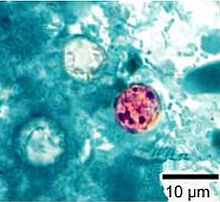
CDC 220px-Cyclospora_cayetanensis_stained

CDC investigation announcement of a multistate outbreak of cyclosporiasis linked to Del Monte Fresh Produce Vegetable Trays, U.S. 2018 can be found here: https://www.cdc.gov/parasites/cyclosporiasis/outbreaks/2018/a-062018/index.html

Key points:

  • CDC, the U.S. Food and Drug Administration, and state and local public health partners are investigating a multistate outbreak of Cyclospora infections associated with consumption of pre-packaged Del Monte Fresh Produce vegetable trays containing broccoli, cauliflower, carrots, and dill dip.
  • Cyclospora cayetanensis is a single-celled parasite that causes an intestinal infection called cyclosporiasis. People can become infected by consuming food or water contaminated with the parasite. Symptoms begin an average of 7 days after ingestion.
  • Symptoms may include watery diarrhea, loss of appetite, weight loss, cramping, bloating, increased gas, nausea and fatigue. Other less common symptoms include vomiting and low-grade fever.
  • As of June 15, 2018 (3pm EDT), CDC has been notified of 78 linked laboratory-confirmed cases of cyclosporiasis from four states—Iowa, Minnesota, Wisconsin, and Michigan.
  • Four of the 78 cases have been hospitalized. No deaths have been reported.
  • Cases reported in Michigan were from persons who bought the products in Wisconsin.
  • Consumers and retailers in Indiana and Illinois also are being alerted as the 28 oz. pre-packaged vegetable trays also were distributed in these states.
  • Most ill people reported buying and consuming pre-packaged Del Monte Fresh Produce vegetable trays containing broccoli, cauliflower, carrots, and dill dip in the Midwest.
  • Most people reported buying the trays at Kwik Trip/Kwik Star convenience stores.
  • On June 15, 2018, Del Monte Fresh Produce recalled 6 oz., 12 oz., and 28 oz. vegetable trays containing fresh broccoli, cauliflower, celery sticks, carrots, and dill dip.
    • Recalled products were sold in clear, plastic clamshell containers.
    • Recalled products were distributed to the following stores: Kwik Trip, Kwik Star, Demond’s, Sentry, Potash, Meehan’s, Country Market, FoodMax Supermarket, and Peapod.
    • Recalled products have a “Best If Enjoyed By” date of June 17, 2018.
      • The recalled 6 oz. Del Monte Fresh Produce vegetable tray has a UPC code of 7 1752472715 2 found on the package label.
      • The recalled 12 oz. Del Monte Fresh Produce vegetable tray has a UPC code of 7 1752472518 9 found on the package label.
      • The recalled 28 oz. Del Monte Fresh Produce small vegetable tray has a UPC code of 7 1752478604 3 found on the package label.
    • Do not eat or sell recalled vegetable trays. Throw them away.

The investigation is ongoing. CDC will provide updates when more information is available on CDC.gov – https://www.cdc.gov/parasites/cyclosporiasis/outbreaks/2018/a-062018/index.html

If you have further questions about this outbreak, please call the CDC media line at (404) 639-3286. If you have questions about cases in a particular state, please call that state’s health department.

CDC – Cyclospora Information

Canada – Food Recall Warning – Certain extra lean ground beef products recalled due to E. coli O157

CFIA

Recall details

Ottawa, June 29, 2018 – The Butcher’s Blend is recalling certain extra lean ground beef products from the marketplace due to possible E. coli O157 contamination. Consumers should not consume the recalled products described below.

Recalled products

Brand Name Common Name Size Code(s) on Product UPC
None Extra Lean Ground Beef Approx. 1 lb None – Sold by The Butcher’s Blend at the Western Fair District Farmer’s Market on June 16, 2018 None
Mitchell’s Butcher’s Blend / Old East Village Grocer Extra Lean Ground Beef Approx. 1 lb Best Before JUN 23/18 Starts with 0 200150
Mitchell’s Butcher’s Blend / Old East Village Grocer Extra Lean Ground Beef Approx. ½ lb Best Before JUN 23/18 Starts with 0 200150

USA – Canal water likely source of E. coli in romaine-related outbreak

Food Safety News 


Federal officials say contaminated canal water near romaine lettuce growing fields is the likely source of the unusually virulent strain of E. coli that has sickened people across 36 states, killing five.

The outbreak is over, according to an update this afternoon from the Centers for Disease Control and Prevention. The agency has confirmed 210 people with infections. Twenty-seven of the victims have developed kidney failure. The most recent victim became sick on June 6.

“Samples have been collected from environmental sources in the region, including water, soil, and cow manure. Evaluation of these samples is ongoing,” according to an update this afternoon from the Food and Drug Administration investigators.

“To date, CDC analysis of samples taken from canal water in the region has identified the presence of E. coli O157: H7 with the same genetic fingerprint as the outbreak strain. We have identified additional strains of Shiga-toxin producing E. coli in water and soil samples, but at this time, the samples from the canal water are the only matches to the outbreak strain.”

Research – Evaluation of an Environmental Monitoring Program for the Microbial Safety of Air and Surfaces in a Dairy Plant Environment

Journal of Food Protection

Microbiological hazards can occur when foodstuffs come into contact with contaminated surfaces or infectious agents dispersed by air currents in the manufacturing environment. An environmental monitoring program (EMP) is a critical aspect of sustainable and safe food manufacturing used to evaluate the effectiveness of the microbial controls in place. An effective EMP should be based on risk analysis, taking into account previous sampling history to determine the selection of the sampling points, the scope of the test, and the frequency of analysis. This study involved evaluation of the environmental monitoring regime and microbiological status of a medium-sized dairy plant manufacturing food ingredients, e.g., proteins, milk powders, and dairy fats. The data specific to microbial tests (n = 3,468), recorded across 124 fixed sampling locations over a 2-year period (2014 to 2015) from air (n = 1,787) and surfaces (n = 1,681) were analyzed. The aim of this study was to highlight the strengths and weaknesses of the EMP in a select dairy processing plant. The results of this study outline the selection of sampling locations, the scope of the test, and the frequency of analysis. An analysis of variance revealed subsections of the manufacturing areas with high risk factors, especially the packaging subsection specified for bulk packaging, the atomizer, and the fluidized bed. The temporal and spatial analysis showed the potential to reduce or relocate the monitoring effort, most notably related to total coliforms and Staphylococcus aureus, across the dairy plant due to homogeneity across the sampling subsections with little or no deviations. The results suggest a need to reevaluate the current EMP and the corrective action plan, especially with regard to detection of pathogens. Recommendations for optimization of the EMP are presented to assist the dairy industry with reviewing and revising the control measures and hazard assessment with regard to existing contamination issues.

Research – Outbreaks Associated with Untreated Recreational Water — United States, 2000–2014

CDC

Outbreaks associated with untreated recreational water can be caused by pathogens, toxins, or chemicals in fresh water (e.g., lakes, rivers) or marine water (e.g., ocean). During 2000–2014, public health officials from 35 states and Guam voluntarily reported 140 untreated recreational water–associated outbreaks to CDC. These outbreaks resulted in at least 4,958 cases of disease and two deaths. Among the 95 outbreaks with a confirmed infectious etiology, enteric pathogens caused 80 (84%); 21 (22%) were caused by norovirus, 19 (20%) by Escherichia coli, 14 (15%) by Shigella, and 12 (13%) by Cryptosporidium. Investigations of these 95 outbreaks identified 3,125 cases; 2,704 (87%) were caused by enteric pathogens, including 1,459 (47%) by norovirus, 362 (12%) by Shigella, 314 (10%) by Cryptosporidium, and 155 (5%) by E. coli. Avian schistosomes were identified as the cause in 345 (11%) of the 3,125 cases. The two deaths were in persons affected by a single outbreak (two cases) caused by Naegleria fowleri. Public parks (50 [36%]) and beaches (45 [32%]) were the leading settings associated with the 140 outbreaks. Overall, the majority of outbreaks started during June–August (113 [81%]); 65 (58%) started in July. Swimmers and parents of young swimmers can take steps to minimize the risk for exposure to pathogens, toxins, and chemicals in untreated recreational water by heeding posted advisories closing the beach to swimming; not swimming in discolored, smelly, foamy, or scummy water; not swimming while sick with diarrhea; and limiting water entering the nose when swimming in warm freshwater.

An outbreak associated with untreated recreational water* is the occurrence of similar illnesses in two or more persons, epidemiologically linked by location and time of exposure to recreational water or to pathogens, toxins, or chemicals aerosolized or volatilized from recreational water into the surrounding air. Public health officials in the 50 states, the District of Columbia, U.S. territories, and Freely Associated States† can voluntarily report recreational water–associated outbreaks to CDC. This report focuses on data on two groups of untreated recreational water–associated outbreaks: 1) those that began during 2000–2012 and were previously reported (1), and 2) those that began during 2013–2014 and were electronically reported to the Waterborne Disease and Outbreak Surveillance System (WBDOSS)§ by December 31, 2015. Data on each outbreak include case count, number of deaths, etiology, setting (e.g., park), and venue (e.g., lake/reservoir/pond) where the exposure occurred, and earliest illness onset date. Poisson regression analysis was conducted to assess the trend in the annual counts of outbreaks.

Research – Surface pH of Fresh Beef as a Parameter To Validate Effectiveness of Lactic Acid Treatment against Escherichia coli O157:H7 and Salmonella

Journal of Food Protection

The U.S. beef industry must provide documentation to the U.S. Department of Agriculture, Food Safety and Inspection Service (USDA-FSIS) that the antimicrobial interventions implemented or any subsequent changes in the process are effective under the actual conditions that apply in its operation. The main objective of this study was to determine whether surface pH after application of diluted lactic acid solution on surfaces of fresh meat can be used as a control measure indicator for the reduction of E. coli O157:H7 and Salmonella. Samples (240 each) of lean and adipose beef tissues were inoculated with cocktail mixtures of Escherichia coli O157:H7 and Salmonella. Application parameters were varied such that lean and adipose tissues were spray treated with either 2 or 4.5% lactic acid solution at either 38 or 60°C for 1 to 10 s. Lean and adipose tissues were collected before and after spray treatments for enumeration of the pathogens. Based on the conditions of this study, there was no difference between spray treatments at 38 or 60°C, but 4.5% lactic acid solution reduced pathogens more effectively (P ≤ 0.05) than did 2% lactic acid solution. Spray treatment with lactic acid solution for 1 to 10 s reduced surface pH values of lean tissues (3 to 3.8) and adipose tissues (2.75 to 3.65). At surface pH values of 3.0 and 2.75, lactic acid reduced E. coli O157:H7 on surfaces of lean and adipose tissues by approximately 1.60 and 1.54 log CFU/cm2, respectively. At surface pH values of 3.8 and 3.65, lactic acid reduced E. coli O157:H7 on lean and adipose tissues by approximately 0.3 and 0.42 log CFU/cm2, respectively. The surface pH values after lactic acid treatment and the reductions of both pathogens showed a strong linear relationship; this indicates that a surface pH of 3.1 would provide at least 1-log reduction of E. coli O157:H7 and Salmonella, regardless of lactic acid application parameters. Therefore, surface pH after spray treatment with lactic acid could be used to validate pathogen reduction.