Category Archives: Uncategorized

USA – Legionnaires’ disease cluster reported in Manhattan neighborhood

Outbreak News Today legionellac

The New York City Health Department are investigating a community cluster of 14 confirmed cases of Legionnaires’ disease in the Lower Washington Heights area of Manhattan

Health officials are investigating these cases and testing the water from all cooling tower systems in this section of Washington Heights.Ages of the individuals ranged from under 40 to over 80, but most were ages 50 and above. There have been no deaths associated with this cluster.

USA – Honey Smacks and Caito Fresh Cut Fruit Salmonella Outbreaks roll on – Marler Clark Investigating

Food Poison Journal

As of July 12, 2018, 100 people infected with the outbreak strain of Salmonella Mbandaka have been reported from 33 states.Illnesses started on dates from March 3, 2018, to July 2, 2018. Ill people range in age from less than one year to 95, with a median age of 57. Of ill people, 68% are female. Out of 77 people with information available, 30 (39%) have been hospitalized. No deaths have been reported.

Illnesses that occurred after June 19, 2018, might not yet be reported due to the time it takes between when a person becomes ill and when their illness is reported. This takes an average of 2 to 4 weeks.

USA – McDonald’s Cyclospora Outbreak Sickens 61 in IA, IL, MN, MO, NE, SD, WI

Food Poison Bulletin

A McDonald’s cyclospora outbreak that is “likely linked” to the fast food chain’s salads has sickened at lest 61 people in 7 states. Two people have been hospitalized because they are so sick. This outbreak is probably not linked to the other current cyclospora outbreak linked to recalled Del Monte Vegetable trays that has sickened 227 people in the upper Midwest, but public health officials are investigating.

Canada – Food Recall Warning – Europe’s Best brand Field Berry Mixes recalled due to Salmonella

CFIA

Recall details

Ottawa, July 13, 2018 – Hain Celestial Canada, ULC is recalling Europe’s Best brand Field Berry Mixes from the marketplace due to possible Salmonella contamination. Consumers should not consume the recalled products described below.

Recalled products

Brand Name Common Name Size Code(s) on Product UPC
Europe’s Best Field Berry Mix 600 g 2020MA03
2020MA04
2020MA10
2020MA11
8 71454 03618 7
Europe’s Best 4-Field Berry Mix 2 kg 2020MA02 8 71454 00200 7

USA – FDA Fast Facts: FDA works with partners to investigate a Cyclospora outbreak potentially associated with McDonald’s salads

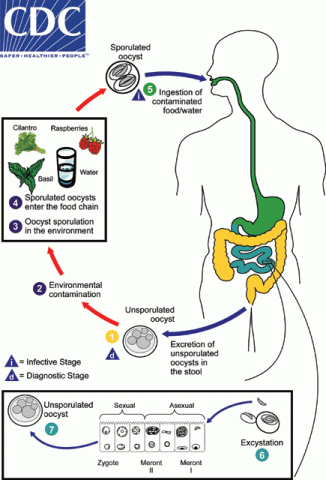
FDA Cyclospora_LifeCycle201

The U.S. Food and Drug Administration and the Centers for Disease Control and Prevention, along with state and local officials, are investigating a multi-state outbreak of Cyclospora infections. Yesterday, the Illinois and Iowa Health Departments identified McDonald’s salads as being potentially linked to cases of Cyclospora in both states. McDonald’s has voluntarily stopped selling salads at affected restaurants across 14 states and the CDC reports that 61 people across seven states have gotten sick.

“We understand how important it is to quickly identify the cause of this foodborne outbreak to help reduce additional illness and we’re working closely with our colleagues at CDC and state partners to get more answers. There’s still a lot to learn about this outbreak, and we appreciate that McDonald’s has removed salads from the menu in impacted restaurants while we work to determine whether they are in fact linked to the outbreak. We will continue to share our progress toward these goals and provide updates as we learn more,” said FDA Commissioner Scott Gottlieb, M.D. “It’s early in the investigation, but we are taking steps now to help ensure consumers know about the potentially contaminated product so that they can better protect themselves or seek treatment, especially if they have signs or symptoms of a Cyclospora infection. This is especially important as Cyclospora is not commonly tested for in a health care setting, so consumers who may think they have been exposed should raise their concerns with their health care professional.”

As part of this emerging investigation, the FDA is actively working with McDonald’s to identify the common ingredients in the salads identified by those who became sick and to trace back those ingredients through the supply chain.

Cyclospora is a parasite that can cause severe intestinal illness, but can be treated. Although it’s unknown exactly how food and water become infected with Cyclospora, people should be aware that rinsing or washing food is not likely to remove it.

The following is an update on the FDA’s ongoing investigation into this outbreak.

USA – FDA Advises Consumers to Avoid Potentially Contaminated Fresh Crab Meat Imported from Venezuela due to Vibrio parahaemolyticus

FDA 

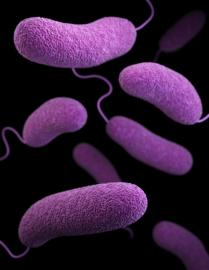
CDC Vibrio

The U.S. Food and Drug Administration is working with federal, state, and local officials regarding a Vibrio parahaemolyticus outbreak linked to fresh crab meat from Venezuela. At this time, the FDA is advising consumers to avoid eating fresh crab meat from Venezuela, as it may be contaminated with Vibrio parahaemolyticus. Consumers are advised to ask where their crab meat is from, if dining out at a restaurant or in grocery stores. This product is commonly found in plastic tubs and may be labeled as “pre-cooked.” As this is an ongoing investigation, the FDA will share additional updates as soon as information becomes available. The FDA and the states are conducting an investigation to determine the source of contaminated fresh crab meat and ensure it is removed from the food supply. Retailers should not serve or sell fresh crab meat imported from Venezuela.

As of July 12, 2018, there are 12 cases of Vibrio parahaemolyticus. The states reporting cases associated with this outbreak include  Maryland (8), Louisiana (2), Pennsylvania (1), and the District of Columbia (1). Four of these cases are confirmed matches to the outbreak strain by Pulsed Field Gel Electrophoresis (PFGE), which is a type of DNA fingerprinting. All four of these confirmed cases are in Maryland. Four people (33%) have been hospitalized. Illnesses started on dates ranging from April 1, 2018 to July 3, 2018.

Food contaminated with Vibrio parahaemolyticus may look, smell, and taste normal.

Research – A Novel Selective Medium for Simultaneous Enrichment of Shiga Toxin–Producing Escherichia coli and Salmonella in Ground Beef

Journal of Food Protection 


Microbiological analysis of ground beef for contamination by both Salmonella and Shiga toxin–producing Escherichia coli (STEC) is performed by the U.S. Department of Agriculture, Food Safety Inspection Service (FSIS), as part of its Performance Standards Verification Testing program. FSIS has established a zero tolerance for STEC serotype O157:H7 and serogroups O26, O45, O103, O111, O121, and O145 because they are regarded as adulterants. The detection and isolation of these specific serogroups presents a technical challenge necessitating time-consuming and costly laboratory procedures that often exceed the technical capabilities of many small internal and reference laboratories. We describe here a method using a novel STEC and Salmonella selective (SSS) broth that allows for simultaneous selective enrichment of STEC and Salmonella sp., providing isolation and detection from the same broth. The method only involves direct plating from beef enrichments to detect suspect isolates that can be easily confirmed by using immunoassays or PCR, rendering the isolation simpler and less costly than the current described methods. In a side-by-side comparison with modified tryptic soy broth (mTSB), the use of SSS broth resulted in primarily isolating STEC and Salmonella sp., while substantially suppressing the growth of other gram-negative Enterobacteriacae by 90%. Significantly more (χ2 < 3.84) samples containing E. coli O157:H7 and STEC O26, O111, O121, and O145 and a nondifferent (χ2 > 3.84) number of samples containing STEC O103 and O45 were identified when enriching in SSS broth. Coenrichment using six different Salmonella serovars showed numerically greater but not significant (χ2 < 3.84) positive samples by using SSS broth compared with mTSB for a majority of serotypes.

Research – Kitchen Towel As Risk Factor for Home Based Food Poisoning

Abstracts Online

Background: Cross contamination in the kitchen could contribute to home-based food poisoning. This study aimed at investigating the potential role of kitchen towels in cross contamination in the kitchen. Methods: A total of 100 kitchen towels were collected after one month of use. The bacteria were cultured and identified by standard biochemical tests. A questionnaire was also designed to investigate the potential risk factors which could affect the result. Results:  Bacterial growth was found in 49% of the kitchen towels and significantly increased by size of family, extended family and presence on children. Multipurpose towels had higher CFU than single use towels (1.31 x 10⁷ vs 6.60 x 10⁴; p<0.05) and humid towels had higher CFU than dry ones (4.8 x 10⁵ vs 0.5x 10⁵; p<0.05). The mean CFU from the towels was found to be 2.76 x 10⁵ and was significantly higher from the cotton towels (4.98 x 10⁵) compared to the nylon (1.64 x 10⁵) and mixture of both towels (1.89 x 10⁵). Out of the 49 samples which were positive for bacterial growth, 36.7% grew coliforms, 36.7% Enterococcus spp., 30.6% Pseudomonas spp., 28.6% grew Bacillus spp., 14.3% S. aureus, 4.1% Proteus spp., 2.0% coagulase negative Staphylococcus. Furthermore, S. aureus was isolated at higher rate from families of lower socio-economic status (p<0.05) and those with children (p<0.05). The risk of having coliforms was twice on humid towels than the dried ones. It was also noted that as the CFU increased, the detection rate of coliform, Enterococcus spp., Proteus spp. and Bacillus spp. also increased significantly. Furthermore, Enterococcus spp. and S. aureus were isolated at higher prevalence in bigger families (p<0.05). Diet was also found to be an important factor. Coliform and S. aureus were detected at significantly higher prevalence from families on non-vegetarian diets while a higher prevalence of Enterococcus species from the kitchen towels of vegetarian families. Conclusions: This study conclude that kitchen towels could be very important source bacterial contamination which could contribute to food poisoning. The multipurpose usage of kitchen towels should be discouraged.

Kenya – Aflatoxin Risk

The Star

Kenya has been mapped as an aflatoxin hotspot, a leading cause of liver cancer, hiding in grains like maize and animal food products.

Findings of a study released last month by the International Livestock Research Institute (ILRI) showed a large amount of milk and grains consumed by Kenyans have aflatoxin levels exceeding internationally accepted limit.

Aflatoxin is a tasteless poison produced by Aspergillus flavus fungus caused by a mould in soil that commonly affect cereals. It is mostly passed to humans through animal food products or direct ingestion of affected crops.

The study dubbed “Measuring and mitigating risk of mycotoxins in maize and dairy products for poor consumers in Kenya” was done from samples of of livestock feeds collected from farmers in five counties.

Kenya Agricultural and Livestock Research Organisation director general Eliud Kireger however dismissed the report as alarmist, saying that most Kenyans could have died if that was the case.

He however acknowledged that aflatoxin is a major threat to food security in the country, asking the government to subsidise bio-control products to tackle aflatoxin.

“The government must provide farmers with Aflasafe KE01, just the same way it subsidize fertilizer. The product effectively clear aflatoxin from soils,” said Kireger.

Public health director, Kepha Ombacho told the Star on phone that the state is conducting several activities to curb food poisoning through aflatoxin. He however, declined to comment further on the report, promising a comprehensive statement later.

The ILRI study established that Kenya had aflatoxin levels of between 0.02 parts per billion (ppb) to 9661 ppb with positive samples ranging from 75-100 per cent.

USA – Father may lose all four limbs after contracting flesh-eating bacteria in NJ – Vibrio vulnificans

News and Tribune

CAMDEN, NJ (RNN) – A 60-year-old father is hospitalized in intensive care after his family says he contracted flesh-eating bacteria while crabbing in a New Jersey river.

Doctors say Angel Perez, 60, developed necrotizing fasciitis, caused by a variety of Vibrio bacteria. The father is now in the ICU at Cooper University Hospital in Camden, NJ, according to NJ Advance Media.

Perez’s daughter, Dilena Perez-Dilan, says her father is an avid crabber. She says hours after he went crabbing near the Maurice River on July 2, his right leg began to swell then quickly got worse.

“It turned brown, blackish color. It was swelling, it was blistered,” Perez-Dilan told WPVI.

According to Perez’s family, it only took a few hours for the infection to spread to all four of his limbs, turning his skin raw and red with blisters and scarring.

“He is in critical condition,” Perez-Dilan told NJ Advance Media. “The infection has spread to his blood…his skin; you can see it spreading from his feet all the way above his kneecap. His forearms are black in color; they have blisters, cuts and sores.”