Category Archives: Uncategorized

USA – Food Safety and Dining Out

CDC

Going out to eat? When choosing a restaurant, look for one that keeps food safety on the menu. Read on for more tips to stay healthy while dining out.

Food Safety Tips for Eating at Restaurants

  • Check inspection scores. Check a restaurant’s score at your health department’s website, ask the health department for a copy of the report, or look for it when you get to the restaurant.
  • Look for certificates that show kitchen managers have completed food safety training. Proper food safety training can help improve practices that reduce the chance of spreading foodborne germs and illnesses.
  • Look for safe food-handling practices.  Sick food workers[272 KB](https://www.cdc.gov/nceh/ehs/ehsnet/plain_language/food-workers-working-when-sick.pdf) can spread their illness to customers. Most kitchens are out of the customer’s sight, but if you can see food being prepared, check to make sure workers are using gloves or utensils to handle foods that will not be cooked further, such as deli meats and salad greens.
  • Order food that’s properly cooked. Certain foods,(https://www.cdc.gov/foodsafety/foods-linked-illness.html) including meat, poultry, and fish, need to be cooked to a temperature high enough to kill harmful germs that may be present. If you’re served undercooked meat, poultry, seafood, or eggs, send them back to be cooked until they are safe to eat.
  • Watch out for food served lukewarm. Cold food should be served cold, and hot food should be served hot. If you’re selecting food from a buffet or salad bar, make sure that the hot food is steaming, and the cold food is chilled. Germs that cause food poisoning grow quickly when food is in the danger zone, between 40˚F and 140F˚.
  • Ask your server if raw or lightly cooked eggs are used in foods such as Caesar salad dressing, custards, or hollandaise sauce. Raw or undercooked eggs can make you sick unless they’re pasteurized to kill germs.
  • Take care of your leftovers quickly. Get them to the fridge within two hours, or just one hour if it’s a hot day.  Eat them within three to four days. Throw them out after that time.
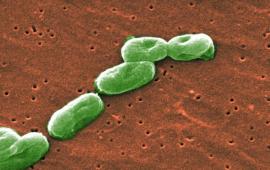
Research – Escherichia coli ST131-H22 as a Foodborne Uropathogen – Analysis ties resistant E coli from poultry meat to human UTIs

MBIO ASM 

Eygpt – Over 100 guests suffer food poisoning at Arab wedding, groom arrested

Khaleej Times

Weddings ending on a happily-ever-after note is usual, but ever heard of a wedding ending with the groom getting arrested?

At a recent wedding in Egypt’s Bishad Qayed, the groom, his father and the chef were arrested after 103 guests suffered food poisoning from meals served at the wedding, according to a report in Youm 7.

The food samples were sent to the lab to be tested for contamination. The three men face trial in the case.

All people affected have been successfully treated and left the hospital except for one female child.

UK – Carmarthenshire Dairy Products recalls Boksburg Blue Cheese due to it being produced without approval

FSA

Carmarthenshire Dairy Products Ltd is recalling Boksburg Blue Cheese which has been sold through a limited number of Tesco stores within Wales and England, as the product has been produced without approval.

No other Carmarthenshire Dairy Products products are known to be affected.

Risk statement

The product was produced without approval, and therefore it is not known what production and hygiene procedures have taken place at the premise.

Action taken by the company

Carmarthenshire Dairy Products Ltd is recalling the above product. Point of sale notices will be displayed in all retail stores that are selling this product. The notice explains to customers why the products are being recalled and tell them what to do if they have bought the product. Please see the attached notice. The product has also been recalled from Tesco stores.

USA – Hellolife, Inc. Issues Voluntary Worldwide Recall of Neuroveen, Respitrol, Thyroveev and Compulsin due to Possible Microbial Contamination

FDA kswfoodworld

HelloLife, Inc. in Grand Rapids, MI is initiating a voluntary recall of four different products, Neuroveen, Respitrol, Thyroveev and Compulsin, within expiry, to the retail and consumer level due to possible microbial contamination. Neuroveen has been tested and found to be contaminated with Staphylococcus saprophyticus and Burkholderia cepacia. Compulsin has been identified as containing Burkholderia cepacia.

Respitrol and Thyroveev are still pending bacterial identification. Each product being recalled is for a single lot that was packaged into 2-ounce amber bottles (see table below) that were manufactured at the King Bio, Inc facility in Asheville, NC.

Administration or use of drug products with microbial contamination could potentially result in increased infections that may require medical intervention, and could result in infections that could be life threatening to certain individuals. To date, HelloLife, Inc. has not received any reports of adverse events related to the recalled products

USA – CDC – How to Report Food Illness

CDC

Please contact your local health department, also known as a county or city health department, if you believe you or someone you know became ill from eating a certain food. Ask to speak with the environmental health specialist, or sanitarian, about a possible food problem. Refer to your state health department website to find more information about how to contact your local health department.

Reporting illnesses to your local health department helps them identify potential foodborne disease outbreaks. Public health officials learn about possible problems in food preparation, production, and distribution that may cause illness during investigations of foodborne disease outbreaks.

Contact CDC about a Foodborne Illness:

Please call CDC INFO at 1-800-CDC-INFO (1-800-232-4636).

RASFF Alerts – Salmonella – Sesame Seeds -Chilled Poultry Meat Preparation – Turkey Breast Fillets

RASFF-Logo

RASFF-Salmonella (presence /25g) in sesame seeds from Sudan in Greece

RASFF-Salmonella (presence /25g) in sesame seeds from Sudan in Greece

RASFF-Salmonella enterica ser. Typhimurium (presence /25g) in chilled poultry meat peparation from Poland in Poland

RASFF-Salmonella (presence /25g) in frozen poultry meat preparation from Brazil in the Netherlands

RASFF-Salmonella enterica ser. Typhimurium (presence) in turkey breast fillets from Poland in Denmark

RASFF Alerts – Aflatoxin – Dried Figs – Almonds – Groundnuts – Psitachios

RASFF-Logo

RASFF-aflatoxins (B1 = 21.8; Tot. = 23.3 µg/kg – ppb) in dried figs from Turkey in Germany

RASFF -aflatoxins (B1 = 16.2 µg/kg – ppb) in unshelled almonds from the United States in Spain

RASFF-aflatoxins (B1 = 7.3; Tot. = 8.2 µg/kg – ppb) in groundnuts from Argentina in France

RASFF-aflatoxins (B1 = 24 µg/kg – ppb) in pistachios with shell from Iran in Spain

RASFF Alert- STEC E.coli -Chilled Fillet Americain

RASFF-Logo

RASFF-shigatoxin-producing Escherichia coli (stx+, eae+ /25g) in chilled filet americain from Belgium in Belgium

RASFF Alert – Mould – Dried Apricots

RASFF-Logo

RASFF-dried apricots from Turkey infested with moulds in Denmark
