Category Archives: Uncategorized

Research – Helicobacter pylori: A foodborne pathogen?

WJG Net

Helicobacter pylori (H. pylori) is an organism that is widespread in the human population and is sometimes responsible for some of the most common chronic clinical disorders of the upper gastrointestinal tract in humans, such as chronic-active gastritis, duodenal and gastric ulcer disease, low-grade B-cell mucosa associated lymphoid tissue lymphoma of the stomach, and gastric adenocarcinoma, which is the third leading cause of cancer death worldwide. The routes of infection have not yet been firmly established, and different routes of transmission have been suggested, although the most commonly accepted hypothesis is that infection takes place through the faecal-oral route and that contaminated water and foods might play an important role in transmission of the microorganism to humans. Furthermore, several authors have considered H. pylori to be a foodborne pathogen because of some of its microbiological and epidemiological characteristics. H. pylori has been detected in drinking water, seawater, vegetables and foods of animal origin. H. pylori survives in complex foodstuffs such as milk, vegetables and ready-to-eat foods. This review article presents an overview of the present knowledge on the microbiological aspects in terms of phenotypic characteristics and growth requirements of H. pylori, focusing on the potential role that foodstuffs and water may play in the transmission of the pathogen to humans and the methods successfully used for the detection of this microorganism in foodstuffs and water.

USA – Peanut Corporation of America: 10 Years Later after the Salmonella Outbreak

Food Processing


Ten years ago, one of the most extensive food recalls in the U.S. forced more than 360 companies to recall more than 3,900 peanut products across 46 states. One company, the Peanut Corp. of America (PCA) was the cause in what eventually became one of the most massive and lethal foodborne contamination cases in the U.S., killing nine and sickening thousands.

The Food Safety Modernization Act (FSMA), signed into law by President Obama in 2011, was enacted in large part in response to the PCA recall. FSMA shifted the focus to preventing outbreaks rather than just reacting to them. The law requires that companies implement best practices to prevent hazards that may be introduced as part of the manufacturing or packaging process.

Despite the advent of FSMA, food safety in the U.S. continues to be an issue. The recent romaine lettuce recalls have sickened hundreds. There have been bats found in bags of salad and golf ball remains identified in frozen hash browns. The Centers for Disease Control (CDC) estimates that more than 48 million Americans get sick each year, 128,000 are hospitalized and 3,000 die due to foodborne illnesses.

USA – Outback Steakhouse Rivergate Employee in Nashville Diagnosed With Hepatitis A

Food Poisoning Bulletin

An employee at the Outback Steakhouse Restaurant Rivergate at 1560 Gallatin Pike North in Madison, Tennessee has been diagnosed with acute hepatitis A. That person worked at the restaurant while he had symptoms December 22 to December 24, 2018. The Metro Public Health Department announced this in a press release. Madison is near Nashville.

A special clinic to offer free vaccinations will be open at the Lentz Public Health Center at 2500 Charlotte Avenue in Nashville to anyone who dined at that location on those dates. You have until January 7, 2019 to be vaccinated. The clinic hours will be January 3 from 8:00 am to 4:30 pm; January 8 from 8:00 am to 4:30 pm; January 5 from 10:00 am to 2:00 pm, and January 7 from 8:00 am to 4:30 pm.

Information – What is it with Sesame Seeds and Salmonella?

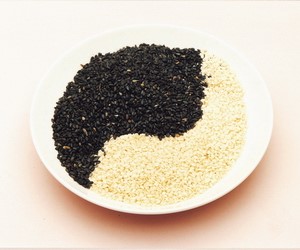
ses


Sesame seeds used in sesame seed products undergo a roasting step that should be sufficient to inactivate Salmonella spp.

Post-processing contamination can occur due to poor hygiene. Some foods, such as canned, retorted, cooked or baked products receive a further heat treatment step which will mitigate post-processing contamination.

Key risk factors associated with on-farm production of sesame seeds include the quality of the irrigation water, use of untreated manure as fertiliser and animal access to the crop.

Plants may be dried unprotected in the open air and in some cases the product is left to dry directly on the ground.

Risk factors associated with this include the cleanliness of the drying area and the presence of animals and birds that can shed or transmit Salmonella spp.

Sesame seeds used in sesame seed products undergo a roasting step that should be sufficient to inactivate Salmonella spp. However, contamination of sesame seed products can occur after the heat treatment step due to poor hygiene during subsequent grinding of the sesame seeds, slicing, packaging and transport. The presence of both high lipid content and low water activity in sesame seed products enables Salmonella spp. to survive in these products for long periods.

Therefore, sesame seeds and sesame seed products that are not further processed after roasting (for example retorting or cooking) have the potential to be contaminated with Salmonella spp. One recent example would be Tahini with issues in the USA and UK.

Results of this study (https://www.sciencedirect.com/science/article/pii/S0168160513001554) demonstrated that the standard roasting process is sufficient to inactivate Salmonella in sesame seeds and low water activity of tahini prevents microbial growth, but its composition allows Salmonella to survive for at least 16 weeks. Therefore, prevention of cross-contamination after roasting is crucial for food safety.

Illness associated with consumption of sesame seeds and sesame seed products contaminated with Salmonella spp.

There have been a number of salmonellosis outbreaks associated with consumption of sesame seeds and sesame seed products 1990 – 2016:

• Outbreak in the United States in 2013 – 16 cases of salmonellosis linked to consumption of tahini sesame paste imported from Turkey. Both Salmonella Montevideo (4 cases) and Salmonella Mbandaka (12 cases) were associated with this outbreak. Both outbreak strains were isolated from the product (CDC 2013).

• Outbreak in New Zealand in 2012 – 16 cases of salmonellosis linked to consumption of hummus made from tahini sesame paste imported from Turkey. Salmonella Montevideo (12 cases), Salmonella Mbandaka (3 cases) and Salmonella Maastricht (1 case) were associated with this outbreak. All three outbreak strains were detected in unopened containers of tahini. The tahini associated with this outbreak was imported from the same company in Turkey as that implicated in the United States outbreak described above (CDC 2013; Paine et al. 2014).

• Three outbreaks across Australia and New Zealand in 2002/2003 – with a total of 68 cases of Salmonella Montevideo infection linked to consumption of hummus and tahini imported from Egypt and Lebanon. The outbreak strain was isolated from the sesame seed products implicated in the outbreaks (Unicomb et al. 2005).

• International outbreak in 2001 – Salmonella Typhimiurium DT104 infection linked to consumption of halva imported from Turkey. There were 27 cases in Sweden and 23 cases in Australia. The outbreak strain was isolated from a number of halva products manufactured in Turkey (OzFoodNet 2001; Brockmann 2001; de Jong et al. 2001).

Prevalence of Salmonella spp. in sesame seeds and sesame seed products

A search of the scientific literature via Web of Science, PubMed, Scopus, CAB abstracts and other publications during the period 1990 – April 2016 identified that data on the prevalence of Salmonella spp. in sesame seeds and sesame seed products is limited:

• Survey in Germany in 2001 – Salmonella spp. were isolated from 11.1% of sesame seeds and sesame seed products (halvah and sesame paste) (n=99) collected at retail (Brockmann et al. 2004).

• Survey in the United States in 2006/2009 – Salmonella spp. were isolated from 11.3% of imported shipments of sesame seeds (n=177) (Van Doren et al. 2013a).

• Survey in the United States in 2010 – Salmonella spp. were isolated from 9.9% of imported shipments of sesame seed (n=233) (Van Doren et al. 2013b).

• Survey in the United Kingdom in 2007/2008 – Salmonella spp. were isolated from 1.7% of sesame seeds (n=771) collected at retail (Willis et al. 2009).

There have also been over 150 RASFF Alerts in Europe in 2018 for Sesame Seeds or Sesame Seed products with Salmonella identified with products from Nigeria, Sudan, Egypt, Burkina Faso, India and Uganda


RASFF Alerts – Salmonella – Sesame Seeds – Prawns in a Mango Sauce

RASFF-Logo

RASFF-Salmonella (presence /25g) in sesame seeds from Sudan in Greece

RASFF-Salmonella (presence /25g) in sesame seeds from India in Germany

RASFF-Salmonella (in 1 out of 5 samples /25g) in sesame seeds from Sudan in Greece

RASFF-Salmonella (presence /25g) in unpeeled sesame seeds from Nigeria in Sesame Seeds

RASFF-Salmonella enterica ser. Neuland (presence /25g) in sesame seeds from Nigeria in Germany

RASFF -Salmonella enterica ser. Onderstepoort (presence /25g) in prawns in mango sauce from Germany in Austria

RASFF-Salmonella enterica ser. Kentucky, Salmonella enterica ser. Ruiru and Salmonella enterica ser. Senftenberg (presence /25g) in sesame seeds from Sudan in Greece


RASFF Alerts – Aflatoxin – Peanuts – Groundnuts – Pistachios

RASFF-Logo

RASFF -aflatoxins (B1 = 4.3 µg/kg – ppb) in peanuts from Nicaragua, via Lithuania in Latvia

RASFF-aflatoxins (B1 = 5.6; Tot. = 33 µg/kg – ppb) in groundnuts from Argentina from the Netherlands

RASFF-aflatoxins (B1 = 21; Tot. = 24 µg/kg – ppb) in pistachios from the United States in the Netherlands

RASFF Alerts – Listeria monocytogenes – Black Angus Steak Tatare – Smoked Salmon

RASFF-Logo

RASFF-Listeria monocytogenes (presence /25g) in chilled black angus steak tartare meat from the United Kingdom in the Netherlands

RASFF -Listeria monocytogenes (presence /25g) in smoked salmon from Denmark in Italy


RASFF Alert -Foodborne Outbreak – Norovirus in live oysters

RASFF-Logo

RASFF-foodborne outbreak suspected to be caused by norovirus in live oysters (Crassostrea gigas) from Ireland, purified in United Kingdom in the UK

RASFF Alerts – Ochratoxin A – Seedless Raisins – Dried Figs – Roasted Salted Pistachios – Sultanas

RASFF-Logo

RASFF-ochratoxin A (11.7 µg/kg – ppb) in seedless raisins from Turkey in the UK

RASFF-ochratoxin A (27.7; 189 µg/kg – ppb) in dried figs from Turkey in Lithuania

RASFF-ochratoxin A (96 µg/kg – ppb) in roasted salted pistachios from unknown origin, packaged in Denmark in Finland

RASFF-ochratoxin A (14.20 µg/kg – ppb) in sultanas from Turkey in Poland

RASFF Alert – Animal Feed – Salmonella – Enterobacteriaceae – Cows Ears – Fish Meal

RASFF-Logo

RASFF-too high count of Enterobacteriaceae (3700, 8800 CFU/g) in cow ears from Mexico in Germany

RASFF-Salmonella enterica ser. Istanbul (in 1 out of 5 samples <10 CFU/g) in fish meal from Mauritania in Greece