Category Archives: Uncategorized

USA – Hy-Vee Cheesecake Mix Recalled over Salmonella concerns

Food Poisoning Journal

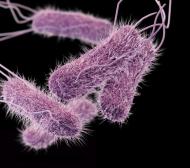
Salmonellaa

Hy-Vee, Inc. is voluntarily recalling its cheesecakes made with Diamond Crystal Brands cheesecake mix due to the potential that they may be contaminated with Salmonella. The potential for contamination was brought to Hy-Vee’s attention today after receiving a letter from the supplier.The voluntary recall includes 32 varieties of cheesecakes in both 8-ounce and 32-ounce packages with best if used by dates of Dec. 6, 2018, through Jan. 11, 2019. No illnesses have been reported to date.

The mixture was distributed to 117 of Hy-Vee’s 249 grocery stores across its eight-state region of Iowa, Illinois, Missouri, Kansas, Nebraska, South Dakota, Minnesota and Wisconsin. The product comes in a plastic container with a plastic lid. The expiration date range is between Dec. 6, 2018, and Jan. 11, 2019. The expiration date can be found on the label.

USA – Possible Hepatitis A Exposure at On the Border Grill inn Jonesboro, Arkansas

Food Poisoning Bulletin Virusds

The Arkansas Department of Health is warning consumers that there is a possible hepatitis A exposure at the On the Border Mexican Grill & Cantino at 2324 Red Wolf Boulevard in Jonesboro. Anyone who ate there between December 13 and December 17, 2018 may have been exposed to the pathogenic virus.

USA – Passengers on Frontier Airlines Out of Cleveland Sickened

Food Poisoning Bulletin

The City of Cleveland has posted a press release that six passengers who were traveling on Frontier Airlines from Cleveland to Tampa were sick during the flight. There is no information about what type of illness these people had, their symptoms, whether or not they were hospitalized, or if they have recovered. The flight was on January 1, 2019.

Bangledesh – 9 nursing students fall sick from food poisoning

The Daily Star

At least nine female students of a nursing college in Habiganj fell sick on Friday due to food poisoning.

All the nine students of Habiganj Nursing Institute are now undergoing treatment at Habiganj Sadar Hospital.

A number of guardians of the victims alleged that after having their lunch, provided by the institution, at around 3:00pm on Friday, the girls started vomiting and also complained of abdominal pain.

The authorities of the nursing institute often supply low quality food to the students, said Nusrat Jahan, a student of the institute, adding that earlier they found ants and flies in their food on different occasions.

Nusrat also demanded a probe body to investigate the incident.

India – Telangana: 67 girl students hospitalised, food poisoning suspected Food Posioning

Times of India

The girls had taken fruit salad before dinner at the hostel By 8am on Sunday, 67 out of 191 developed severe stomach pains and vomiting and were taken to hospital.
There is no information on the type of illness or the food that caused it.

USA – Bacterial Outbreak Associated With Xi’an Noodles in Seattle Sickens Three

Food Poisoning Bulletin

Three people are sick after a bacterial toxin is associated with Xi’an Noodles restaurant in Seattle, Washington. None of the patients have been hospitalized. The people ate at that restaurant on December 21, 2018.

The press release states that symptoms and timing suggest that a bacterial toxin is responsible for the illnesses, such as Clostridium perfringens or Bacillus cereus. The exact food or beverage served at Xi’an Noodles that caused the illness has not yet been identified.

Environmental Health investigators were at the restaurant on December 31, 2018. Earlier food safety inspections and the current rating for the restaurant were good.

Investigators looked for potential risk factors, including lack of thermometer use, incorrect cooling of foods that can be dangerous, and improper storage of foods at room temperature.

Research – Detection, Isolation, and Characterization of Shiga Toxin–Producing Escherichia coli in Flour

Journal of Food Protection

Wheat flour has recently been described as a novel vehicle for transmission of Shiga toxin–producing Escherichia coli (STEC). Very recently, an outbreak of STEC O121 and STEC O26 infections was linked to flour in the United States. The aim of the present study was to generate baseline data for the occurrence of STEC in flour samples from different retailers in Switzerland. In total, 70 flour samples were analyzed. After enrichment, the samples were screened for stx1 and stx2 by the Assurance GDS MPX ID assay. STEC strains were isolated and serotyped by the E. coli SeroGenoTyping AS-1 kit. The determination of stx subtypes was performed with conventional PCR amplification. Screening for eae, aggR, elt, and estIa/Ib was performed by real-time PCR. Nine (12.9%) of the flour samples tested positive for stx by PCR. STEC was recovered from eight (88.9%) of the positive samples. Two isolates were STEC O11:H48 harboring stx1c/stx1d, two were O146:H28 containing stx2b, one was O103:H2 containing stx1a and eae, and three were O nontypeable: Ont:H12 (stx2a), Ont:H14 (stx2a/stx2g), and Ont:H31 (stx1c/stx1d). STEC O103 belongs to the “top five” serogroups of human pathogenic STEC in the European Union, and STEC O146 is frequently isolated from diseased humans in Switzerland. Our results show that flour may be contaminated with a variety of STEC serogroups. Consumption of raw or undercooked flour may constitute a risk for STEC infection.

Research – Biofilms and Meat Safety: A Mini-Review

Journal of Food Protection

Biofilms are surface-attached microbial communities with distinct properties, which have a tremendous impact on public health and food safety. In the meat industry, biofilms remain a serious concern because many foodborne pathogens can form biofilms in areas at meat plants that are difficult to sanitize properly, and biofilm cells are more tolerant to sanitization than their planktonic counterparts. Furthermore, nearly all biofilms in commercial environments consist of multiple species of microorganisms, and the complex interactions within the community significantly influence the architecture, activity, and sanitizer tolerance of the biofilm society. This review focuses on the effect of microbial coexistence on mixed biofilm formation with foodborne pathogens of major concern in the fresh meat industry and their resultant sanitizer tolerance. The factors that would affect biofilm cell transfer from contact surfaces to meat products, one of the most common transmission routes that could lead to product contamination, are discussed as well. Available results from recent studies relevant to the meat industry, implying the potential role of bacterial persistence and biofilm formation in meat contamination, are reviewed in response to the pressing need to understand the mechanisms that cause “high event period” contamination at commercial meat processing plants. A better understanding of these events would help the industry to enhance strategies to prevent contamination and improve meat safety.

Research – MRSA Transmission Between Humans and Horses

Outbreak News Today

Although rare, zoonotic diseases such as Methicillin –resistant Staphylococcus aureus (MRSA) have been shown to be transmitted from humans to horses and horses to humans putting those that work with horses at a higher risk. According to recent research, MRSA is up to ten times more common in equine veterinarians than the rest of us.

Information – Guidance for the Management of Norovirus Infection in Cruise Ships

Virox.com Food Borne Illness - Norovirus -CDC Photo

The purpose of this document is to set out guidance for health professionals, port health and other agency staff and the crew of affected vessels for the identification and management of Norovirus outbreaks aboard cruise vessels. It also forms the basis of an approach to minimise the impact of the disease being brought aboard a vessel by passengers and crew, particularly during periods of heightened activity of the virus in the UK and other countries where a significant number of passengers are due to join the vessel.

This is not a prescriptive document as it is recognised that each individual incident has to be managed according to the circumstances prevailing and the decisions of the outbreak control group will reflect such variations in circumstances.