Category Archives: Uncategorized

UK – Local authority sentenced after member of public contracts Legionnaires’ Disease

HSE

Tendring District Council has been fined after a member of public contracted Legionnaires’ Disease having been a regular user of its leisure centre facilities.

Colchester Magistrates’ Court heard how the member of public frequently used the showers at Walton Lifestyles when, in November 2016, he fell seriously ill and was taken to hospital where he remained for 18 days. He was diagnosed with Legionnaires’ disease, sepsis, pneumonia and chronic kidney failure.

Water samples taken from the men’s shower tested positive for the legionella bacteria. Legionella bacteria can proliferate in hot and cold water systems that aren’t properly maintained or cleaned.

Research -Identification and Spoilage Potential of the Remaining Dominant Microbiota on Food Contact Surfaces after Cleaning and Disinfection in Different Food Industries

Journal of Food Protection

After cleaning and disinfection (C&D), surface contamination can still be present in the production environment of food companies. Microbiological contamination on cleaned surfaces can be transferred to the manufactured food and consequently lead to foodborne illness and early food spoilage. However, knowledge about the microbiological composition of residual contamination after C&D and the effect of this contamination on food spoilage is lacking in various food sectors. In this study, we identified the remaining dominant microbiota on food contact surfaces after C&D in seven food companies and assessed the spoilage potential of the microbiota under laboratory conditions. The dominant microbiota on surfaces contaminated at ≥102 CFU/100 cm2 after C&D was identified based on 16S rRNA sequences. The ability of these microorganisms to hydrolyze proteins, lipids, and phospholipids, ferment glucose and lactose, produce hydrogen sulfide, and degrade starch and gelatin also was evaluated. Genera that were most abundant among the dominant microbiota on food contact surfaces after C&D were Pseudomonas, Microbacterium, Stenotrophomonas, Staphylococcus, and Streptococcus. Pseudomonas spp. were identified in five of the participating food companies, and 86.8% of the isolates evaluated had spoilage potential in the laboratory tests. Microbacterium and Stenotrophomonas spp. were identified in five and six of the food companies, respectively, and all tested isolates had spoilage potential. This information will be useful for food companies in their quest to characterize surface contamination after C&D, to identify causes of microbiological food contamination and spoilage, and to determine the need for more thorough C&D.


Research – Growth and Survival of Listeria monocytogenes and Salmonella on Whole and Sliced Cucumbers

Journal of Food Protection cucumber
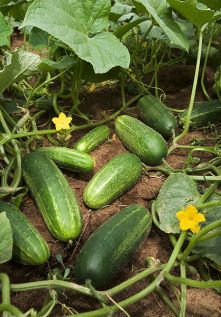
Cucumbers were associated with four multistate outbreaks of Salmonella in the United States between 2013 and 2016. This study evaluated the fate of Listeria monocytogenes and Salmonella on whole and sliced cucumbers at various storage temperatures. Cucumbers were inoculated with five-strain cocktails of L. monocytogenes or Salmonella, air dried, and stored at 23 ± 2, 4 ± 2, and −18 ± 2°C. Whole and sliced cucumber samples were enumerated on nonselective and selective media at 0, 0.21, 1, 2, 3, and 4 days (23 ± 2°C); 0, 1, 2, 3, 7, 14, and 21 days (4 ± 2°C); and 0, 7, 28, 60, 90, and 120 days (−18 ± 2°C). For Salmonella, additional time points were added at 8 and 17 h (23 ± 2°C) and at 17 h (4 ± 2°C). Population levels were calculated for whole (CFU per cucumber) and sliced (CFU per gram) cucumbers. Both pathogens grew on whole and sliced cucumbers held at ambient temperatures. At 23 ± 2°C, L. monocytogenes and Salmonella populations significantly increased on whole (2.3 and 3.4 log CFU per cucumber, respectively) and sliced (1.7 and 3.2 log CFU/g, respectively) cucumbers within 1 day. Salmonella populations significantly increased on whole and sliced cucumbers after only 5 h (2.1 log CFU per cucumber and 1.5 log CFU/g, respectively), whereas L. monocytogenes populations were not significantly different on whole and sliced cucumbers at 5 h. L. monocytogenes and Salmonella populations survived up to 21 days on refrigerated whole and sliced cucumbers. At 4 ± 2°C, L. monocytogenes populations significantly increased on whole (2.8 log CFU per cucumber) and sliced (2.9 log CFU/g) cucumbers, whereas Salmonella populations significantly decreased on whole (0.6 log CFU per cucumber) and sliced (1.3 log CFU/g) cucumbers over 21 days. Both pathogens survived on frozen whole and sliced cucumbers for at least 120 days. The ability of L. monocytogenes and Salmonella to grow on whole and sliced cucumbers in short amounts of time at ambient temperatures, and to survive on whole and sliced cucumbers past the recommended shelf life at refrigeration temperatures, highlights the need to reduce the likelihood of contamination events throughout the cucumber supply chain.

USA – Norovirus: Suspect cases in Renton, WA; Confirmed cases at the University of Virginia

Outbreak News Today Norovirus Food Safety kswfoodworld

More than two dozen people have been sickened with symptoms of nausea, vomiting, and diarrhea linked to La Fuente in Renton, WA, according to King County health officials.

Officials are investigating an outbreak of 28 norovirus-like illnesses from one meal party who became ill after consuming food and beverage from La Fuente on January 25, 2019.

Environmental Health investigators visited the restaurant on January 29. Investigators learned of a possible ill customer at the restaurant on January 25. If this customer was infected with norovirus, this could have contaminated the bathroom area with norovirus. The investigators observed improper handwashing and inadequate handwashing facilities. No employees reported being ill.

Canada – Raw Chicken Salmonella Outbreak in Canada Grows to 529 Sick

Food Poisoning Bulletin


A raw chicken Salmonella outbreak in Canada has grown to include 529 laboratory-confirmed illnesses. Ninety people have been hospitalized, and three people have died. However, Salmonella was not the case of death for two of those patients, and it was not determined whether this illness contributed to the death of the third person.

USA – Outbreak of Multidrug-Resistant Salmonella Infections Linked to Raw Turkey Products – Update

CDC

Latest Outbreak Information

Illustration of a megaphone.

At A Glance

  • Since the last update on November 8, 2018, 52 ill people from 26 states and the District of Columbia have been added to this investigation.
  • As of December 18, 2018, 216 people infected with the outbreak strain of SalmonellaReading have been reported from 38 states and the District of Columbia.
    • 84 people have been hospitalized, and one death has been reported from California.
  • Epidemiologic and laboratory evidence indicates that raw turkey products from a variety of sources are contaminated with Salmonella Reading and are making people sick.
  • In interviews, ill people report eating different types and brands of turkey products purchased from many different locations. Three ill people lived in households where raw turkey pet food was fed to pets.
  • The outbreak strain has been identified in samples taken from raw turkey pet food, raw turkey products, and live turkeys.
    • On November 15, 2018, Jennie-O Turkey Store Sales in Barron, Wisconsin recalled approximately 91,388 pounds of raw ground turkey products.
    • On December 21, 2018, Jennie-O Turkey Store Sales, LLC, in Faribault, Minnesota recalled approximately 164,210 pounds of raw ground turkey products.
    • On January 28, 2019, Woody’s Pet Food Deli in Minnesota recalled raw turkey pet food. The recalled product was sold in 5-pound plastic containers labeled “Woody’s Pet Food Deli Raw Free Range Turkey” and was sold in Minnesota.
    • A single, common supplier of raw turkey products or of live turkeys has not been identified that could account for the whole outbreak.
  • The Public Health Agency of Canada has identified ill people infected with the same DNA fingerprint of Salmonella Reading bacteria in Canada.
  • The outbreak strain of Salmonella Reading is present in live turkeys and in many types of raw turkey products, indicating it might be widespread in the turkey industry. CDC and USDA-FSIS have shared this information with representatives from the turkey industry and asked about steps that they may be taking to reduce Salmonella contamination.

USA – FDA Investigated Recalled Duncan Hines Cake Mixes Potentially Linked to Salmonella Agbeni Illnesses

FDA

Update: January 31, 2019

On January 14, 2019, CDC reported that this outbreak appears to be over. The FDA, CDC, public health and regulatory officials in several states worked together to investigate this multistate outbreak of SalmonellaAgbeni infections. In early November, FDA investigated the facility that produced the recalled cake mix; however, product and environmental samples collected at that time were negative for Salmonella. There was not enough epidemiologic and traceback information available to determine if the ill people in this outbreak had eaten the contaminated cake mix produced by Duncan Hines.

Recommendation:

The FDA recommends consumers to not bake with or eat the recalled product. Additionally, consumers should not eat uncooked batter, flour, or cake mix powder.

Case Counts

Total Illnesses: 7
Hospitalizations: 0
Deaths: 0
Last illness onset: October 5, 2018
States with Cases: FL (1), MD (2), MO (1), OH (2), WI (1)

Conagra Brands reports that the products covered by this recall were distributed for retail sale in the U.S. and limited international exports; the specific product information is listed below. These products may be available in grocery stores around the U.S., and consumers should check their labels carefully.

Research – Prevalence of Listeria monocytogenes in Select Ready-to-Eat Foods—Deli Meat, Soft Cheese, and Packaged Salad: A Systematic Review and Meta-Analysis

Journal of Food Protection

Listeria monocytogenes is the cause of listeriosis, an important foodborne disease. Contaminated ready-to-eat foods are common sources of L. monocytogenes, yet no global estimates exist for prevalence and levels in high-risk ready-to-eat foods. Our objective was to estimate the prevalence and levels of L. monocytogenes in deli meat, soft cheese, and packaged salad. We searched Medline, Web of Science, Agricola, Conference Proceedings Citation Index-Science, Science.gov, ScienceResearch.com, and OpenGREY for studies on L. monocytogenes prevalence and/or levels, with no restriction on publication date. We used a priori study selection, data extraction, and risk of biases processes. Results were synthesized with random-effects meta-analyses and meta-regressions to evaluate heterogeneity between studies. We included in the review 100 studies with a sample size restriction of ≥100, and we estimated L. monocytogenes prevalence in deli meat at 2.9% (95% confidence interval [CI], 2.3 to 3.6%), in soft cheese at 2.4% (95% CI, 1.6 to 3.6%), and in packaged salad at 2.0% (95% CI, 1.2 to 3.1%). High heterogeneity was present in all food groups, and meta-regressions did not reveal consistent explanations for heterogeneity. Pathogen level was not reported consistently or in the format required for synthesis, so meta-analyses of this variable were not performed. The high heterogeneity between studies indicates that use of global summary prevalence estimates for risk assessments are not advisable, but awareness of risk and the heterogeneity of the risk is relevant for education and further risk assessment.


Kenya – Kenya: Govt Warns Over Toxic Peanut Butter as ‘Nuteez’ Maker Refutes Claims

All Africa

The Government Chemist has confirmed the presence of aflatoxin, a poisonous substance, in peanut butter brand ‘Nuteez’, making it unfit for human consumption.

Government Chemist Francis Maina said that the peanut butter was found to be containing 24.08ppb aflatoxin, 14.08ppb more than the required limit.

“It is true that they had high levels of aflatoxin and therefore unfit for human consumption,” he said.

Jetlak Foods Limited has however refuted claims that its product has been declared unfit for human consumption.

The denial came after a viral letter, purportedly sent to the company by the Ministry of Interior and Coordination of National Government, warned about the peanut butter.

But in a rebuttal, the company, in a statement pinned on its website, said it had not received such a letter from the government.

RASFF Alert – E.coli – Chilled Minced Beef

RASFF-Logo

RASFF – Salmonella enterica ser. Typhimurium monophasic (1 ,4, [5], 12:i:-) (present /25g) and high count of Escherichia coli (550 CFU/g) in chilled minced beef produced in the Netherlands, with raw material from Germany, packaged in Denmark in Finland