Category Archives: Uncategorized

Research – An assessment of the microbial quality of “döner kebab” during cold storage: Effects of different packaging methods and microwave heating before consumption

Wiley Online

Abstract

In the current study, döner kebabs packed with different packaging methods (air packaging [AP], modified atmosphere packaging [MAP], vacuum packaging [VP] and sous vide packaging [SVP]) were evaluated for their microbial quality during storage at 4 °C. In addition, the effect of microwave heating before consumption on the microbial quality of döner kebabs was also investigated. Total mesophilic aerobic bacteria and total psycrophilic aerobic bacteria counts of döner kebabs increased during storage and reached to 6.48, 8.27, 8.15, 3.96 and 5.58, 8.53, 8.63, <1.00 log cfu/g in AP (9th day), MAP (29th day), VP (29th day) and SVP (99th day) groups, respectively. Although coliform, Escherichia coli and Staphylococcus aureus counts of döner kebabs were below 3 MPN/g, 3 MPN/g, 2 log cfu/g in all groups, respectively; no Clostridium perfringens and Listeria monocytogenes was detected in any of the groups during storage. Microwave heating was found effective on reducing the microbial load of döner kebabs. It was concluded that without any additional preservation techniques, the SVP prolonged the shelf life of döner kebabs more than 20, 6, and 5 times comparing to AP, MAP, and VP groups, respectively.

Practical applications

Döner kebab is a meat product which is very convenient for microbial growth due to its nutritional and chemical composition. Döner kebab that cannot be sold immediately after production causes high economic losses since the shelf life of döner kebab is very short after cooking. Therefore, it requires additional preservation techniques in order to prevent the economic losses after cooking and to have the opportunity of secure serving of it where döner kebab oven is not present. In the current study, sous vide (SV) applied döner kebabs protected their microbiological quality at least 100 days at 4 °C without any additional preservation techniques and application of SV after cooking provided döner kebabs with a longer shelf life comparing to air packaging, modified atmosphere packaging and vacuum packaging methods. Besides, microwave heating was applied to döner kebabs in order to simulate the conditions of consumption. Microwave heating before consumption significantly reduced the microbial load of döner kebabs.

Scotland – Food Standards Scotland issues warning over Shiga-toxi E.coli bug

Herald Scotland

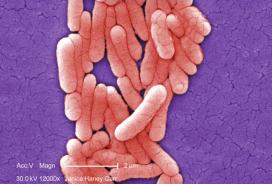
FOOD safety inspectors have warned that even trace amounts of an E. coli bacteria can post a danger to human health.

The updated guidance from Food Standards Scotland (FSS) has been published today following a joint report by the World Health Organisation and United Nations which urged vigilance in relation to Shiga Toxin-producing E. coli (STEC).

Professor Norval Strachan, Independent Chief Scientific Adviser for FSS, said: “STEC, or Shiga Toxin-producing E. coli, are a group of different types of E. coli bacteria found in the guts of animals such as cattle and sheep, which can make their way into the food chain via the animals’ faeces.

USA – Raw Turkey Salmonella Reading Outbreak Grows to 279 Sick

Food Poisoning Bulletin Salm2

The raw turkey Salmonella Reading outbreak has grown to include 279 sick people, according to an update by the Centers for Disease Control and Prevention (CDC). Of those patients, 107 people have been hospitalized, and one person who lived in California has died.

That’s an addition of 63 more people from 24 states and the District of Columbia. Illness onset dates range form November 20, 2017 to January 29, 2019. The patient age range is from less than 1 year to 101. Forty-eight percent of patients have been hospitalized.

USA -Boston College: Norovirus confirmed on campus

Outbreak News Today   norovirus-2(1)

Today, Dr. Thomas I. Nary, the Director of University Health Services at Boston College (BC) reported that laboratory tests from three patients treated early last week revealed the presence of Norovirus.

The confirmation comes after Nary said Friday several dozen students reported to University Health Services last week with symptoms related to gastrointestinal illness. He noted at the time there were no confirmed Norovirus cases.

An aggressive cleaning by BC Housekeeping and Dining Services have limited the spread of the illness on campus. Staff disinfected common touch-points–such as switch panels, faucets, doorknobs, and handrails–throughout campus, and restrooms in all residence halls were treated with disinfectant. Salad bars were closed and self-service food items were removed from dining halls, measures consistent with the recommendations of the Department of Public Health. As a result, there has been a steady reduction of student visits to University Health Services since the beginning of last week.

USA – Legionnaires’ disease cases linked to Crookston, MN hotel

Outbreak News Today Legionella A

Minnesota health officials report investigating four recent cases of Legionnaires’ disease associated with a Crookston area hotel.

Four people who became ill between Jan. 22 and Jan. 27 all reported spending some time at the Crookston Inn and Convention Center prior to their illnesses. None of the ill people were overnight guests at the hotel, but all visited the hotel for various occasions.

Malaysia – 86 Kuala Kangsar Vocational College students get food poisoning

SG News

IPOH, Feb 19 — Eighty-six trainees from the Kuala Kangsar Vocational College suffered food poisoning, believed to from eating at their hostel’s kitchen.

Perak Health Director Datuk Dr Ding Lay Ming said his department received an incident report on February 17.

“Around 86 trainees out of the total 562 were exposed to the food poisoning. The affected victims are aged between 16 and 19,” she said in a statement.

Dr Ding said that six victims were admitted at the Hospital Kuala Kangsar and their condition is now stable. The rest received outpatient treatment.

Victims suffered symptoms such as stomach pain, vomiting, diarrhoea and fever, she said.

Dr Ding said that the cause of the poisoning is still under investigation and several samples were taken for testing at the Makmal Kesihatan Awam here.

USA -Company recalls chicken salad for Listeria; some went to Whole Foods

Food Safety News

Lean Culinary Services LLC of Hollywood, FL, is recalling about 220 pounds of ready-to-eat chicken salad because the USDA’s Food Safety and Inspection Service confirmed the presence of Listeria monocytogenes in the product. Some of it carries the Whole Foods Market brand logo.

The FSIS reports all of the chicken salad was produced on Feb. 12. Consumers are urged to check their homes for unused portions of the products, a list can be found at the link above.

Romania – Romanian agency clamps down after Listeria in salmon recalls

Food Safety News

Listeria cdc

Image CDC

The Romanian food safety agency has stepped up controls after repeated recalls of fish products because of Listeria.

Eight recalls have been issued since the start of this year for Listeria in salmon involving retailers such as Auchan, Kaufland and Carrefour.

The National Sanitary Veterinary and Food Safety Authority (ANSVSA) commissioned enhanced controls following the incidents. The agency has not reported any related illnesses.

During these checks, samples were taken from different batches of finished items and from areas of production and packaging of finished products with processed samples sent to laboratories for analysis. Results showed the presence of Listeria monocytogenes in smoked salmon fillet finished product samples from two unnamed fish processing units.

Canada – Eat Smart Sweet Kale Salad Bag Kit Recalled for Listeria

Food Poisoning Bulletin

Eat Smart brand Sweet Kale Vegetable Salad Bag Kit in 340 gram packages has been recalled in Canada for possible Listeria monocytogenes contamination. The product was sold in New Brunswick, Newfoundland and Labrador, Ontario, and may have been sold nationwide. No illnesses have been reported to date in connection with this recall.

The recalled product is Eat Smart Sweet kale Vegetable Salad Bag Kit in 12 ounce (340 gram) packages. The codes on the product are FEB 16 2019 2019 FE 16 2 01B 032, 2 01A 032, and 2 000 32. The UPC number is 7 09351 89145 8.

The recall was triggered by Canadian Food Inspection Agency test results. The CFIA is conducting an investigation, which may lead to the recall of more products.

Canada – Updated Food Recall Warning – Canada Herb brand Fish Mint recalled due to Salmonella

CFIA

Recall details Canada Herb - Fish Mint

Ottawa, February 19, 2019 – The food recall warning issued on January 20, 2019 has been updated to include additional product information. This additional information was identified during the Canadian Food Inspection Agency’s (CFIA) food safety investigation.

Canada Herb is recalling Canada Herb brand Fish Mint from the marketplace due to possible Salmonella contamination. Consumers should not consume the recalled product described below.

Recalled products

Brand Name Common Name Size Code(s) on Product UPC
Canada Herb Fish Mint Variable weight LOT: 1721-0060 13/FEB or all packages sold up to and including February 19, 2019 None