Category Archives: Uncategorized

Singapore – Patulin Update

Update on 5 May 2020: SFA has extended the recall to include the products below,
as patulin has been similarly detected in samples of the products at levels exceeding
the maximum limit for patulin in fruit juice as stated in the Singapore Food
Regulations. We have directed the importer, Cold Storage Singapore (1983) Pte Ltd
to recall the products and the recall is ongoing.

Recall of “Pure Tassie Organic Apple & Raspberry Juice” and “Pure Tassie
Organic Apple & Blackcurrant Juice” due to contamination with patulin
The Singapore Food Agency (SFA) has detected patulin, a mycotoxin, in
samples of various batches of “Pure Tassie Organic Apple & Raspberry Juice” and
“Pure Tassie Organic Apple & Blackcurrant Juice” at levels exceeding the maximum
limit[1] for patulin in fruit juice as stated in the Singapore Food Regulations.
2 We have directed the importer, Cold Storage Singapore (1983) Pte Ltd to recall
the products. The recall is ongoing. This comes after an earlier recall[2] of a batch of
“Pure Tassie Organic Apple & Blackcurrant Juice” products (1.5L, best before date: 6
Oct 2020).
3 The level of patulin detected may cause the products to be unsafe for
consumption if there is long-term intake. The ingestion of large amounts of patulin
from food is associated with nausea, gastrointestinal disturbances and vomiting.
4 Consumers who have purchased the affected products should not consume it.
Consumers may contact the importer at 1800 8918 100 for enquiries and for exchange
or refund of products.
Research – Tips For Handling Flour Safely to Avoid Food Poisoning

Food Poisoning Bulletin

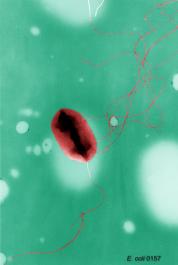
kswfoodworld E.coli O157

Image CDC


When an E. coli O157:H7 outbreak in 2009 was linked to the flour used in prepackaged cookie dough, many people were shocked. How could flour, which seems so innocuous, actually be contaminated with such a serious pathogen? Flour is dry. It seems inert and safe. But flour is a raw agricultural product, and can be contaminated with pathogens just like romaine lettuce. Learn some tips for handling flour safely to avoid food poisoning.

Macau – Group of Casino Workers Suffer Food Poisoning

Macau News

A large group of workers from four different casinos – all connected to gaming operator Sociedade dos Jogos de Macau (SJM) – were diagnosed with food poisoning on the same night, the Health Bureau (SSM) has announced.

The health authority received a notification on Sunday night from both of the city’s hospitals, the Kiang Wu Hospital and the Conde S. Januário Hospital, about the collective gastroenteritis infection.

It is considered one single case involving a group of people from several locations. The collective infection involved many people – 53 precisely – of whom 13 are male and 40 are female. Their ages range from 26 to 60.
Each member of this large group of people works at one of the following properties: Jai Alai Oceanus, Grand Lisboa, Lisboa Hotel and the New Orient Landmark Hotel.

According to the SSM, the case has a seeming connection with an employee catering area for the four properties, as 32 of the group dined at the facility on May 1, while the others did so on some dates between April 30 and May 2.

The 43 with whom the SSM has had contact declared that they developed symptoms of diarrhoea, fever and vomiting from April 30, with three of them hospitalised.


France -Carrefour Recall – Minced Pork. Possible Salmonella.

AFSCA

Following a check and as a precautionary measure in order to guarantee consumer safety, the company WESTVLEES requests to withdraw from trade the PIG AX 250G and 500G sold in the BUTCHER department of certain Carrefour stores in Belgium and reminds consumers of this following possible presence of Salmonella.

Description of products:

Name: HACHE PORC 250G
EAN code: 5400101248915
Expiration date (DLC): 05/07/2020
Lot number: 218

Name: HACHE PORC 500G
EAN code: 5400101027879
Expiration date (DLC): 06/05 / 2020
Lot number: 218

All of the products have been withdrawn from sale. Some of these products were, however, marketed on the Belgian market before the withdrawal measure. It is therefore recommended that people who hold the product described above not consume it, destroy it or return it to the point of sale where they will be reimbursed.


Europe – Large E. coli increase recorded for Europe in 2018

Food Safety News

The Shiga toxin-producing E. coli infection rate in Europe jumped by 40 percent in 2018 compared to the previous year, based on data from ECDC’s annual surveillance report.

After a stable period from 2014 to 2017, the rate increased by 41 percent in 2018. This made STEC the third most common zoonosis in Europe after Campylobacter and Salmonella.

A contributing factor may be the shift from culture to culture-independent diagnostic methods, with PCR more commonly used to diagnose cases, according to the European Centre for Disease Prevention and Control (ECDC).

STEC infection is mainly acquired through eating contaminated food and contact with animals and/or their feces. Adequate cooking of food, particularly beef, and use of pasteurized milk may reduce the risk of foodborne infections, added the agency.

Australia – The Kimchi Company — Kimchi Company Kimchi 300g and 600g

FSANZ

Photograph of Kimchi Company Kimchi 600g and 300g

Identifying features

Other
APN/EAN: 300g – 8809089 420158 and 600g – 8809089 420141

What are the defects?

The recall is due to potential microbial contamination due to under allocation of salt.

What are the hazards?

Food products with microbial contamination may cause illness if consumed.

What should consumers do?

Any consumers concerned about their health should seek medical advice and should return the products to the place of purchase for a full refund.

For further information, please contact The Kimchi Company Pty Ltd on 0449 051 894 or visit www.kimchicompany.com.au

Traders who sold this product

Harris Farm Markets in NSW

Where the product was sold
New South Wales
Dates available for sale
  • 23 April 2020 – 28 April 2020

Recall advertisements and supporting documentation

Research – Common ways to cook chicken at home may not ensure safety from pathogens

Science Daily

For home cooks, widespread techniques for judging doneness of chicken may not ensure that pathogens are reduced to safe levels. Solveig Langsrud of the Norwegian Institute of Food, Fisheries and Aquaculture Research and colleagues present these findings in the open-access journal PLOS ONE on April 29, 2020.

Chicken can harbor the bacterial pathogens Salmonella and Campylobacter. High temperatures can kill these microbes, but enough may survive to cause illness if meat is undercooked. Recommendations for monitoring doneness vary widely, and the prevalence and safety of methods commonly used by home cooks have been unclear.

To help clarify consumers’ chicken cooking practices, Lansgrud and colleagues surveyed 3,969 private households across five European countries (France, Norway, Portugal, Romania, and the U.K.) on their personal chicken cooking practices. They also interviewed and observed chicken cooking practices in 75 additional households in the same countries.

Research – Update and review of control options for Campylobacter in broilers at primary production

EFSA


The 2011 EFSA opinion on Campylobacter was updated using more recent scientific data. The relative risk reduction in EU human campylobacteriosis attributable to broiler meat was estimated for on‐farm control options using Population Attributable Fractions (PAF) for interventions that reduce Campylobacter flock prevalence, updating the modelling approach for interventions that reduce caecal concentrations and reviewing scientific literature. According to the PAF analyses calculated for six control options, the mean relative risk reductions that could be achieved by adoption of each of these six control options individually are estimated to be substantial but the width of the confidence intervals of all control options indicates a high degree of uncertainty in the specific risk reduction potentials. The updated model resulted in lower estimates of impact than the model used in the previous opinion. A 3‐log10 reduction in broiler caecal concentrations was estimated to reduce the relative EU risk of human campylobacteriosis attributable to broiler meat by 58% compared to an estimate larger than 90% in the previous opinion. Expert Knowledge Elicitation was used to rank control options, for weighting and integrating different evidence streams and assess uncertainties. Medians of the relative risk reductions of selected control options had largely overlapping probability intervals, so the rank order was uncertain: vaccination 27% (90% probability interval (PI) 4–74%); feed and water additives 24% (90% PI 4–60%); discontinued thinning 18% (90% PI 5–65%); employing few and well‐trained staff 16% (90% PI 5–45%); avoiding drinkers that allow standing water 15% (90% PI 4–53%); addition of disinfectants to drinking water 14% (90% PI 3–36%); hygienic anterooms 12% (90% PI 3–50%); designated tools per broiler house 7% (90% PI 1–18%). It is not possible to quantify the effects of combined control activities because the evidence‐derived estimates are inter‐dependent and there is a high level of uncertainty associated with each.

Canada – Sapsucker Tree Water and St. Francis Herb Coconut Oil Recalled

Food Poisoning Bulletin

Two products are being recalled in Canada: one is Sapsucker Tree Water because the cans are swelling, and the other is St. Francis Herb Farm Coconut Oil. There are no reports of illness or adverse reactions with either of these recalled products, since both are non harmful recalls.

The first recall is for Sapsucker Organic Sparkling Tree Water. It is being recalled in Canada because the cans that contain the beverage are swelling. According to the recall notice, this is a microbiological – non harmful recall, for quality or spoilage. The recalling company is Lower Valley Beverage Company. The product was sold in Alberta, British Columbia, Manitoba, Nova Scotia, Ontario, and Quebec at the retail level.

The recalled products are Sapsucker The Original One – Organic Sparkling Tree Water sold in 355 ml containers. The UPC number on the product is 8 98171 00001 7. The best before date is 01/2021/06, and the code is HH:MM 017 (where HH:MM is the time stamp). Also recalled is the same product sold in 8 x 355 ml packages. The UPC number is 8 98171 00004 8, the best before date is 01/2021/06, and the Batch is SS-017.

The second recall is for St. Francis Herb Farm Organic Raw Virgin Coconut Oil, for mould. This product was sold in Alberta, British Columbia, New Brunswick, Newfoundland and Labrador, Nova Scotia, Ontario, Prince Edward Island, Quebec, and Saskatchewan at the retail level.

USA – Preliminary Incidence and Trends of Infections with Pathogens Transmitted Commonly Through Food — Foodborne Diseases Active Surveillance Network, 10 U.S. Sites, 2016–2019

CDC

Summary

What is already known about this topic?

The incidence of most infections transmitted commonly through food has not declined for many years.

What is added by this report?

Incidence of infections caused by Listeria, Salmonella, and Shigella remained unchanged, and those caused by all other pathogens reported to FoodNet increased during 2019. Infections caused by Salmonella serotype Enteritidis, did not decline; however, serotype Typhimurium infections continued to decline.

What are the implications for public health practice?

New strategies that target particular serotypes and more widespread implementation of known prevention measures are needed to reduce Salmonella illnesses. Reductions in Salmonella serotype Typhimurium suggest that targeted interventions (e.g., vaccinating chickens and other food animals) might decrease human infections. Isolates are needed to subtype bacteria so that sources of illnesses can be determined.