Category Archives: Uncategorized

USA – Dumplings seven brands found E. coli

KXAN 36 News

Experts Roskoshestvo during the follow-up study checked the dumplings seven brands. In all products have been identified serious violations.

Dumplings all seven grades do not meet the requirements of the technical regulations of the Customs Union “On safety of meat and meat products”, said Roskoshestvo. In particular, all goods specialists found dangerous to the health of consumers of Escherichia coli and products of the same brand has revealed yet and Salmonella.

in addition to the presence in the products of dangerous bacteria, it has also been observed discrepancy between the labeling information. So, dumplings, two brands were significantly lower in protein.

Australia – Dozens of Salmonella cases linked to bakery

Yahoo News

A Melbourne cafe has been closed after more than 36 people were diagnosed with salmonella food poisoning.

Lincoln Bakery Cafe, in Carlton, shut on May 8 after customers fell ill.

An investigation is underway, Victoria’s Health Minister Jenny Mikakos confirmed during a press conference on Saturday.

No salmonella sufferers to date have been hospitalised, the state’s Chief Health Officer Dr Brett Sutton said.

USA – Ice Cream recalled over Listeria concerns

Food Poison Journal

Ramar Foods of Pittsburg, CA, is recalling its 14 ounce packages of Peekaboo branded Mint Chocolate Chip with Hidden Spinach Ice Cream product out of an abundance of caution because of the potential contamination of Listeria monocytogenes

Research – Antibacterial activity and mechanism of Litsea cubeba essential oil against food contamination by Escherichia coli and Salmonella enterica

Wiley Online

Litsea cubeba essential oil (LC‐EO) has been reported as antibacterial agents, but there are few studies about its possible antibacterial mechanism. The antibacterial activities and the underlying mechanisms of LC‐EO against Escherichia coli O157: H7 and Salmonella enterica were investigated. The results showed that the LC‐EO was more effective against gram‐negative bacteria. The inhibition zone for E. coli O157: H7 and S. enterica were 3.1 ± 0.8 and 4.5 ± 0.6 mm, respectively. The minimum inhibitory concentration of LC‐EO against both bacteria was 0.9 μg/ml, while the minimum bactericidal concentrations were 4.5 and 9 μg/ml. Gas chromatography–mass spectrometry analysis confirmed that citral (86.8%) was the main component of LC‐EO. The results of a time–kill analysis illustrated that treatment with LC‐EO led to a rapid decrease in viable bacterial cell number. The release of electrolytes and nucleic acids from the bacterial cells increased with the dose of LC‐EO. Propidium iodide uptake revealed that LC‐EO caused cell membrane damage. Scanning electron and transmission electron microscopy showed that LC‐EO caused damage to the cell walls and membranes, resulting in cell deformation, atrophy, and large central voids. Thus, LC‐EO may provide the basis for the development of new natural food preservatives.

Research -Reducing contamination of carcasses during de-feathering

Watt Poultry USA Campylobacter kswfoodworld

Broiler carcasses are often contaminated with bacteria during feather plucking. Applying an acidic solution could prevent this.


Research – Chicken study probes resistance to Campylobacter

Poultry World

Transplanting gut microbes from chickens that are relatively resistant to Campylobacter bacteria into chickens that are susceptible does not improve resistance, a study by The Roslin Institute at the University of Edinburgh has shown.

Campylobacter is a cause of food poisoning in people and is often found in chickens. In the UK alone, it is estimated that more than half a million people are infected with Campylobacter each year.

Research – Intensive farming increases risk of epidemics

Science Daily

Overuse of antibiotics, high animal numbers and low genetic diversity caused by intensive farming techniques increase the likelihood of pathogens becoming a major public health risk, according to new research led by UK scientists.

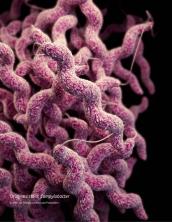
An international team of researchers led by the Universities of Bath and Sheffield, investigated the evolution of Campylobacter jejuni, a bacterium carried by cattle which is the leading cause of gastroenteritis in high income countries.

Campylobacter facts:

  • Causes bloody diarrhea in humans
  • Transferred to humans from eating contaminated meat and poultry
  • Although not as dangerous as typhoid, cholera or E.coli, it causes serious illness in patients with underlying health issues and can cause lasting damage.
  • Around 1 in 7 people suffer from an infection at some point in their life
  • Causes three times more cases than E.coli, Salmonella and listeria combined
  • Carried in the faeces of chickens, pigs, cattle and wild animals
  • Campylobacter is estimated to be present in the faeces of 20% cattle worldwide
  • The bug is very resistant to antibiotics due to their use in farming

The researchers, publishing in the journal Proceedings of the National Academy of Sciences, studied the genetic evolution of the pathogen and found that cattle-specific strains of the bacterium emerged at the same time as a dramatic rise in cattle numbers in the 20th Century.

The authors of the study suggest that changes in cattle diet, anatomy and physiology triggered gene transfer between general and cattle-specific strains with significant gene gain and loss. This helped the bacterium to cross the species barrier and infect humans, triggering a major public health problem.

Combine this with the increased movement of animals globally, intensive farming practices have provided the perfect environment in which to spread globally through trade networks.

Professor Sam Sheppard from the Milner Centre for Evolution at the University of Bath, said: “There are an estimated 1.5 billion cattle on Earth, each producing around 30 kg of manure each day; if roughly 20 per cent of these are carrying Campylobacter, that amounts to a huge potential public health risk.

“Over the past few decades, there have been several viruses and pathogenic bacteria that have switched species from wild animals to humans: HIV started in monkeys; H5N1 came from birds; now Covid-19 is suspected to have come from bats.

“Our work shows that environmental change and increased contact with farm animals has caused bacterial infections to cross over to humans too.

“I think this is a wake-up call to be more responsible about farming methods, so we can reduce the risk of outbreaks of problematic pathogens in the future.”

Professor Dave Kelly from the Department of Molecular Biology and Biotechnology at the University of Sheffield said: “Human pathogens carried in animals are an increasing threat and our findings highlight how their adaptability can allow them to switch hosts and exploit intensive farming practices.”

The researchers hope that their study can help scientists predict potential problems in the future so they can be prevented before they turn into another epidemic.

Research – Fusarium: How to assess and manage the risk in cereals

FWI

Protecting crops against the damaging effects of fusarium ear blight is essential in any year, but it could be even more so this season, given the reduced wheat area and strong premiums for milling wheat.

Fusarium and its associated mycotoxins are not just a concern for milling wheat growers, though, as the different forms of the disease can affect yield and quality in all the main cereals: wheat, barley and oats.

As there are legal mycotoxin limits on grain for human consumption, and guidance limits on crops intended for animal feed, it is vital to protect all crops.

Sweden – Histamine poisoning in Sweden linked to tuna from Vietnam

Food Safety News

Thirty people in Sweden fell ill with scombroid poisoning after eating tuna from Vietnam earlier this month.

The histamine poisoning foodborne outbreak was linked to frozen tuna loins from Vietnam, via the Netherlands.

Local authorities were responsible for the outbreak investigation and tracing of food batches. The Swedish Food Agency (Livsmedelsverket) is the national contact point for Europe’s Rapid Alert System for Food and Feed (RASFF).

Mats Lindblad, from the Swedish Food Agency, said about 30 people were sick but no deaths were reported.

“Symptoms were typical for histamine poisoning and included swelling, hives, irregular heartbeat, nausea, diarrhea and vomiting,” he told Food Safety News.

USA – Ramar Foods Recalls Mint Chocolate Chip With Hidden Spinach Ice Cream Because of Possible Health Risk – Listeria monocytogenes

Food Poisoning News

Ramar Meals of Pittsburg, CA, is recalling its 14 ounce packages of Peekaboo branded Mint Chocolate Chip with Hidden Spinach Ice Cream product out of an abundance of warning due to the potential contamination of Listeria monocytogenes, an organism which might trigger severe and generally deadly infe