Category Archives: Uncategorized

UK – Iceland recalls Chip Shop Curry Chicken Breast Toppers and Southern Fried Chicken Popsters because of the presence of Salmonella

FSA

Iceland has recalled their own brand Chip Shop Curry Chicken Breast Toppers and Southern Fried Chicken Popsters because salmonella has been found in the products

Product details

Iceland Chip Shop Curry Chicken Breast Toppers
Pack size 400g
Best before 27 February 2021, 17 March 2021 and 8 April 2021
Iceland Southern Fried Chicken Popsters
Pack size 220g
Best before 4 April 2021

Risk statement

The presence of salmonella in the product(s) listed above.

Symptoms caused by salmonella usually include fever, diarrhoea and abdominal cramps.

Action taken by the company

Iceland is recalling the above products. Point of sale notices will be displayed in all retail stores that are selling these products. These notices explain to customers why the products are being recalled and tell them what to do if they have bought the product. Please see the attached notice.

Our advice to consumers

If you have bought any of the above products do not consume them. Instead, return them to the store from where they were bought for a full refund or contact Iceland Customer Care line on 0800 328 0800 and select option 2.

About product recalls and withdrawals

If there is a problem with a food product that means it should not be sold, then it might be ‘withdrawn’ (taken off the shelves) or ‘recalled’ (when customers are asked to return the product). The FSA issues Product Withdrawal Information Notices and Product Recall Information Notices to let consumers and local authorities know about problems associated with food. In some cases, a ‘Food Alert for Action’ is issued. This provides local authorities with details of specific action to be taken on behalf of consumers.

Ref: FSA-PRIN-36-2020


Tanzania -Caution Cited On Aflatoxin Threat to Food Security

All Africa

INCREASING contamination of food crops with aflatoxin is, besides jeopardising public health, threatening the country’s food security, experts have warned, proposing proper handling of food from farming to storage phases.

“Aflatoxin contamination is a serious problem that demands concerted mitigation efforts,”Tanzania Initiatives for Preventing Aflatoxin Contamination (TANIPAC) Project Officer Ali Hamad said yesterday.

Speaking at the ongoing third Nanenane exhibitions at Chamanangwe grounds here, the officer blamed aflatoxin on improper farming, harvesting, processing and storage of food crops.

Italy – Italy records nearly 80 HUS cases in 12 months

Food Safety News

Almost 80 hemolytic uremic syndrome (HUS) cases were registered between July 2019 and June 2020 in Italy.

The 77 patients came from 17 regions in the country while one person contracted HUS while abroad. Notification rates varied by region but were highest in Aosta Valley and higher than 1 case per 100,000 in Basilicata, Calabria, Liguria, Lombardy, Marche, Trento, and Bolzano.

Seventy of those affected were under 15 years of age. The median age of patients at the clinical onset of the disease was 2 years and 7 months for the past 12 months and the past decade.

USA – FSIS Issues Public Health Alert for Ready to Eat Sausage Products due to Possible Listeria Contamination

USDA

The U.S. Department of Agriculture’s Food Safety and Inspection Service (FSIS) is issuing a public health alert because Bluegrass Provisions Co., a Crescent Springs, Ky. establishment, produced sausage products that may be contaminated with Listeria monocytogenes. A recall was not requested because it is believed that all products are no longer in commerce and are past their use or freeze by dates.

The ready-to-eat smoked sausage items were produced on Apr. 22, 2020. The following products subject to the public health alert are: [View Label (PDF only)]

  • 14-oz. plastic packages containing 6 pieces of “BLUE GRASS METTWURST,” with a use or freeze by date of July 23, 2020.
  • 14-oz. plastic packages containing 6 pieces of “WALNUT CREEK FOODS Smoked Sausage,” with a use or freeze by date of July 23, 2020.
  • 14-oz. plastic packages containing 6 pieces of Lidl “SMOKED BRATWURST,” with a use or freeze by date of July 23, 2020.
  • 14-oz. plastic packages containing 6 pieces of Lidl “SMOKED BRATWURST WITH CHEESE,” with a use or freeze by date of July 23, 2020.

The products bear establishment number “EST. 7417” inside the USDA mark of inspection. These items were shipped to distributors and retail locations in Kentucky, Ohio, North Carolina, and Virginia.

The problem was discovered by routine testing and the results showed one of the products was contaminated with Listeria monocytogenes. The additional products may be affected by cross-contamination.

Consumption of food contaminated with L. monocytogenes can cause listeriosis, a serious infection that primarily affects older adults, persons with weakened immune systems, and pregnant women and their newborns. Less commonly, persons outside these risk groups are affected.

Listeriosis can cause fever, muscle aches, headache, stiff neck, confusion, loss of balance and convulsions sometimes preceded by diarrhea or other gastrointestinal symptoms. An invasive infection spreads beyond the gastrointestinal tract. In pregnant women, the infection can cause miscarriages, stillbirths, premature delivery or life-threatening infection of the newborn. In addition, serious and sometimes fatal infections can occur in older adults and persons with weakened immune systems. Listeriosis is treated with antibiotics. Persons in the higher-risk categories who experience flu-like symptoms within two months after eating contaminated food should seek medical care and tell the health care provider about eating the contaminated food.

FSIS is concerned that some product may be in consumers’ freezers. Consumers who have purchased these products are urged not to consume them. These products should be thrown away or returned to the place of purchase.

FSIS advises all consumers to reheat ready-to-eat product until steaming hot.

Members of the media with questions about the public health alert can contact Paul Rice, President of Blue Grass Quality Meats, at (859) 394-0689. Consumer inquiries can be directed to David Kegley, Vice President of Sales & Marketing for Blue Grass Quality Meats, at (859) 331-7100.

Consumers with food safety questions can call the toll-free USDA Meat and Poultry Hotline at 1-888-MPHotline (1-888-674-6854) or live chat via Ask USDA from 10 a.m. to 6 p.m. (Eastern Time) Monday through Friday. Consumers can also browse food safety messages at Ask USDA or send a question via email to MPHotline@usda.gov. For consumers that need to report a problem with a meat, poultry, or egg product, the online Electronic Consumer Complaint Monitoring System can be accessed 24 hours a day at https://foodcomplaint.fsis.usda.gov/eCCF/.

USA – Southern Taste of Kernersville recalls cole slaw after tests show presence of Listeria monocytogenes

The Coastland times 

Southern Taste of Kernersville is recalling 16-ounce containers of its Southern Taste Deli Cole Slaw distributed at retail supermarkets in North Carolina. Southern Taste has ceased the manufacture of this product and is fully cooperating with the N.C. Department of Agriculture and Consumer Services as the cause of the contamination is investigated, stated NCDA&CS in a Friday press release.

“The company launched the recall after cole slaw sampled during a routine inspection conducted by the Food and Drug Protection Division tested positive for Listeria monocytogenes, which may cause life-threatening illness. No illnesses have been reported to date,” stated the release. The product is sold in round plastic containers labeled as “Southern Taste Deli Cole Slaw” with a sell by date of 8/27/20.

“This recall is a direct result of our routine inspection and testing of ready-to-eat products to protect consumers,” said Agriculture Commissioner Steve Troxler. “These products are tested at our Food and Drug Protection Lab for common pathogens such as Listeria, Salmonella and E coli.”

USA – FRESHOUSE II, LLC Voluntarily Recalls Select Mesh Bags and Bulk Shipments of Potatoes, Limes, Valencia Oranges and Lemons Because of Possible Health Risk – Listeria monocytogenes

FDA

Image, 2 lb lime mesh bag

Image 3, Fresh from the Start Potatoes in mesh bag

Freshouse II, LLC of Salisbury, NC is recalling the following specific production lots, brands and weights of Valencia Oranges, Lemons, Limes, Organic Limes, and Red B Potatoes because they have the potential to be contaminated with Listeria monocytogenes, an organism which can cause serious and sometimes fatal infections in young children, frail or elderly people, and others with weakened immune systems. Although healthy individuals may suffer only short-term symptoms such as high fever, severe headache, stiffness, nausea, abdominal pain and diarrhea Listeria infection can cause miscarriages and stillbirths among pregnant women.

The recall was voluntarily initiated after the company’s routine internal testing identified Listeria monocytogenes on a piece of equipment in one of our packing facilities. We have ceased the production and distribution of the product that was packed on the equipment in question and are taking corrective actions and continually evaluating our cleaning and sanitation regimes.

No illnesses have been associated with this recall to date.

Image, Wegmans California Valencia Oranges 64 oz.

Image 2, Fresh from the Start Lemons in mesh bag

USA – Outbreak of Salmonella Newport Infections Linked to Onions

CDC

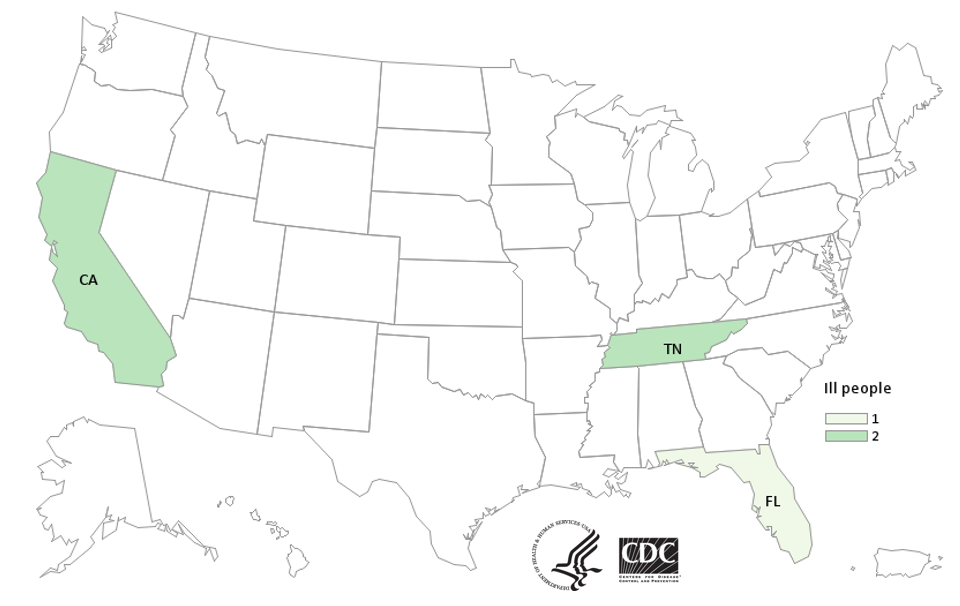
Graphic of the U.S. map with persons infected by state of residence as of August 6, 2020.

Recall and Advice to Consumers, Restaurants, and Retailers
Illustration of a clipboard with check marks on it.
At A Glance
Various onions on a wooden table.

Do not eat, serve, or sell recalledexternal icon onions from Thomson International, Inc., or food made with these onions. Onion types include red, white, yellow, and sweet yellow varieties. Other companies have also issued recalls of foods, like chicken salads, made with recalled onions.

  • At home, check your refrigerator and kitchen for recalled onions or foods made with them, such as salads, wraps, tacos, sandwiches, etc.
    • Check the package or look for a sticker on the onion to see if it is from Thomson International, Inc., or one of the brand names below. If it is, don’t eat it. Throw it away.
      • Other brand names that may be on labels include: Thomson Premium, TLC Thomson International, Tender Loving Care, El Competitor, Hartley’s Best, Onions 52, Majestic, Imperial Fresh, Kroger, Utah Onions, and Food Lion.
      • See the recall noticeexternal icon to check for further details and pictures of the products.
    • Some foods made with recalled onions, such as deli salads and vegetable mixes, have also been recalled. Check your homes for the recalled products listed below.
    • If you can’t tell where your onions are from, don’t eat them. Throw them away.
    • If you used onions to make any other food and don’t know where the onions were from, don’t eat the food. Throw it away, even if some of it was eaten and no one got sick.
    • Wash and sanitize any surfaces that may have come in contact with onions or their packaging, such as countertops, storage bins, refrigerator drawers, knives, and cutting boards.
  • When you order food from a restaurant or shop for food, check with the restaurant or grocery store to make sure they are not serving or selling recalled onions from Thomson International, Inc., or any foods prepared with recalled onions, including foods such as salads, sandwiches, tacos, salsas, and dips.
    • If they don’t know where their onions are from, don’t buy the product.
    • People sickened in this outbreak reported eating onions in freshly prepared foods, including salads, sandwiches, tacos, salsas, and dips.

Advice to Restaurants, Retailers, and Suppliers

  • Restaurants and retailers should not serve or sell recalled onions from Thomson International, Inc., or food prepared with these onions.
    • If you don’t know where your onions are from, don’t serve or sell them.
    • Clean and sanitize all surfaces that onions have come in contact with, including cutting boards, countertops, slicers, utensils, and storage bins.
  • Suppliers, distributors, and others in the supply chain should not ship or sell recalled onions from Thomson International, Inc.
    • Suppliers and distributors that repackage raw onions should clean and sanitize any surfaces and storage bins that may have come in contact with recalled onions.

Recalls

  • On August 1, 2020, Thomson International, Inc., voluntarily recalled red, yellow, white, and sweet yellow onions because they may be contaminated with Salmonella.
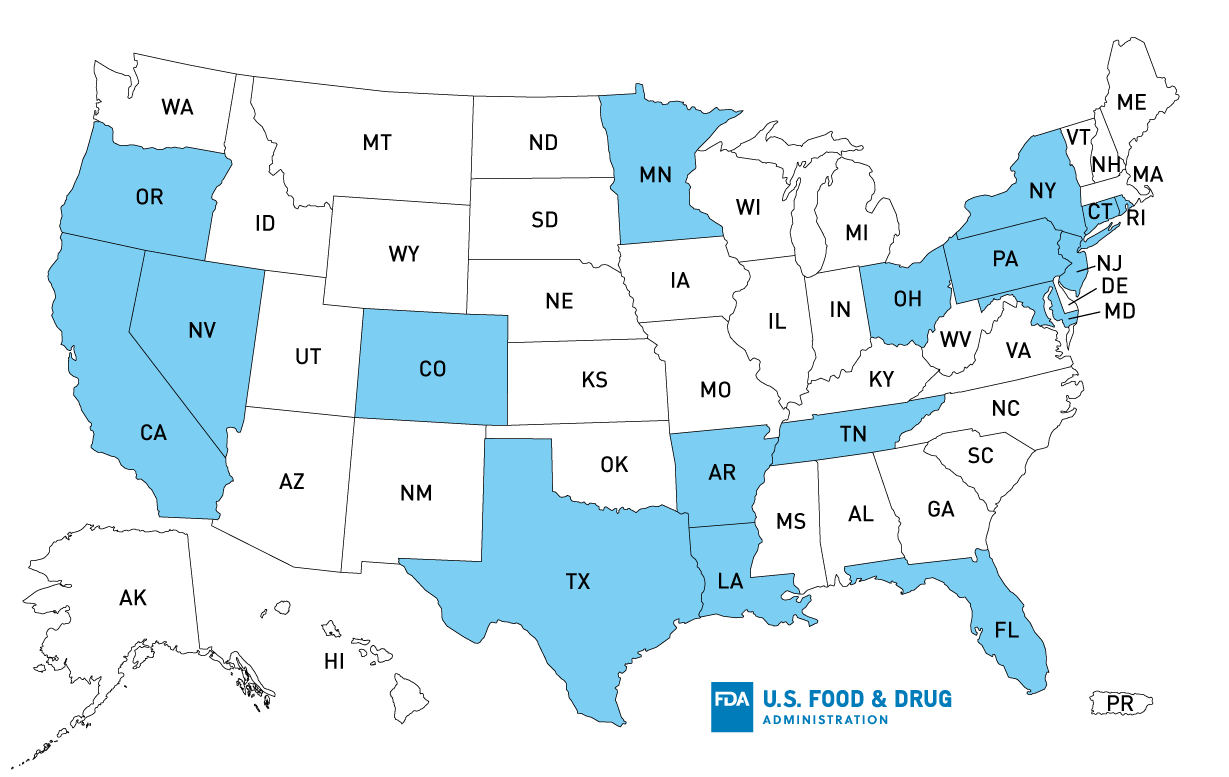
    • Onions were distributed to wholesalers, restaurants, and retail stores in all 50 states and the District of Columbia.
    • Onions were distributed in bulk cartons and mesh sacks ranging from 2 to 50 pounds under these brand names: Thomson Premium, TLC Thomson International, Tender Loving Care, El Competitor, Hartley’s Best, Onions 52, Majestic, Imperial Fresh, Kroger, Utah Onions, and Food Lion.
    • See the recall noticeexternal icon to check for universal product codes (UPC) and pictures of the products.
  • On August 1, Giant Eagle recalledexternal icon onions and foods made with recalled onions sold in stores across Pennsylvania, Ohio, West Virginia, Indiana and Maryland.
  • On August 1, Publix recalled onions sold in bulk at stores in Alabama, Georgia, North Carolina, South Carolina, Tennessee, and Virginia.
  • On August 5, 2020, the United States Department of Agriculture’s Food Safety and Inspection Service (USDA-FSIS) issued a public health alertexternal icon for products made with recalled onions. Check the alert for product details and pictures. USDA-FSIS will update the public health alert as more information becomes available.
  • On August 6, 2020, Taylor Farms issued a recallexternal icon of foods that were made from recalled onions.
  • There may be additional recalls related to this outbreak. Please refer to the FSISexternal icon and FDAexternal icon websites for the latest recall information.

Take these steps if you have symptoms of a Salmonella infection:

  • Talk to your healthcare provider.
  • Write down what you ate in the week before you started to get sick.
  • Report your illness to your local health department.
    • The health department will likely call you for an interview to ask you about foods you ate in the week before you got sick.
  • Assist public health investigators by answering their questions when they contact you.
Symptoms of Salmonella Infection
Illustration of a person with stomach pain.
  • Most people infected with Salmonella develop diarrhea, fever, and stomach cramps 6 hours to 6 days after being exposed to the bacteria.
  • The illness usually lasts 4 to 7 days, and most people recover without treatment.
  • In some people, the illness may be so severe that the patient needs to be hospitalized. Salmonella infection may spread from the intestines to the bloodstream and then to other places in the body.
  • Children younger than 5 years, adults 65 years and older, and people with weakened immune systems are more likely to have a severe illness.
  • For more information, see Symptoms of Salmonella Infection.
Latest Outbreak Information
Illustration of a megaphone.
  • Since the last case count update on July 31, 2020, an additional 244 ill people have been reported in this outbreak, including 15 from 10 new states: Alabama, Connecticut, Delaware, Georgia, Massachusetts, Mississippi, New Hampshire, New Jersey, New Mexico, West Virginia.
  • On August 1, Giant Eagle recalledexternal icon produce and prepared foods sold in stores across Pennsylvania, Ohio, West Virginia, Indiana and Maryland.
  • On August 1, Publix recalled onions sold in bulk at stores in Alabama, Georgia, North Carolina, South Carolina, Tennessee, and Virginia.
  • On August 5, 2020, the United States Department of Agriculture’s Food Safety and Inspection Service (USDA-FSIS) issued a public health alertexternal icon for products made with recalled onions. Check the alert for product details and pictures. USDA-FSIS will update the public health alert as more information becomes available.
  • On August 6, 2020, Taylor Farms issued a recallexternal icon of foods that were made from recalled onions.
  • A total of 640 people infected with the outbreak strain of Salmonella Newport have been reported from 43 states.
    • 85 hospitalizations have been reported. No deaths have been reported.
  • Epidemiologic and traceback information showed that red onions are a likely source of this outbreak.
  • This investigation is ongoing. CDC will provide more information as it becomes available.
Investigation Details

August 7, 2020

As of August 6, 2020, a total of 640 people infected with the outbreak strain of Salmonella Newport have been reported from 43 states. A list of the states and the number of cases in each can be found on the Map of Reported Cases page.

Illnesses started on dates ranging from June 19, 2020, to July 23, 2020. Ill people range in age from less than 1 to 102 years, with a median age of 39. Fifty-four percent of ill people are female. Of 343 ill people with information available, 85 hospitalizations have been reported. No deaths have been reported.

Illnesses might not yet be reported due to the time it takes between when a person becomes ill and when the illness is reported. This takes an average of 2 to 4 weeks. Please see the Timeline for Reporting Cases of Salmonella Infection for more details.

Whole genome sequencing analysis of 48 isolates from ill people did not predict any antibiotic resistance. Standard antibiotic susceptibility testing by CDC’s National Antimicrobial Resistance Monitoring System (NARMS) laboratory is underway.

Whole genome sequencing analysis shows that an outbreak of Salmonella Newport infections in Canada is related genetically to this outbreak in the United States. This means that people in both of these outbreaks are likely to share a common source of infection.

Investigation of the Outbreak

On July 10, 2020, CDC’s PulseNet identified an outbreak of 13 Salmonella Newport infections in three states. Since being identified, the outbreak has rapidly grown to a total of 640 infections in 43 states.

State and local public health officials are interviewing ill people to determine what they ate and other exposures in the week before their illness started.

Many ill people were identified as part of illness clusters. An illness cluster is defined as two or more people who do not live in the same household who report eating at the same restaurant location, attending a common event, or shopping at the same location of a grocery store in the week before becoming ill. Investigating illness clusters can provide critical clues about the source of an outbreak. If several unrelated ill people ate or shopped at the same location of a restaurant or store within several days of each other, it suggests that the contaminated food item was served or sold there. Twenty-five illness clusters have been identified in nine states. Information from these clusters shows that many ill people ate red onions. The traceback information collected from these illness clusters identified Thomson International, Inc., of Bakersfield, Calif., as a likely source of red onions. Due to the way onions are grown and harvested, other onion types, such as, white, yellow, or sweet yellow, may also be contaminated. Additional traceback is ongoing to determine if other onions are linked to the outbreak.

Public Health Agency of Canada (PHAC) is investigating an outbreak of Salmonella Newport infections in Canada that is related by whole genome sequencing to the U.S. outbreak. On July 30, PHAC’s outbreak investigationexternal icon identified U.S. red onions as a likely source of its outbreak.

On August 1, 2020, Thomson International, Inc., voluntarily recalledexternal icon red, yellow, white, and sweet yellow onions because they may be contaminated with Salmonella.

On August 1, Giant Eagle recalledexternal icon onions and foods made with recalled onions sold in stores across Pennsylvania, Ohio, West Virginia, Indiana and Maryland.

On August 1, Publix recalled onions sold in bulk at stores in Alabama, Georgia, North Carolina, South Carolina, Tennessee, and Virginia.

On August 5, 2020, the United States Department of Agriculture’s Food Safety and Inspection Service (USDA-FSIS) issued a public health alertexternal icon for products made with recalled onions. Check the alert for product details.

On August 6, 2020, Taylor Farms issued a recallexternal icon of foods that were made from recalled onions.

Consumers, restaurants, and retailers should not eat, serve, or sell recalled onions from Thomson International, Inc., of Bakersfield, California, or other foods made with recalled onions.

CDC will provide updates when more information is available.

USA – CDC Closes Atlanta Buildings After Finding Legionella

Outbreak News Today

CDC legionella

Image CDC

The CDC closed several buildings it leases in Atlanta after finding legionella bacteria in the plumbing. “During the recent closures at our leased space in Atlanta, working through the General Services Administration (GSA), CDC directed the landlord to take protective actions,” CDC told CNN.

“Despite their best efforts, CDC has been notified that Legionella, which can cause Legionnaires’ Disease, is present in a cooling tower as well as in some water sources in the buildings. Out of an abundance of caution, we have closed these buildings until successful remediation is complete.”

Research – Survival of Staphylococcus aureus and Salmonella enteritidis on salted sardines (Sardina pilchardus) during ripening

PubMed

The ripening period for salted sardines ranges from 4 to 6 months, depending on the season. Sometimes producing industries need to distribute the product earlier owing to market needs, and when this happens the product’s safety needs to be assured. The purpose of this work was to study the survival of Staphylococcus aureus and Salmonella Enteritidis on salted sardines during a ripening period of 115 days. Salted sardines were inoculated with pure cultures of S. aureus and Salmonella Enteritidis (10(5) CFU/g of fish on day 0). After 5 days of ripening, the water activity value for the sardines decreased from 0.93 to 0.69. The survival of both pathogens and that of total viable cells were evaluated during the ripening process. Total viable counts decreased by 2 log units over the 115-day ripening period. Salmonella Enteritidis and S. aureus survived for 60 and 90 days, respectively. Therefore, the use of a 90-day ripening period could be effective in assuring the safety of the final product.

USA – Cyclospora Outbreak in Texas

Outbreak News Today

Austin Public Health (APH) announced it was investigating an outbreak of Cyclospora, an intestinal illness caused by a parasite, after at least 82 cases have been reported since June 1, 2020. This Austin-Travis County Cyclospora Outbreak does not yet have an identified source.

According to  APH Epidemiologist Janet Pichette, “While we may be in COVID-19 season, we cannot forget the other diseases and infections that are commonly present in our community. And as we have said time and time again, there are ways to prevent many of these diseases and infections, including cyclosporiasis – thoroughly wash fresh produce, wash your hands after handling fruits and vegetables, and separate produce from raw meat and seafood.”

Until a source is found, the APH reminds all Texas residents to wash their hands and their produce.