Category Archives: STEC

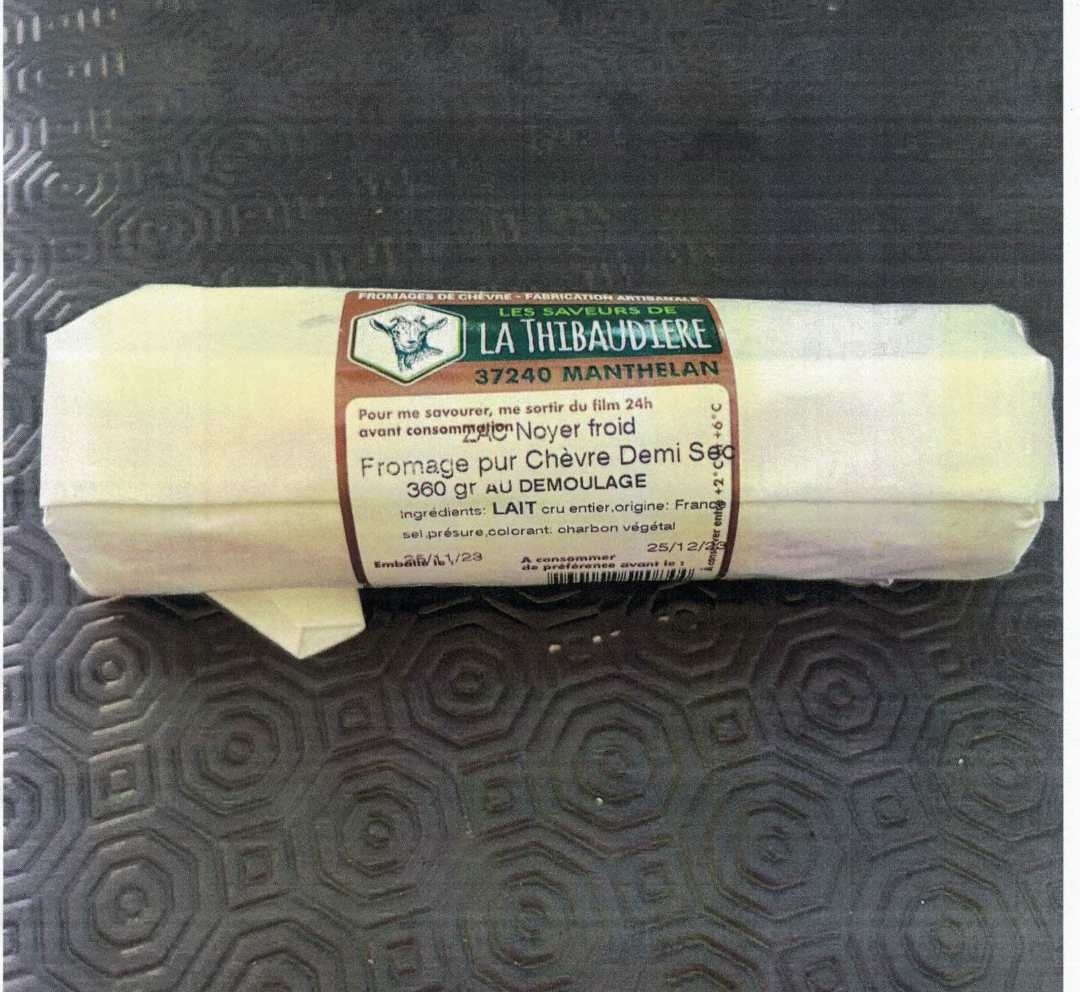
France – Pure Semi-dry Goat Cheese 360 ​​gr UNMOLDED – STEC E.coli

Gov France

Product category
Food
Product subcategory
Milk and dairy products
Product brand name
The Flavors of Thibaudiere
Model names or references
Pure Semi-dry Goat Cheese 360 ​​gr UNMOLDED
Product identification
GTIN Batch Date
3760108520844 301 Use-by date 09/12/2023
3760108520844 302 Use-by date 13/12/2023
3760108520844 303 Use-by date 13/12/2023
Products List
PRODUCT_REMINDER.pdfAttachmentPackaging
Paper packaging + blotter
Start/end date of marketing
From 09/11/2023 to 25/11/2023
Storage temperature
Product to keep in the refrigerator
Geographical sales area
Departments: INDRE-ET-LOIRE (37)
Distributors
INTERMARCHE, SUPER U and NETTO
List of points of sale
List_of_concerned_stores.pdf

Canada – Catering company at centre of Calgary day care E. coli outbreak pleads not guilty to municipal charges

Calgary City News

The owners of the company behind the historic Calgary E. coli outbreak at daycares back in September are appeared in court Tuesday, entering a ‘not guilty’ plea to several municipal bylaw charges.

The two directors of KidsU Centennial — operating as Fueling Brains Academy and Fueling Minds Incorporated — Faisal Alimohd and Anil Karim, are facing a fine of up to $120,000 for allegedly providing third-party food services to five Calgary childcare centres they didn’t own.

The city said in September the catering company had also been operating without a food services business license.

In total, the company faces 12 charges.

A lawyer for the company met with the Crown prosecutor in a Calgary courtroom Tuesday, where they pleaded ‘not guilty.’

A trial date has now been set for Sept. 6, 2024.

RASFF Alerts – STEC E.coli – Goat Cheese- Cheese

RASFF

Shigatoxin-producing Escherichia coli (STEC) in goat cheese from France in Italy

RASFF

Possible presence of Escherichia coli (STEC) in cheese from France in German, Italy and Sweden

USA – FDA Leafy Greens STEC Action Plan Updated

FDA

Introduction

Leafy greens are among the most widely consumed vegetables and an important part of an overall healthy diet. However, while millions of servings are consumed safely every day, leafy greens have been repeatedly associated with illnesses caused by Shiga toxin-producing E. coli (STEC), the most common of which is E. coli O157:H7. FDA is committed to breaking this cycle of reoccurring outbreaks.

Over the last several years, the FDA and partners in the public and private sectors have worked to enhance the safety of leafy greens through the development and implementation of the Leafy Greens STEC Action Plan (LGAP). This work includes prioritized inspections, focused sampling, stakeholder engagement and collaboration, data sharing, root cause investigations, and advancements in the science of detection and prevention.

Collectively, this work has expanded our body of knowledge about how and why outbreaks linked to leafy greens have occurred, which has guided and informed the evolution of the action plan over the years. Still, we know that we cannot fix the issue of leafy green contamination on our own. Industry leadership, along with collaboration among growers, processors, retailers, state partners, and the broader agricultural community, is critical to preventing foodborne illness.

The link above goes to a  table that provides the approaches for three priority areas: Prevention, Response, and Addressing Knowledge Gaps, as well as accomplishments that have been made since the action plan launched in March 2020 (updated and current as of October 2023)

Foodborne illness source attribution estimates for Salmonella, Escherichia coli O157, and Listeria monocytogenes — United States, 2021

CDC

Executive Summary
Each year in the United States an estimated 9 million people get sick, 56,000 are hospitalized, and 1,300 die of foodborne disease caused by known pathogens. These estimates help highlight the scope of this public health problem. However, to develop effective prevention measures, food safety agencies and partners need to understand the types of foods contributing to the problem.

The Interagency Food Safety Analytics Collaboration (IFSAC) is a tri-agency group created by the Centers for Disease Control and Prevention (CDC), the U.S. Food and Drug Administration (FDA), and the U.S. Department of Agriculture’s Food Safety and Inspection Service (FSIS). By bringing together data from CDC, FDA, and FSIS,
and by developing sound analytical methods, IFSAC scientists can improve estimates of the sources of foodborne illness.

Using outbreak surveillance data from 1998 through 2021, this report presents annual estimates of the percentages of foodborne illness attributed to 17 food categories for Salmonella, Escherichia coli O157, and Listeria monocytogenes.

Salmonella illnesses came from a wide variety of foods. More than 75% of Salmonella illnesses were attributed to seven food categories: Chicken, Fruits, Pork, Seeded Vegetables (such as tomatoes), Other Produce (such as nuts), Beef, and Turkey.

Escherichia coli (E. coli) O157 illnesses were most often linked to two categories.
Over 80% of Escherichia coli (E. coli) O157 illnesses were linked to Vegetable Row Crops (such as leafy greens) and Beef.

Listeria monocytogenes (Listeria) illnesses were most often linked to Dairy products, Vegetable Row Crops, and Fruits. More than 75% of illnesses were attributed to these three categories, but the rarity of Listeria outbreaks makes these estimates less reliable than those for other pathogens.

Attribution estimates for Campylobacter are not presented in this year’s report. Evidence suggests the sources of Campylobacter outbreaks likely differ considerably from the sources of non-outbreak-associated illnesses caused by this pathogen. IFSAC is exploring alternative approaches for estimating the sources of Campylobacter illnesses.

IFSAC derived the estimates for 2021 using the same method used for previous estimates, with some modifications. The original method, dating back to the estimates from 2012, was described in a report, a peer- reviewed journal article, and at a public meeting. The data in this year’s report came from 47,657 illnesses linked to 1,322 foodborne disease outbreaks that occurred from 1998 through 2021 and for which each confirmed or suspected implicated food was assigned to a single food category. The method relies most heavily on the last five years of outbreak data (2017 – 2021). Foods are categorized using a scheme IFSAC
created that classifies foods into 17 categories that closely align with the U.S. food regulatory agencies’ classification needs.

Examples of foods included in each food category can be found in the appendix.
This collaborative effort to provide annual attribution estimates continues IFSAC’s work to improve foodborne illness source attribution, which can help inform efforts to prioritize food safety initiatives, interventions, and policies for reducing foodborne illnesses. These consensus estimates allow all three agencies to take a consistent approach to identifying food safety priorities to protect public health. For more information on
IFSAC projects visit https://www.cdc.gov/foodsafety/ifsac/projects/index.html.

Japan – Elderly man, woman die after food poisoning sickens 33 at east Japan nursing facility – STEC E.coli

Mainichi

SHIZUOKA — Two people have died after dozens fell ill following the consumption of meals provided at a nursing facility in the Shizuoka Prefecture town of Nishiizu, the prefectural government announced on Nov. 15.

The meals in question included dishes such as “takikomi” rice, “tatsuta-age” deep-friend mackerel and stew containing “ganmodoki” tofu fritters. Of the 94 staff members and residents who ate the food, 33 aged 45 to 103 fell ill, complaining of symptoms such as diarrhea. A pathogenic O157 strain of E. coli bacteria was detected in the stools of 11 of those who fell ill.

France “Best Moments” salami with deer meat – STEC/VTEC E.coli

Lebensmittelwarnung

Alert type: Groceries
Date of first publication:

November 15, 2023

Product name: “Best Moments” salami with deer meat
Product images:

Product photos.jpg

Consumer information

Manufacturer (distributor):

Manufacturer: G. Pfitscher GmbH, Romstrasse 20, I-39014 Burgstall (Italy) Distributed via Penny, Bringoo and Wolt

Reason for warning:

Detection of verotoxin-producing Escherichia coli (VTEC)

Packaging Unit: 60g
Durability: 01/05/2024
Lot identification: Lot number: 42234
Additional Information:

Reference is made to the enclosed consumer information.

Czech Republic – Beef tartare – Pathogenic E.coli

Potravinynapranyri

Place of inspection:
Opava ( Otická 638/10a, 746 01 Opava )
ID: 03052559
Food group: Dishes Cold dishes

Beef tartare
Category: Dangerous foods
Invalid parameter:

Escherichia coli (the presence of genes typical for pathogenic E. coli)

The presence of enteropathogenic E. Coli was proven in the dish  . The presence of this bacterium in food intended for direct consumption represents a high risk of disease in the consumer.

Batch: 6/9/2023
Quantity of the product in the package: 388 g
Manufacturer: GOLDEN TIMES BETWEEN MARKETS sro, Otická 638/10a, 746 01 Opava
Date of sample collection: 6/9/2023
Reference number: 23-000829-SZPI-CZ
The sample was detected by the official control of the State Agricultural and Food Inspection.

RASFF Alerts – STEC E.coli – Raw Salami with Deer Meat – Goat Cheese Salad

RASFF

Verotoxin-producing Escherichia coli (VTEC) in raw salami with deer meat from Italy in Germany

RASFF

Shigatoxin-producing Escherichia coli (STEC) in goat cheese salad from the Netherlands in Germany

Germany – Sliced ​​Deer Salami 60g ATM brand BEST MOMENTS – STEC E.coli

Produktrueckruke

As a precautionary measure, the company G. Pfitscher GmbH, Burgstall, Italy, is recalling the product sliced ​​deer salami 60g ATM brand BEST MOMENTS.


The reason for the precautionary recall of the affected batch/article, in consultation with the responsible authority, is that Escherichia coli VTEC has been detected in individual products. These can lead to diarrhea and nausea. Consumers who have consumed the above product and are suffering from the symptoms described are asked to consult a doctor immediately. A health risk cannot be ruled out with absolute certainty.