Category Archives: Staphylococcus aureus

Czech Republic – Raspberry slice Staphylococcus aureus

Potravinynapranyri

Illustrative photo #1

Place of inspection:
Štětí ( Obchodní 548, 411 08 Štětí )
ID: 71838601
Food group: Confectionery and dough Confectionery

Raspberry slice
Category: Dangerous foods
Invalid parameter:

Coagulase-positive staphylococci

The food exceeded the limit for the content of pathogenic bacteria – coagulase-positive staphylococci. These bacteria cause staph infections.

Expiration date: 9/5/2024
Quantity of the product in the package: 240 g
Manufacturer: Smetanová cukrárna as, Panenské Břežany 199, 250 70 Panenské Břežany
Date of sample collection: 7/5/2024
Reference number: 24-000245-SZPI-CZ
The sample was detected by the official control of the State Agricultural and Food Inspection.

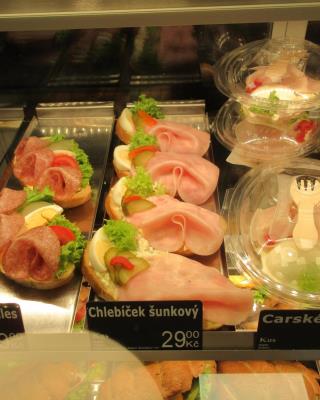
Czech Republic – HAM BREAD -Staphylococcus aureus

Potravinynapranyri

Illustrative photo #1

Place of inspection:
Hradec Králové ( Rovná 1697, 500 02 Hradec Králové )
ID: 27889190
Food group: Cold food Other cold food

HAM BREAD
Category: Dangerous foods
Invalid parameter:

Coagulase-positive staphylococci

The food exceeded the limit for the content of pathogenic bacteria – coagulase-positive staphylococci. These bacteria cause staph infections.

Expiration date: 17/04/2024
Packaging: stainless steel tray in the display case
Quantity of the product in the package: 80 g
Manufacturer: Mimo Bohemia as, Rovná 1697, Hradec Králové (Ječmínek)
Country of origin:  Czechia
Date of sample collection: 17/04/2024
Reference number: 24-000223-SZPI-CZ
The sample was detected by the official control of the State Agricultural and Food Inspection.

Canada – Various brands of Cheese recalled due to Staphylococcus aureus

Gov Canada

Summary

Product
Cheese
Issue
Food – Microbial Contamination – Staphylococcus aureus
What to do

Do not use, sell, serve or distribute the affected products.

Audience
Retail
Distribution
Alberta
British Columbia
Ontario
Quebec

Various brands of Cheese recalled due to Staphylococcus aureus.

RASFF Alert- Staphylococcus – Lasagna

RASFF

Coagulase positive Staphylococcus in lasagna from Austria in the Netherlands

Greece – Staph found in school meals linked to mass food poisoning

EKATHIMERINI

Strains of the staphylococcus bacteria have been detected in samples of school lunches that allegedly caused mass food poisoning among dozens of primary schoolchildren in the city of Lamia last week.

According to state broadcaster ERT, staph was identified in ten food samples sent to the regional National Public Health Organization laboratory in Thessaly.

According to the Mayo Clinic, staph bacteria are one of the most common causes of food poisoning. The bacteria multiply in food and produce toxins that make people sick. Symptoms come on quickly, usually within hours of eating contaminated food. Symptoms usually disappear quickly, too, often lasting just half a day.

Research – Inactivation of Salmonella Typhimurium, Escherichia coli, and Staphylococcus aureus in Tilapia Fillets (Oreochromis niloticus) with Lactic and Peracetic Acid through Fogging and Immersion

MDPI

Abstract

This study investigated the antimicrobial effects of lactic acid (LA) (3%) and peracetic acid (PA) (300 ppm) on tilapia fillets (Oreochromis niloticus) by fogging (15 min) or by immersion (2 s) in a pool of Escherichia coli (NEWP 0022, ATCC 25922, and a field-isolated strain), Staphylococcus aureus (ATCC 25923 and a field-isolated strain), and Salmonella Typhimurium (ATCC 13311 and ATCC 14028), as well as the effects on the physicochemical characteristics of the fillets. Fogging was effective and the best application method to control S. Typhimurium regardless of the acid used, promoting reductions of 1.66 and 1.23 log CFU/g with PA and LA, respectively. Regarding E. coli, there were significant reductions higher than 1 log CFU/g, regardless of the treatment or acid used. For S. aureus, only immersion in PA showed no significant difference (p < 0.05). For other treatments, significant reductions of 0.98, 1.51, and 1.17 log CFU/g were observed for nebulized PA, immersion, and LA fogging, respectively. Concerning the pH of the samples, neither of the acids used differed from the control. However, treatments with LA, and fogging with PA, reduced the pH compared to immersion in PA. As for color parameters, L* and a* values showed changes regardless of the acid or method used, resulting in an improved perception of fillet quality. These results indicate that fogging and immersion are alternatives for reducing S. Typhimurium, E. coli, and S. aureus in tilapia fillets.

France – Recall Last Week – E.coli and Staphylococcus aureus

Gov France

Raw goat’s milk cheese – Harria

Research – Exploring Propolis as a Sustainable Bio-Preservative Agent to Control Foodborne Pathogens in Vacuum-Packed Cooked Ham

MDPI

Abstract

The search for natural food additives makes propolis an exciting alternative due to its known antimicrobial activity. This work aims to investigate propolis’ behaviour as a nitrite substitute ingredient in cooked ham (a ready-to-eat product) when confronted with pathogenic microorganisms of food interest. The microbial evolution of Listeria monocytogenesStaphylococcus aureusBacillus cereus, and Clostridium sporogenes inoculated at known doses was examined in different batches of cooked ham. The design of a challenge test according to their shelf life (45 days), pH values, and water activity allowed the determination of the mesophilic aerobic flora, psychotropic, and acid lactic bacteria viability. The test was completed with an organoleptic analysis of the samples, considering possible alterations in colour and texture. The cooked ham formulation containing propolis instead of nitrites limited the potential growth (δ < 0.5 log10) of all the inoculated microorganisms until day 45, except for L. monocytogenes, which in turn exhibited a bacteriostatic effect between day 7 and 30 of the storage time. The sensory analysis revealed the consumer’s acceptance of cooked ham batches including propolis as a natural additive. These findings suggest the functionality of propolis as a promising alternative to artificial preservatives for ensuring food safety and reducing the proliferation risk of foodborne pathogens in ready-to-eat products.

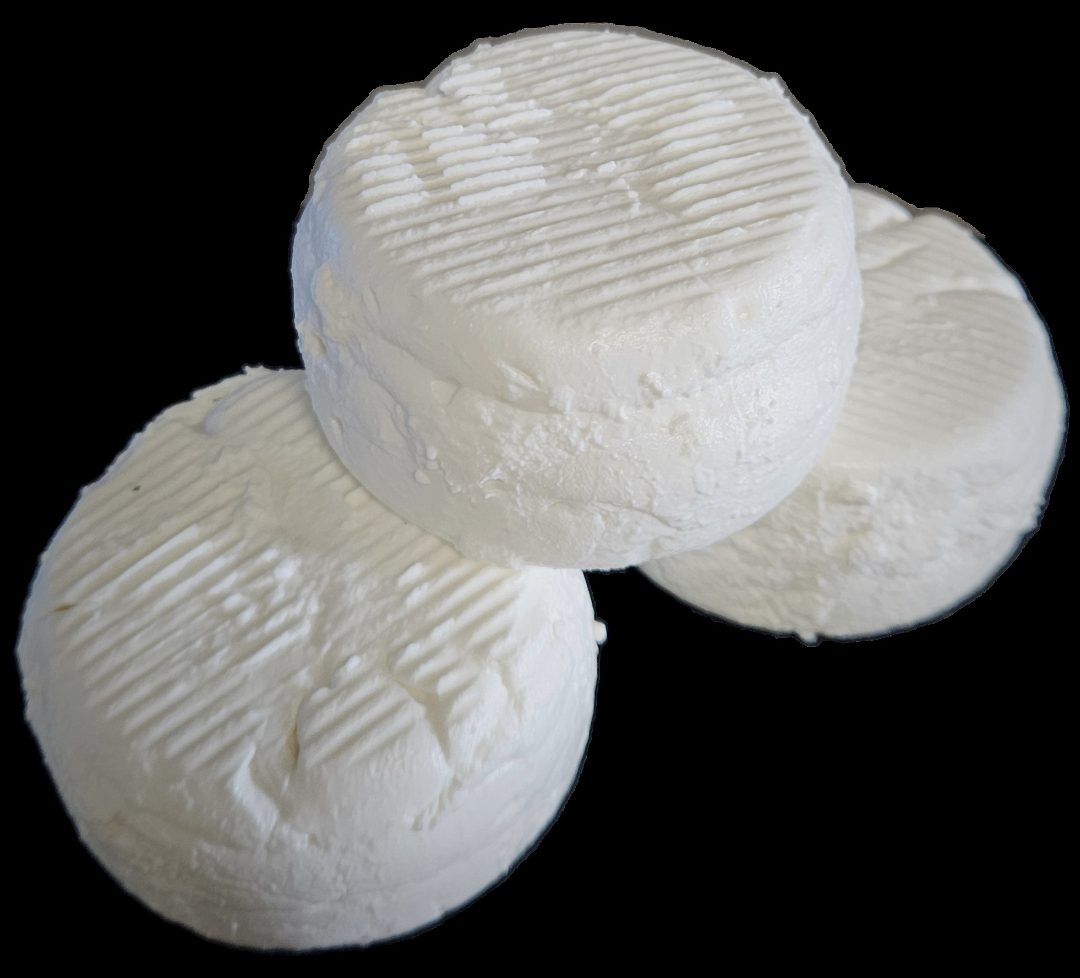
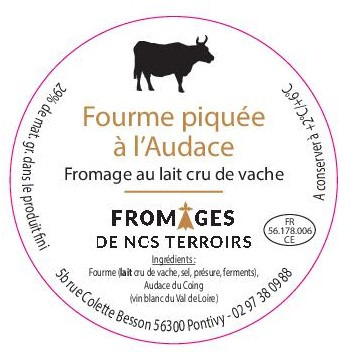
France – Fourme pique à l’Audace – Staphylococcus aureus

Gov France

Product category
Food
Product subcategory
Milk and dairy products
Product brand name
Unbranded
Model names or references
Fourme pique à l’Audace
Product identification
Batch Date
078023244 Minimum durability date 06/21/2024
0780232412 Minimum durability date 06/24/2024
Packaging
Cut cheese of approximately 2.2 kg, wrapped in paper, packaged in boxes of 2 units
Start/end date of marketing
From 04/22/2024 to 04/29/2024
Storage temperature
Product to keep in the refrigerator
Health mark
FR 56.178.006 CE
Geographical sales area
Regions: Brittany, Pays-de-la-Loire
Distributors
Team-West Distralis

RASFF Alert – Staphylococcus aureus – Raw Milk Cheese – Sucuk

RASFF

Coagulase Staphylococcus in raw milk cheese, from France in the Netherlands

RASFF

Staphylococci in Sucuk from Austria in Germany