Category Archives: salmonellosis

EU – Kinder Chocolate Salmonella Typhimurium Outbreak sickens over 200 in Europe – International outbreak of Salmonellosis in young children linked to the consumption of Kinder brand products. Update on April 20, 2022.

Sante Publique

Update on 20/04/22 following the recall of several products from the Kinder range manufactured in a factory in Belgium due to suspected contamination by  Salmonella Typhimurium.

Following the investigations carried out by the Belgian health authorities, together with their English, European and in particular French counterparts, the company Ferrero proceeded on April 5, 2022 to the recall of several Kinder range products manufactured in a factory in Belgium due to suspected contamination by Salmonella Typhimurium . On April 8, 2022, the recall finally affected all Kinder products from this factory, regardless of their expiry date. On April 14, 2022, an update of the recalled products, including the 2021 Christmas Advent Calendars, was released.

Case of salmonellosis in France: update on April 20, 2022

In total, as of 04/19/2022: 42 cases of salmonellosis with a strain belonging to the epidemic have been identified by the National Reference Center (CNR) for salmonella at the Institut Pasteur in France. 

The 42 cases are spread over 11 regions: Ile-De-France (7 cases), Provence-Alpes-Côte d’Azur (7 cases), Grand-Est (6 cases), Hauts-de-France (4 cases), Auvergne-Rhône-Alpes (4 cases), Nouvelle-Aquitaine (3 cases), Bourgogne-Franche-Comté (3 cases), Normandy (3 cases), Brittany (2 cases), Occitanie (2 cases), and Corsica (1 cases), with a median age of 3 years, and involved 22 boys and 20 girls.

Thirty-two cases were able to be questioned by Public Health France. All the cases report, before the onset of their symptoms (which occurred between 20/01 and 23/03/2022), the consumption of chocolates of the brand cited here.

Thirteen people were hospitalized for their salmonellosis, all discharged since. No deaths were reported. Public Health France is continuing its investigations with the families of cases recently reported by the CNR. 

The successive withdrawals and recalls of the Kinder brand products concerned, produced by the Belgian factory with its closure by the Belgian authorities, should limit the occurrence in France of new cases of salmonellosis in the coming days/weeks. 

To find out the list of products concerned by the withdrawal-recall: https://rappel.conso.gouv.fr/

People who have consumed the products mentioned above and who present symptoms (gastrointestinal disorders, fever within 72 hours of consumption), are invited to consult their doctor without delay, notifying him of this consumption.

In order to limit person-to-person transmission (especially in households with young children), it is recommended to wash your hands well with soap and water after using the toilet, after changing your child, and before to cook.

Situation internationale

See the previous points

EU – 8 April update: ECDC/EFSA investigation into multi-country Salmonella outbreak continues

ECDC

The outbreak has been linked to a factory in Arlon. Belgian authorities suspended all activities, all products that were manufactured there will be recalled, and retailers are also asked to remove the products from their shelves.

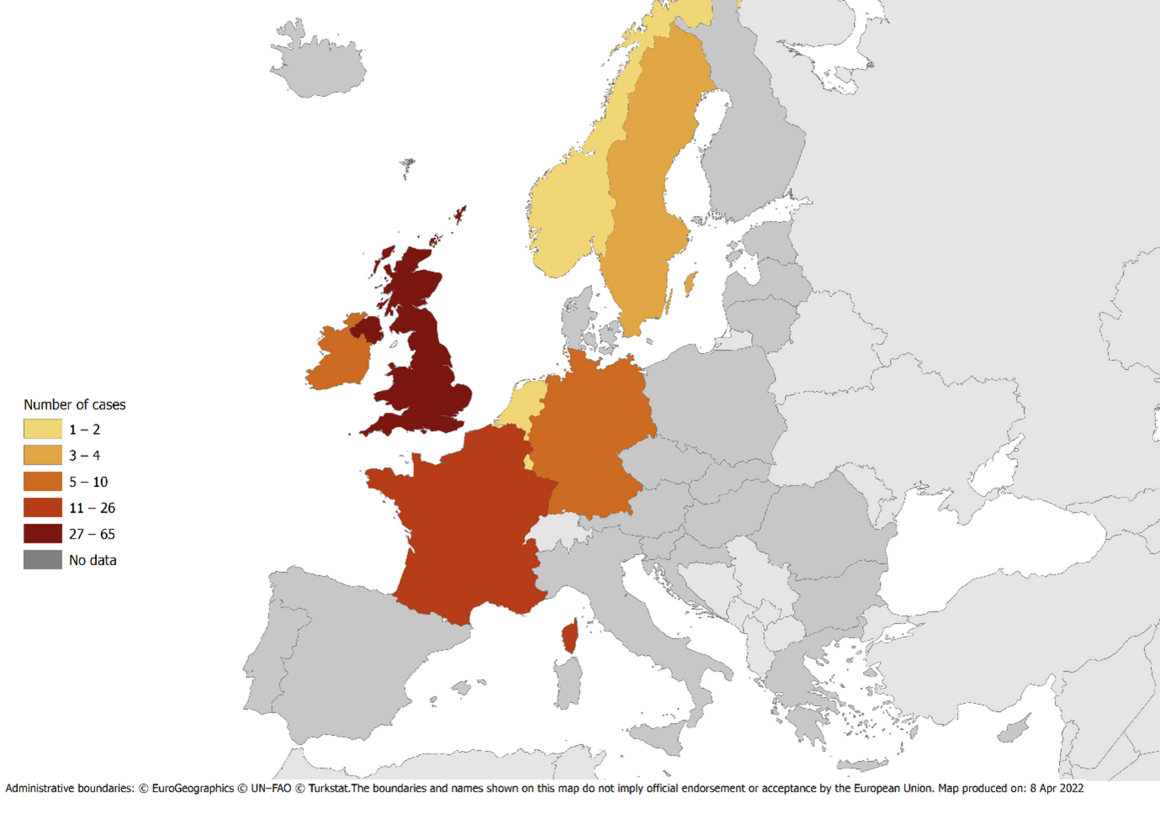
An outbreak caused by monophasic Salmonella Typhimurium is rapidly evolving in eight EU/EEA countries and the United Kingdom (UK). As of 8 April 2022, 142 cases have been reported, mainly among children under 10 years old. The first case was identified in the UK on 7 January 2022. Since 17 February 2022, cases have also been identified elsewhere in Europe.

Geographical distribution of confirmed and probable cases of monophasic S. Typhimurium in the EU/EEA and the UK, as of 8 April 2022
 

The outbreak is characterised by an unusually high proportion of children being hospitalised, some with severe clinical symptoms such as bloody diarrhoea. Based on interviews with patients and initial analytical epidemiological studies, specific chocolate products have been identified as the likely route of infection. Affected cases have been identified through advanced molecular typing techniques. As this method of testing is not routinely performed in all countries, some cases may be undetected.

Product recalls have been launched in several countries to date, including BelgiumFranceGermanyIrelandLuxembourgNetherlandsNorway, and the UK, to prevent the consumption of products potentially contaminated with Salmonella. Further investigations are being conducted by public health and food safety authorities in countries where cases are reported, to identify the cause and the extent of the contamination, and to ensure contaminated products are not put on the market.

ECDC and EFSA are assessing the available data from these countries and preparing a rapid outbreak assessment to be published next week. Questions regarding ongoing product recalls should be addressed to national food safety authorities.

Number of confirmed and probable cases* with monophasic S. Typhimurium infection by country, EU/EEA and the UK, as of 8 April 2022

Country Confirmed cases Probable cases Total cases
Belgium 0 26 26
France 25 0 25
Germany 6 2 8
Ireland 10 0 10
Luxembourg 1 0 1
Netherlands 2 0 2
Norway 1 0 1
Sweden 4 0 4
Total EU/EEA 42 29 77
United Kingdom 65 0 65
Total 114 28 142

*According to the European outbreak case definition

UK – ‘Don’t take the risk’: The FSA, FSS and UKHSA issue reminder that a range of Kinder egg products and Schoko-Bon’s should not be eaten this Easter weekend

FSA

The agencies are continuing to work with Public Health Scotland, Public Health Wales, Public Health Agency Northern Ireland – as well as international public health and food safety authorities – to investigate an ongoing outbreak of Salmonella linked to certain Kinder egg product ranges and Schoko-Bons produced at one of the Ferrero company’s factories, in Arlon, Belgium.

Full details on the products affected and the recall can be found here (Opens in a new window).

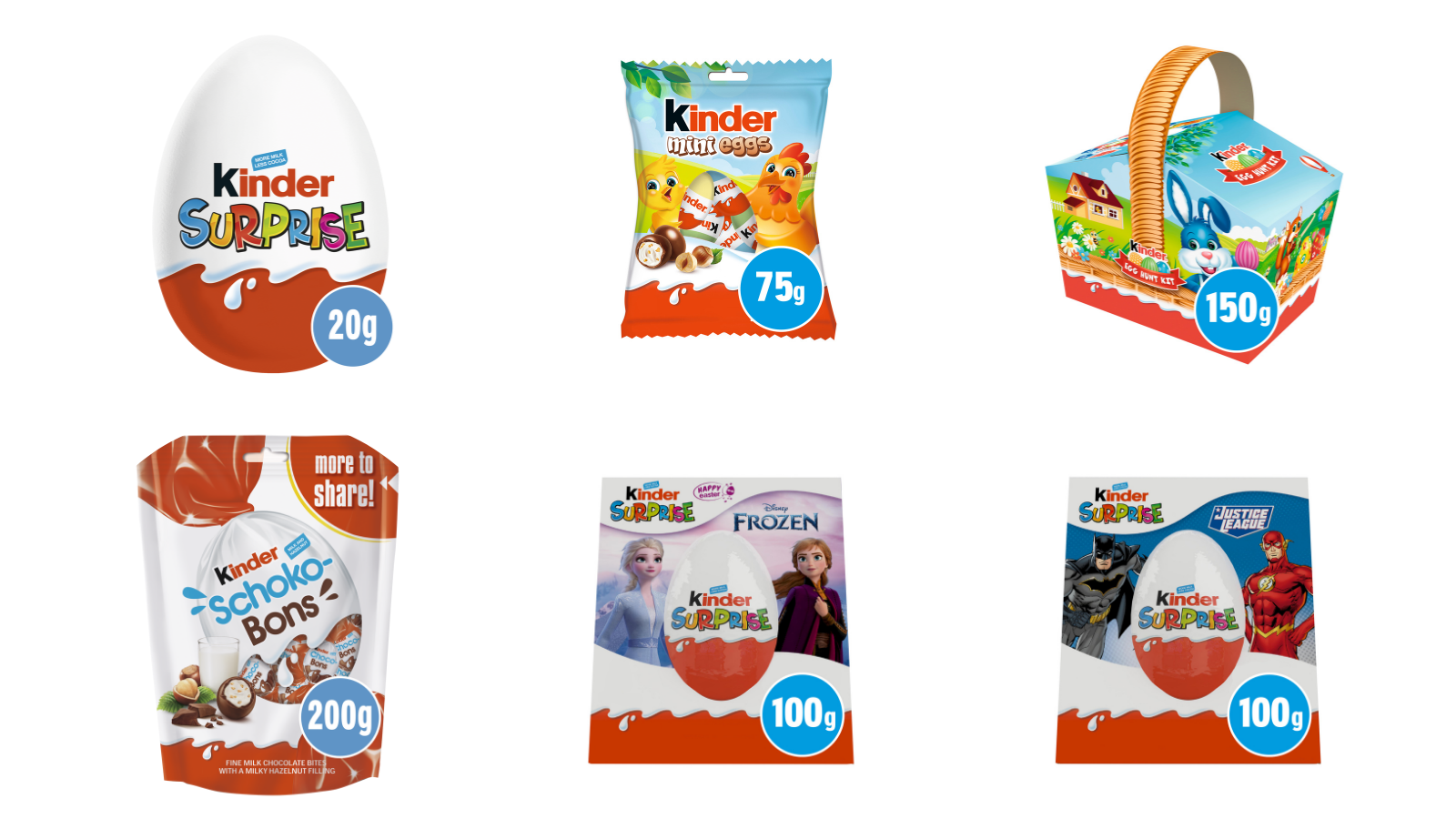
Kinder product recall items

As of 15 April, there are 70 cases linked to this outbreak in the UK. The majority of the cases are in children under 5 years of age.

Emily Miles, Chief Executive of the Food Standards Agency said:

“As we go into the Easter weekend, we are strongly urging consumers to follow the advice in the latest recall notice and to check any Kinder products they might have already bought against the list detailed in the notice, as they may pose a risk to health. If they do have any products on the list, they should not eat them and should discard them immediately.

“We have emphasised to the business and the authorities in Belgium the importance of taking a precautionary approach to their recall and trust that they will continue to put consumers’ needs first in any action they take.”

Dame Jenny Harries, Chief Executive of the UK Health Security Agency (UKHSA), said:

“We’re reminding people of the recall this Bank Holiday weekend as it’s possible these products have been bought and stored as gifts, or for events such as Easter trails.

“It’s crucial these products are not eaten and are discarded. Salmonella infection can be severe and many children affected in this outbreak have been very unwell and hospitalised, so anyone giving chocolate products to friends or family should take extra care to ensure their Easter gifts are not amongst those products recalled.

“Thank you to parents and guardians  who worked with us and other public health authorities in the UK to tell us what their children had eaten prior to becoming unwell – this allowed us to rapidly pinpoint a potential source of infection and helped food chain investigations both in this country and in Europe. We understand this has been a worrying time for these families, and their responses have helped to prevent more children and vulnerable adults being affected.”

Symptoms of salmonellosis – or infection with salmonella – typically resolve themselves within a few days. However, symptoms can be more severe, especially in young children, those who are pregnant and those with weakened immune systems.

Anybody with concerns that they have symptoms of salmonellosis should contact their GP or call NHS 111. Salmonella can be spread from person to person as well as from food, so anyone affected should adhere to good hygiene practices, such as washing hands thoroughly after using the bathroom and avoiding handling food for others where possible, if you have symptoms.

Notes to Editors:

The following products have been recalled and regardless of best-before date, should not be eaten.

The recall includes:

Kinder Surprise 20g & 3x 20g

Kinder Surprise 100g

Kinder Egg Hunt

Kinder Mini Eggs

Kinder Schoko-Bons

Research – Levels and genotypes of Salmonella and levels of Escherichia coli in frozen ready-to-cook chicken and turkey products in England tested in 2020 in relation to an outbreak of S. Enteritidis

PubMed

Frozen reformulated (FR) breaded chicken products have previously been implicated in causing human salmonellosis. A multi-country Salmonella enterica serovar Enteritidis outbreak involving several strains with >400 reported human cases in the UK occurred in 2020. Initially S. Infantis was detected in one sample from a case home but S. Enteritidis was then also isolated using a S. Enteritidis specific PCR in combination with isolation via a Craigie-tube. This prompted a survey to examine the presence and levels of Salmonella and E. coli in ready-to-cook FR poultry products in England in 2020. From a total of 483 samples, including two from cases’ homes, Salmonella was detected in 42 chicken samples, these originated from six out of 53 production plants recorded. Salmonella detection was associated with elevated levels of generic E. coli (OR = 6.63). S. Enteritidis was detected in 17 samples, S. Infantis in 25, S. Newport in four and S. Java, S. Livingstone and S. Senftenberg in one each. The highest levels of Salmonella were 54 MPN/g for S. Infantis and 28 MPN/g for S. Enteritidis; 60% of the Salmonella-positive samples had <1.0 MPN/g. S. Enteritidis was detected together with S. Infantis in five samples and with S. Livingstone in one. Where S. Enteritidis was detected with other Salmonella, the former was present at between 2 and 100-fold lower concentrations. The Salmonella contamination was homogeneously distributed amongst chicken pieces from a single pack and present in both the outer coating and inner content. The S. Enteritidis were all outbreak strains and detected in six products that were linked to four production plants which implicated a Polish origin of contamination. Despite S. Infantis being most prevalent in these products, S. Infantis from only two contemporaneous human cases in the UK fell into the same cluster as isolates detected in one product. Except for one human case falling into the same cluster as one of the S. Newport strains from the chicken, no further isolates from human cases fell into clusters with any of the other serovars detected in the chicken samples. This study found that higher E. coli levels indicated a higher probability of Salmonella contamination in FR chicken products. The results also highlight the importance of recognising co-contamination of foods with multiple Salmonella types and has provided essential information for detecting and understanding outbreaks where multiple strains are involved.

RASFF Alerts – Salmonella – Polish Chicken Products

RASFF

Poultry meat – Salmonella enteritidis from Poland in Belgium

RASFF

Salmonella Infantis in chilled chicken broiler wings from Poland in Lithuania

RASFF

Salmonella Infantis in chilled minced chicken broiler meat from Poland in Lithuania

Research – Salmonellosis in Australia in 2020: possible impacts of COVID-19 related public health measures

1 Health

kswfoodworld salmonella

Abstract

Background

More than seventy per cent of salmonellosis in Australia is thought to be due to contaminated food. Rates of salmonellosis vary across the Australian states and territories, with the highest rates in the Northern Territory. In 2020, to control coronavirus disease 2019 (COVID-19), Australia implemented public health measures including border closures, physical distancing and hygiene advice. This study analyses salmonellosis notification rates in 2020 and considers possible impacts of COVID-19 measures.

Methods

Monthly and annual salmonellosis notifications per 100,000 population, for each of Australia’s eight states and territories for the years 2015 to 2020, were extracted from Australia’s publicly accessible National Notifiable Diseases Surveillance System. For each jurisdiction, the salmonellosis rate each month in 2020 was compared with the previous 5-year median rate for that calendar month. The possible impacts of COVID-19 public health measures on salmonellosis notifications in the respec-tive states and territories were examined.

Results

The annual Australian salmonellosis notification rate was 27% lower in 2020 than the previous 5-year median. The reduction in salmonellosis rate varied throughout Australia. States and territories with more stringent, more frequent or longer COVID-19 public health measures had generally greater salmonellosis rate reductions. However, Tasmania had a 50% deeper reduction in salmonellosis rate than did the Northern Territory, despite similar restriction levels.

Conclusions

Salmonellosis notifications decreased in Australia during the global COVID-19 pandemic. The reduction in notifications corresponded with the implementation of public health measures. Persistence of high rates in the Northern Territory could indicate the overarching importance of demographic and environmental factors.

Argentina – So far in January, Salta registers about 500 cases of Salmonellosis

Salta

The highest percentage was located in the Capital department. 52% of affected individuals are children up to 9 years of age. Prevention lies in the safe handling of food.

In the first 25 days of January, 571 suspected cases of salmonella infection were reported in the province, of which 482 were confirmed, which represents 84% ​​positivity.

Of this amount, the largest proportion of affected individuals corresponds to the age range of 5 to 9 years, with a total of 130. In second place, with 122 cases, are children aged 0 to 4 years. These data show that 52% of the cases correspond to children between 0 and 9 years of age.

Regarding the location of cases, the department with the highest number is Capital, with 366, which means 76% of the total.

Of 23 departments in which the province of Salta is divided, in the period from January 1 to 25, cases of salmonellosis were registered in 19 of them. There were no cases in La Candelaria, Rosario de la Frontera, San Carlos and Los Andes.

According to records of the Epidemiological Surveillance program of the Ministry of Public Health, in 2021 there were 1,930 suspected cases, with 1,748 confirmed (91% positivity).

Prevention Guidelines

The Ministry of Public Health recommends taking precautions when handling food, since salmonellosis occurs through the ingestion of food contaminated with bacteria of the salmonella genus.

Canada – Certain Tiger Nuts recalled due to possible Salmonella contamination from rodent infestation

Gov france

Summary

Product
Tiger Nuts
Issue
Food » Microbial Contamination » Salmonella
What to do

Do not consume, use, sell, serve, or distribute the recalled product.

Issue

African Foodways Market is recalling certain re-packaged Tiger Nuts from the marketplace due to possible Salmonella contamination from rodent infestation.

The recalled product has been sold in Manitoba.

What you should do

  • If you think you became sick from consuming a recalled product, call your doctor
  • Check to see if you have the recalled product in your home
  • Do not consume the recalled product
  • Do not serve, use, sell, or distribute the recalled product
  • Recalled products should be thrown out or returned to the location where they were purchased

Food contaminated with Salmonella may not look or smell spoiled but can still make you sick. Young children, pregnant women, the elderly and people with weakened immune systems may contract serious and sometimes deadly infections. Healthy people may experience short-term symptoms such as fever, headache, vomiting, nausea, abdominal cramps and diarrhea. Long-term complications may include severe arthritis.

Ireland – Woman died from Salmonella-contaminated food served at First Communion party

Irish Examiner

A Dublin woman who was a keen fitness fanatic died from poisoning as a result of eating food contaminated with salmonella that was served at a First Holy Communion party.

An inquest into the death of Sandra O’Brien heard it was linked to cold turkey supplied by a catering firm that resulted in a major outbreak of a rare form of Salmonella in north Co Dublin in May 2017.

Ms O’Brien, 55, a mother of one from Brookdale Way, Swords, Co Dublin, was found dead in the bedroom of her home on May 21, 2017.

The inquest heard the form of infection, Salmonella Brandenburg, was typically only fatal in 0.4% of cases.

Evidence was heard that the food for the event had been provided by Flanreil Food Services, which had been operating from O’Dwyer’s Pub on Strand Road in Portmarnock, Co Dublin.

The inquest heard there had been 35 confirmed cases of Salmonella and another 37 cases of suspected Salmonella linked to the outbreak which included two kitchen staff and two chefs from the catering company.

Norway – The Norwegian Zoonoses Report 2020

Summary

The occurrence of most zoonotic pathogens in animals was stable in 2020 compared to previous years. The occurrence in humans, however, decreased in 2020 due to the COVID-19 situation. The decrease was highest in campylobacteriosis, salmonellosis and E. coli (EHEC/VTEC) infections, mainly due to less travel associated cases. Introduction The Zoonosis Report is published annually in Norway in accordance with the requirements of the EU Council Directive 2003/99/EC. In addition, data on specified zoonoses in feed, animals and food are reported to the European Food Safety Authority (EFSA). Corresponding data from humans are reported to the European Center for Disease Control (ECDC).

These two European institutions compile an annual European zoonosis report based on the received data: https://www.efsa.europa.eu/en/efsajournal/pub/6971The Norwegian Veterinary Institute (NVI) is responsible for reporting of Norwegian data to EFSA, while the Norwegian Institute of Public Health (NIPH) reports Norwegian data to ECDC. The Zoonosis Report is written by the NVI in collaboration with the Norwegian Food Safety Authority (NFSA) and NIPH.

Click to access 2021_63%20Zoonoserapporten%202020.pdf