Category Archives: Salmonella

Sweden – Maximat Nordby recalls minced meat – may contain Salmonella

Livsmedelsverket

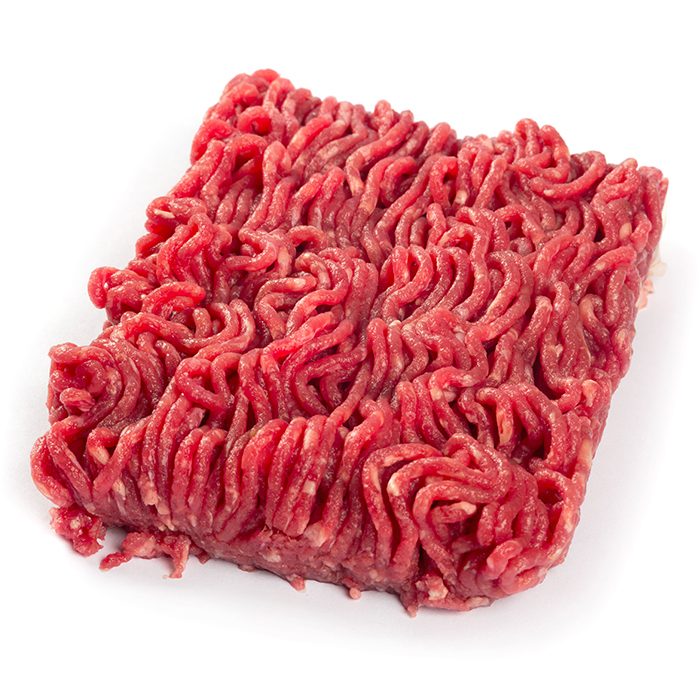
Maximat Nordby is recalling minced meat because it may contain salmonella.

France – Ground beef sold in the butcher section traditional stand – Salmonella

Gov France

Product category
Food
Product subcategory
Meats
Product brand name
Unbranded
Model names or references
Ground beef sold in the butcher section traditional stand
Product identification
GTIN Batch
00000000000000 No lot sold at the traditional stand
Packaging
On customer request in the form of minced meat or minced steak
Start/end date of marketing
From 05/13/2024 to 05/14/2024
Storage temperature
Product to keep in the refrigerator
Further information
The product was sold in the traditional butcher’s section between 05/13/2024 and 05/14/2024.
Geographical sales area
Noeux-Les-Mines
Distributors
Leclerc Noeux-Les-Mines

Belgium – Prepared American and Prepared American Martino from the Norenca and Spar brand – Salmonella

AFSCA

American_Norenca

In agreement with the FASFC, Norenca NV is withdrawing the Prepared American and Prepared American Martino products of the Norenca and Spar brands from sale and recalling them from consumers due to the possible presence of Salmonella.

Norenca asks its customers not to consume this product and to return it to the point of sale.

Description of products: 

Product names: Prepared American and Martino Prepared American
Brand: Norenca and Spar
Batch numbers: 02421142 and 0242143
Expiration dates (DLC): 05/28/2024 and 05/29/2024
Weight: +/- 175g and +/- 300g
Sales period : from 05/23/2024
Information for consumers
Possible symptoms of a food infection caused by salmonella include fever, abdominal cramps and diarrhea, within 12 to 48 hours after consumption of the contaminated food. The risk of infection is higher in the elderly, children, pregnant women and immunocompromised people.
People who have consumed these products and who present this type of symptoms are invited to consult their doctor without delay, reporting this consumption.

For any  further information , contact NORENCA NV, 2440 GEEL, info@norenca.be
014/58.45.11

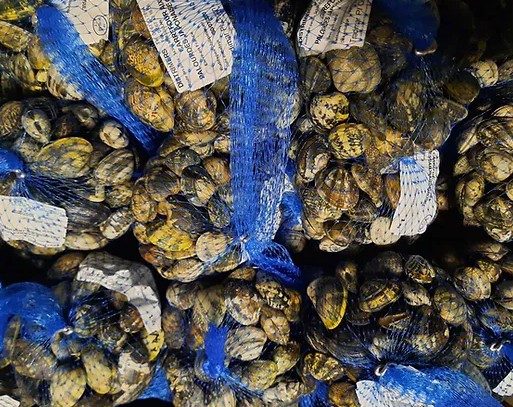
Luxembourg – Gray clams sold in bulk -Salmonella

SAP

The following product is recalled in Luxembourg:

Name Gray clam
Brand sales at the Auchan fish department
Batch 62177 and 62168
Sales period from 05/16/2024

Danger  : Presence of Salmonella

Salmonella can cause symptoms such as nausea, vomiting, abdominal cramps, diarrhea, fever and headache within 6 to 72 hours after consumption. These symptoms may be aggravated in young children, immunocompromised individuals and the elderly. People who have consumed these products and present these symptoms are invited to consult a doctor and report this consumption.

Sale confirmed in Luxembourg by: Auchan. A sale by other operators cannot be excluded.

Information Source: Recall Notification

Research – Foodborne Illnesses from Leafy Greens in the United States: Attribution, Burden, and Cost

Science Direct

Abstract

Leafy green vegetables are a major source of foodborne illnesses. Nevertheless, few studies have attempted to estimate attribution and burden of illness estimates for leafy greens. This study combines results from three outbreak-based attribution models with illness incidence and economic cost models to develop comprehensive pathogen-specific burden estimates for leafy greens and their subcategories in the United States. We find that up to 9.18% (90% CI: 5.81%-15.18%) of foodborne illnesses linked to identified pathogens are attributed to leafy greens. Including ‘Unknown’ illnesses not linked to specific pathogens, leafy greens account for as many as 2,307,558 (90% CI: 1,077,815–4,075,642) illnesses annually in the United States. The economic cost of these illnesses is estimated to be up to $5.278 billion (90% CI: $3.230-$8.221 billion) annually. Excluding the pathogens with small outbreak sizes, Norovirus, Shiga toxin-producing Escherichia coli (both non-O157 and O157:H7), Campylobacter spp., and nontyphoidal Salmonella, are associated with the highest number of illnesses and greatest costs from leafy greens. While lettuce (romaine, iceberg, “other lettuce”) takes 60.8% of leafy green outbreaks, it accounts for up to 75.7% of leafy green foodborne illnesses and 70% of costs. Finally, we highlighted that 19.8% of Shiga toxin-producing Escherichia coli O157:H7 illnesses are associated with romaine among all food commodities, resulting in 12,496 estimated illnesses and $324.64 million annually in the United States.

Germany – Wild garlic oil – Salmonella

Lebensmittelwarnung

Alert type: Groceries
Date of first publication: 23.05.2024
Product name:

Wild garlic oil

Product images:

Wild garlic oil.jpg

Product image wild garlic oil

Manufacturer (distributor):

Ölmühle Hartmann GbR Lindenfeldweg 12 86420 Diedorf/Biburg

Reason for warning:

Salmonella

Packaging Unit: 0.25l
Durability: 30.03.2026
Lot identification: 51368
Additional Information:

Please refer to the company’s attached product recall.

Manufacturer’s homepage:

France – Japanese Clam – Salmonella

Gov France

Product category
Food
Product subcategory
Fishing and aquaculture products
Product brand name
DISTRIMATE
Model names or references
Japanese clam
Product identification
Batch
62177
62168
Start/end date of marketing
From 05/16/2024 to 05/21/2024
Storage temperature
Product to keep in the refrigerator
Geographical sales area
Whole France
Distributors
CARREFOUR AUCHAN SUPER U POMONA

RASFF Alerts- Salmonella – Polish Poultry Products – Brazilian Poultry Products – Organic Basil – Spices – Clams – Alfalfa – MRM – Chicken Fillets

RASFF

Salmonella spp in organic basil from Spain in Italy

RASFF

Salmonella Abony and Montevideo in spices from Türkiye in Finland

RASFF

Salmonella spp in clams from Spain with raw material from Portugal in France and Belgium

RASFF

Salmonella Enteritidis in chilled chicken elements from Poland in Italy and Germany

RASFF

Salmonella in frozen mechanically separated meat from Belgium in Spain

RASFF

Salmonella Enteritidis in fresh chicken from Poland in Croatia and Slovakia

RASFF

Salmonella spp. in frozen and salted poultry breast halves from Brazil in Germany

RASFF

Salmonella spp. in poultry meat preparation from Brazil in Germany

RASFF

 Presence of Salmonella spp in alfalfa sprouts from Spain in Andorra

RASFF

Salmonella spp. in frozen chicken meat preparation from Brazil in Germany

RASFF

Salmonella spp. in frozen chicken meat preparation from Brazil in Germany

RASFF

Salmonella spp. in frozen chicken meat preparation from Brazil in Germany
RASFF

Salmonella in frozen chicken fillets from Romania in Bulgaria, France, Germany, Hong Kong, Hungary, Romania.

RASFF

Salmonella spp. in frozen chicken meat preparation from Brazil in Germany

RASFF

Salmonella spp. in frozen chicken meat preparation from Brazil in Germany

USA – FDA – Investigations of Foodborne Illness Outbreaks

FDA

What’s New

  • An outbreak of Salmonella Africana illnesses (ref # 1227) linked to a not yet identified product has been added to the table. FDA has initiated traceback.
  • For the outbreak of E. coli O157:H7 (ref # 1221) linked to bulk organic walnuts, FDA has initiated an onsite inspection and sample collection and analysis.

UK reports 90 sick in Salmonella outbreak linked to melonSalmonella Saintpaul outbreak associated with cantaloupe consumption, the United Kingdom and Portugal, September to November 2023

Cambridge.org

Abstract

In September 2023, the UK Health Security Agency identified cases of Salmonella Saintpaul distributed across England, Scotland, and Wales, all with very low genetic diversity. Additional cases were identified in Portugal following an alert raised by the United Kingdom. Ninety-eight cases with a similar genetic sequence were identified, 93 in the United Kingdom and 5 in Portugal, of which 46% were aged under 10 years. Cases formed a phylogenetic cluster with a maximum distance of six single nucleotide polymorphisms (SNPs) and average of less than one SNP between isolates. An outbreak investigation was undertaken, including a case–control study. Among the 25 UK cases included in this study, 13 reported blood in stool and 5 were hospitalized. One hundred controls were recruited via a market research panel using frequency matching for age. Multivariable logistic regression analysis of food exposures in cases and controls identified a strong association with cantaloupe consumption (adjusted odds ratio: 14.22; 95% confidence interval: 2.83–71.43; p-value: 0.001). This outbreak, together with other recent national and international incidents, points to an increase in identifications of large outbreaks of Salmonella linked to melon consumption. We recommend detailed questioning and triangulation of information sources to delineate consumption of specific fruit varieties during Salmonella outbreaks.