Category Archives: Salmonella

Research – Influence of Antimicrobial Agents on the Thermal Sensitivity of Foodborne Pathogens: A Review

Journal of Food Protection

Consumers are driving food production toward the use of more organic antimicrobial agents such as essential oils (EOs) by demanding more natural and clean-label food products. Due to the strong aromatic and flavor properties of EOs, their use is often precluded, or limited to concentrations below the flavor threshold. However, adding EOs at concentrations this low often renders their biocidal activity ineffective. An opportunity exists for low concentrations of EO antimicrobial agents to be combined with mild heating (e.g., 42 to 55°C) for short treatment times to use the hurdle concept for additive or synergistic effects on foodborne pathogens such as Escherichia coli O157:H7, Salmonella, or Listeria monocytogenes; norovirus; and surrogate organisms. In some cases, especially with fruit juices, this intervention combination is described as antimicrobial-assisted pasteurization. Used below the organoleptic quality threshold, EOs, which otherwise would have little effect on the inactivation of foodborne pathogens, are effective antimicrobial agents when used in conjunction with mild thermal processes. Thermal processes combined with antimicrobial agents can be used for processing liquids, eggs, juices, drinks, and fresh produce. This review highlights research literature where antimicrobial agents and mild heating have been combined to increase the inactivation of foodborne pathogen populations. Commodities and testing substrates reviewed include buffers and nutrient broths, juices, liquid egg, mangoes, cut lettuce, cut and shredded cabbage, shredded carrot, baby spinach leaves, and salsa. Opportunities exist for the application of this hurdle technology to a whole array of food products, which could benefit from pathogen reduction or elimination, and to prevention of aqueous cross-contamination and/or internalization during the washing of fresh produce.
Research – ECDC – Salmonellosis – Annual Epidemiological Report for 2016

ECDC

Publication series: Annual Epidemiological Report on Communicable Diseases in Europe
Time period covered: This report is based on data for 2016 retrieved from The European Surveillance System (TESSy) on 15 March 2018. 

Australia – Ash and Sons Eggs – Salmonella

Food Authority NSW

Recalls and advisories

Research – Estimate of the annual burden of foodborne illness in nondeployed active duty US Army Service Members: five major pathogens, 2010–2015

Cambridge.org

In this study, we estimate the burden of foodborne illness (FBI) caused by five major pathogens among nondeployed US Army service members. The US Army is a unique population that is globally distributed, has its own food procurement system and a food protection system dedicated to the prevention of both unintentional and intentional contamination of food. To our knowledge, the burden of FBI caused by specific pathogens among the US Army population has not been determined. We used data from a 2015 US Army population survey, a 2015 US Army laboratory survey and data from FoodNet to create inputs for two model structures. Model type 1 scaled up case counts of Campylobacter jejuni, Shigella spp., Salmonella enterica non-typhoidal and STEC non-O157 ascertained from the Disease Reporting System internet database from 2010 to 2015. Model type 2 scaled down cases of self-reported acute gastrointestinal illness (AGI) to estimate the annual burden of Norovirus illness. We estimate that these five pathogens caused 45 600 (5%–95% range, 30 300–64 000) annual illnesses among nondeployed active duty US Army Service members. Of these pathogens, Norovirus, Campylobacter jejuni and Salmonella enterica non-typhoidal were responsible for the most illness. There is a tremendous burden of AGI and FBI caused by five major pathogens among US Army Soldiers, which can have a tremendous impact on readiness of the force. The US Army has a robust food protection program in place, but without a specific active FBI surveillance system across the Department of Defence, we will never have the ability to measure the effectiveness of modern, targeted, interventions aimed at the reduction of specific foodborne pathogens.

USA -More frozen breaded chicken nuggets recalled in connection with outbreak

Food Safety News

Canadian officials have posted the 13th recall notice related to more than a dozen Salmonella outbreaks — some ongoing — in their country in the past 22 months. Investigators have traced the outbreaks to frozen breaded chicken nuggets, patties and similar products.

In the latest recall, posted March 21, the Canadian Food Inspection Agency urged consumers to check their homes for certain Janes brand “Pub Style – Chicken Nuggets – Breaded Chicken Cutlettes” and throw them away even if some have been eaten and no one appeared to have become sick. The agency reported the Sofina Foods Inc. distributed the recalled products to retailers nationwide.

The Public Health Agency of Canada continues to warn the public about the dangers of raw frozen breaded chicken products. The agency reported that as of March 1, there had been a total of 555 laboratory-confirmed outbreak victims nationwide. Of those for whom complete information is available, 92 people had to be admitted to hospitals. 

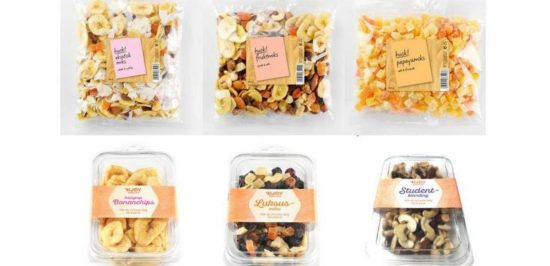
Norway – Snack mix recall expanded as patient count increases in Salmonella outbreak

Bama recall Salmonella Norway

Food Safety News

More cases of Salmonella infections have been reported in Norway with a link to imported dried fruit and coconut. Salmonella Agbeni has been detected in several samples of the snack mixes. Salmonella Gamaba was also found in two unopened packages from the same lot.

The Norwegian Institute of Public Health (Folkehelseinstituttet) reported 32 confirmed and seven possible Salmonella Agbeni cases in an update from the 21 confirmed and nine possible infections earlier this month.

RASFF Alerts – Salmonella – Black Pepper – Sesame Seeds – Chicken Meat – Salted Chicken – Mulitcereal Bread Mix – Ducks Legs – Peppered Turkey Breast – Chorizo Noir

RASFF-Logo

RASFF – Salmonella (present /25g) in chilled chicken meat from Slovakia in Poland

RASFF – Salmonella (presence /25g) in frozen salted raw chicken half breast from Brazil in the UK

RASFF – Salmonella (presence /25g) in multicereal bread mix from the Netherlands in Belgium

RASFF – Salmonella enterica ser. Enteritidis (present /25g) in chilled chicken from Poland in the Czech Republic

RASFF – Salmonella enterica ser. Give (present /25g) in frozen duck legs from Hungary in Italy

RASFF – Salmonella (present /25g) in frozen peppered turkey breast from Chile in Germany

RASFF – Salmonella enterica ser. Kottbus (presence /25g) in frozen duck legs from Hungary in Italy

RASFF – Salmonella (present /25g) in frozen peppered turkey breast from Chile in Germany

RASFF – Salmonella (presence /25g) in sesame seeds from Sudan in Greece

RASFF – Salmonella (present /25g) in chorizo noir from Portugal in France

RASFF – Salmonella enterica ser. Typhimurium (presence /25g) in chilled chicken cuts from France in France

RASFF – Salmonella enterica ser. Oranienburg (presence /25g) in black pepper from Brazil in Germany

RASFF – Salmonella (present /25g) in black pepper from Brazil in Spain

RASFF – Salmonella (presence /25g) in sesame seeds from India in Romania

Canada – Food Recall Warning – Janes brand Pub Style Chicken Nuggets recalled due to Salmonella

CFIA


Salmonella kswfoodworld

Image CDC

Recall details

Ottawa, March 21, 2019 – Sofina Foods Inc. is recalling Janes brand Pub Style Chicken Nuggets from the marketplace due to possible Salmonella contamination. Consumers should not consume the recalled product described below.

Recalled products

Brand Name Common Name Size Code(s) on Product UPC
Janes Pub Style – Chicken Nuggets – Breaded Chicken Cutlettes – Uncooked 800 g Best Before: 2019 DE 15 0 69299 12490 3

RASFF Alerts – Salmonella – Organic Soybean Cake -Organic Rapeseed Cake

RASFF-Logo

RASFF – Salmonella (presence /250g) in organic soybean cake from China, via the Netherlands in Germany

RASFF – Salmonella enterica ser. Jerusalem (presence /25g), Salmonella enterica ser. Livingstone (presence /25g) and Salmonella enterica ser. Poona (presence /25g) in organic soybean cake from Italy in Austria

RASFF – Salmonella enterica ser. Typhimurium (presence /25g) in organic rapeseed cake from Romania, via the Netherlands in Denmark

RASFF – Salmonella enterica ser. Liverpool (presence /25g) in organic sunflower seed press cake for feed from Turkey, via Germany in Germany

Ireland – Recall of Wafle Suche Due to Possible Contamination with Salmonella

FSAI

Summary
Category 2: For Information
Alert Notification: 2019.12
Product: Wafle suche; pack size: 170g
Batch Code: All batches with ‘best-before’ dates from 7/09/2019 to 22/09/19
Country Of Origin: Poland

Message:

As a precautionary measure, Zakład Handlowo-Usługowy “Tadex” Tadeusz Koniak is recalling all batches of the above date range of Wafle suche, due to possible post-production contamination with Salmonella Anatum. Stores in Ireland that sold the implicated batches are displaying in-store recall notices.  Customers should not consume the implicated batches, but can return them to the place of purchase.

Wafle suche