Category Archives: Salmonella

Finland – Suspicion of Salmonella in Fresh Baby Spinach

Ruokavirasto

Satotukku Oy has announced that it has withdrawn one batch of fresh baby spinach from sale. Preliminary studies have identified salmonella in the product and, as a precautionary measure, Satotukku withdraws the remaining products in the batch from the stores and also advises consumers to dispose of the product. The doubt concerns only the lot with the symbol LOT: 121 . The babypinate under the brand name Semprefresco is packed in a 70 gram box and has been on sale in 19 S Group stores during the week.

Further information: Satotukku Oy: Johanna Timonen, tel. +358 40 451 6221, johanna.timonen@satotukku.fi

The matter is handled by the Inspector General of the Finnish Food Safety Authority Paula Hietanen, tel. +358 50 596 9637,  firstname.lastname@ruokavirasto.fi .


Product image:

Baby spinach in a plastic package.

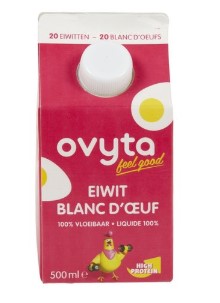
Luxembourg -OVYTA BRAND LIQUID EGG WHITE – PRESENCE OF SALMONELLA

Securite Alimetaire

Source of information: Notification by the companies Euro Ei BV and Lodewijckx NV  

Distribution in Luxembourg: offered for sale by Colruyt

The Luxembourg food safety authorities inform about the following recall:

Danger / Non-Compliance  : presence of Salmonella

Last name Liquid egg white
Mark Ovyta
Unit 500 milliliters
Barcode 05412671117904
Use by date (DLC) 09/21/2020
Lot 20183

France – Salmonella prompts recall of more than half a million eggs

Food Safety News

A number of supermarkets in France have recalled eggs sold under different brand names due to possible Salmonella contamination.

According to the French magazine 60 Millions de Consommateurs the recall covers more than 500,000 eggs but there have been no official communications from authorities and no reported illnesses.

Carrefour has issued three recalls. The first involved the company Arradoy and the other two the firm Matines.

The Arradoy recall was for packages of 20 large standard eggs with dates on the boxes of April 27 to May 18. The implicated eggs are marked with lot number 3FRMDB678 and lot 06 on the box.

The Matines recalls involve packs of 10 and 30 medium sized shell eggs with recommended use-by dates from April 26 to May 14. The code on the eggs is 3FRMDB08 and FR 32 066 020 is on the boxes.

Research – Presence of Bacterial Pathogens and Levels of Indicator Bacteria Associated with Duck Carcasses in a Commercial Processing Facility

Journal of Food Protection

ABSTRACT

Little information has been published on the microbiological aspects of U.S. commercial duck processing. The objective of this study was to measure prevalence and/or levels of bacteria in duck samples representing the live bird and partially or fully processed oven-ready duck meat. At 12 monthly sampling times, samples were collected at six sites along the processing line in a commercial duck slaughter plant. Crop and cecum samples were collected at the point of evisceration. Whole carcass rinse samples were collected before and after carcass immersion chilling plus application of an antimicrobial spray. Leg quarters were collected from the cut-up line before and after application of an antimicrobial dip treatment. All samples (five from each site per monthly replication) were directly plated and/or enriched for Salmonella and Campylobacter. For the last 10 replications, carcass and leg quarter rinse samples were also evaluated for enumeration of total aerobic bacteria, Escherichia coli, and coliforms. Most cecum, crop, and prechill carcass rinse samples were positive for Campylobacter (80, 72, and 67%, respectively). Carcass chilling and chlorinated spray significantly lowered Campylobacter prevalence (P < 0.01), and even fewer leg quarters were positive for Campylobacter (P < 0.01). Passage through a chlorinated dip did not further reduce Campylobacter prevalence on leg quarters. Salmonella was infrequently found in any of the samples examined (≤10%). Total aerobic bacteria, coliforms, and E. coli levels were reduced (P < 0.01) on whole carcasses by chilling but were not different after cut-up or leg quarter dip treatment. Overall, current commercial duck processing techniques as applied in the tested plant were effective for reducing the prevalence and levels of Campylobacter on duck meat products.

HIGHLIGHTS
  • Campylobacter and Salmonella can be associated with live ducks for commercial slaughter.
  • Antimicrobial treatment reduced the prevalence of Campylobacter in duck samples.
  • Antimicrobial treatment reduced levels of aerobic bacteria, coliforms, and E. coli in duck samples.

Research – Two Generally Recognized as Safe Surfactants plus Acidulants Inactivate Salmonella, Escherichia coli O157:H7, and Listeria monocytogenes in Suspension or on Dip-Inoculated Grape Tomatoes

Journal of Food Protection

ABSTRACT

Contamination of fresh produce with the foodborne pathogens Salmonella enterica, Listeria monocytogenes, and Escherichia coli O157:H7 continues to be problematic, resulting in outbreaks of foodborne illness and costly corporate recalls. Various individual concentrations of citric or lactic acids (0.35 to 0.61%) or isopropyl citrate (0.16 to 0.54%) combined with two generally recognized as safe surfactants, 0.025% sodium-2-ethyl-hexyl sulfate and 0.025% sodium dodecylbenzene-sulfonate, were tested against these three pathogens in suspension and when inoculated and dried on the surface of grape tomatoes. The efficacy of sodium hypochlorite (NaClO; at 46 ppm) was also evaluated under dirty and clean conditions in suspension after addition of 0.3 or 0.03% bovine serum albumin, respectively, as an organic load. NaClO (46 ppm) inactivated the three pathogens in suspension by <0.76 log CFU/mL after 5 min in the presence of 0.3% bovine serum albumin, whereas 9 and 15 ppm of free chlorine inactivated the pathogens by 0.64 and 2.77 log CFU/mL, respectively, after 5 min under clean conditions. Isopropyl citrate (0.16% acidulant) plus 0.05% total concentration of the two surfactants inactivated the pathogens in suspension by up to 7.0 log CFU/mL within 2 min. When applied to grape tomatoes for 2 min, 0.54% isopropyl citrate plus 0.025% concentrations of each of the two surfactants reduced Salmonella, E. coli O157:H7, and L. monocytogenes by as much as ca. 5.47, 4.89, and 4.19 log CFU/g, respectively. These reductions were significantly greater than those achieved with 49 ppm of free chlorine. Citric acid and lactic acid plus surfactant washes achieved greater inactivation than water-only washes, reducing Salmonella, E. coli O157:H7, and L. monocytogenes on tomatoes by up to 4.90, 4.37, and 3.98 log CFU/g, respectively. These results suggest that these combinations of acidulants and surfactants may be an effective tool for preventing cross-contamination during the washing of grape tomatoes, for reducing pathogens on the fruit itself, and as an alternative to chlorine for washing fresh produce.

HIGHLIGHTS
  • Acidulants and surfactants were used in combinations against three foodborne pathogens.
  • Acidulant (0.16%) plus surfactants (0.05%) inactivated pathogens in suspension by up to 7.0 log CFU/mL.
  • Acidulant plus surfactant inactivated pathogens on dip-inoculated grape tomatoes by 3.35 to 5.47 log CFU/g.

Belgium – Salmonella – Euro Ei BV recalled Product: Ovyta brand liquid egg white

AFSCA

During an internal control, the presence of Salmonella was noted in the liquid white egg product bearing the expiry date of 21/09/2020 .

In consultation with the AFSCA, the manufacturer therefore decided to withdraw the product concerned from sale and to recall it to consumers.

Customers who bought this product are advised not to consume it and bring it back to the store, where it will be refunded. In the meantime, all stores have removed the affected products from the shelves.

PRODUCT DESCRIPTION

  • Name: Ovyta liquid egg white (500ml)
  • Use by date (DLC): 09/21/2020
  • Sales period: from 7/05/2020 to 11/05/2020 included
  • Item number: 18961
  • Lot number: 20183
  • Barcode: 05412671117904

This product was offered for sale via the following stores: Colruyt, Okay and Okay Compact.


Research – Study reveals foodborne illness burden in Taiwan

Food Safety News

One in six Taiwanese people suffered from foodborne illness annually during a four year period studied by researchers.

From 2012 to 2015, almost 3.9 million foodborne illnesses and 50 deaths occurred annually in the country.

Scientists said the study, published in the Journal of the Formosan Medical Association, provided the first national estimates on the disease burden from foodborne illnesses in Taiwan.

Among just more than half of foodborne illnesses cases with identifiable causal microorganisms, non-typhoid Salmonella, norovirus, and Vibrio parahaemolyticus were leading pathogens.

Foodborne illnesses caused a substantial financial disease burden, with a medical cost up to NT $1.3 billion (U.S. $43,400) annually.

Research – Poland, poultry and Salmonella

Poultry Med

A series of reports from RASFF (the Rapid Alert System for Food and Feed):
-Salmonella enterica ser. Typhimurium (present /25g) in chilled turkey meat from Poland in Poland (Notification date: 30/4/2020)
-Salmonella enterica ser. Enteritidis (presence /25g) in chilled chicken breasts from Poland in Slovakia (28/4/2020)
-Salmonella enterica ser. Enteritidis (presence /25g) in chilled chicken quarters from Poland in Slovakia (24/4/2020)
-Salmonella enterica ser. Infantis (presence /25g) in frozen chicken legs from Poland in Lithuania (24/4/2020)
-Salmonella enterica ser. Enteritidis (in 2 out of 5 samples /25g) in chilled chicken wings from Poland in Lithuania (24/4/2020)
-Salmonella enterica ser. Enteritidis (presence /25g) in chilled chicken quarters from Poland in Lithuania (24/4/2020)
-Salmonella enterica ser. Newport (3 out of 5 samples /50g) in frozen chicken breast fillets from Poland in Romania (24/4/2020)

Is this the quality of Europe’s largest poultry producer?

I have to agree most of the products are being sold to other eastern European countries although Italy was included in this weeks alerts.

Research – Enhanced elimination of Salmonella Typhimurium and Campylobacter jejuni on chicken skin by sequential exposure to ultrasound and peroxyacetic acid

Wiley Online

The present study investigated the effects of combined ultrasound (37 kHz, 380 W for 5 min) and peroxyacetic acid (PAA; 50–200 ppm) treatment on the reduction of Salmonella Typhimurium and Campylobacter jejuni on chicken skin. Ultrasound was not sufficient to inactivate S. Typhimurium (0.48 log CFU/g reduction) or C. jejuni (0.25 log CFU/g reduction), whereas PAA significantly (p < .05) reduced S. Typhimurium (0.93–1.59 log CFU/g reduction) and C. jejuni (0.77–1.52 log CFU/g reduction). However, maximum reductions of 2.21 and 2.08 log CFU/g were observed for S. Typhimurium and C. jejuni, respectively, for combined treatment with 5 min of ultrasound and 200 ppm PAA. Our results indicate that a combination of ultrasound treatment for 5 min and 200 ppm PAA was more effective in reducing S. Typhimurium and C. jejuni compared to the individual treatments, without significantly affecting the color or texture of the chicken skin, thus, demonstrating its potential to increase the microbial safety during poultry processing.

RASFF Alerts – Salmonella – Chilled Chuck Rolls – Chicken Legs – Chicken Wings- Black Pepper – Betel Leaves – Sesame Seeds – Chicken Fillets – Chicken Breast -Chicken Quarters – Minced Turkey Meat – Turkey Breast – Chicken Thighs – Chicken Kebab – Whitish Sesame Seeds – Kaffir Lime Leaves

RASFF-Logo

RASFF – Salmonella (presence /25g) in chilled chuck rolls from Ireland in the Netherlands

RASFF – Salmonella enterica ser. Enteritidis (in 2 out of 5 samples /25g) in chilled chicken legs from Poland in Lithuania

RASFF – Salmonella (presence /25g) in black pepper from Brazil in Spain

RASFF – Salmonella enterica ser. Enteritidis (in 4 out of 5 samples /25g) in chilled chicken wings from Poland in Lithuania

RASFF – Salmonella enterica ser. Infantis (presence /25g) in frozen salted chicken fillets with added water from Hungary in Italy

RASFF – Salmonella enterica ser. Newport (in 5 out of 5 samples /25g) in chilled chicken breast from Poland in the Czech Republic

RASFF – Salmonella enterica ser. Enteritidis (presence /25g) in chilled chicken quarters from Poland  Slovakia

RASFF – Salmonella (presence /25g) in chilled minced turkey meat from Poland, via Latvia in Lithuania

RASFF – Salmonella enterica ser. Saintpaul (in 1 out of 5 samples /25g) in chilled turkey breasts from Poland in the Czech Republic

RASFF – Salmonella (presence /25g) in black pepper (Piper) from Brazil in Spain

RASFF – Salmonella enterica ser. Infantis (presence /25g) in frozen chicken thighs from Hungary in Lithuania

RASFF – Salmonella (present /25g) in whitish sesame seeds from Sudan in the Netherlands

RASFF – Salmonella enterica ser. Infantis (in 3 out of 5 samples /25g) in chilled skinless chicken thighs from Poland in Lithuania

RASFF – Salmonella enterica ser. Infantis (presence /25g) and Salmonella enterica ser. Newport (presence /25g) in in chilled turkey legs from Poland used to produce frozen turkey kebab in the Czech Republic

RASFF – Salmonella enterica ser. Infantis (presence /25g) in chilled chicken legs from Poland used to produce frozen chicken kebab in the Czech Republic

RASFF – Salmonella enterica ser. Infantis (presence /25g) in frozen chicken breast fillets from Ukraine, via the Netherlands in Finland

RASFF – Salmonella enterica ser. Enteritidis (presence /25g) in chilled chicken wings from Poland in Italy

RASFF – Salmonella enterica ser. Enteritidis (presence /25g) in chilled chicken thighs from Poland in Italy

RASFF – Salmonella (4,5:12:l,v:x /25g) in frozen chicken meat from France in France

RASFF – Salmonella (presence /25g) in kaffir lime leaves from South Africa in Switzerland

RASFF – Escherichia coli (58000 CFU/g) and Salmonella (1 out of 5 /25g) in betel leaves from Sri Lanka in the UK