Category Archives: Salmonella

Research – Salmonella prevalence in raw cocoa beans and a microbiological risk assessment to evaluate the impact of cocoa liquor processing on the reduction of Salmonella

Science Direct

Abstract

Salmonella in raw cocoa beans (n= 870) from main sourcing areas over nine months was analyzed. It was detected in 71 (ca. 8.2%) samples, with a contamination level of 0.3-46 MPN/g except for one sample (4.1×10⁴ CFU/g). Using prevalence and concentration data as input, the impact of thermal treatment in cocoa processing on the risk estimate of acquiring salmonellosis by a random Belgian chocolate consumer was calculated by a quantitative microbiological risk assessment (QMRA) approach. A modular process risk model from raw cocoa beans to cocoa liquor up to a hypothetical final product (70-90% dark chocolate tablet), was set up to understand changes of Salmonella concentrations following the production process. Different thermal treatments during bean or nib steam, nib roasting or liquor sterilization (achieving a 0-6 log reduction of Salmonella) were simulated. Based on the generic FAO/WHO Salmonella dose-response model and the chocolate consumption data in Belgium, salmonellosis risk per serving and cases per year at population level were estimated. When a 5 log reduction of Salmonella was achieved, the estimated mean risk per serving was 3.35×10⁻⁸ (95% CI: 3.27×10⁻¹⁰-1.59×10⁻⁷), and estimated salmonellosis cases per year (11.7 million population) was 88 (95% CI: <1-418). The estimated mean risk per serving was 3.35×10⁻⁹ (95% CI: 3.27×10⁻¹¹-1.59×10⁻⁸), and the estimated salmonellosis cases per year was 9 (95% CI: <1-42), for a 6 log reduction. The current QMRA model solely considered Salmonella reduction in a single-step thermal treatment in the cocoa process. Inactivation obtained during other process steps (e.g. grinding) might occur but was not considered. As the purpose was to use QMRA as a tool to evaluate the log reduction in the cocoa processing, no post-contamination from the processing environment and ingredients was included. A minimum of 5 log reduction of Salmonella in the single-step thermal treatment of cocoa process, was considered to be adequate.

Finland – Pirkka seeds, nuts recalled over health concerns -Salmonella – Aflatoxin

YLE

A batch of Pirkka salad seed mix and Pirkka pumpkin seeds will be withdrawn from sale due to Finnish Customs control inspections showing Salmonella, K-Group said in a press release about its store brand on Monday.

In the same inspection, aflatoxin levels also exceeding the EU legal limit were found in K-Menu-branded peanuts. Aflatoxin is a mould toxin that can form in products stored in humid and warm conditions. The products are dangerous and should not be consumed.

Romania – AlFez – Tahini Products – Salmonella

ANSVA

Tahini Al’Fez paste 160g
The manufacturing company AB World Foods UK informs about the withdrawal
from the market of all batches of the product Pasta Tahini Al’Fez 160g

ANSVA

Al’Fez Pasta Tahini

ANSVA

Pasta Tahini Al`Fez 160g
The manufacturer AB World Foods LTD UK is currently withdrawing the Pasta product from the market
Tahini Al`Fez 160g from the lots with the expiration dates:
31.07.2024
30.09.2024
30.11.2024
31.01.2025

Research – Greece dealing with Salmonella outbreak; Listeria increase

Food Safety News

At least 100 people fell ill in Greece recently with contaminated water suspected as the source.

The Hellenic National Public Health Organization (EODY) said an increased incidence of gastroenteritis cases was observed in late May in residents of the areas of Rizomylos and Stefanovikiou, Magnesia.

A total of 100 cases, of all ages and both sexes, with symptom onset dates between May 24 and June 2, were reported. Nine children were hospitalized, as well as an elderly person with underlying conditions

Belgium – AL’FEZ brand “Natural Tahini” sesame seed paste – Salmonella

AFSCA

tahini

In consultation with the AFSCA, Albert Heijn is recalling the sesame seed paste “Natural Tahini” from the AL’FEZ brand (all expiry dates combined). A check carried out by the producer has detected the presence of salmonella in a limited number of products.

Albert Heijn asks its customers not to consume this product and to return it to the point of sale. It will be refunded.

Product Description :     

  • Product Category: Sesame Seed Paste
  • Product Name: Natural Tahini 
  • Brand: AL’FEZ
  • EAN code: 5010338300890
  • Expiry date (BDD): all
  • Lot: all
  • Weight: 160g
  • Sales period: from January 1, 2023 to July 11, 2024

Product sold in Albert Heijn stores.

For further information please contact Albert Heijn on: 0800 777 05

Sweden – Protos recalls Smak av Gotland minced lamb with best before date 07-17-2024 – Salmonella

Livsmedelsverket

Protos recalls Smak av Gotland minced lamb with best before date 07-17-2024

2024-07-12

Protos is recalling minced lamb of the Smak av Gotland brand after salmonella was found in a limited batch.

USA – AB World Foods US, Inc. Recalls Al’Fez Natural Tahini Because of Possible Health Risk

FDA

AB World Foods US, Inc. of Oakbrook Terrace, Illinois, is voluntarily recalling Al’Fez Natural Tahini in 5.6oz glass jars because it has the potential to be contaminated with Salmonella, an organism which can cause serious and sometimes fatal infections in young children, frail or elderly people, and others with weakened immune systems. Healthy persons infected with Salmonella often experience fever, diarrhea (which may be bloody), nausea, vomiting and abdominal pain. In rare circumstances, infection with Salmonella can result in the organism getting into the bloodstream and producing more severe illnesses such as arterial infections (i.e., infected aneurysms), endocarditis and arthritis.

The recalled Al’Fez Natural Tahini was distributed nationwide in retail stores beginning 05/26/23. The recalled Al’Fez Natural Tahini was sold in 5.6oz glass jars, UPC 711464506778, and with a “BEST BEFORE” of “2024 JL 11” or later. The specific codes being recalled are: Lot Numbers “3031”, “3080”, “3270”, “3297” with corresponding BEST BEFORE: “2024 JL 31”; “2024 SE 09”; “2025 MR 27”; “2025 AL 04”. The recall only applies to these codes, the codes are located on the back of the jar as depicted in the pictures below.

To date, AB World Foods US, Inc. has received no reports of illness related to the recalled product from consumers in the United States.

The potential for contamination was noted after testing by the company revealed the presence of Salmonella. The company has ceased distribution of the product as the company continues their investigation.

Consumers who have purchased Al’Fez Natural Tahini 5.6oz with the affected lot codes are advised to discontinue use immediately and return the product to the place of purchase for a full refund. If a consumer experiences the symptoms listed above and believes they may have been exposed to Salmonella, they are urged to contact a medical provider.

The wellbeing of its customers is paramount to AB World Foods US, Inc. Consumers who have questions may contact Adifi Burman, info@alfez.us, 647 218 0081. Monday through Friday 9 a.m. to 5 p.m. Eastern Time.

This recall is being made with the knowledge of the Food and Drug Administration.

Research – Microbial Contamination and Disease Outbreaks Associated with Rockmelons (Cucumis melo): Implications for Public Health Protection

MDPI

Abstract

Foodborne illnesses caused by consuming contaminated fresh produce not only pose serious public health risks but also lead to huge economic losses. Rockmelons (cantaloupes) have emerged as a recurrent source of disease outbreaks caused by foodborne pathogens, including Listeria monocytogenes, Salmonella, and Escherichia coli. The most common factor of the outbreaks was the microbial contamination of rockmelons at the farm, and subsequently, the pathogenic bacteria were transferred to the flesh during cutting and processing. One of the deadliest outbreaks occurred in the USA due to L. monocytogenes contamination of rockmelons which caused 33 deaths in 2011. Since then, several guidelines and recommendations have been developed for food safety management to reduce the microbial contamination of melons on farms and post-harvest operations. This article explicitly provides an updated overview of microbiological contamination, disease outbreaks, pathogens prevalence, and mitigation strategies to reduce public health risks due to the consumption of rockmelons.

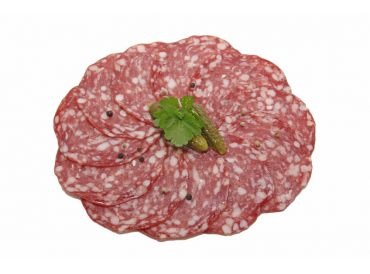
France – LIGHT OLD-STYLE ROSETTE sold in the delicatessen section of the HYPER MONTREUIL store between 03/07/24 and 12/07/24 – Salmonella

Gov France

Product Category
Food
Product subcategory
Meats
Product brand name
Unbranded
Model names or references
LIGHT OLD-STYLE ROSETTE sold in the delicatessen section of the HYPER MONTREUIL store between 03/07/24 and 12/07/24
Product identification
GTIN Batch
1111111111116 Sold between 03/07/24 and 12/07/24
Packaging
Bag
Start/End of marketing date
From 03/07/2024 to 12/07/2024
Storage temperature
Product to be stored in the freezer
Further information
LIGHT OLD-STYLE ROSETTE sold in the delicatessen section of the HYPER MONTREUIL store between 03/07/24 and 12/07/24
Geographic area of ​​sale
Carrefour Hyper Montreuil
Distributors
Carrefour Hyper Montreuil Only

Ireland – Recall of additional batches of Al’Fez Natural Tahini Smooth and Nutty due to the possible presence of Salmonella

FSAI

Category 1: For Action
Alert Notification: 2024.29 (update 1)
Product Identification: Al’Fez Natural Tahini Smooth & Nutty; pack sizes: 160g and 270g
Batch Code All batches; all best before dates
Country Of Origin: United Kingdom

Message:

Further to FSAI food alert 2024.29, all batches of Al’Fez Natural Tahini Smooth & Nutty are being recalled due to the possible presence of Salmonella. Recall notices will be displayed at point-of-sale.

Nature Of Danger:

People infected with Salmonella typically develop symptoms between 12 and 36 hours after infection, but this can range between 6 and 72 hours. The most common symptom is diarrhoea, which can sometimes be bloody. Other symptoms may include fever, headache and abdominal cramps. The illness usually lasts 4 to 7 days. Diarrhoea can occasionally be severe enough to require hospital admission. The elderly, infants, and those with impaired immune systems are more likely to have a severe illness.

Action Required:

Manufacturers, wholesalers, distributors, caterers & retailers:

Retailers are requested to remove the implicated batches from sale and display recall notices at point-of-sale.

Consumers:

Consumers are advised not to eat the affected batches.