Category Archives: Salmonella

Kinder International Recall -Salmonella

EFOOD ALERT

International recall of Ferrero’s Kinder chocolate products

Ferrero has expanded its international recall of Kinder Surprise chocolate novelty products, linked to a multi-country outbreak of Salmonella Typhimurium illnesses. Click on the country link to navigate to the most recent recall notice for that jurisdiction.

Hong Kong – Not to consume two types of imported chocolate products with possible contamination with Salmonella

CFS

Issue Date 14.4.2022
Source of Information Notification from the Rapid Alert System for Food and Feed of the European Commission
Food Product Chocolate products
Product Name and Description Product name: Kinder Überraschung Maxi Rosa 100g XMAS

Brand: Kinder

Place of origin: Belgium

Net weight: 100 grams per pack

Best-before date: April 20, 2022

Product name: Kinder Überraschung Maxi Classic 100g XMAS

Brand: Kinder

Place of origin: Belgium

Net weight: 100 grams per pack

Best-before date: April 20, 2022

Reason For Issuing Alert The Centre for Food Safety (CFS) received a notification from the Rapid Alert System for Food and Feed of the European Commission that two of the chocolate products that are possibly contaminated with Salmonella have been imported into Hong Kong.

Salmonella infection may cause fever and gastrointestinal upset such as vomiting, abdominal pain and diarrhoea. The effects on infants, young children, the elderly and persons with a weak immune system could be more severe and may even lead to death.

Action Taken by the Centre for Food Safety The CFS has immediately contacted local importers for follow-up. An importer, CIAO International Limited, had imported the affected batches of products. As a precautionary measure, the importer has already stopped sales and removed from shelves the affected products on April 7, and will initiate a recall according to the CFS’s instructions.

The CFS has stepped up testing of related products as well as alerting the trade to the incident, and will continue to follow up, closely liaise with overseas authorities and take appropriate action. An investigation is ongoing.

Advice to the Trade The trade should stop using or selling the affected products immediately if they possess them.
Advice to Consumers Do not consume the affected products.
Further Information The CFS press release

The latest information of affected products can be found at the CFS’s Food Incident Post webpage (www.cfs.gov.hk/english/rc/subject/fi_list.html).

Members of the public may call the hotline of the importer, CIAO International Limited, at 2755 7777 during office hours for enquiries about the recall.

France – International outbreak of salmonellosis in young children linked to the consumption of Kinder brand products. Update on April 12, 2022.

Sante Publique

Following the investigations carried out by the Belgian health authorities, together with their English, European and in particular French counterparts, the company Ferrero proceeded on April 5, 2022 to the recall of several Kinder range products manufactured in a factory in Belgium due to suspected contamination by Salmonella Typhimurium . On April 8, 2022, the recall finally affected all Kinder products from this factory, regardless of their expiry date. 

Case of salmonellosis in France: update on April 12, 2022

In total, as of 04/12/2022: 33 cases have been identified by the National Reference Center (CNR) for salmonella at the Institut Pasteur in France. 

The cases are spread over 11 regions: Ile-de-France (6 cases), Grand-Est (5 cases), Provence-Alpes-Côte d’Azur (4 cases), Hauts-de-France (4 cases), Nouvelle -Aquitaine (3 cases), Auvergne-Rhône-Alpes (3 cases), Normandy (2 cases), Bourgogne-Franche-Comté (2 cases), Brittany (2 cases), Corsica (1 case), and Occitanie (1 case ), with a median age of 4 years, and 17 boys and 16 girls.

Twenty-two cases were able to be questioned by Public Health France. All the cases report, before the onset of their symptoms, the consumption of chocolates of the brand mentioned here. Nine people were hospitalized for their salmonellosis, all since discharged. No deaths were reported.

Public Health France is continuing its investigations with families who have not yet been able to be reached. 

The withdrawal and recall on 05/04 of the concerned products of the Kinder brand, extended on 08/04 to all production by the Belgian factory with closure of the latter by the Belgian authorities, should limit the occurrence in France new cases of salmonellosis in the coming days/weeks. 

To find out the list of products concerned by the withdrawal-recall: https://rappel.conso.gouv.fr/

People who have consumed the products mentioned above and who present symptoms (gastrointestinal disorders, fever within 72 hours of consumption), are invited to consult their doctor without delay, notifying him of this consumption. 

In order to limit person-to-person transmission (especially in households with young children), it is recommended to wash your hands well with soap and water after using the toilet, after changing your child, and before to cook.

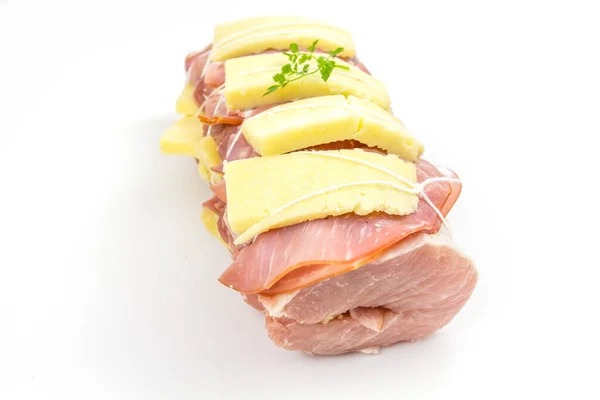
France – ROAST PORK ORLOFF -Salmonella

Gov france

Identification information of the recalled product

  • Product category Food
  • Product subcategory Meats
  • Product brand name/
  • Model names or references ROAST PORK ORLOFF SOLD IN BUTCHER STAND
  • Identification of products
    Batch
    ORLOFF PORK ROAST SOLD AT THE BUTCHER STAND BETWEEN APRIL 4 AND 15
  • Products List Reminder_poster.pdfEnclosed
  • Packaging Packed in a butcher’s stand
  • Marketing start/end date From 04/04/2022 to 15/04/2022
  • Storage temperature Product to be stored in the refrigerator
  • Health mark/
  • Further information The packaging date is indicated on the label of the bag given to the customer.
  • Geographic area of ​​sale Auchan City Tourcoing
  • Distributors Auchan City Tourcoing

Practical information regarding the recall

  • Reason for recall presence of Salmonella
  • Risks incurred by the consumer Salmonella spp (causative agent of salmonellosis)

EU – 8 April update: ECDC/EFSA investigation into multi-country Salmonella outbreak continues

ECDC

The outbreak has been linked to a factory in Arlon. Belgian authorities suspended all activities, all products that were manufactured there will be recalled, and retailers are also asked to remove the products from their shelves.

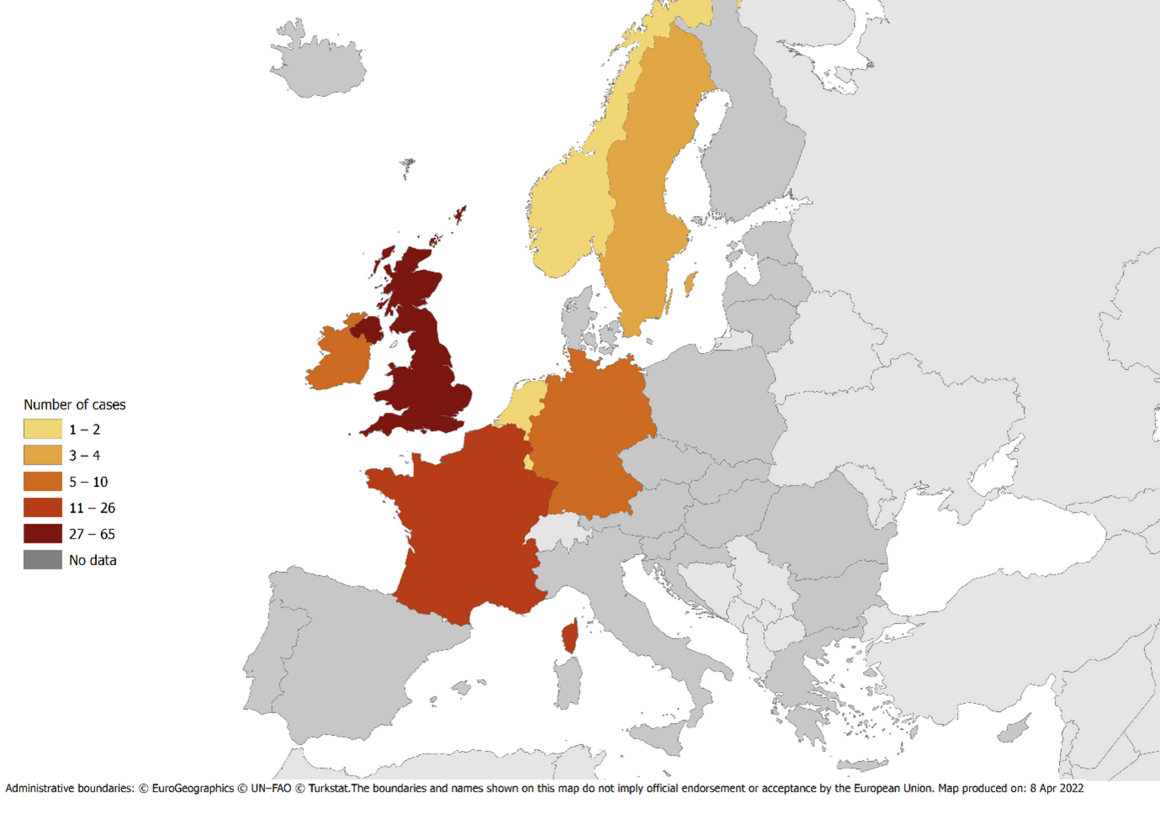
An outbreak caused by monophasic Salmonella Typhimurium is rapidly evolving in eight EU/EEA countries and the United Kingdom (UK). As of 8 April 2022, 142 cases have been reported, mainly among children under 10 years old. The first case was identified in the UK on 7 January 2022. Since 17 February 2022, cases have also been identified elsewhere in Europe.

Geographical distribution of confirmed and probable cases of monophasic S. Typhimurium in the EU/EEA and the UK, as of 8 April 2022
 

The outbreak is characterised by an unusually high proportion of children being hospitalised, some with severe clinical symptoms such as bloody diarrhoea. Based on interviews with patients and initial analytical epidemiological studies, specific chocolate products have been identified as the likely route of infection. Affected cases have been identified through advanced molecular typing techniques. As this method of testing is not routinely performed in all countries, some cases may be undetected.

Product recalls have been launched in several countries to date, including BelgiumFranceGermanyIrelandLuxembourgNetherlandsNorway, and the UK, to prevent the consumption of products potentially contaminated with Salmonella. Further investigations are being conducted by public health and food safety authorities in countries where cases are reported, to identify the cause and the extent of the contamination, and to ensure contaminated products are not put on the market.

ECDC and EFSA are assessing the available data from these countries and preparing a rapid outbreak assessment to be published next week. Questions regarding ongoing product recalls should be addressed to national food safety authorities.

Number of confirmed and probable cases* with monophasic S. Typhimurium infection by country, EU/EEA and the UK, as of 8 April 2022

Country Confirmed cases Probable cases Total cases
Belgium 0 26 26
France 25 0 25
Germany 6 2 8
Ireland 10 0 10
Luxembourg 1 0 1
Netherlands 2 0 2
Norway 1 0 1
Sweden 4 0 4
Total EU/EEA 42 29 77
United Kingdom 65 0 65
Total 114 28 142

*According to the European outbreak case definition

Canada – Various poppy seeds recalled due to Salmonella

CFIA

Summary

Product
Various poppy seeds
Issue
Food – Microbial Contamination – Salmonella
What to do

Do not consume, use, sell, serve, or distribute the recalled products

Issue

Industry is recalling various poppy seeds from the marketplace due to possible Salmonella contamination.

The recalled products have been sold as indicated in the table.

What you should do

  • If you think you became sick from consuming a recalled product, call your doctor
  • Check to see if you have the recalled products in your home
  • Do not consume the recalled products
  • Do not serve, use, sell, or distribute the recalled products
  • Recalled products should be thrown out or returned to the location where they were purchased

Food contaminated with Salmonella may not look or smell spoiled but can still make you sick. Young children, pregnant women, the elderly and people with weakened immune systems may contract serious and sometimes deadly infections. Healthy people may experience short-term symptoms such as fever, headache, vomiting, nausea, abdominal cramps and diarrhea. Long-term complications may include severe arthritis.

UK – ‘Don’t take the risk’: The FSA, FSS and UKHSA issue reminder that a range of Kinder egg products and Schoko-Bon’s should not be eaten this Easter weekend

FSA

The agencies are continuing to work with Public Health Scotland, Public Health Wales, Public Health Agency Northern Ireland – as well as international public health and food safety authorities – to investigate an ongoing outbreak of Salmonella linked to certain Kinder egg product ranges and Schoko-Bons produced at one of the Ferrero company’s factories, in Arlon, Belgium.

Full details on the products affected and the recall can be found here (Opens in a new window).

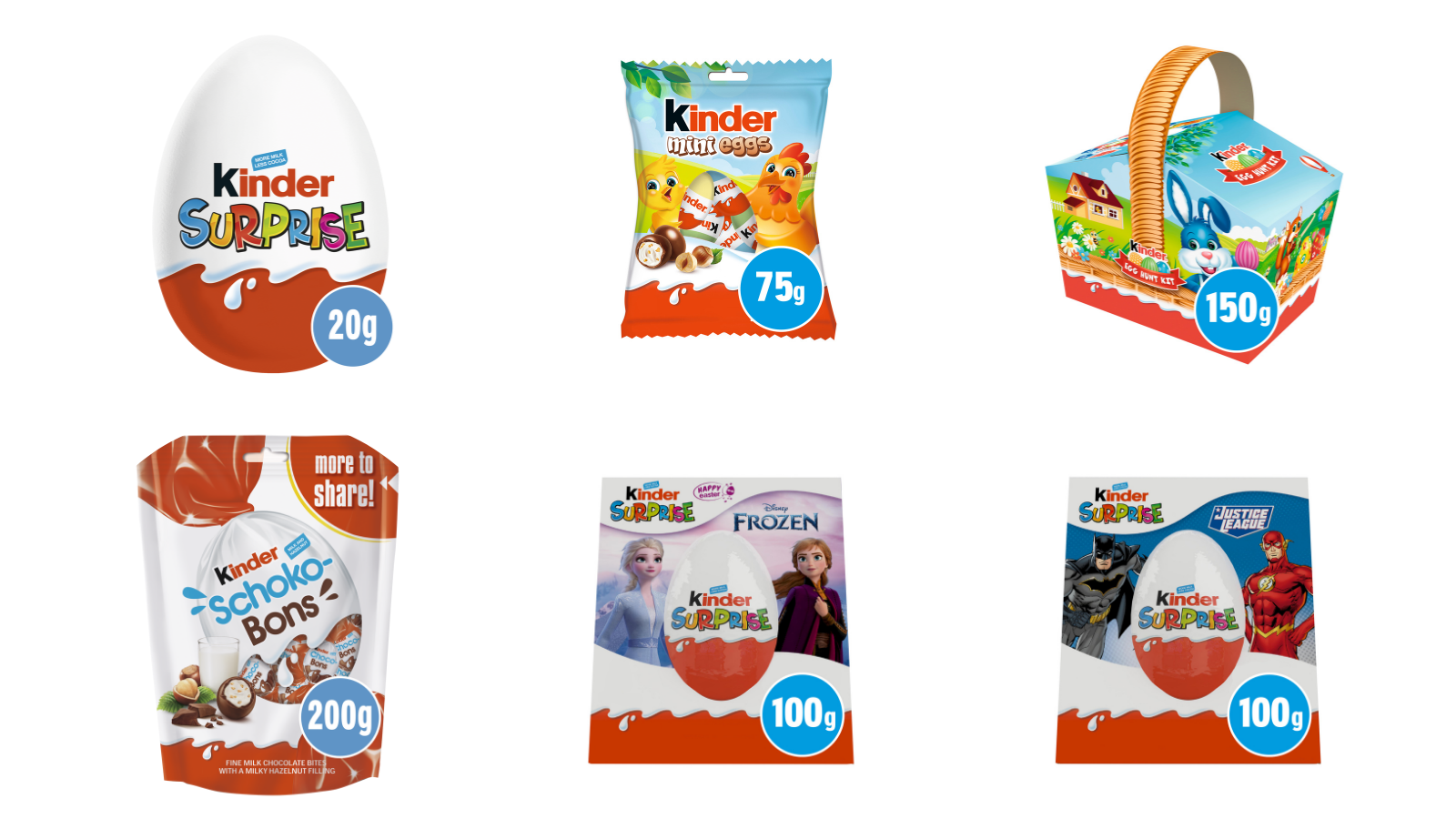
Kinder product recall items

As of 15 April, there are 70 cases linked to this outbreak in the UK. The majority of the cases are in children under 5 years of age.

Emily Miles, Chief Executive of the Food Standards Agency said:

“As we go into the Easter weekend, we are strongly urging consumers to follow the advice in the latest recall notice and to check any Kinder products they might have already bought against the list detailed in the notice, as they may pose a risk to health. If they do have any products on the list, they should not eat them and should discard them immediately.

“We have emphasised to the business and the authorities in Belgium the importance of taking a precautionary approach to their recall and trust that they will continue to put consumers’ needs first in any action they take.”

Dame Jenny Harries, Chief Executive of the UK Health Security Agency (UKHSA), said:

“We’re reminding people of the recall this Bank Holiday weekend as it’s possible these products have been bought and stored as gifts, or for events such as Easter trails.

“It’s crucial these products are not eaten and are discarded. Salmonella infection can be severe and many children affected in this outbreak have been very unwell and hospitalised, so anyone giving chocolate products to friends or family should take extra care to ensure their Easter gifts are not amongst those products recalled.

“Thank you to parents and guardians  who worked with us and other public health authorities in the UK to tell us what their children had eaten prior to becoming unwell – this allowed us to rapidly pinpoint a potential source of infection and helped food chain investigations both in this country and in Europe. We understand this has been a worrying time for these families, and their responses have helped to prevent more children and vulnerable adults being affected.”

Symptoms of salmonellosis – or infection with salmonella – typically resolve themselves within a few days. However, symptoms can be more severe, especially in young children, those who are pregnant and those with weakened immune systems.

Anybody with concerns that they have symptoms of salmonellosis should contact their GP or call NHS 111. Salmonella can be spread from person to person as well as from food, so anyone affected should adhere to good hygiene practices, such as washing hands thoroughly after using the bathroom and avoiding handling food for others where possible, if you have symptoms.

Notes to Editors:

The following products have been recalled and regardless of best-before date, should not be eaten.

The recall includes:

Kinder Surprise 20g & 3x 20g

Kinder Surprise 100g

Kinder Egg Hunt

Kinder Mini Eggs

Kinder Schoko-Bons

Research – Preservation of cut fruit and use of a technological adjuvant for washing certain vegetables

ACSA

The Spanish Agency for Food Safety and Nutrition has published two new reports from its Scientific Committee:

  • Report on the storage conditions of fruit cut in half in retail establishments.
  • Report on the safety of the use of an aqueous solution of sodium lauryl ether sulfate as a processing aid for washing apples, peaches, bananas, tomatoes, peppers and citrus in processing plants .      

Report on the storage conditions of fruit cut in half in retail establishments

The AESAN Scientific Committee has assessed whether it is possible to keep melon, watermelon, pineapple and papaya cut in half at room temperature in retail establishments for a limited time, ensuring consumer safety.

The Scientific Committee has concluded that, on the basis of the information

  • Storage at room temperature of melon, watermelon, papaya and pineapple cut in half can pose a health risk as the physicochemical conditions (pH, water activity, total soluble solids, nutrient availability, etc.) are compatible with growth. of foodborne pathogens, such as Salmonella , E. coli verotoxigenic or L. monocytogenes .
  • In order to make the storage conditions of melon, watermelon, papaya and pineapple cut in half more flexible, temperatures below 25 ºC for a time of less than 3 may be allowed, as they do not pose a significant microbiological risk. hours in a place sufficiently ventilated and preserved from sunlight, followed by continuous refrigerated storage at temperatures below 5 ºC.
  • To minimize the health risk that these practices may pose, it is recommended to discard for cutting fruits with an excessive degree of ripeness, or that have wounds or cracks on their surface, as they can be a source of contamination.

Report on the safety of the use of an aqueous solution of sodium lauryl ether sulfate as a processing aid for washing apples, peaches, bananas, tomatoes, peppers and citrus in processing plants

The AESAN Scientific Committee has evaluated the safety of using an aqueous solution of sodium lauryl ether sulfate (27%) as a technological aid for washing apples, peaches, bananas, tomatoes, peppers and citrus in processing plants. request of a company request.

Sodium lauryl ether sulfate (LESS) is not authorized for human consumption.

As the presence of residues in the final products (fruits and vegetables) after the use of this aqueous solution cannot be ruled out, the technology adjuvant is classified as an unauthorized substance in human food whose Admissible Daily Intake (ADI) is not established and whose use may lead to the presence of technically unavoidable waste.

The Scientific Committee concludes that, based on the information provided by the applicant and taking into account the proposed composition and conditions of use, the use of the technology adjuvant does not imply a risk to the health of the consumer.

The conclusions of this report refer exclusively to the solution under evaluation as a technological aid in the proposed conditions of use and its composition, and may not be extended to formulations or conditions other than those evaluated, including joint use with other substances.

This evaluation does not imply an authorization for use or affect uses other than use as a technological aid in the process of washing apples, peaches, bananas, tomatoes, peppers and citrus in the processing plants. This use involves a final rinsing with drinking water, following the application of the washing water with the technological adjuvant, so that the possible residues in the fruits and vegetables are eliminated.

Click to access FRUTAS_CORTADAS.pdf

Click to access COADYUVANTE_LAURIL_ETER.PDF

Research – Impact of Quercetin against Salmonella Typhimurium Biofilm Formation on Food–Contact Surfaces and Molecular Mechanism Pattern

MDPI

Quercetin is an active nutraceutical element that is found in a variety of foods, vegetables, fruits, and other products. Due to its antioxidant properties, quercetin is a flexible functional food that has broad protective effects against a wide range of infectious and degenerative disorders. As a result, research is required on food-contact surfaces (rubber (R) and hand gloves (HG)) that can lead to cross-contamination. In this investigation, the inhibitory effects of quercetin, an antioxidant and antibacterial molecule, were investigated at sub-MIC (125; 1/2, 62.5; 1/4, and 31.25; 1/8 MIC, μg/mL) against Salmonella Typhimurium on surfaces. When quercetin (0–125 μg/mL) was observed on R and HG surfaces, the inhibitory effects were 0.09–2.49 and 0.20–2.43 log CFU/cm2, respectively (p < 0.05). The results were confirmed by field emission scanning electron microscopy (FE-SEM), because quercetin inhibited the biofilms by disturbing cell-to-cell connections and inducing cell lysis, resulting in the loss of normal cell morphology, and the motility (swimming and swarming) was significantly different at 1/4 and 1/2 MIC compared to the control. Quercetin significantly (p < 0.05) suppressed the expression levels of virulence and stress response (rpoSavrA, and hilA) and quorum-sensing (luxS) genes. Our findings imply that plant-derived quercetin could be used as an antibiofilm agent in the food industry to prevent S. Typhimurium biofilm formation. View Full-Text

Research – Levels and genotypes of Salmonella and levels of Escherichia coli in frozen ready-to-cook chicken and turkey products in England tested in 2020 in relation to an outbreak of S. Enteritidis

PubMed

Frozen reformulated (FR) breaded chicken products have previously been implicated in causing human salmonellosis. A multi-country Salmonella enterica serovar Enteritidis outbreak involving several strains with >400 reported human cases in the UK occurred in 2020. Initially S. Infantis was detected in one sample from a case home but S. Enteritidis was then also isolated using a S. Enteritidis specific PCR in combination with isolation via a Craigie-tube. This prompted a survey to examine the presence and levels of Salmonella and E. coli in ready-to-cook FR poultry products in England in 2020. From a total of 483 samples, including two from cases’ homes, Salmonella was detected in 42 chicken samples, these originated from six out of 53 production plants recorded. Salmonella detection was associated with elevated levels of generic E. coli (OR = 6.63). S. Enteritidis was detected in 17 samples, S. Infantis in 25, S. Newport in four and S. Java, S. Livingstone and S. Senftenberg in one each. The highest levels of Salmonella were 54 MPN/g for S. Infantis and 28 MPN/g for S. Enteritidis; 60% of the Salmonella-positive samples had <1.0 MPN/g. S. Enteritidis was detected together with S. Infantis in five samples and with S. Livingstone in one. Where S. Enteritidis was detected with other Salmonella, the former was present at between 2 and 100-fold lower concentrations. The Salmonella contamination was homogeneously distributed amongst chicken pieces from a single pack and present in both the outer coating and inner content. The S. Enteritidis were all outbreak strains and detected in six products that were linked to four production plants which implicated a Polish origin of contamination. Despite S. Infantis being most prevalent in these products, S. Infantis from only two contemporaneous human cases in the UK fell into the same cluster as isolates detected in one product. Except for one human case falling into the same cluster as one of the S. Newport strains from the chicken, no further isolates from human cases fell into clusters with any of the other serovars detected in the chicken samples. This study found that higher E. coli levels indicated a higher probability of Salmonella contamination in FR chicken products. The results also highlight the importance of recognising co-contamination of foods with multiple Salmonella types and has provided essential information for detecting and understanding outbreaks where multiple strains are involved.