Category Archives: Salmonella

Hong Kong – CFS continues to follow up on imported chocolate products with possible contamination of Salmonella

CFS

The Centre for Food Safety (CFS) of the Food and Environmental Hygiene Department today (April 19) said that subsequent to earlier announcements that some imported chocolate products might have been contaminated with Salmonella, a pathogen, follow-up investigations showed another affected product has been imported to Hong Kong for export to the Mainland. The product was not put on sale in Hong Kong.

Details of the product are as follows:

Product name: Kinder Happy Moments Mini Mix 162g
Brand: Kinder
Place of origin: Belgium
Net weight: 162 grams per pack
Best-before dates: July 7, 2022, and July 8, 2022

A spokesman for the CFS said, “The CFS received a notification from the Rapid Alert System for Food and Feed of the European Commission that the above-mentioned batches of a chocolate product are suspected to be contaminated with Salmonella and have been imported into Hong Kong. Upon learning of the incident, the CFS immediately contacted local importers for follow-up.”

The CFS’s follow up investigations found that an importer, Hongkong Ehigo E.commerce Co Ltd, had imported the affected batches of the product for export to the Mainland. All the products are stored inside a warehouse after import and they have not entered the local market. The CFS has inspected the warehouse and marked and sealed the product concerned. The operator was also instructed to dispose of all the product concerned and the CFS has notified the Mainland authorities concerned of the incident.

“Salmonella infection may cause fever and gastrointestinal upset such as vomiting, abdominal pain and diarrhoea. The effects on infants, young children, the elderly and persons with a weak immune system could be more severe and may even lead to death,” the spokesman said.

The latest information on affected products can be found at the CFS’s Food Incident Post webpage (www.cfs.gov.hk/english/rc/subject/fi_list.html). The CFS has stepped up testing of related products as well as alerting the trade to the incident, and will continue to follow up, closely liaise with overseas authorities and take appropriate action. Investigation is ongoing.

Ends/Tuesday, April 19, 2022

USA – USDA investigating a new Salmonella Enteritidis outbreak. Little information has been released.

Food Poisoning News

The US Department of Agriculture Food Safety and Inspection Service (FSIS) announced this week they are investigating a Salmonella Enteritidis outbreak. Not much information has been released, but according to the FSIS situation report, the early stages of the investigation have been launched.

The FSIS has not released details about how many people are sick or where they live. The most recent update was posted on April 20, 2022 and states that chicken is a possible source of the outbreak and Salmonella Enteritidis is the pathogen involved.

The Centers for Disease Control and Prevention (CDC) has not released any information on this particular outbreak, but they frequently post updates on illnesses from all kinds of foodborne pathogens.

Symptoms of a Salmonella infection include diarrhea, fever and abdominal cramps that develop within 12 hours to 3 days after exposure to the organism. The illness typically lasts four to seven days and most people recover without treatment. However, in some cases, hospitalization is necessary and in rare cases death can occur. Children, the elderly and people with compromised immune systems are at an increased risk for severe illness.

If you think you have a Salmonella infection, it’s important to see a doctor right away for treatment.

Belgium – Ground Cumin from the Larissa brand – Salmonella

AFSCA

FASFC recall
Product: ground cumin from the Larissa brand.
Problem: possible presence of Salmonella.

The FASFC is today recalling consumers of ground cumin (1kg) of the Larissa brand. This recall follows a RASFF (Rapid Alert System for Food and Feed) concerning the possible presence of Salmonella.

The FASFC asks not to consume these products and to bring them back to the point of sale where they were purchased.

Product Description :

Product category: spices
Product name: ground cumin
Brand: Larissa Best before
date (BDD): 27/01/2024
Batch number: 420322022

This product was sold through multiple outlets.

For any additional information, you can contact the FASFC contact point for consumers: 0800/13.550 or pointdecontact@afsca.be .

Italy – Kinder Product Recalls – Salmonella

Salute

Brand : FERRERO
Name : KINDER HAPPY MOMENT 162 GR.
Reason for reporting : Recall due to microbiological risk
Publication date : April 20, 2022
Documentation

Documentation

Salute

Brand : FERRERO KINDER
Name : KINDER HAPPY MOMENTS
Reason for reporting : Recall due to microbiological risk
Publication date : 20 April 2022
Documentation

Documentation

Salute

Brand : FERRERO KINDER
Name : KINDER MINI EGGS
Reason for reporting : Recall due to microbiological risk
Publication date : 20 April 2022
Documentation

Documentation

Salute

Brand : FERRERO KINDER
Name : KINDER MIX
Reason for reporting : Recall due to microbiological risk
Publication date : 20 April 2022
Documentation

Documentation

Salute

Brand : FERRERO KINDER
Name : KINDER SCHOKO BONS
Reason for reporting : Recall due to microbiological risk
Publication date : 20 April 2022
Documentation

Documentation

Salute

Brand : FERRERO KINDER
Name : KINDER ÜBERRASCHUNG
Reason for reporting : Recall due to microbiological risk
Publication date : 20 April 2022
Documentation

Documentation

Salute

Brand : FERRERO KINDER
Name : KINDER ÜBERRASCHUNG MAXI
Reason for reporting : Recall due to microbiological risk
Publication date : 20 April 2022
Documentation

Documentation

Canada – Various poppy seeds recalled due to Salmonella

CFIA

Summary Update

Product
Various poppy seeds
Issue
Food – Microbial Contamination – Salmonella
What to do

Do not consume, use, sell, serve, or distribute the recalled products.

Issue

Industry is recalling various poppy seeds from the marketplace due to possible Salmonella contamination.

The recalled products have been sold as indicated in the table.

What you should do

  • If you think you became sick from consuming a recalled product, call your doctor
  • Check to see if you have the recalled products in your home
  • Do not consume the recalled products
  • Do not serve, use, sell, or distribute the recalled products
  • Recalled products should be thrown out or returned to the location where they were purchased

Food contaminated with Salmonella may not look or smell spoiled but can still make you sick. Young children, pregnant women, the elderly and people with weakened immune systems may contract serious and sometimes deadly infections. Healthy people may experience short-term symptoms such as fever, headache, vomiting, nausea, abdominal cramps and diarrhea. Long-term complications may include severe arthritis.

Research – Raw-milk cheeses: What are the associated health risks and what preventive measures can be taken?

ANSES

Salmonella, enterohaemorrhagic E. coli, Listeria monocytogenes – a wide range of bacteria can be found in the raw-milk cheeses and other raw-milk dairy products we consume. These are sometimes involved in cases of food poisoning, leading them to be recalled or withdrawn from the market. In order to further improve the control of these risks, ANSES has identified the types of raw-milk cheeses on which efforts should focus as a priority.

ANSES received a request from the Directorate General for Food to identify and classify the main bacterial hazards associated with the various types of raw-milk cheeses and other dairy products made from raw milk. The aim was also to assess the main sources of contamination and the means implemented to control the associated risks.

The main microbiological hazards in raw-milk cheeses and dairy products

In France over the last decade, 34%, 37% and 60% of outbreaks of salmonellosis, listeriosis and enterohaemorrhagic E. coli (EHEC) infections respectively have been linked to the consumption of raw-milk cheeses. While some bacteria can cause gastroenteritis symptoms (Salmonella spp. and Staphylococcus aureus), others can have much more serious consequences such as kidney failure (EHEC) or even death (L. monocytogenes, EHEC).

The main sources of these hazards are soft cheeses with a surface mould (such as Camembert, Brie and Crottin) and short-ripened uncooked pressed cheeses (such as Morbier, Reblochon and Saint-Nectaire). Next come soft washed-rind cheeses such as Munster and Maroilles.

Continue efforts to prevent microbiological risks, from farm to consumer

The means implemented to control microbiological risks in the main dairy sectors (cattle, sheep, goats), from the rearing stage to the consumption stage, were studied by the Agency. It concluded that:

At farm level, good animal husbandry and hygiene practices are well known in the various sectors. The efforts already well under way in terms of hygiene during milking and the management of mastitis should be continued;
At the production stage, levels of risk control are also very high; the Agency recommends continuing to implement good hygiene practices and to carry out self-checks in order to best anticipate any risk of an outbreak;
At consumer level, in order to avoid a foodborne infectious disease, it is essential to comply with the information on the packaging or that given by the seller concerning the temperature at which the cheese should be stored in the refrigerator and its use-by date. Lastly, ANSES reiterates its recommendation that pregnant women, immunocompromised individuals, people over the age of 65 and young children should avoid consuming raw-milk cheeses, with the exception of hard pressed cheeses such as Gruyère and Comté.

“For several years now, we have been seeing a strong commitment on the part of the various raw-milk cheese sectors to preventing microbiological risks. Thanks to the actions taken, levels of hygiene and risk control are now very high on farms. The self-checks implemented at the processing stage are able to identify a large number of problematic batches. However, there is still a residual risk and it is important to identify new ways of optimising the current control measures. For example, this could involve improving epidemiological investigations, identifying poor hygiene practices at an earlier stage, or communicating more with consumers”, explains Laurent Guillier, who coordinated ANSES’s expert appraisal.

Did you know?

Contrary to popular belief, removing the rind from a raw-milk cheese is not enough to protect yourself against bacteria, as these can be found everywhere in the cheese.

On the other hand, when raw-milk cheeses are well cooked, as in an oven-baked recipe, they no longer pose a health risk.

A new forthcoming expert appraisal
This work to classify raw-milk cheeses was a first step in responding to the formal request. The expert appraisal work is continuing, to evaluate the effectiveness of the various health measures such as the sorting of milk at farm level and self-checks at the production stage. The next step will be to identify priority work areas for further reducing microbiological risks.

Click to access BIORISK2019SA0033.pdf

Hong Kong – Not to consume an imported chocolate product with possible contamination with Salmonella

CFS

Issue Date 19.4.2022
Source of Information Notification from the Rapid Alert System for Food and Feed of the European Commission
Food Product Chocolate product
Product Name and Description Product name: Kinder Happy Moments Mini Mix 162g
Brand: Kinder
Place of origin: Belgium
Net weight: 162 grams per pack
Best-before dates: July 7, 2022, and July 8, 2022
Reason For Issuing Alert
  • The Centre for Food Safety (CFS) received a notification from the Rapid Alert System for Food and Feed of the European Commission that the above-mentioned batches of a chocolate product are suspected to be contaminated with Salmonella and have been imported into Hong Kong.
  • Subsequent to earlier announcements that some imported chocolate products might have been contaminated with Salmonella, a pathogen, follow-up investigations showed another affected product has been imported to Hong Kong for export to the Mainland. The product was not put on sale in Hong Kong.
  • Salmonella infection may cause fever and gastrointestinal upset such as vomiting, abdominal pain and diarrhoea. The effects on infants, young children, the elderly and persons with a weak immune system could be more severe and may even lead to death.
Action Taken by the Centre for Food Safety
  • Upon learning of the incident, the CFS immediately contacted local importers for follow-up.
  • The CFS’s follow up investigations found that an importer, Hongkong Ehigo E.commerce Co Ltd, had imported the affected batches of the product for export to the Mainland. All the products are stored inside a warehouse after import and they have not entered the local market.
  • The CFS has inspected the warehouse and marked and sealed the product concerned. The operator was also instructed to dispose of all the product concerned and the CFS has notified the Mainland authorities concerned of the incident.
  • The CFS has stepped up testing of related products as well as alerting the trade to the incident, and will continue to follow up, closely liaise with overseas authorities and take appropriate action. Investigation is ongoing.
Advice to the Trade
  • The trade should stop using or selling the affected products immediately if they possess them.
Advice to Consumers
  • Do not consume the affected product.
Further Information The CFS press release

The latest information on the affected products can be found at the CFS’s Food Incident Post webpage: http://www.cfs.gov.hk/english/rc/subject/fi_list.html

Centre for Food Safety
Food and Environmental Hygiene Department
2022-4-19

USA – Organic Zucchini recalled after Salmonella positive test

Food Poison Journal

World Variety Produce, Inc. of Los Angeles, CA is voluntarily recalling case lot #38706503 of Organic Zucchini, because it has the potential to be contaminated with Salmonella, an organism which can cause serious and sometimes fatal infections in young children, frail or elderly people, and others with weakened immune systems.

Recalled Organic Marketside Zucchini can be identified by the following descriptions:

Brand Organic Marketside
Packaging Clear Overwrap Tray
Pack/Weight 2ct / Net Wt. 6oz (170g)
UPC Code 6-81131-22105-4
Case Lot Number 38706503

No illnesses have been reported to date.

This recall was initiated because a single lot of imported organic zucchini tested positive for salmonella as a result of a routine FDA sampling.

Spain – Presence of salmonella in organic food supplements from Germany with raw material from Sri Lanka

asca

The German health authorities have communicated through the European Commission the withdrawal from the market of a food supplement due to the presence of Salmonella spp.

The product involved is:

  • Product name (on the label): Organic Moringa
  • Trademark: VEGAVERO
  • Appearance, weight and packaging: 270 capsules.
  • Batch number and best before date: 44494-1761 (28.02.2024); 44459-1701 (01.31.2024) and 44494-1762 (02.28.2024) .
  • Storage temperature: room.

– The product is marketed online through the Amazon platform and the company’s own website https://www.vegavero.com/ .

This product has been alerted in the Coordinated System for the Rapid Exchange of Information (SCIRI) and the withdrawal from the corresponding market will be supervised by the competent authorities.

With the available information , there is NO record in Spain of any notified case associated with this alert.

Research – Investigation of an international outbreak of multidrug-resistant monophasic Salmonella Typhimurium associated with chocolate products, EU/EEA and United Kingdom, February to April 2022

Eurosurveillance

In February 2022, a small five-single nucleotide polymorphism (SNP) single linkage cluster of eight cases of infection with monophasic  subsp.  serotype Typhimurium (1,4,5,12:i:-) eBG 1, sequence type (ST) 34 was identified in the United Kingdom (UK). The cluster was unusual, with all but one reported case younger than 10 years, and the strain demonstrated genotypic markers of an unusual antimicrobial resistance pattern not commonly seen in livestock, food or human disease cases in the UK. The cluster was not closely related to any other UK strains of monophasic  Typhimurium.

Exploratory interviews using an open-ended, anthropological approach (not binary yes/no questions) were undertaken with the parents/guardians of five cases in England for hypothesis generation. Subsequently, a targeted questionnaire to refine hypotheses identified through the exploratory interviews was used, confirming a strong signal for a specific brand of chocolate products.

Following the UK’s notification on the European Centre for Disease Prevention and Control (ECDC) EpiPulse Food and Waterborne Diseases (FWD) platform on 17 February 2022, and an Early Warning and Response System (EWRS) alert on 25 March, Germany, Sweden, France, the Netherlands and subsequently Luxembourg, Norway, Ireland, Belgium and Spain reported confirmed or probable cases in their respective countries.

Case definitionThe agreed European Union (EU) case definition for confirmed cases was laboratory-confirmed monophasic  Typhimurium with symptom onset on or after 1 October 2021 and belonging to the same five SNP single linkage cluster by SNP typing or cases who clustered within five allelic differences of another confirmed outbreak strain by core genome multilocus sequence typing (cgMLST) analysis or shared the same HC5_296366 by the EnteroBase HierCC scheme [1]. This definition therefore depended on the whole genome sequencing (WGS) methodology used at the national level in each country (i.e SNP typing or cgMLST analysis). Probable cases were those with laboratory confirmation of monophasic  Typhimurium with symptom onset on or after 1 October 2021 and phenotypic antimicrobial resistance (AMR) results consistent with the outbreak strain or a multilocus variable number tandem repeat analysis (MLVA) profile 3–11–14-NA-0211.

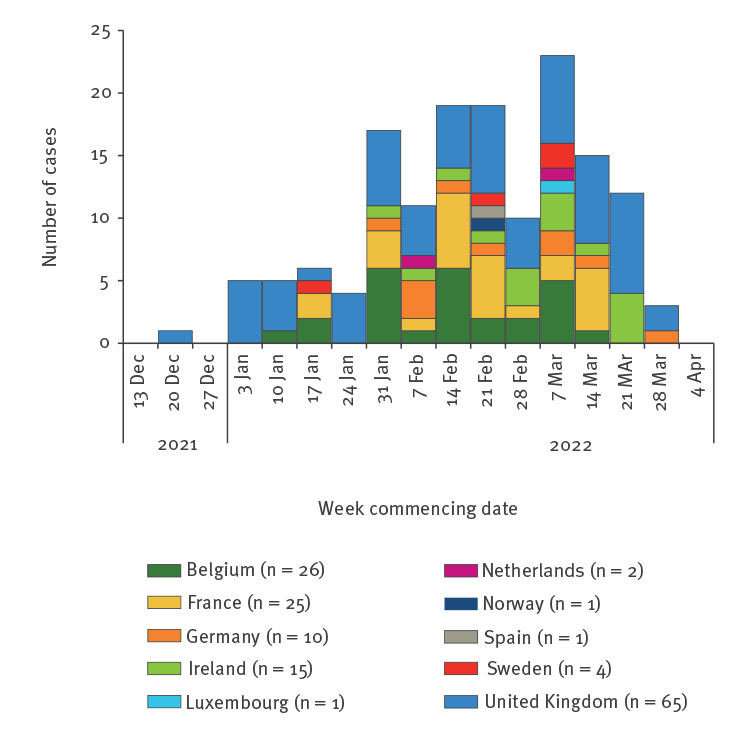
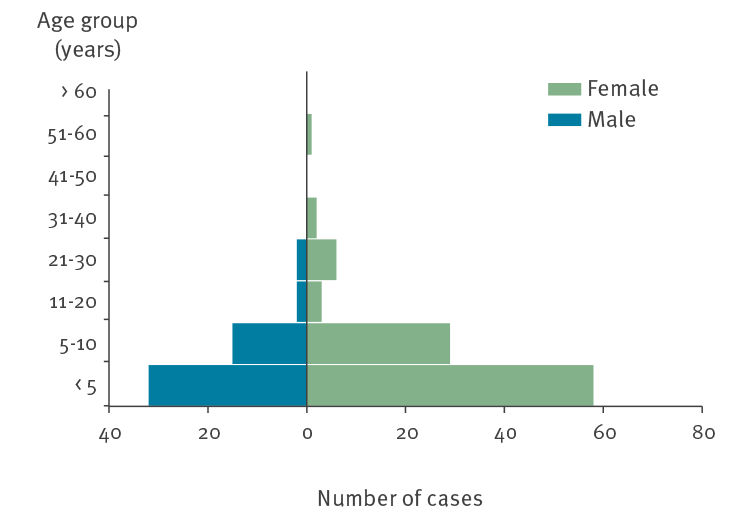
Detected cases in the EU/EEA and United KingdomBy 10 April 2022, a total of 150 confirmed and probable cases were identified across nine EU/European Economic Area (EEA) countries and the UK, with case sampling dates ranging from 21 December 2021 (the first UK case) to 28 March 2022 (Figure 1). Descriptive epidemiological investigations demonstrated cases ranged in age from 8 months to 56 years, but were predominately under the age of 10 years (n = 134; 89%) and disproportionately female (n = 99; 66%) (Figure 2). The hospitalisation rate was 42% of cases for whom information was available (116 cases with 49 hospitalised) – higher than that usually reported in salmonellosis outbreaks [2] and for individual cases of infection with . Typhimurium [3]. While this is probably also influenced by the demographic characteristics of those affected, this is a possible indicator of increased clinical severity of infection in this outbreak.

Figure 1.Distribution of confirmed and probable salmonellosis outbreak cases by week and country and by date of onseta,b, EU/EEA and UK, up to 10 April 2022 (n = 150)
Figure 1EEA: European Economic Area; EU: European Union; UK: United Kingdom.

a Case onset date (n=108) is not consistently available for all reported cases, therefore date of sampling has been used where case onset date is unavailable (n=39) or date of receipt at reference laboratory where both onset and sampling dates are unknown (n=3).

b Probable cases were reported by Belgium (n=19) and Germany (n=2) (data as of 13 April).

Figure 2.Distribution of confirmed and probable salmonellosis outbreak cases, by age group and sex, EU/EEA and UK, up to 10 April 2022 (n = 150)

Figure 2

EEA: European Economic Area; EU: European Union; UK: United Kingdom.

Multi-country collaboration through teleconferences and sharing of information between public health agencies and reference laboratories indicated that cases in affected countries commonly reported consumption of a specific brand of chocolate products. Overall, of 101 case interviews carried out across the 10 affected countries, 88 cases (87%) confirmed consumption of these products. The most commonly consumed product was Product A, marketed primarily for children in the age group 3–10 years, but multiple other product types were also reported.