Category Archives: Salmonella

RASFF Alerts -Salmonella – Polish Chicken Products – Black Pepper – Chicken Neck Skins – Ham and Pistachio Roll – Chicken Liver – Frozen Pork Meat – Organic Coriander Seed –

RASFF

Salmonella enteritidis in chicken neck skins from the Czech Republic in Slovakia

RASFF

Salmonella Infantis in 25 g of the product – poultry meat from Poland in the Czech Republic

RASFF

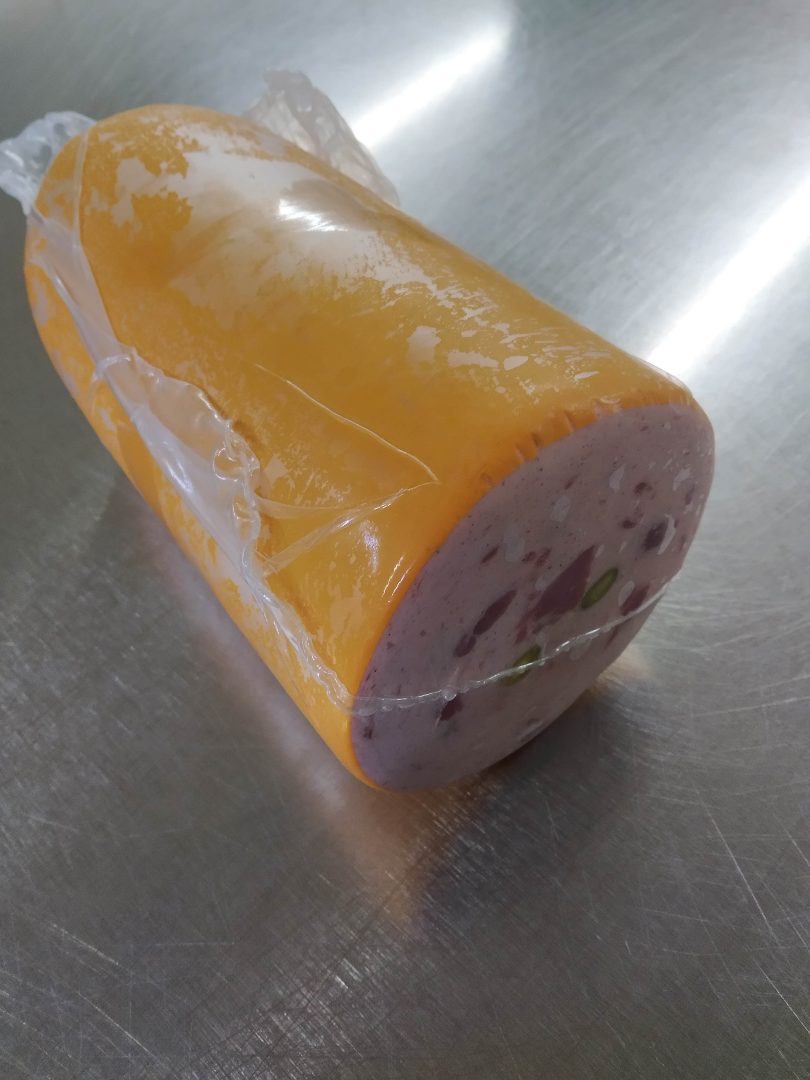
Salmonella in meat product (ham and pistachio roll) from Belgium in France

RASFF

Salmonella spp. in Chicken elements and chicken neck skin from Poland in the UK and Germany

RASFF

Salmonella Enteritidis in official samples of chicken neck skins from Poland in the Netherlands

RASFF

Salmonella in frozen pork meat from Spain in Finland

RASFF

Salmonella gr C in chicken filet from Poland in the Netherlands

RASFF

Salmonella spp. in organic coriander seed of unknown origin, via Italy in Germany

RASFF

Salmonella spp. in black pepper from Brazil in Germany

RASFF

Salmonella spp. in black pepper from Brazil in Germany
RASFF

Salmonella spp. in black pepper from Brazil in Germany

RASFF

Salmonella spp. in black pepper from Brazil in Germany

RASFF

Salmonella spp. in black pepper from Brazil in Germany

RASFF

Salmonella spp. in black pepper from Brazil in Germany

RASFF

Salmonella spp. in black pepper from Brazil in Germany and  the Netherlands

RASFF

Salmonella in chicken liver from Poland in the Netherlands

RASFF

Salmonella spp. in black pepper from Brazil in Germany

Research – Mechanisms of Inhibition of Quorum Sensing as an Alternative for the Control of E. coli and Salmonella

MDPI

Quorum sensing (QS) is a process of cell–cell communication for bacteria such as E. coli and Salmonella that cause foodborne diseases, with the production, release, and detection of autoinducer (AI) molecules that participate in the regulation of virulence genes. All of these proteins are useful in coordinating collective behavior, the expression of virulence factors, and the pathogenicity of Gram-negative bacteria. In this work, we review the natural or synthetic inhibitor molecules of QS that inactivate the autoinducer and block QS regulatory proteins in E. coli and Salmonella. Furthermore, we describe mechanisms of QS inhibitors (QSIs) that act as competitive inhibitors, being a useful tool for preventing virulence gene expression through the downregulation of AI-2 production pathways and the disruption of signal uptake. In addition, we showed that QSIs have negative regulatory activity of genes related to bacterial biofilm formation on clinical artifacts, which confirms the therapeutic potential of QSIs in the control of infectious pathogens. Finally, we discuss resistance to QSIs, the design of next-generation QSIs, and how these molecules can be leveraged to provide a new antivirulence therapy to combat diseases caused by E. coli or SalmonellaView Full-Text

RASFF Alert – Animal Feed – Salmonella – Premix NutriBlend Plus Dry – Raw Dog Food

RASFF

Salmonella spp. in premix NutriBind Plus Dry from Germany in Belgium

RASFF

Salmonella Diarizonae in raw dog feed from Norway in Denmark, France, Germany, Lithuania, Norway Sweden, Switzerland and the UK

Australia – Elite confectionery products – Salmonella

FSANZ

Date published: 28 April 2022

Product information

Benedikt Imports Ptd Ltd is conducting a recall of the various Elite branded confectionery products including Elite Chocolate, Elite Cakes, Elite Wafers, Energy Grain Snacks, Energy Chocolate Rice Cakes, Gum and Toffee Candies from all expiration dates. The products have been available for sale nationally at Coles, Woolworths, IGAs, 7/11, Independent Kosher stores and Milk bars.

Date markings

All batches, best before, used by and made on dates are being recalled.  


Problem

The recall is due to potential microbial (Salmonella) contamination.

Food safety hazard

Food products contaminated with Salmonella may cause illness if consumed. ​

Country of origin

Israel

​​What to do​

Consumers should not eat this product. Any consumers concerned about their health should seek medical advice and should return the products to the place of purchase for a full refund.

For further information please contact:

Benedikt Imports Ptd Ltd

03 9577 3000

http://www.benedikts.com

Related links:

Israel – How did salmonella spread in the Strauss production facility? – analysis

Jpost

How does salmonella spread in a food production facility and can it be prevented?

Because salmonella is a pathogen that is prevalent in the gut of many animals and insects, it can spread by the animal’s feces into the soil, water and food. From there it can easily be introduced into and spread throughout a food production facility by way of raw ingredients, as was the case with the Strauss facility. It can also spread through the facility via contaminated packaging, equipment and workers’ hands and clothing.

Salmonella thrives in moist, warm environments such as drains, floors and processing equipment, making a food production facility the perfect environment for it.

However, there are several ways to ensure that the risk of salmonella contamination in a food facility is lessened, according to international cleaning equipment supplier Vikan’s hygiene and compliance manager Stine Lønnerup Bislev.

The first step to controlling the spread of the bacteria is to ensure that only clean and disinfected equipment, tools and utensils are brought into the processing area, Bislev explains on the company’s website. Then, all incoming ingredients and materials that pose a risk for contamination should be tested for salmonella ahead of production.

Ingredients must be cleaned and disinfected properly, using either a wet or dry cleaning method, depending on the moisture content of the ingredient. High moisture ingredients that require wet cleaning include meat, vegetables and dairy products, Bislev notes.

To avoid the spread of contamination, raw and processed foods must be handled in separate areas, using separate tools and equipment. Cleaning equipment should meet the appropriate hygiene standards to facilitate easy cleaning and prevent microbial growth.

Hygenic design features include smooth surfaces, one-piece construction, easy dismantling and a lack of crevices.

Finally, Bislev states, a program should be developed by the production facility’s management in order to routinely sample the space for salmonella.

“An environmental monitoring program will assess the effectiveness of your overall hygienic practices, monitor the environment for transient pathogens and help mitigate potential harborage and growth niches,” she concludes.

Read more at the link above.

Quebec – Advice not to consume organic blue poppy seeds sold in bulk by various companies – Salmonella

MAPAQ

QUEBEC CITY , April 26, 2022 /CNW Telbec/ – The Ministère de l’Agriculture, des Pêcheries et de l’Alimentation (MAPAQ), in collaboration with the companies listed in the table below, is advising the public not to consume product listed in the table below, as this food may have been contaminated with Salmonella bacteria.

This warning stems from a Canadian Food Inspection Agency food recall involving Genesis Food brand organic Blue Poppy Seeds distributed at several establishments across Canada .

The product was offered at room temperature in the bulk product section of the establishments concerned. Some packages had a label showing the retailer’s information. Others may have been sold without a label.

Establishment

Product name

Format

Sale period

Maude Desroches Grocery – Culinary laboratory

1501, chemin de la Canardière,

Quebec

ORGANIC BLUE POPPY SEEDS

Variable

Until April 25, 2022 inclusively 

Farm with small onions

1842 Highway 117

Mont Tremblant

Harvest

360, rue Sicard

Sainte-Therese

The companies named in the table are voluntarily recalling the product in question. They have agreed with MAPAQ to issue this warning as a precautionary measure. In addition, people who have this product in their possession are advised not to consume it. They must return it to the establishment where they bought it or throw it away.

Even if the product does not show signs of tampering or a suspicious odor, consumption of food contaminated with Salmonella bacteria can cause salmonellosis, a food-borne illness that can lead, in young children, to , the elderly and people with weakened immune systems, very serious infections. In healthy people, it can present with symptoms such as high fever, chills, headache, vomiting, nausea, abdominal pain, or diarrhea, sometimes with blood in the stool. . However, no case of disease associated with the consumption of this food has been reported to MAPAQ to date.

UK – Girl, 3, left ‘lifeless’ after seemingly ‘contracting salmonella from Kinder Egg’

LBC

A “heartbroken” mum has claimed her three-year-old daughter was left looking “dead behind the eyes” after she seemingly contracted salmonella from a Kinder Surprise egg.

Charlotte Elizabeth Wingfield issued a warning on Facebook to other parents after her daughter Brooklyn-Mai fell ill whilst at nursery, with her temperature soaring to 39C.

It comes after thousands of Kinder Surprise chocolate eggs were recalled from shelves due to fears of a salmonella link, with more than 60 cases detected – mainly in children – in the UK.

Ms Wingfield claims her toddler was left “lifeless” after eating a Kinder Surprise egg last weekend.

“She slept for 21 out of the following 24 hours & then kept falling asleep as she was doing things,” she wrote on Facebook.

“Her temperature spiked to over 39° & I struggled to disturb her. I knew something wasn’t right & spoke to the gp who ran through a list of what it could be alongside a hospital visit.”

Following a hospital visit, Ms Wingfield said her daughter was diagnosed with salmonella and has been unwell ever since.

“Pleaseee check your chocolate dates & throw them if they fit the recall description,” the mother pleaded on Facebook.

Read More at the link above.

France – Pistachio Roulade – Salmonella

Gov france

Identification information of the recalled product

  • Product category Food
  • Product subcategory Others
  • Product brand name unbranded
  • Model names or references Pistachio roulade
  • Identification of products
    Batch Date
    220407000 Use-by date 05/24/2022
  • Marketing start/end date From 04/20/2022 to 04/26/2022
  • Storage temperature Product to be stored in the refrigerator
  • Health mark B 659
  • Further information Product sold in the traditional charcuterie department
  • Geographic area of ​​sale BOUSBECQUE (59); OTHERVILLE (02)
  • Distributors Intermarché Bousbecque Carrefour Market Otherville

Practical information regarding the recall

  • Reason for recall Salmonella detection
  • Risks incurred by the consumer Salmonella spp (causative agent of salmonellosis)

USA – Publisher’s Platform: Hey Chicken Little, the sky will not fall if Salmonella is deemed an adulterant

LEX

If Salmonella is deemed an adulterant – at least those that sicken and kill us – the sky will not fall – history as a guide.

On Jan. 19, 2020, we filed a petition with USDA’s Food Safety and Inspection Service (FSIS), on behalf of Rick Schiller, Steven Romes, the Porter family, Food & Water Watch, Consumer Federation of America, and Consumer Reports. 20-01-marler-011920 The petition asked FSIS to declare the following Salmonella “outbreak serotypes” as per se contaminants (adulterants) in meat and poultry products:

Salmonella Agona, Anatum, Berta, Blockely, Braenderup, Derby, Dublin, Enteritidis, Hadar, Heidelberg, I 4,[5],12:i:-, Infantis, Javiana, Litchfield, Mbandaka, Mississippi, Montevideo, Muenchen, Newport, Oranienburg, Panama, Poona, Reading, Saintpaul, Sandiego, Schwarzengrund, Senftenberg, Stanley, Thompson, Typhi, and Typhimurium.

I said at the time, reducing salmonellosis from meat and poultry “demands bold action” beyond that yet taken by FSIS. Salmonella is a leading cause of foodborne illness in the United States, causing 1.35 million illnesses, 26,500 hospitalizations, 130 outbreaks, and 420 deaths each year.

Presently, government regulators are somewhat silent with what they intend to do.  The poultry industry, as expected, sees any additional regulation as unnecessary, burdensome and costly.

Read More at the link above.

Quebec – Notice not to consume organic blue poppy seeds sold in bulk by La Boite à Grains (Aylmer) – Salmonella

MAPAQ

QUEBEC CITY , April 25, 2022 /CNW Telbec/ – The Ministry of Agriculture, Fisheries and Food (MAPAQ), in collaboration with La Boite à Grains (Aylmer), advises the population not to consume the product listed in the table below, as this food may have been contaminated with Salmonella bacteria.

This warning stems from a Canadian Food Inspection Agency food recall involving GPE brand Organic Blue Poppy Seeds distributed at multiple establishments across Canada .

The product was offered at ambient temperature in the bulk product section of the establishment concerned. The products may have been sold without a label.

Establishment

Product name

Format

Sale period

The Grain Box

186 Hill Avenue

Gatineau

ORGANIC
BLUE POPPY SEEDS

Variable

Until April 15, 2022
inclusively

The company named in the table is voluntarily recalling the product in question. It has agreed with MAPAQ to issue this warning as a precautionary measure. In addition, people who have this product in their possession are advised not to consume it. They must return it to the establishment where they bought it or throw it away.

Even if the product does not show signs of tampering or a suspicious odor, consumption of food contaminated with Salmonella bacteria can cause salmonellosis, a food-borne illness that can lead, in young children, to , the elderly and people with weakened immune systems, very serious infections. In healthy people, it can present with symptoms such as high fever, chills, headache, vomiting, nausea, abdominal pain, or diarrhea, sometimes with blood in the stool. . However, no case of disease associated with the consumption of this food has been reported to MAPAQ to date.

Hazard Classification:  Class 1
Reference Number:  4538

Source:
Media relations
Direction des communications
Ministry of Agriculture, Fisheries
and Food
Tel. : 418 380-2100, extension 3512
www.mapaq.gouv.qc.ca