Category Archives: Salmonella

RASFF Alert – Animal Feed – Salmonella – PAT

RASFF

Salmonella Spp in PAT from Czech Republic in Italy

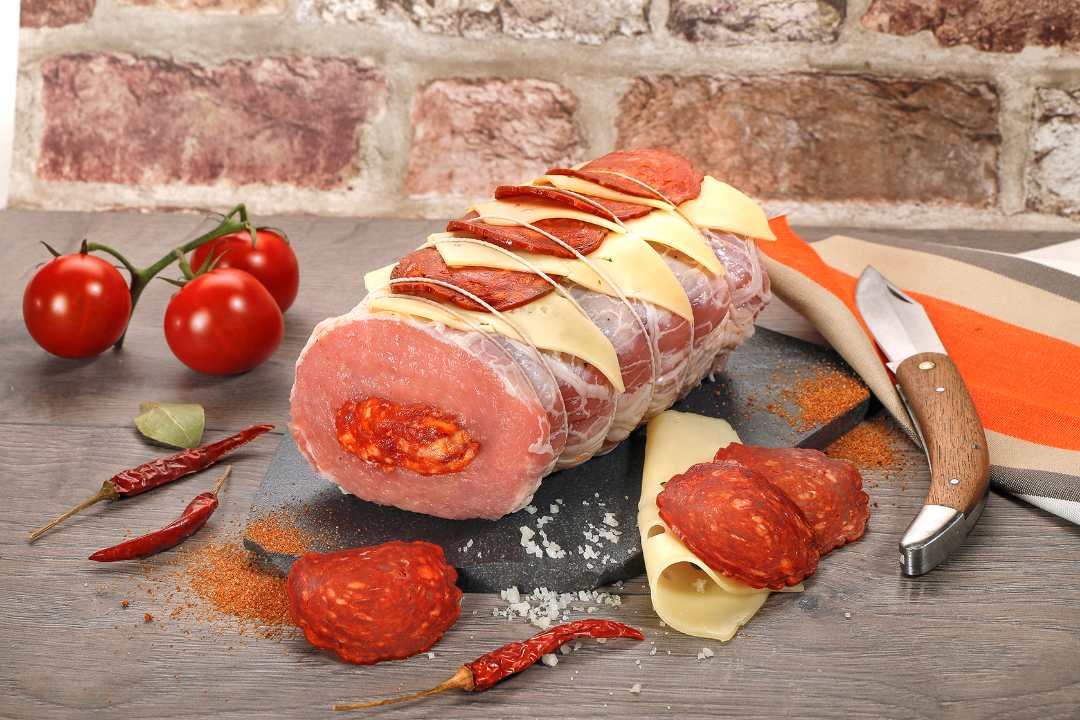
France – Roast Chorizo – Salmonella

Gov france

Identification information of the recalled product

  • Product category Feed
  • Product subcategory Meats
  • Product brand name Vallegrain
  • Model names or references Roast Chorizo
  • Identification of products
    GTIN Batch Date
    3467980061181 2232105601 Use-by date 27/11/2022
    3467980061082 2232105601 Use-by date 27/11/2022
  • Packaging Tray under modified atmosphere of about 4kg or 3x4kg.
  • Marketing start/end date From 17/11/2022 to 18/11/2022
  • Storage temperature Product to be stored in the refrigerator
  • Health mark FR-28-111-020-CE
  • Further information Roast pork elaborated about 4kg. Roast stuffed with a pork merguez stuffing, covered with slices of Emmental and Chorizo, all wrapped in strainer.
  • Geographic area of ​​saleDepartments: EURE-ET-LOIR (28), ORNE (61), VAL-D’OISE (95)
  • Distributors SUPER U and LECLERC
  • List of points of saleDHQUALCP_-_Roti_chorizo.pdf

Practical information regarding the recall

  • Reason for recall Presence of Salmonella detected
  • Risks incurred by the consumer Salmonella spp (causative agent of salmonellosis)

Research – Salmonella recall cost Cranswick £3 million

Food Safety News

Cranswick has revealed that a Salmonella incident earlier this year cost the company more than £3 million ($3.6 million).

In a half-year results statement, which covers up to Sept. 24, 2022, the food producer said adjusted group operating profit was 1.7 percent lower at £68.4 million ($81.4 million).

This included a charge of £3.1 million ($3.7 million) due to costs associated with the product recall in May after Salmonella was found at the Hull cooked poultry facility in England.

Viet Nam – Salmonella, Bacillus cereus, E.coli detected in food samples in Nha Trang school outbreak

Outbreak News Today

In a follow-up on the food poisoning outbreak that affected hundreds of schoolchildren at the Ischool Nha Trang in Khanh Hoa province, Vietnam, health officials now report test results from the Pasteur Institute Nha Trang show pathogenic bacteria were found in the fried chicken wings of the meal, causing the outbreak which sickened students at a Ischool Nha Trang.

Specifically, Salmonella sp., Bacillus cereus and Escherichia coli were detected in food samples. In addition, Bacillus cereus was also detected in fish sauce samples.

According to our previous report, some 400 students were sickened including more than 200 hospitalizations and one death was reported in a first grade student after eating a school lunch.

Israel – After Recall in April Over Salmonella Concerns, Elite Chocolate Brands Return to Shelves in Israel

Haaretz

Israel’s top chocolate manufacturer announced on Tuesday that it is reintroducing several lines of candy to the Israeli market following a nationwide recall earlier this year due to salmonella contamination.

In a statement, the Strauss Group said that products from its Elite chocolate line, including the Parra brand, Pesek Zman and Kif Kef candy bars, would “gradually return to the shelves.” The move follows the reopening of its factory in Nof Hagalil in Israel’s north, where the salmonella was discovered. The company said that it has made “significant investments … to ensure the quality and safety of the products at the highest level.”

USA – FDA Core Outbreak Table- Investigations of Foodborne Illness Outbreaks

FDA

What’s New

  • For the Listeria monocytogenes outbreak (reference #1127), the product linked to illnesses has been updated to imported enoki mushrooms. CDC posted an investigation notice on this incident.
  • For the Salmonella Typhimurium outbreak in a not yet identified food (reference #1113), the case count has increased from 264 cases to 269 cases, and sample collection and analysis have been initiated.
  • For the E. coli O157 (reference #1121) in a not identified food, the investigation status has ended.

Research – Use of a Non-Destructive Surface Sampling Device to Sample Domestic Beef Manufacturing Trimmings and Bench Trim

FSIS USDA

Summary

On February 1, 2023, FSIS intends to stop using the N60 excision sampling method to sample domestic beef manufacturing trimmings and bench trim for adulterant Shiga toxin-producing Escherichia coli (E. coli) (STEC) and Salmonella. FSIS intends to replace the N60 excision sampling method with a non-destructive surface sampling method that uses a cloth manual sampling device. FSIS has found that the cloth sampling method is as effective as the N60 excision sampling method at recovering organisms in beef manufacturing trimmings. Additionally, the cloth sampling method is faster and safer for FSIS inspection program personnel (IPP) to use because it does not require IPP to use hooks or knives to collect samples. Moreover, the cloth sampling method allows FSIS to sample without destroying product, which reduces food waste.

Dates

FSIS will implement the cloth sampling on February 1, 2023, unless the Agency receives substantive comments that warrant further review. Submit comments on or before January 23, 2023.

Research – Salmonella not detected on NZ poultry farms since September

RNZ

Efforts to eradicate salmonella enteritidis from the poultry industry are on track with no properties under restricted movement controls.

The bacteria strain was first found in an Auckland hatchery in March last year.

Since then 14 sites tested positive for the strain, about 550 thousand birds have been culled and 130 people became unwell with the bacteria.

Salmonella enteritidis can cause abdominal cramps, diarrhoea, fever, headache and vomiting in people.

New Zealand Food Safety deputy director general Vincent Arbuckle said control efforts were paying off.

Salmonella enteritidis had not been detected on farm since early September and the last case detected in a human was May, he said.

“It’s almost a textbook example of the regulator working with the poultry industry and individual farmers, what was a pretty serious outbreak in 2021. Through careful work with the industry, we believe we’ve got a well contained now.

 USA – Salmonella Typhimurium outbreak (reference # 1113) 

Food Poisoning News

kswfoodworld salmonella

As of November 16, 2022, a Salmonella Typhimurium outbreak (reference # 1113) has been identified in the United States with no known source as the cause of the outbreak. A total of 264 cases have been identified in connection with the outbreak, though the number of actual cases is thought to be much higher and the investigation remains ongoing. The Food and Drug Administration (FDA) is leading the investigation in collaboration with both federal, state, and local partners. The FDA is currently working vigilantly to find the source of the Salmonella Typhimurium outbreak and will update the public accordingly.

Spain – Presence of Salmonella in Chistorra (Cheese) from Spain

ACSA

Alert joke

The Spanish Agency for Food Safety and Nutrition has communicated to the competent authorities of the autonomous communities, through the Coordinated System of Rapid Information Exchange (SCIRI), an alert, transmitted by the health authorities of Navarre, regarding the presence of  Salmonella , in the CHISTORRA DE NAVARRA product.

The data of the product involved are:

  • Product number:  CHISTORRA DE NAVARRA
  • Product appearance: Vacuum packed.
  • Lot number: 222429
  • Expiry date: 02/26/2023 and 02/27/2023
  • Unit weight: 220g
  • Temperature: Refrigerated

The manufacturing company has withdrawn the product from the market, distributed exclusively in LIDL supermarkets, which has published information about it on its website.

The withdrawal of the affected products from the marketing channels will be verified by the competent authorities.

With the available information , there is no evidence in Spain of any notified case associated with this alert.

People who have products affected by this alert at home are advised to refrain from consuming them and return them to the point of purchase.

The presence of  Salmonella  in the products can pose certain risks to the health of the people who consume them. If you have consumed this product and present any symptoms compatible with salmonellosis (mainly diarrhea and/or vomiting accompanied by fever and headache), it is recommended to go to a health center.