Category Archives: Salmonella

Czech Republic – Chilled chicken breast steak – Salmonella

Potravinynapranyri

Illustrative photo #1

Place of inspection:
Vrbátky ( Vrbátky, 79813 Vrbátky )
ID: 28624297
Invalid parameter:

Salmonella Enteritidis

The pathogenic bacterium Salmonella Enteritidis was detected in the product . This bacteria can cause a disease called salmonellosis.

Batch: 1476/23/ZLC/1
Expiration date: 24/04/2023
Manufacturer: ZAKLAD PRZETWÓRSTWA DROBIU MARICA Sp. z o. o. Sp. k., 43-318 BIELSKO-BIALA, UL. STRACONKI 68, Poland, PL 24034301 WE
Country of origin:  Poland
Date of sample collection: 20/04/2023
Reference number: 23-000019-SVS-CZ
The sample was detected by the official control of the State Veterinary Administration.
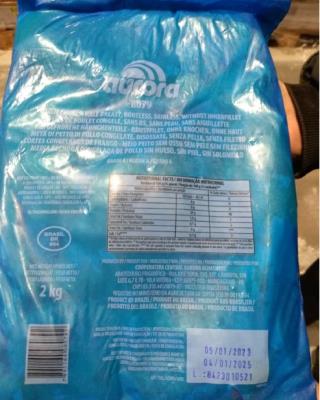
Czech Republic – Deep-frozen boneless, skinless chicken breasts – Salmonella

Potravinynapranyri

Illustrative photo #1

Place of inspection:
Kostelec nad Černými lesy ( U Cihelny 1074, 28163 Kostelec nad Černými lesy )
ID: 26131285
Food group: Meat and meat products Packaged meat

Deep-frozen boneless, skinless chicken breasts
Category: Dangerous foods
Invalid parameter:

Salmonella Minnesota

The pathogenic bacterium Salmonella Minnesota was detected in the product . This bacteria can cause a disease called salmonellosis.

Batch: 8423010521
Best before date: 4/1/2025
Packaging: Plastic foil
Quantity of the product in the package: kg
Manufacturer: COOPERATIVA CENTRAL AURORA ALIMENTOS BRASIL BR 664
Importer: EU Food-Bridge Ltd. Ireland
Distributor: Animalco as
Country of origin:  Brazil
Date of sample collection: 20/04/2023
Reference number: 23-000018-SVS-CZ
The sample was detected by the official control of the State Veterinary Administration.

USA – Summary of Possible Multistate Enteric (Intestinal) Disease Outbreaks in 2021

CDC

Outbreak Investigations At A Glance

Possible Multistate Outbreaks

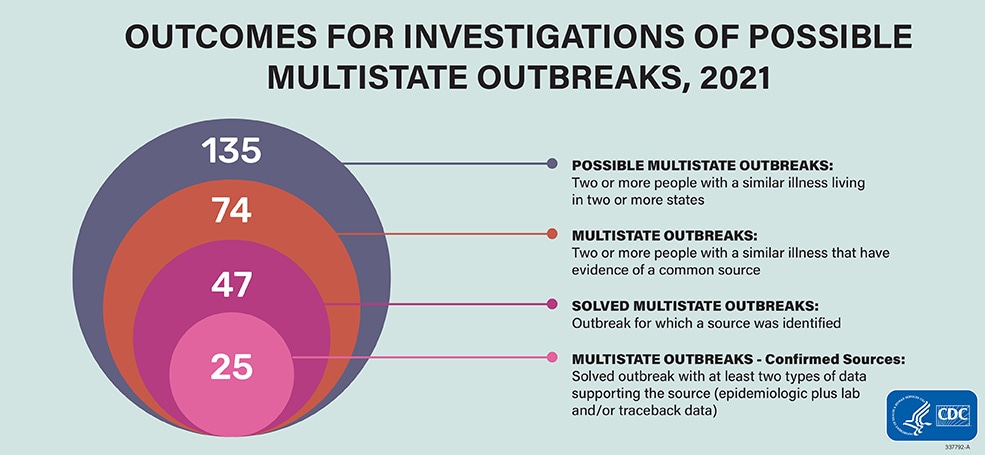
This analysis includes 135 possible multistate outbreak investigations during 2021.

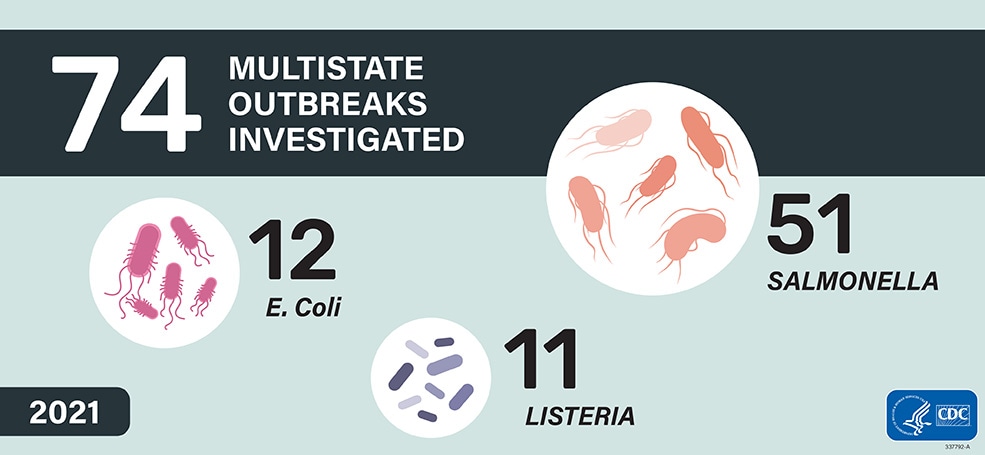
This analysis includes 135 investigations of possible multistate enteric (intestinal) outbreaks during 2021. Some possible outbreaks were excluded from this report because they were determined to be single state or because they were linked to international travel. After investigation, 74 (55%) of these were determined to be multistate outbreaks, and investigators solved 47 (64%) of these outbreaks.

Multistate Outbreaks

74 (55%) of the 135 investigations were determined to be multistate outbreaks.

The number of outbreaks increased from 2020 but was lower than the 82 investigated outbreaks in 2019. The number of outbreaks investigated in 2021 was likely lower than that in 2019 due in part to continued effects of the COVID-19 pandemic on enteric disease outbreak detection and investigation (e.g., decreased resources at local, state, and federal public health agencies, changes in healthcare-seeking behavior, and changed restaurant dining and grocery shopping patterns.) Additionally, changing diagnostic testing practices likely continued to affect enteric disease surveillance and the ability to identify possible outbreaks.

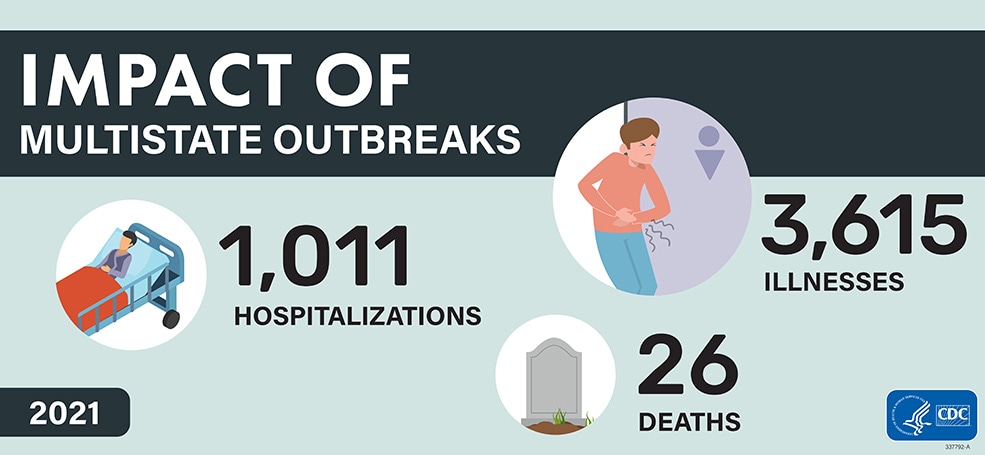
The 74 investigated multistate outbreaks resulted in 3,615 illnesses, 1,011 hospitalizations, and 26 deaths

Solved Multistate Outbreaks

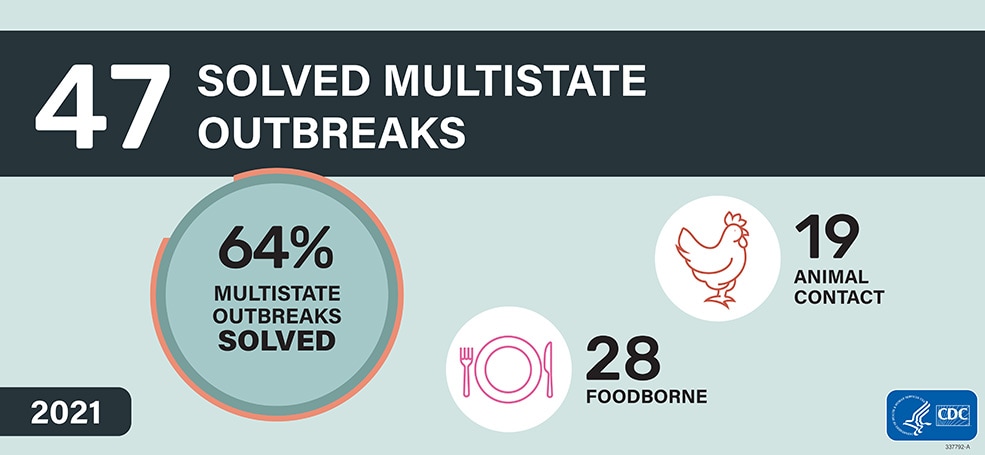
Among the 74 investigated multistate outbreaks, 47 (64%) were solved, including 25 outbreaks with confirmed sources and 22 with suspected sources.

Among the 74 multistate outbreaks, 47 (64%) were solved, meaning a confirmed or suspected source of the outbreak was identified, including 25 (53%) outbreaks with confirmed sources and 22 (47%) with suspected sources. Among the 47 solved outbreaks, 28 (60%) were linked to contaminated foods, and 19 (40%) were linked to animal contact.

Solved multistate outbreaks caused at least 2,047 illnesses. Solved multistate outbreaks linked to contaminated food caused 1,740 illnesses, 496 hospitalizations, and 15 deaths, while multistate outbreaks linked to animal contact caused 1,307 illnesses, 329 hospitalizations, and 3 deaths.

Denmark – Polish chicken kebab is linked to Danish salmonella outbreak

SSI

Since May, 22 people have been registered in Denmark with the same salmonella type, which has also made people sick in other European countries. Now the investigation has shown that imported chicken kebab meat from Poland is also the source of infection for the Danish cases.

Last edited on August 29, 2023
Last week, the Danish Veterinary and Food Administration found salmonella in a batch of frozen chicken kebab meat from Poland, and the batch was withdrawn from the market. Further analyzes have shown that it is the same type of salmonella that made 22 people sick in Denmark in the period May to August 2023. It is estimated that more people may have been infected, as not all infected people go to the doctor and are tested for salmonella. The frozen chicken kebab products have mainly been sold to restaurants.

“The investigation into this salmonella outbreak has been extensive – partly there has been international collaboration to compare salmonella samples from humans and food, and partly we in the Danish food emergency department have interviewed patients and unraveled where the chicken kebab meat they had eaten came from. We have now found a clear connection between the salmonella type in the chicken kebab meat and the salmonella type in the Danish cases,” says epidemiologist at the Statens Serum Institut, Luise Müller.

“In general, it is the restaurant’s responsibility that consumers do not get sick from the food that is served. The Salmonella bacteria cannot survive heat treatment above 75 degrees,” says Senior researcher and research group leader at the DTU Food Institute Marianne Sandberg.

Head of unit Lene Mølsted Jensen from the Danish Food and Drug Administration states: “The chicken kebab meat from Poland was pre-fried and intended to be further heat-treated before eating. It is therefore an important lesson for restaurants and kebab places that in the future they pay attention to the handling and frying of chicken kebab meat to avoid this happening again.”

In the coming time, the Danish Food and Food Administration will keep an extra eye on whether other batches of chicken products from Poland may be contaminated with salmonella.

What should you do if you have eaten chicken kebab?

If you have not had symptoms of a salmonella infection, or if you have had symptoms that have resolved on their own, do not take any action. In case of persistent symptoms or questions, you can contact your own doctor.

The coordination of the investigation of the disease outbreak has taken place under the auspices of the Central Outbreak Group. It consists of representatives from SSI, the DTU Food Institute and the Danish Veterinary and Food Administration.

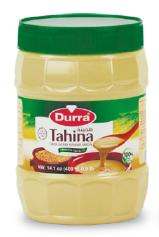
New Zealand – Durra brand Tahina (400g and 800g) – Salmonella

MPI

29 August 2023: Aldiery’s Mediterranean Market Ltd is recalling a specific batch of Durra brand Tahina due to the possible presence of Salmonella.

Product type Tahini
Name of product (size) Durra brand Tahina (400g and 800g)
Date marking EXP: 24/03/25
Package size and description The product is sold in a 400g and 800g plastic container.
Distribution The products are imported from Jordan.

The products are sold at retail outlets and ethnic grocery stores throughout New Zealand.

The products have not been re-exported.

Notes This recall does not affect any other Durra brand products.

Point of sale notice for retailers

If you are a retailer of the products in this recall, download a copy of the point of sale notice. You need to display it in your store for one month.

Point of sale notice – Durra brand Tahina (400g and 800g) [PDF, 40KB]

Consumer advice

Customers are asked to check the date mark on the product.

Affected products should not be consumed. There have been no reports of associated illness in New Zealand. If you have consumed any of these products and have any concerns about your health, seek medical advice.

Customers should return the products to their retailer for a full refund.

Who to contact

If you have questions, contact Aldiery’s Mediterranean Market Ltd:

  • Phone: 021 145 2970.

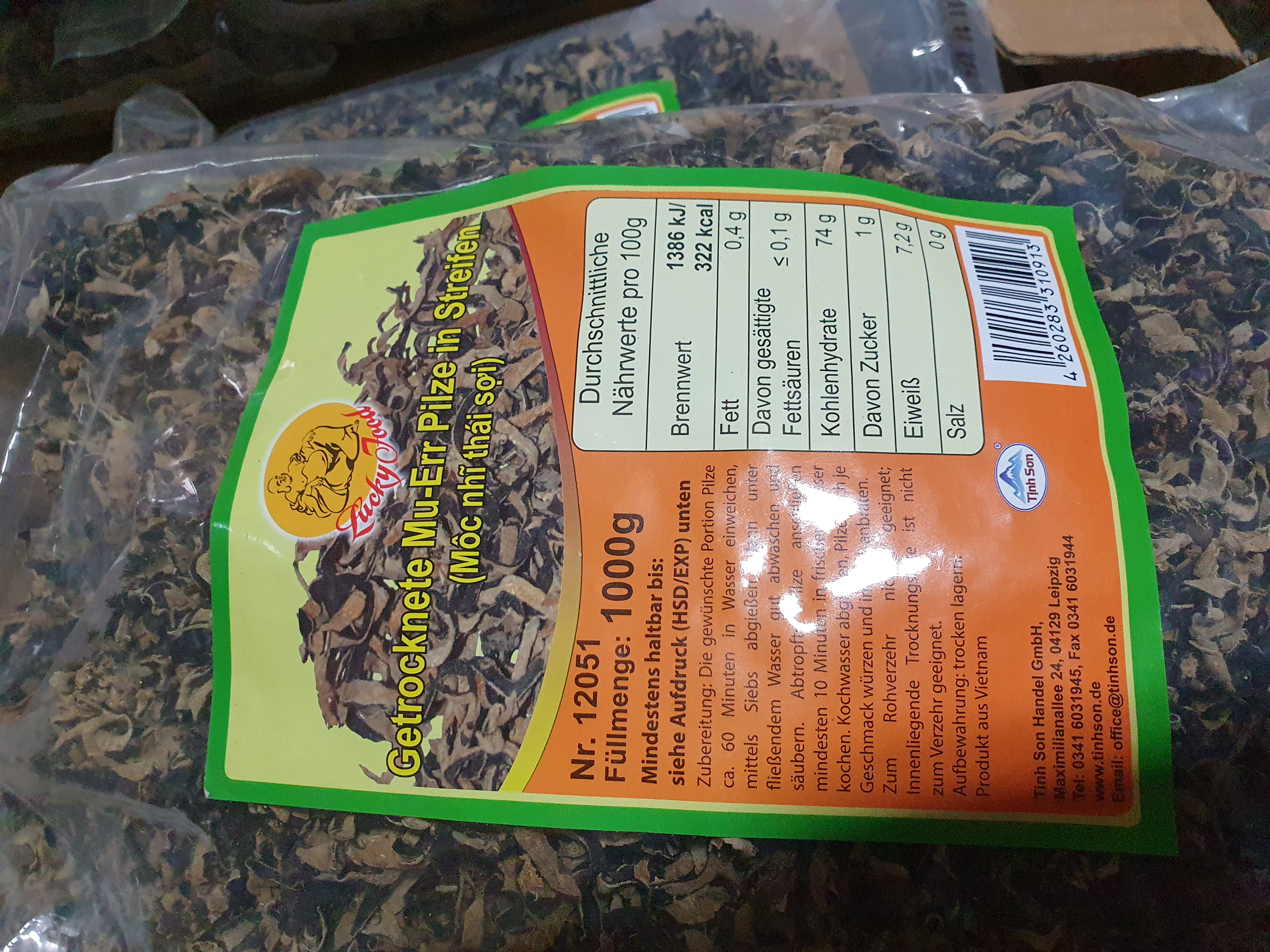
Germany – “Mu-err mushrooms in strips, 1 kg” – Salmonella

LMW

Alert type: Groceries
Date of first publication: 08/29/2023
Product name:

“Mu-err mushrooms in strips, 1 kg”

Product images:

20230706_115113.jpg
Manufacturer (distributor):

Importer according to labeling: Thanh Long Food Williama Heerleina Lindleya 16 02-013 Warzawa, Poland or Thin Son Handel GmbH Maximillianallee 24 04129 Leipzig

Reason for warning:

Health hazard due to microbiological contamination with Salmonella spp. (Section 40 paragraph 1 sentence 1)

Packaging Unit: 1 kg
Durability: putative HSD.20 12 24
Production date:

putative NSX.20 12 22

Additional Information:

Salmonella disease manifests itself within a few days after infection with diarrhoea, abdominal pain and occasionally vomiting and a slight fever. The symptoms usually subside on their own after a few days. Babies, small children, senior citizens and people with a weakened immune system in particular can develop more severe illnesses. Persons who have eaten this food and develop severe or persistent symptoms should seek medical attention and report possible Salmonella infection. It makes no sense to seek preventive medical treatment without symptoms.

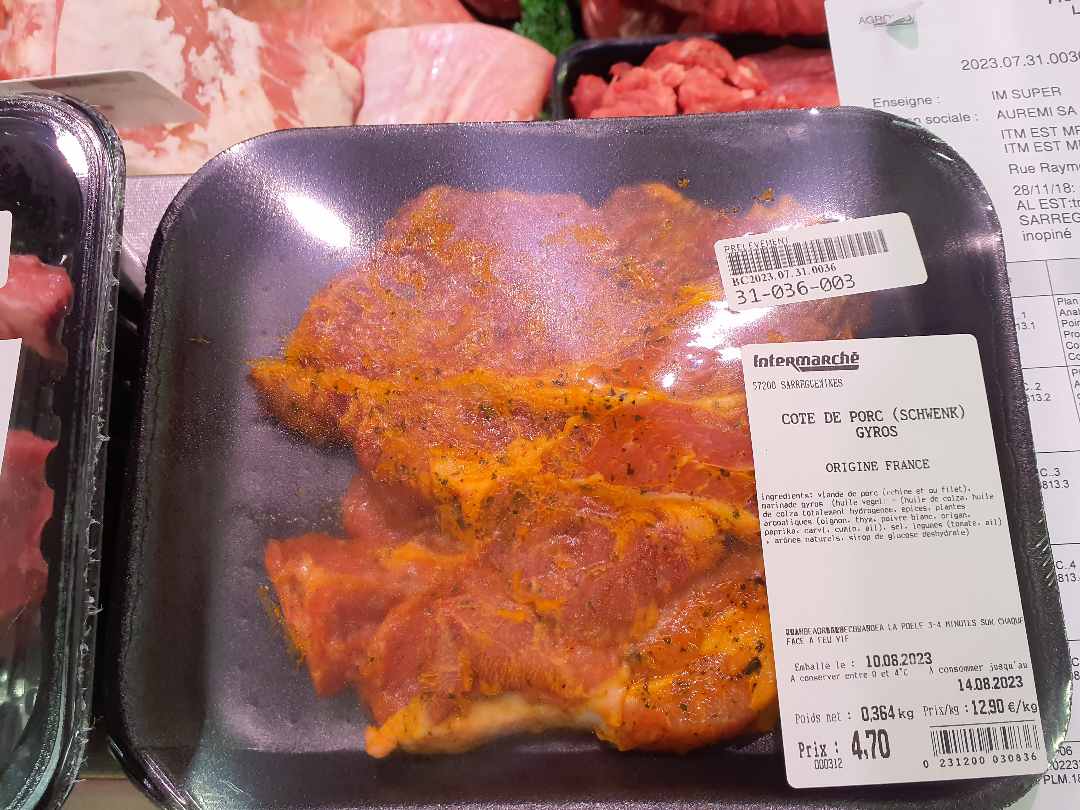
France – G/OS Marinated Pork Chops – Salmonella

Gov france

  • Product category Food
  • Product subcategory Meats
  • Product brand name unbranded
  • Model names or references BBC red label AFM pork loin
  • Identification of products
    GTIN Batch Date
    0231200000000 G32200118 Best before date 08/17/2023
  • Packaging under film
  • Marketing start/end date From 08/10/2023 to 08/14/2023
  • Storage temperature Product to be stored in the refrigerator
  • Health mark unbranded
  • Further information When we returned from the analysis, we did not have the product on our shelves. We are unable to attach a photo.
  • Geographic area of ​​sale SARREGUEMINES
  • Distributors Intermarché des Faienceries

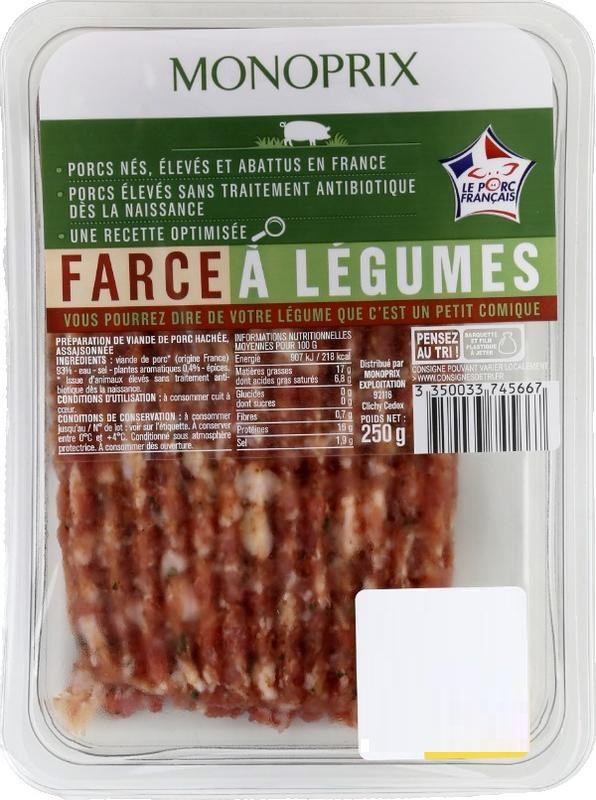
France – VEGETABLE STUFFING – Salmonella

Gov france

  • Product category Food
  • Product subcategory Meats
  • Product brand name MONO PRICE
  • Model names or references VEGETABLE STUFFING 250G MONOPRIX
  • Identification of products
    GTIN Batch Date
    3350033745667 01357424 Use-by date 08/20/2023
  • Packaging 250g tray
  • Marketing start/end date From 08/11/2023 to 08/20/2023
  • Storage temperature Product to be stored in the refrigerator
  • Health mark EN 29.233.001 CE
  • Geographic area of ​​sale Whole France
  • Distributors MONO PRICE

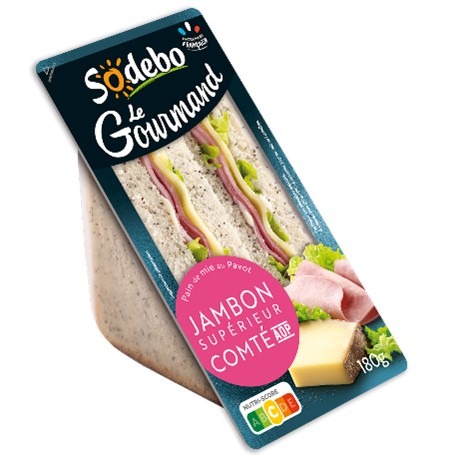
France – SANDWICH LE GOURMAND HAM SUPERIEUR COMTE AOP 180G – Salmonella

Gov france

  • Product category Food
  • Product subcategory Prepared meals and snacks
  • Product brand name SODEBO
  • Model names or references LE GOURMAND HAM SUPERIEUR COMTE AOP 180G
  • Identification of products
    GTIN Batch Date
    3242272846055 DLC 08/29/2023 Use-by date 08/29/2023
  • Packaging 180G tray
  • Marketing start/end date From 08/17/2023 to 08/25/2023
  • Storage temperature Product to be stored in the refrigerator
  • Geographic area of ​​saleWhole France
  • Distributors List of signs delivered as attachments
  • List of points of sale List_of_brands.pdf

Research – Genomic diversity and epidemiological significance of non-typhoidal Salmonella found in retail food collected in Norfolk, UK

Microbiology Research

ABSTRACT

Non-typhoidal  (NTS) is a major cause of bacterial gastroenteritis. Although many countries have implemented whole genome sequencing (WGS) of NTS, there is limited knowledge on NTS diversity on food and its contribution to human disease. In this study, the aim was to characterise the NTS genomes from retail foods in a particular region of the UK and assess the contribution to human NTS infections. Raw food samples were collected at retail in a repeated cross-sectional design in Norfolk, UK, including chicken (=311), leafy green (=311), pork (=311), prawn (=279) and salmon (=157) samples. Up to eight presumptive NTS isolates per positive sample underwent WGS and were compared to publicly available NTS genomes from UK human cases. NTS was isolated from chicken (9.6 %), prawn (2.9 %) and pork (1.3 %) samples and included 14 serovars, of which  Infantis and  Enteritidis were the most common. The . Enteritidis isolates were only isolated from imported chicken. No antimicrobial resistance determinants were found in prawn isolates, whilst 5.1 % of chicken and 0.64 % of pork samples contained multi-drug resistant NTS. The maximum number of pairwise core non-recombinant single nucleotide polymorphisms (SNPs) amongst isolates from the same sample was used to measure diversity and most samples had a median of two SNPs (range: 0–251). NTS isolates that were within five SNPs to clinical UK isolates belonged to specific serovars: . Enteritidis and . Infantis (chicken), and . I 4,[5],12:i- (pork and chicken). Most NTS isolates that were closely related to human-derived isolates were obtained from imported chicken, but further epidemiological data are required to assess definitively the probable source of the human cases. Continued WGS surveillance of  on retail food involving multiple isolates from each sample is necessary to capture the diversity of  and determine the relative importance of different sources of human disease.