Category Archives: Research

Research – What is Campylobacter gastroenteritis?

Medical News Today

See full article at the link above

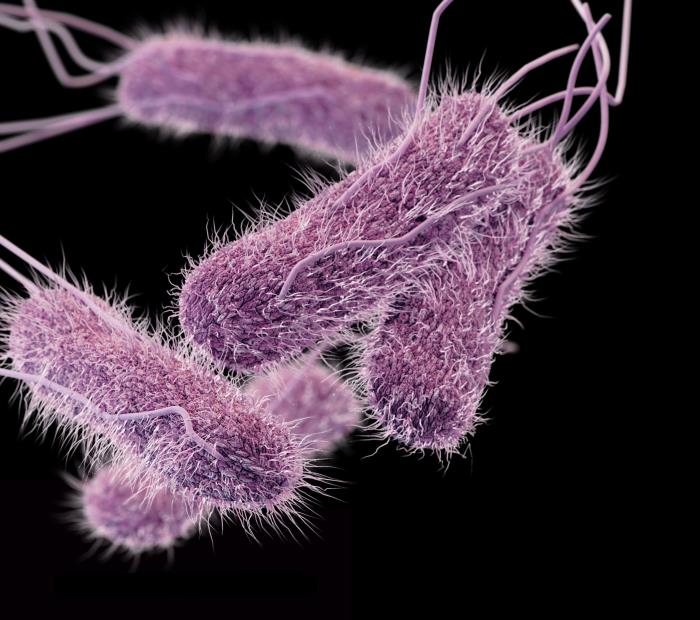
Campylobacter gastroenteritis is a common intestinal infection that occurs due to Campylobacter bacteria.

According to the Centers for Disease Control and Prevention (CDC), Campylobacter bacteria are the most common bacterial cause of diarrheal illness, affecting 1.5 million people in the United States each year.

The bacteria may be present in the meat or milk of an animal or pass to water or produce through feces or contact with infected meat.

Campylobacter gastroenteritis can lead to symptoms such as:

The World Health Organization (WHO)states that infections are typically mild and will subside on their own. However, young children, older adults, and people with weakened immune systems have a higher risk of developing severe illness.

Causes

Campylobacter gastroenteritis occurs when a person comes into contact with Campylobacter bacteria.

The WHO notes that Campylobacter bacteria are present in many animals, including:

  • poultry
  • pigs
  • cattle
  • sheep
  • ostriches
  • shellfish

They can also be present in pets, such as cats and dogs.

The main route of exposure is through eating undercooked meat. When an animal is slaughtered, the bacteria from the feces can contaminate the meat.

People can also come into contact with the bacteria via:

  • raw or unpasteurized milk
  • contaminated water and ice
  • unwashed fruits and vegetables

Milk can become contaminated when Campylobacter bacteria are present in the udder. Fruits and vegetables can become contaminated if they come into contact with water or soil that contains animal feces.

Rarely, the condition is a result of exposure to contaminated water during recreation such as swimming. Lakes and streams can become contaminated with animal faeces.
Research – In-House Validation of Multiplex PCR for Simultaneous Detection of Shiga Toxin-Producing Escherichia coli, Listeria monocytogenes and Salmonella spp. in Raw Meats

MDPI

The aim of the study was to perform in-house validation of the developed multiplex PCR (mPCR)-based alternative method to detect Shiga toxin-producing Escherichia coli (STEC), Listeria monocytogenes (L. monocytogenes) and Salmonella spp. in raw meats following the ISO 16140-2: 2016. A comparative study of the developed mPCR against the Bacteriological Analytical Manual (BAM) method was evaluated for inclusivity and exclusivity, sensitivity and the relative level of detection (RLOD). Inclusivity levels for each target bacterium were all 100%, while exclusivity for non-target bacteria was 100%. The sensitivity of the developed mPCR was calculated based on the analysis of 72 samples of raw meat. The sensitivity of the developed mPCR was 100%. The RLOD values of the developed mPCR for STEC, L. monocytogenes and Salmonella spp. were 0.756, 1.170 and 1.000, respectively. The developed mPCR showed potential as a tool for the fast, specific and sensitive detection of the three bacteria in the raw meat industry View Full-Text

Research – Foodborne Illness Outbreaks Reported to National Surveillance, United States, 2009–2018

CDC

Abstract

Foodborne outbreaks reported to national surveillance systems represent a subset of all outbreaks in the United States; not all outbreaks are detected, investigated, and reported. We described the structural factors and outbreak characteristics of outbreaks reported during 2009–2018. We categorized states (plus DC) as high (highest quintile), middle (middle 3 quintiles), or low (lowest quintile) reporters on the basis of the number of reported outbreaks per 10 million population. Analysis revealed considerable variation across states in the number and types of foodborne outbreaks reported. High-reporting states reported 4 times more outbreaks than low reporters. Low reporters were more likely than high reporters to report larger outbreaks and less likely to implicate a setting or food vehicle; however, we did not observe a significant difference in the types of food vehicles identified. Per capita funding was strongly associated with increased reporting. Investments in public health programming have a measurable effect on outbreak reporting.

Foodborne diseases remain a major public health challenge in the United States, where 31 known pathogens cause an estimated 9 million illnesses, 56,000 hospitalizations, and 1,300 deaths annually (1). Efforts to improve food safety and reduce the burden of foodborne disease rely on data from foodborne disease surveillance and outbreak investigations to help prioritize food safety interventions, policies, and practices. Data from foodborne illness outbreaks reported to the Centers for Disease Control and Prevention (CDC) provide vital information on the foods causing illness and common food–pathogen pairs. Those data are used by the Interagency Food Safety Analytics Collaboration (IFSAC) to inform outbreak-based attribution models that attribute illnesses to specific food categories (2,3).

Foodborne illness outbreaks are investigated by local, state, and territorial health departments, CDC, the US Food and Drug Administration (FDA), and the Food Safety and Inspection Service of the United States Department of Agriculture and are reported to CDC’s Foodborne Disease Outbreak Reporting Surveillance System (FDOSS) through the web-based National Outbreak Reporting System (NORS). Although reported outbreaks are a rich data source, they represent a subset of all outbreaks occurring in the United States; not all outbreaks will be detected, investigated, and reported. Factors influencing which outbreaks are detected, investigated, and reported to CDC include both structural factors associated with the jurisdiction in which the outbreak occurred (e.g., infrastructure and capacity) and characteristics of the outbreak (e.g., size, geographic location, pathogen).

We integrated data from a variety of sources to examine structural factors and describe outbreak characteristics of foodborne outbreaks involving Salmonella, Shiga toxin–producing Escherichia coli (STEC) O157, norovirus, and bacterial toxins that were reported to national surveillance. In addition, we assessed the effects of state variation in outbreak reporting on the types of food vehicles identified.

Research – Inactivation of viruses related to foodborne infections using cold plasma technology

Wiley Online

Globally, there is a rise in day-to-day demand for minimally processed foods to supply nutritious, wholesomeness and safe foods to the consumers. Contamination of food by pathogens is a serious problem resulting in several outbreaks. Food pathogens like molds, bacteria were detectable and can be inactivated. The virus detection in foods is always a difficult task as their presence could not alter any noticeable change in the quality. Norovirus, Hepatitis A viruses are well-known for their foodborne outbreaks and illnesses. Enveloped viruses are resistant and have the stability to the current traditional preservation methods due to the presence of a protective capsid layer and an envelope. The current thermal processing has shown significant effect on the product quality. The use of chemical disinfestation compounds is not suitable for food commodities. There is a need for alternative nonthermal food processing technologies for decontamination of food and food packages and preserving the food quality as well. Cold plasma is one of the emerging nonthermal, chemical-free residues, and eco-friendly technology widely being applied to the different food sectors. The main antiviral mechanism is the disruption of the capsid protein layer, the oxidation and denaturation of viral proteins. The method has also caused damage to the envelope layer and genetic material. This review focuses on cold plasma inactivation efficiency on different viruses.

Research – How Does Peanut Butter Get Contaminated With Salmonella, Anyway?

Health

Manufacturing Issues May Lead to Salmonella in Peanut Butter

To understand the link between peanut butter and Salmonella, it’s important to go over how peanut butter is made. The process of making peanut butter starts with raw, shelled peanuts that are roasted and cooled, Vijaya Surampudi, MD, clinical nutrition specialist at UCLA Health, told Health. The peanuts are then ground, and heated again during the grinding, she added.

Heating the peanuts and keeping them dry is a hugely important step in keeping your peanut butter safe from contamination, Darin Detwiler, LPD, a professor of food policy and corporate social responsibility at Northeastern University and author of Food Safety: Past, Present, and Predictions, told Health.

“Peanut butter is made from shelled and ground peanuts that are typically left sitting in unprotected piles until ready for the next stage of food manufacturing or for delivery to another company,” said Detwiler. “Most cases of Salmonella in peanuts are caused by the presence of rain water bringing feces onto the product, or animals—birds, or more likely rodents—[coming] directly] into contact with the product.”

Roasting the contaminated peanuts can help kill the Salmonella “if the food is heated to a high enough temperature, held at that temperature for enough time, and cooked throughout,” said Detwiler. But then the peanut butter has to keep that sanitized status after heating and grinding. “Roasted peanut butter can become contaminated in the processing plant if proper sanitation protocols are not followed.”

However, in some cases roasting contaminated peanuts can actually cause a type of heat-tolerant bacteria. “That’s why cleaning and sanitizing of the equipment and the facility is so important in addition to ensuring that the facility is well maintained,” Ellen Shumaker, PhD, food safety extension associate at North Carolina State University, told Health.

Peanut Butter Is an Ideal Place for Salmonella to Survive

According to Detwiler, Salmonella may not be able to grow in peanut butter, but it can survive for “many months” if it gets into the product.

“Peanut butter is a low-moisture food, meaning there is not enough available water to support the growth of microbial pathogens like Salmonella,” Abby Snyder, PhD, assistant professor of food science at the Cornell College of Agriculture and Life Sciences, told Health. “However, while Salmonella can’t grow, it can survive for extended periods of time in low-moisture foods like peanut butter.”

The high fat content of peanut butter may even act like a layer of protection for the bacteria, according to Shumaker. She pointed to a 2000 study in the Journal of Applied Microbiology which found that the bacteria could survive for up to 24 weeks in peanut butter jars.

Another large issue: Peanut butter is considered a “ready to eat” food, meaning people typically eat it without cooking it—which then raises the risk of contracting Salmonella, if the jar is contaminated, said Snyder.

Research – Comparison of Selected Phenotypic Features of Persistent and Sporadic Strains of Listeria monocytogenes Sampled from Fish Processing Plants

MDPI

(1) Background: The main source of transmission of Listeria monocytogenes is contaminated food, e.g., fish and meat products and raw fruit and vegetables. The bacteria can remain for 13 years on machines in food processing plants, including fish plants.

(2) Methods: A total of 720 swabs were collected from a salmon filleting line. The research material consisted of 62 (8.6%) L. monocytogenes isolates. Pulsed Field Gel Electrophoresis (PFGE) allowed detecting a pool of persistent strains. All persistent strains (n = 6) and a parallel group of strains collected sporadically (n = 6) were characterized by their ability to invade HT-29 cells, biofilm formation ability, and minimum bactericidal concentrations (MBC) of selected disinfectants.

(3) Results: Among the obtained isolates, 38 genetically different strains were found, including 6 (15.8%) persistent strains. The serogroup 1/2a-3a represented 28 strains (73.7%), including the persistent ones. There were no significant differences in invasiveness between the persistent and sporadic strains. The persistent strains tolerated higher concentrations of the tested disinfectants, except for iodine-based compounds. The persistent strains initiated the biofilm formation process faster and formed it more intensively.

(4) Conclusions: The presence of persistent strains in the food processing environment is a great challenge for producers to ensure consumer safety. This study attempts to elucidate the phenotypic characteristics of persistent L. monocytogenes strains. View Full-Text

Research – A risk assessment model for Salmonella spp. in swine carcasses

EFSA

Salmonellosis is one of the most important food‐borne outbreaks that occurs in the EU/EEA. From the first production stages at slaughter, meat is susceptible to spoilage and can be a substrate for the pathogenic microorganisms growth. Among the pathogens, the presence of Salmonella is mainly due to mishandling during the evisceration stage. For the year 2019, according to the collected data from MSs, on the 17.9% of all food‐borne outbursts, the presence Salmonella was confirmed. Pork meat is considered as one of the four most commonly reported foods in cases of salmonellosis. For the training purposes of this project, Salmonella isolation and identification along with RA for carcass contamination, was performed. Pig carcasses were sampled using the non‐destructive technique. The sampling took place post dressing and before the stage of chilling. For the Salmonella detection, a three phases process was performed (pre‐enrichment, enrichment, isolation). A total of 757 samples were collected, 19 were found to be positive for Salmonella. The most common was found to be Salmonella Derby, which was identified eight times. The main objective of the project was to determine the prevalence of Salmonella spp. in swine carcasses. Moreover, certain parameters were evaluated in terms of their influence on the prevalence of Salmonella. A stochastic simulation model was developed in Microsoft Office Excel 2019 by using the add‐in @Risk v.8.1. The prevalence was estimated to be 2.6%. For the pigs sampled, the average value of the distance from farm to slaughterhouse was 200.92 km. Additionally, the average weight of the carcasses was 127.97 kg. The prevalence of Salmonella between the samples that came from farms with a distance above the average, was higher by 1.7 units, while the prevalence for the samples with weight above the average was higher by 0.2 units. According to the stochastic model, it is specified that the prevalence is higher with greater distance, and there is an 8.1% probability the prevalence will exceed the legislation’s – hygiene criteria. In addition, the prevalence of Salmonella was shown to increase, as well in the case of samples from weightier animals, but to a lesser extent.

Norway Research – Outbreaks stable but illnesses down in 2021 

Food Safety News

The number of foodborne outbreaks in Norway has remained steady but fewer people were sick in 2021 compared to the year before.

A total of 25 foodborne outbreaks were announced this past year, which is on a par with 23 in 2020 but down compared to 46 in 2019 and 52 in 2018.

Overall, 327 people fell sick in the 25 outbreaks in 2021 with a range of three to 30 patients per outbreak. The 23 outbreaks in 2020 affected 495 people.

Data comes from a report that gives an overview of outbreaks and related illnesses reported to the Norwegian Institute of Public Health (FHI) in 2021.

Research – A Review of Essential Oils as Antimicrobials in Foods with Special Emphasis on Fresh Produce

Journal of Food Protection

Consumer safety concerns over established fresh produce washing methods, combined with demand for organic and clean label food, has led to the exploration of novel methods of produce sanitization. Essential oils (EOs), extracted from commonly found plants have potential as clean label sanitizers, as they are naturally derived and act as antimicrobials as well as antioxidants. In this review, the antimicrobial abilities of EOs are explored in the following categories: individually and in-combination, as emulsions, combined with existing chemical and physical preservation methods, incorporated into films and coatings, and in vapor phase. We examine combining EOs with one another, with EO components, with surfactants, or with other preservatives or preservation methods to increase sanitizing efficacy.  Components of major EOs are also identified, chemical mechanisms are discussed, and potential for antibacterial resistance and effect on organoleptic properties is examined. Studies reveal that EOs can serve as equivalent or better sanitizing agents than chlorine; nevertheless, concentrations must be kept low to avoid adverse sensory effects. For this reason, it is crucial that future studies address the maximum permissible EO concentrations, which do not negatively affect sensory properties.  This review should be beneficial to food scientists or industry personnel interested in sanitization and preservation of foods, including fresh produce with EOs.

Research – The Response and Survival Mechanisms of Staphylococcus aureus under High Salinity Stress in Salted Foods

MDPI

Staphylococcus aureus (S. aureus) has a strong tolerance to high salt stress. It is a major reason as to why the contamination of S. aureus in salted food cannot be eradicated. To elucidate its response and survival mechanisms, changes in the morphology, biofilm formation, virulence, transcriptome, and metabolome of S. aureus were investigated. IsaA positively regulates and participates in the formation of biofilm. Virulence was downregulated to reduce the depletion of nonessential cellular functions. Inositol phosphate metabolism was downregulated to reduce the conversion of functional molecules. The MtsABC transport system was downregulated to reduce ion transport and signaling. Aminoacyl-tRNA biosynthesis was upregulated to improve cellular homeostasis. The betaine biosynthesis pathway was upregulated to protect the active structure of proteins and nucleic acids. Within a 10% NaCl concentration, the L-proline content was upregulated to increase osmotic stability. In addition, 20 hub genes were identified through an interaction analysis. The findings provide theoretical support for the prevention and control of salt-tolerant bacteria in salted foods. View Full-Text