Category Archives: Research

Research – Salmonella enterica 4,[5],12:i:- an emerging threat for the swine feed and pork production industry

Journal of Food Protection

Salmonella continues to be a significant cause of foodborne illnesses in human medicine. The Centers for Disease Control and Prevention reported Salmonella as the second leading cause of foodborne illness in the United States, and the leading cause of both hospitalizations and deaths. Salmonella enterica 4,[5],12:i:- (STM) is a monophasic variant of S. Typhimurium and it is an emerging threat to both human and animal health. STM was first identified in the 1980’s from poultry products and has become increasingly prevalent in meat products including pork. STM has also been identified in swine farms as well as feed manufacturing environments and feed itself. Similar pulse-field gel electrophoresis profiles have been observed between human clinical cases and the STM samples originating from swine feed. These related profiles suggest a link between swine ingesting contaminated feed and the source of foodborne illness in human. The objective of this article was to better understand the history of STM and the possible pathway between swine feed to the household table. Continued research is necessary to better understand how STM can enter both the feed supply chain and the pork production chain to avoid contamination of pork products destined for human consumption.

Research – Comparisons of Non-thermal Decontamination Methods to Improve the Safety for Raw Beef Consumption

Journal of Food Protection

The object of this study was to examine non-thermal treatments to reduce foodborne pathogens in raw beef. Foodborne-illness pathogens were inoculated in the raw beef. Death rates of foodborne illness pathogens were evaluated by non-thermal decontamination methods(high pressure processing at 500MPa[HPP] for 2min, 5min, and 7min; UV LED radiation at 405nm[UV LED] for 2h, 6h, and 24h; hypochlorous acid water at 100ppm[HAW] for 1min, 3min, and 5min; 2.5% lactic acid[LA] for 1min, 3min, and 5min; modified atmosphere that replaced O2 to CO2 [MAP] for 24h and 48​​h; bio-gel[BG] application for 24h and 48h. Quality characteristics were measured after applying the practical non-thermal decontamination methods. After the treatment of HPP for 7min, inactivity rates were 4.4-6.7Log CFU/g for E. coli, Salmonella, and L. monocytogenes and 1.7Log CFU/g for S. aureus (p <0.05). After the treatment with UV LED for 24h, the reduced cell counts were 0.5, 0.7, and 0.3Log CFU/g for E. coli , Salmonella , and S. aureus, respectively(p <0.05), but no significant reduction for L. monocytogenes. When the beef was treated with HAW was treated for 5min, 0.6Log CFU/g of E. coli, 0.5Log CFU/g of Salmonella, 0.4Log CFU/g of S. aureus , and 0.5Log CFU/g of L. monocytogenes were inactivated. After the beef was treated with LA for 5min, 1.8Log CFU/g of E. coli, 3.0Log CFU/g of Salmonella, 1.3Log CFU/g of S. aureus, and 1.9Log CFU/g of L. monocytogenes were inactivated. MAP for 48h caused the inactivation of 0.3Log CFU/g of E. coli, 0.1Log CFU/g of Salmonella. After treatment of BG for 48h, 0.3Log CFU/g of E. coli and 0.4Log CFU/g of Salmonella were significantly decreased(p <0.05). HPP cooked the beef after 2min of treatment. HAW and BG changed the surface color of the beef, LA reduced the pH of beef (p<0.05). However, UV LED did not cause any changes in the beef quality properties. These results indicates that UV LED can improve the food safety of raw beef.

Research – Detrimental Effect of Ozone on Pathogenic Bacteria

MDPI

Background: Disinfection of medical devices designed for clinical use associated or not with the growing area of tissue engineering is an urgent need. However, traditional disinfection methods are not always suitable for some biomaterials, especially those sensitive to chemical, thermal, or radiation. Therefore, the objective of this study was to evaluate the minimal concentration of ozone gas (O3) necessary to control and kill a set of sensitive or multi-resistant Gram-positive and Gram-negative bacteria. The cell viability, membrane permeability, and the levels of reactive intracellular oxygen (ROS) species were also investigated;

Material and Methods: Four standard strains and a clinical MDR strain were exposed to low doses of ozone at different concentrations and times. Bacterial inactivation (cultivability, membrane damage) was investigated using colony counts, resazurin as a metabolic indicator, and propidium iodide (PI). A fluorescent probe (H2DCFDA) was used for the ROS analyses;

Results: No reduction in the count colony was detected after O3 exposure compared to the control group. However, the cell viability of E. coli (30%), P. aeruginosa (25%), and A. baumannii (15%) was reduced considerably. The bacterial membrane of all strains was not affected by O3 but presented a significant increase of ROS in E. coli (90 ± 14%), P. aeruginosa (62.5 ± 19%), and A. baumanni (52.6 ± 5%);

Conclusion: Low doses of ozone were able to interfere in the cell viability of most strains studied, and although it does not cause damage to the bacterial membrane, increased levels of reactive ROS are responsible for causing a detrimental effect in the lipids, proteins, and DNA metabolism. View Full-Text

Research – Understanding and predicting food safety risks posed by wild birds

Centre For Produce Safety

Summary

Click to access SHARIAT_%20FINAL.pdf

Co-existence of fresh produce with animal agriculture has come under increased scrutiny, given multiple recent outbreaks where pathogen strains on produce have been linked to livestock. An important consideration in this co-existence is understanding how pathogens are vectored from animals and their environments to fresh produce. This proposal centers on understanding the risks posed by wild birds and how their fecal pathogen content is influenced by nearby animal agriculture. Previous studies examining wild birds have been focused in the western US, where ‘cattle is king’ in terms of animal agriculture. The southeast has a $4 billion fresh produce and nut industry and, while also having beef and dairy cattle, in this region, ‘poultry is king.’ Campylobacter and Salmonella are the top bacterial causes of foodborne illness in the US, are frequently isolated from food animals, and have been linked to outbreaks in fresh produce. This study will examine the role of poultry and cattle in influencing the pathogens deposited onto fresh produce by wild birds. Mapping and modeling technologies will be implemented to develop risk profiles resulting from links between integrated/proximal animal agriculture and wild bird feces containing viable pathogens that are deposited on produce foliage. High-resolution molecular tools will be used to generate pathogen population profiles and, alongside genomic analyses, will be used to attribute pathogen source to zoonotic reservoirs associated with animal agriculture.

Technical Abstract

There is abundant evidence that wildlife often carries potential foodborne pathogenic bacteria. Indeed, wildlife sources have been associated with several outbreaks, leading to calls to remove natural habitats from farms to discourage wildlife visits. Thus, it was surprising that a recent study found that the likelihood of produce contamination actually increased, rather than decreased, in leafy greens fields where natural habitats had been removed (31). Consistent with this, we found that wild bird feces collected from broccoli were more likely to carry Campylobacter when those fields were surrounded by intensified livestock and crop production, rather than more-natural habitats (52). Pathogens were associated with invasive starlings and house sparrows, known to frequent feedlots and other high-density livestock areas, but also with many native birds (e.g., American robins) that also are associated with pastures and cropping fields. Altogether, work to-date suggests three interacting links between wild bird-associated food safety problems: (i) intensive livestock production that provides a pathogen reservoir, (ii) heavily farmed landscapes that support large numbers of invasive birds, and (iii) simple on-farm habitats that draw livestock-associated birds to a particular field. However, thus far these links have been drawn from circumstantial, rather than direct, evidence of pathogen movement. This limits the ability of fresh produce growers to definitively assess food safety risks associated based on local and regional land-use patterns, or to manipulate on-farm habitats to mediate these risks.

Fortunately, recent advances in pathogen tracking, using fine-scale genetic differences in pathogen genomes, is providing a means to directly separate different animal agriculture, wildlife, and environmental pathogen sources. For example, Salmonella Typhimurium isolates have been attributed to different zoonotic sources based on their genome sequences (59). PI Shariat has been a leader in using next-generation sequencing approaches to assess pathogen populations, having developed CRISPR-SeroSeq as a tool to produce high-resolution population profiles of Salmonella serotypes. Here, we propose to definitively establish links between livestock/poultry pathogen reservoirs and pathogens in bird feces on produce foliage growing in the field. We will also examine how likely pathogens in bird feces are to move from deposition points to surrounding produce and plants. We propose two primary research objectives focusing on bird fecal samples collected directly from the fields of our cooperating growers: In Obj. 1 we will assess the risk posed by wild bird feces on fresh produce plants and the influence of proximal animal agriculture on pathogen presence in wild bird feces. In Obj. 2, we will determine the diversity, not just the dominant species or serotype, of Campylobacter and Salmonella in bird feces and perform fine-scale tracking and source attribution using whole genome sequencing. Both of these research objectives will be directly paired with outreach products/strategies that move our findings directly to the hands of growers, processors, and others in the industry that critically need this information. Altogether, we seek to provide produce growers with the science-based knowledge and tools to assess the risk that wild birds pose to food safety on their farms, based on farm-specific local and landscape farming practices.

Research – Investigating the Campylobacter enteritis winter peak in Germany, 2018/2019

Nature.com

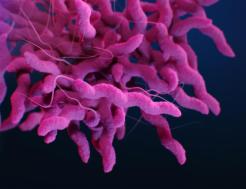
Campylobacter kswfoodworld

Surveillance of notified Campylobacter enteritis in Germany revealed a recurrent annual increase of cases with disease onset several days after the Christmas and New Year holidays (“winter peak”). We suspected that handling and consumption of chicken meat during fondue and raclette grill meals on the holidays were associated with winter peak Campylobacter infections. The hypothesis was investigated in a case–control study with a case-case design where notified Campylobacter enteritis cases served as case-patients as well as control-patients, depending on their date of disease onset (case-patients: 25/12/2018 to 08/01/2019; control-patients: any other date between 30/11/2018 and 28/02/2019). The study was conducted as an online survey from 21/01/2019 to 18/03/2019. Adjusted odds ratios (aOR) were determined in single-variable logistic regression analyses adjusted for age group and sex. We analysed 182 data sets from case-patients and 260 from control-patients and found associations of Campylobacter infections after the holidays with meat fondue (aOR 2.2; 95% confidence interval (CI) 1.2–3.8) and raclette grill meals with meat (aOR 1.5; 95% CI 1.0–2.4) consumed on the holidays. The associations were stronger when chicken meat was served at these meals (fondue with chicken meat: aOR 2.7; 95% CI 1.4–5.5; raclette grill meal with chicken meat: aOR 2.3; 95% CI 1.3–4.1). The results confirmed our initial hypothesis. To prevent Campylobacter winter peak cases in the future, consumers should be made more aware of the risks of a Campylobacter infection when handling raw meat, in particular chicken, during fondue or raclette grill meals on the holidays.

Research – What you need to know during a Listeria Outbreak –

Food Poison Journal

There is a video to watch in the link above.

Ingested by mouth, Listeria is among the most virulent foodborne pathogens, with up to 20% of clinical infections resulting in death. These bacteria primarily cause severe illness and death in persons with immature or compromised immune systems.

Except for the transmission of mother to fetus, human-to-human transmission of Listeria is not known to occur. Infection is caused almost exclusively by the ingestion of the bacteria, most often through the consumption of contaminated food.

Adults can get listeriosis by eating food contaminated with Listeria, but babies can be born with listeriosis if their mothers eat contaminated food during pregnancy. The mode of transmission of Listeria to the fetus is either transplacental via the maternal blood stream or ascending from a colonized genital tract. Infections during pregnancy can cause premature delivery, miscarriage, stillbirth, or serious health problems for the newborn.

Listeria is a common presence in nature, found widely in such places as water, soil, infected animals, human and animal feces, raw and treated sewage, leafy vegetables, effluent from poultry and meat processing facilities, decaying corn and soybeans, improperly fermented silage, and raw (unpasteurized) milk.

Foods commonly identified as sources of Listeria infection include improperly pasteurized fluid milk, cheeses (particularly soft-ripened varieties, such as traditional Mexican cheeses, Camembert and ricotta), ice cream, raw vegetables, fermented raw-meat sausages, raw and cooked poultry, and cooked, ready-to-eat (RTE) sliced meats—often referred to as “deli meats,) smoked finfish, smoked shellfish and packaged fruits and vegetables.

Scotland- FSS – Advice Feeder Mice and Salmonella

HPS

21 December 2021

Article: 55/5107

Food Standards Scotland (FSS) and the Food Standards Agency (FSA) are reminding reptile owners who have purchased certain frozen feeder mice for their pets to take extra precautions in order to avoid contracting salmonellosis. An outbreak of Salmonella has been linked to specific frozen mice products and as a result, a product recall information notice detailing affected products has been issued.

FSS and the FSA are instructing reptile owners and others who have a supply of the affected frozen mice to return them to the place of purchase so they can be carefully disposed of. They are also warning people to be extra careful when handling any frozen rodents, not just the batches identified, due to the risk of Salmonella from other batches linked to this recall.

Since the outbreak was first reported in 2015, there have been almost 900 cases of illness. FSS and the FSA advise that the risk to the general public is considered to be very low.

Source: FSS, 14 December 2021

Ireland – Irish survey shows gaps in turkey cooking knowledge

Food Safety News

More than three-quarters of Irish people don’t know the correct temperature to cook their turkey, according to a survey.

Among respondents in the Republic of Ireland, 27 percent were concerned about undercooking the turkey and being sure it was safe to eat while 7 percent were worried about overcooking and serving it dry.

The survey was commissioned by safefood with Empathy Research. It was done online in November across a nationally representative sample of 1,036 adults over the age of 18.

Past safefood research has found people are unsure when asked what temperature turkey should be cooked to, with responses ranging from 30 to 260 degrees C (86 to 500 degrees F). The safe cooking temperature for all poultry products is 165 degrees F, according to the U.S. Department of Agriculture.

Whether thawing frozen turkey or storing thawed turkey, it should be kept on the bottom shelf of the refrigerator so any drips won’t land on other food and spread germs. Rinsing turkey or chicken should not be done as it only spreads bacteria around the kitchen. Proper cooking will destroy bacteria and other pathogens.

Research – Predicting the growth of Listeria monocytogenes in cooked sliced deli turkey breast as function of clean label antimicrobial, pH, moisture and salt

Journal of Food Protection

The use of antimicrobials in formulations of ready-to-eat meat and poultry products has been identified as a major strategy to control Listeria monocytogenes . The USDA-FSIS recommends no more than 2-logs of Listeria outgrowth over the stated shelf life if antimicrobials are used as a control measure for a product with post-lethality environmental exposure. This study was designed to understand the efficacy of a clean label antimicrobial against the growth of L. monocytogenes as affected by the product attributes. A response surface method-central composite design was used to investigate the effects of product pH, moisture, salt content, and a commercial “clean-label” antimicrobial on the growth of L. monocytogenes in a model turkey deli meat formulation. Thirty treatment combinations of pH (6.3, 6.5, and 6.7), moisture (72, 75, and 78%), salt (1.0, 1.5, and 2.0%), and antimicrobial (0.75, 1.375, and 2.0%) with six replicated center points and eight design star points were evaluated. Treatments were surface inoculated with a 3 log 10 CFU/g target of a five-strain L. monocytogenes cocktail, vacuum packaged, and stored at 5°C for up to 16 weeks. Populations of L. monocytogenes were enumerated from triplicate samples every week until the stationary growth phase was reached. The enumeration data was fitted to a Baranyi and Roberts growth curve to calculate the lag time and maximum growth rate for each treatment.  Linear least-squares regression of the lag-time and growth-rate against the full quadratic, including the second order interaction terms, design matrix was performed. Both lag time and maximum growth rate were significantly affected ( p <0.01) by the antimicrobial concentration and product pH. Product moisture and salt content affected ( p <0.05) lag phase and maximum growth rate, respectively. The availability of a validated growth model assists meat scientists and processors with faster product development and commercialization.

Australia – Your poultry doesn’t need a bath!

Food Safety ASN

Campylobacter kswfoodworld

The Food Safety Information Council and the Australian Chicken Meat Federation today released a consumer survey that found 49% of Australian cooks were still taking a food poisoning risk by washing raw whole chicken before cooking.

Cathy Moir, Council Chair, said washing any raw poultry is very risky as it can spread bacteria to your hands, surfaces and other foods that may not be cooked. Washing is also unnecessary as cooking poultry to 75°C in the centre of a fillet or the thickest part of the thigh will kill any bacteria.

‘We are pleased that rates of washing raw whole chicken has reduced from 60% to 49% since we last asked this question in 2011. Cooks who wash raw chicken pieces with skin on has also reduced from 52% to 43% and washing skinless pieces from 41% to 40%.

‘The survey found that chicken is a popular dish with 78% of respondents cooking whole chicken, 83% cooking chicken pieces with skin on and 88% cooking skinless pieces. But the message is that washing any raw poultry, whether it is chicken, duck, goose or the Christmas turkey, is both unsafe and unnecessary.

“As we gather this Summer with multi-generations of family and friends, here are some of our key Christmas and Summer entertaining food safety tips:

  1. Wash hands: Another recent survey has found the number of times people wash their hands each day dropped 15% since last year. Don’t forget to wash your hands with soap and water before preparing and cooking food, and after handling shell eggs, seafood, raw meat and poultry, burgers and sausages. Watch how to wash your hands correctly using the Glitterbug here
  2. Clean utensils: Ensure your tools, utensils and chopping-boards are cleaned and dried thoroughly before you start preparing your food and ensure you clean them with hot soapy water after use. Use separate chopping-boards such as red for raw meat/poultry and  green for vegetables.
  3. Don’t strain your fridge: Plan ahead and don’t buy more food than you need. It’s vital that you don’t overstock your fridge and freezer, as this won’t allow the cool air to circulate freely and perishable food cannot be adequately frozen or chilled. Less food will also help to reduce food waste.
  4. Make space: Prevent overstocking by making room in your fridge for perishable foods by removing alcohol and soft drinks and put them on ice in a container or laundry sink. This also stops guests opening the fridge so often and helps to maintain the temperature at 5°C or below. Use a fridge thermometer to check the fridge temperature.
  5. Bird or bits? Think about getting a turkey breast that is simpler to cook, rather than a whole turkey. If you do need a whole turkey ask your supermarket if they sell them fresh rather than frozen. Otherwise it must be covered and defrosted in your fridge which can take several days and also increase the risk of potentially contaminating ready to eat foods stored in the fridge.
  6. Cook poultry correctly: Cook the any poultry until a meat thermometer shows it has reached 75° C in the thickest part of the thigh and cook any stuffing separately as it will slow the cooking and the inside of the bird might not be fully cooked. Probe thermometers are readily available, easy to use and help you make sure that food has reached the right temperature.
  7. Don’t go raw. Cooked egg dishes are simple and nutritious but try to avoid raw or minimally cooked egg dishes, such as raw egg mayonnaise or aioli, eggnog or fancy desserts like tiramisu, which can be a particular risk for food poisoning. A safer alternative, if you want to serve raw egg dishes, is to use pasteurised egg products.
  8. Christmas ham won’t last forever– check the storage instructions and best before or use by date before removing the ham from its plastic wrap, cover it with clean cloth soaked in water and vinegar so it doesn’t dry out, and store it in the fridge at or below 5°C. Keep the cloth moist to stop the ham drying out too much. It is important to remember that the use by date on the original packaging won’t apply after the packaging has been removed, so check the fine print and see if the ham has a suggested shelf life after opening. Reduced salt hams are now becoming popular but will not last as long as conventional hams so think how much you are going to use in the next week or so and freeze the rest for later.
  9. Phased roll-out: Don’t leave perishable chilled foods out for more than two hours. These foods include cold meats, soft cheeses like Camembert and Brie, cold poultry, cooked seafood like prawns and smoked salmon, pâtés, sushi and salads. Put out small amounts and replace them (do not top them up) from the fridge.
  10. Get it cold, quick. Refrigerate leftovers as soon as possible. If perishable foods and leftovers have been left out of the fridge for less than two hours they should be okay to refrigerate or freeze to eat later, so long as they haven’t been sitting out on a hot day. Never eat perishable food that has been unrefrigerated for more than four hours as it may not be safe and should be thrown away. Food should not be refrigerated if it has been outside in the heat for more than an hour and discarded after it has sat outside for 2 hours.
  11. Get it right hot. Always reheat leftovers to 75°C the centre of the item or the thickest part to kill any food poisoning bugs. Use a probe thermometer or the auto reheat function of your microwave (following any prompts) to help you make sure that the leftovers have been reheated safely.

‘We would like to thank our partner Tonic Media Network who will be showing our handwashing and food safety community service announcements in GP, Pharmacy and hospital waiting rooms around Australia this Summer. Also, thanks to our member First for Training, the Australian Chicken Meat Federation and Accord for their charitable donations to fund our Summer campaign.\,” Ms Mir concluded.

Media contact: Lydia Buchtmann, Food Safety Information Council, 0407 626 688 or info@foodsafety.asn.au

Survey details:

The chicken washing survey was conducted nationally by Omnipoll amongst 1219 people aged 18+ over the period 7-12 October 2021. Respondents were drawn from the online consumer panel managed by Lightspeed Research, OmniPoll’s online partner and to help reflect the overall population distribution. Results were post-weighted to Australian Bureau of Statistics (2016 Census) data on education, age, sex and area.