Category Archives: Research

Research – Control of Bacillus weihenstephanensis in Pasteurized Liquid Whole Eggs Formulated with Nisin

Journal of Food Protection

Bacillus weihenstephanensis can grow at refrigeration temperature and cause food poisoning. It has been isolated from liquid whole egg products. The moderate heat used for pasteurization of liquid egg products is ineffective for killing spore-forming bacteria including Bacillus. Available predictive models and a pretrial study in broth suggested the potential for growth of Bacillus spp. under the tested conditions. Hence, hurdles such as storage of product below 4°C or use of preservatives would be needed to ensure the food safety of pasteurized egg products. This study evaluated the growth inhibition of B. weihenstephanensis in pasteurized liquid whole egg product formulated with 6.25 ppm nisin during storage at refrigerated and abuse refrigerated temperatures for a total 13 weeks, in three replicate trials. At day 0, the product had a pH of 7.52±0.29, while background microflora such as aerobic plate counts, presumptive B. cereus, and yeast and molds were <10 CFU/g. Product inoculated with target 2.5 log10 CFU/g of B. weihenstephanensis, stored at 4°C for 4 weeks and subsequently at 7 or 10°C for 9 weeks exhibited no growth in all three replicate trials.  Average counts reduced (p<0.05) by at least one-log10 in six weeks in all samples stored at either 7 or 10°C. Similarly, growth of total plate counts, presumptive Bacillus spp., yeast and mold counts was not observed in uninoculated controls stored at 4°C for 4 weeks and subsequently at 7 or 10°C for 9 weeks. Visual and odor evaluation performed at each sampling time point showed no abnormalities. This study assessed the efficacy of maximum allowed level of nisin for use in pasteurized liquid whole eggs and validated the inhibition of B. weihenstephanensis in the product for an extended shelf life of up to 13 weeks.

Research – Prevalence and patterns of fecal shedding of Shiga toxin–producing Escherichia coli by cattle at a commercial feedlot in South Africa

Wiley Online

Healthy colonized cattle are the major reservoir of Shiga toxin–producing Escherichia coli (STEC) and play a key role in the entry point of the pathogen into the beef chain. Excretion rates and the concentration of the pathogen in feces influence the epidemiology and transmission of the pathogen within herds and to humans. This study evaluated the prevalence and dynamics of fecal shedding of STEC by cattle in a commercial feedlot in Gauteng, South Africa. An initial cross-sectional survey was conducted; fecal samples were obtained from 106 randomly selected weaned beef calves on arrival at the feedlot using polymerase chain reaction (PCR) to screen by detecting stx1 and stx2 genes. Subsequently, a longitudinal study was conducted, and 15 STEC-positive and 11 STEC-negative cattle were sampled monthly and followed to slaughter. STEC O157 and non-O157 were enumerated in samples using commercial chromogenic agar. Initial prevalence of STEC shedding was 27% (29/106; 95% CI [19, 37%]). All 26 cattle shed STEC intermittently or continuously during the study period, all except one were super-shedders (≥4 log10 CFU/g) at one or more samplings, and 19 (73%) were persistent or intermittent super-shedders. Of the 38 STEC isolates recovered, 15 (39%) were serotypeable, representing 11 non-O157 serogroups, including O101, O168, O178, and O68. The most frequent virulence combination profile was stx1 + eaeA + ehxA (n = 12; 32%). This study confirms the occurrence and variability of STEC super-shedding in feedlot cattle and highlights that super-shedding is not limited to STEC O157. It also shows their public health significance.

Research – Evaluation of Salmonella Biofilm Cell Transfer from Common Food Contact Surfaces to Beef Products

Journal of Food Protection

Meat contamination by Salmonella enterica is a serious public health concern. Available studies have suggested that biofilm formation at processing plants and the contaminated contact surfaces might contribute to meat contamination. Since bacteria transfer from contact surfaces to food products via direct contact has been deemed as the most common transmission route that could lead to contamination, we evaluated the effect of Salmonella biofilm forming ability, contact surface materials, and beef surface tissue types on Salmonella biofilm transfer from hard surfaces to beef products. Salmonella biofilms developed on common contact surface stainless steel (S.S) and polyvinylchloride (P.V.C) were transferred consecutively via direct contacts of 30 sec each to either lean muscle or adipose tissue surfaces of 15 pieces of beef trim. Our results showed that Salmonella biofilm cells could be effectively transferred multiple times from contact surface to beef trim as enumerable Salmonella cells could be detected on most of the meat samples. Bacterial biofilm forming ability had the most significant impact (p<0.05) on transfer efficiency as the strong biofilm forming strains not only transferred higher amounts of bacteria after each contact, but also contaminated more meat samples with enumerable Salmonella cells compared to the weak biofilm formers. Contact surface materials could affect transferability as Salmonella biofilms on S.S surface appeared to transfer more efficiently compared to those on P.V.C surface. Conversely, the two types of meat surface tissues showed no significant difference (p>0.05) on biofilm transfer efficiency. Furthermore, biofilm – contacted beef trim without enumerable Salmonella cells all exhibited positive Salmonella prevalence after enrichment. Our study demonstrated the high potential of Salmonella biofilms on common contact surfaces to cause product cross contamination in meat processing plants.

Research – Survival of Salmonella Typhimurium and Escherichia coli O157:H7 on blueberries and impacts on berry quality during 12 weeks of frozen storage after washing with combinations of sodium dodecyl sulfate and organic acids or hydrogen peroxide

Wiley Online

Salmonella spp. and Escherichia coli are well tolerant of freezing. This study was to investigate survival of the foodborne pathogens during storage at −18 ± 2°C for 12 weeks on blueberries after washing with: 500 ppm acetic acid plus 5,000 ppm sodium dodecyl sulfate (SDS) (AA/SDS), 20 ppm peroxyacetic acid plus 5,000 ppm SDS (PPA/SDS), or 200 ppm hydrogen peroxide plus 5,000 ppm SDS (H2O2/SDS), when compared with findings from no wash, or wash with water, 80 ppm PPA or 200 ppm chlorinated water. Following a 60 s contact with one of the three new solutions, the treatments showed 3.3–3.9 log10 CFU/g reductions in Salmonella Typhimurium and E. coli O157:H7 counts. After 2 weeks of frozen storage, 3.9–4.2 log10 CFU/g reductions of Salmonella and E. coli were observed. After 12 weeks of frozen storage, Salmonella and E. coli survivors were below detection limits (0.39 log10 CFU/g) in berries washed with new solutions. The frozen storage had a significant impact (p < .05) on microbial counts of both treated and nontreated blueberries. Although none of these washings decreased the total phenolic and anthocyanins contents and apparent quality at time 0, frozen storage caused significant damage on the texture of both treated and nontreated blueberries. Interestingly, no significant decrease in the total phenolic, anthocyanins content, and apparent quality was observed during the 12-week frozen storage. The counts of total bacteria, yeasts, and molds decreased throughout storage for treated and untreated berries. This demonstrates that the three wash solutions enhance the safety of frozen berries.

Research – Effect of domestic freezing on the viability of Toxoplasma gondii in raw and dry-cured ham from experimentally infected pigs

Journal of Food Protection

Toxoplasma gondii is the causative agent of the parasitic disease toxoplasmosis, which is an important food borne zoonosis. Eating undercooked meat of infected animals has been considered the major transmission route of T. gondii to humans. The present study evaluates the efficacy of domestic freezing on the inactivation of T. gondii bradyzoites in raw and dry-cured ham. Meat (raw and dry-cured ham) of a pig experimentally orally inoculated with 4,000 oocysts of T. gondii VEG strain was subjected to domestic freezing of -20 ºC at different days. The effect was evaluated by bioassay in mice followed by qPCR. In raw ham and dry-cured ham, temperature of -20 ºC for 7 and 14 days respectively did not inactivate T. gondii . More studies are needed to find the right temperature and time needed to render the bradyzoites non-infectious for human. Meanwhile, the recommendations of freezing to inactivate T. gondii in raw or dry-cured meats must be revisited considered that it does not reduce the risk of infection.

Research – Lactic Acid Bacteria as Antimicrobial Agents: Food Safety and Microbial Food Spoilage Prevention

MDPI

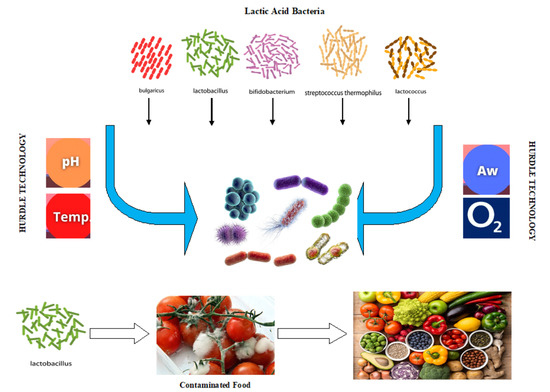
In the wake of continual foodborne disease outbreaks in recent years, it is critical to focus on strategies that protect public health and reduce the incidence of foodborne pathogens and spoilage microorganisms. Currently, there are limitations associated with conventional microbial control methods, such as the use of chemical preservatives and heat treatments. For example, such conventional treatments adversely impact the sensorial properties of food, resulting in undesirable organoleptic characteristics. Moreover, the growing consumer advocacy for safe and healthy food products, and the resultant paradigm shift toward clean labels, have caused an increased interest in natural and effective antimicrobial alternatives. For instance, natural antimicrobial elements synthesized by lactic acid bacteria (LAB) are generally inhibitory to pathogens and significantly impede the action of food spoilage organisms. Bacteriocins and other LAB metabolites have been commercially exploited for their antimicrobial properties and used in many applications in the dairy industry to prevent the growth of undesirable microorganisms. In this review, we summarized the natural antimicrobial compounds produced by LAB, with a specific focus on the mechanisms of action and applications for microbial food spoilage prevention and disease control. In addition, we provide support in the review for our recommendation for the application of LAB as a potential alternative antimicrobial strategy for addressing the challenges posed by antibiotic resistance among pathogens. View Full-Text

EU – Europe Increases Checks on Melons after Salmonella Outbreak

Food Safety News

The European Commission has tightened the rules around imports of Galia melons from Honduras because of a recent Salmonella outbreak.

Emergence of a risk to human health because of possible Salmonella Braenderup contamination means official controls are to be increased with identity and physical checks on 10 percent of consignments entering the EU beginning Jan. 6.

The multi-country outbreak of Salmonella Braenderup that affected more than 350 people was traced to Galia melons from Honduras. Four people were sick in the United States and two in Canada. The UK was the most affected but ill people were also from Sweden, Belgium, Germany, Denmark, Netherlands, Switzerland, Austria, Czech Republic, Finland, France, Ireland, Luxembourg and Norway.

A sample of Salmonella Braenderup that matched the outbreak strain was found on the surface of a washing tank in one of the Honduran facilities where Galia melons were packed. The harvest season started again this month.

However, authorities in Honduras said the cause cannot be confirmed to be Galia melons from the country because a case was reported in July 2021 in Denmark, and no melons from Honduras were exported at that time.

The updated regulation temporarily changes the rate of official controls and puts emergency measures on entry into the EU of certain goods from some non-EU countries. Rules are modified every six months to account for new information on risks to health and non-compliance with EU legislation.

Research – A Naturally Derived Nanocomposite Film with Photodynamic Antibacterial Activity: New Prospect for Sustainable Food Packaging

ACS

Abstract Image

Food packaging with efficient antibacterial ability is highly desirable and challenging in facing the crisis of microbial contamination. However, most present packaging is based on metal-based antibacterial agents and requires a time-consuming antibacterial process. Here, the unique packaging (CC/BB films) featuring aggregation-induced emission behavior and photodynamic inactivation activity is prepared by dispersing self-assembled berberine–baicalin nanoparticles (BB NPs) into a mixed matrix of sodium carboxymethylcellulose-carrageenan (CC). The superiority of this design is that this packaging film can utilize sunlight to generate reactive oxygen species, thus eradicating more than 99% of E. coli and S. aureus within 60 min. Also, this film can release BB NPs to inactivate bacteria under all weather conditions. Surprisingly, the CC/BB nanocomposite film presented excellent mechanical performances (29.80 MPa and 38.65%), hydrophobicity (117.8°), and thermostability. The nanocomposite film is validated to be biocompatible and effective in protecting chicken samples, so this work will provide novel insights to explore safe and efficient antibacterial food packaging.

Research – ‘Jelly’ ice cubes could revolutionize cold storage and the safety of cold food

Food Safety News

Researchers at the University of California-Davis have developed a new type of cooling cube with the potential, they say, to transform how cold storage is done.

The benefits of plastic-free, “jelly ice cubes” are that they do not melt, are compostable and antimicrobial, and can help prevent cross-contamination.

It can be easy for foodservice operators and their employees not to think about the food safety implications of how ice is used and handled. If they don’t take proper precautionary measures to handle food properly or keep up with necessary preventive maintenance measures to ensure that their ice machines are clean, sanitary and operating safely, there can be serious food safety risks. The researchers at the UC-Davis took note of this concern.

The researchers began working on their coolant cubes after Luxin Wang, an associate professor in the Department of Food Science and Technology, saw the amount of ice used at fish-processing plants and the cross-contamination that meltwater could spread among products or drains.

“The amount of ice used by these fish-processing sites is massive,” Wang said. “We need to control the pathogens.”

Research – Sustainable food packaging that keeps harmful microorganisms away

ACS

Abstract Image

Active food packaging materials that are sustainable, biodegradable, and capable of precise delivery of antimicrobial active ingredients (AIs) are in high demand. Here, we report the development of novel enzyme- and relative humidity (RH)-responsive antimicrobial fibers with an average diameter of 225 ± 50 nm, which can be deposited as a functional layer for packaging materials. Cellulose nanocrystals (CNCs), zein (protein), and starch were electrospun to form multistimuli-responsive fibers that incorporated a cocktail of both free nature-derived antimicrobials such as thyme oil, citric acid, and nisin and cyclodextrin-inclusion complexes (CD-ICs) of thyme oil, sorbic acid, and nisin. The multistimuli-responsive fibers were designed to release the free AIs and CD-ICs of AIs in response to enzyme and RH triggers, respectively. Enzyme-responsive release of free AIs is achieved due to the degradation of selected polymers, forming the backbone of the fibers. For instance, protease enzyme can degrade zein polymer, further accelerating the release of AIs from the fibers. Similarly, RH-responsive release is obtained due to the unique chemical nature of CD-ICs, enabling the release of AIs from the cavity at high RH. The successful synthesis of CD-ICs of AIs and incorporation of antimicrobials in the structure of the multistimuli-responsive fibers were confirmed by X-ray diffraction and Fourier transform infrared spectrometry. Fibers were capable of releasing free AIs when triggered by microorganism-exudated enzymes in a dose-dependent manner and releasing CD-IC form of AIs in response to high relative humidity (95% RH). With 24 h of exposure, stimuli-responsive fibers significantly reduced the populations of foodborne pathogenic bacterial surrogates Escherichia coli (by ∼5 log unit) and Listeria innocua (by ∼5 log unit), as well as fungi Aspergillus fumigatus (by >1 log unit). More importantly, the fibers released more AIs at 95% RH than at 50% RH, which resulted in a higher population reduction of E. coli at 95% RH. Such biodegradable, nontoxic, and multistimuli-responsive antimicrobial fibers have great potential for broad applications as active and smart packaging systems.