Category Archives: Raw Milk

Research -Quantitative microbiological risk assessment of traditional food of animal origin produced in short supply chains in Poland

EFSA

Abstract

Polish raw-milk cheeses produced in short supply chains may pose a threat to consumer safety due to pathogen presence. Listeria monocytogenes is a bacterium of great importance for the food safety of refrigerated RTE foods due to its ability to grow at refrigeration temperatures.

During the EU-FORA fellowship, a stochastic risk assessment was designed and executed to estimate the risk for consumers from L. monocytogenes in these products. The aim was to develop a probabilistic QMRA model that would incorporate the variability and uncertainty of the model’s inputs such as prevalence, initial concentration levels, product intrinsic factors, domestic storage temperature and consumer behaviour. The project involved data collection and analysis, growth model selection, mathematical modelling and Monte Carlo analysis in R programming language.

Microbiological and physicochemical testing were carried out throughout the year on two types of cheeses in combination with a domestic refrigerator temperature survey and accompanying consumption questionnaire. Collected data were fitted to probability distributions using R. The appropriate growth model for the pathogen was selected based on an inoculation study performed on one of the raw-milk cheeses and the chosen mathematical model was written into the R script developed for the QMRA. The dose–response model used the ingested dose calculated from the modelled concentration of L. monocytogenes at the time of consumption and the single serving size from the questionnaire to estimate the probability of illness. The final risk was expressed as probability of listeriosis for Polish consumers per serving of raw-milk cheese.
RASFF Alerts – STEC E.coli – Raw Milk Goat Cheese – Beef Carpaccio

RASFF

Possible STEC (stx+;eae+) in raw milk goat cheese from Belgium in Germany

RASFF

STEC in beef carpaccio from the Netherlands in Belgium


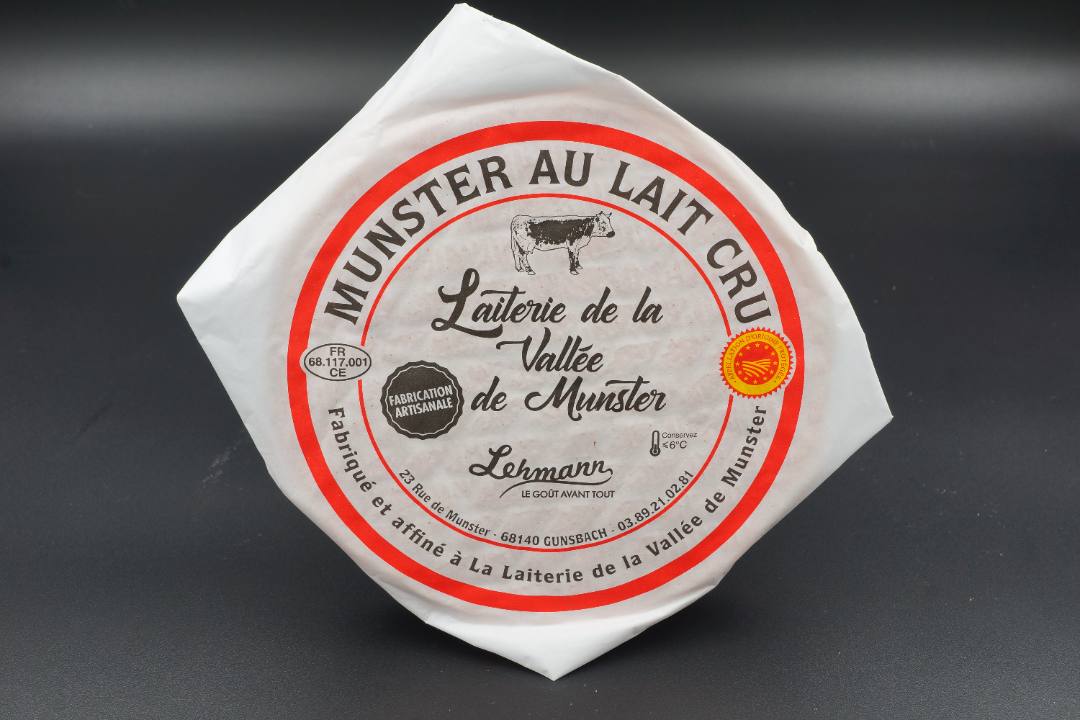
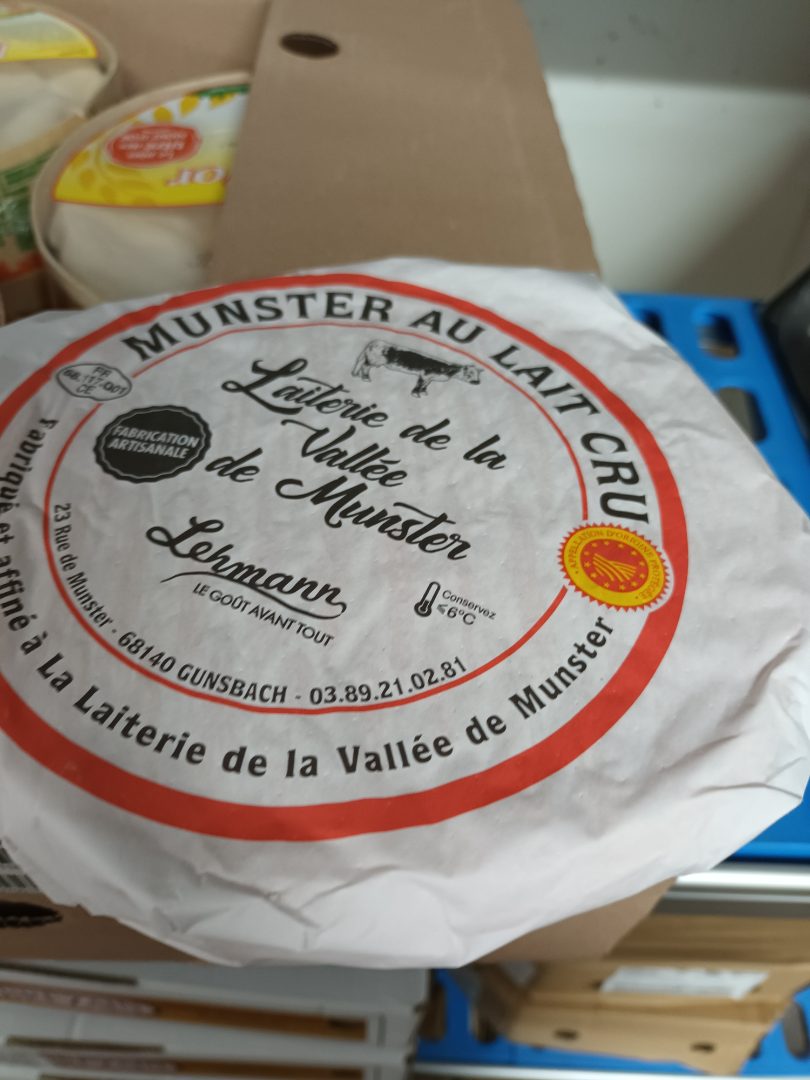
France – MUNSTER AOP WITH RAW MILK – Listeria monocytogenes

Gov france

Identification information of the recalled product

  • Product category Feed
  • Product subcategory Milk and dairy products
  • Product brand name MUNSTER VALLEY DAIRY
  • Model names or references Small Munster Large Munster Small Munster Cumin Large Munster Cumin
  • Identification of products
    Batch Date
    307 Use-by date between 23/12/2022 and 07/01/2023
  • Packaging FOOD WRAPPING PAPER
  • Marketing start/end date From 23/11/2022 to 07/12/2022
  • Storage temperature Product to be stored in the refrigerator
  • Health mark FR.68.117.001 EC
  • Geographic area of ​​sale Whole France
  • Distributors See list of points of sale below
  • List of points of sale Munsters_lot_307.pdf

Practical information regarding the recall

  • Reason for recall presence of Listeria Monocytogenes

France – Munster AOP de la Vallée with raw milk – Listeria monocytogenes

Gov france

Identification information of the recalled product

  • Product category Feed
  • Product subcategory Milk and dairy products
  • Product brand name Valley Dairy
  • Model names or references not concerned
  • Identification of products
    GTIN Batch Date
    2600138016539 270 22 Use-by date between 04/11/2022 and 26/11/2022
  • Products List Poster_Reminder_Product_TRAD_LISTERIA.pdf Attachment
  • Packaging cut cheese wrapped in cling film
  • Marketing start/end date From 04/11/2022 to 26/11/2022
  • Storage temperature Product to be stored in the refrigerator
  • Further information cheese sold in portions
  • Geographic area of ​​sale Departments: BAS-RHIN (67)
  • Distributors U Bernolsheim

Practical information regarding the recall

  • Reason for recall presence of Listeria Monocytogenes
  • Risks incurred by the consumer Listeria monocytogenes (causative agent of listeriosis)

USA – Raw Milk recalled in New York due to Listeria monocytogenes

Food Poison Journal

New York State Department of Agriculture and Markets Commissioner Richard A. Ball today warned consumers not to consume unpasteurized raw milk from the farm of Eric and Jessica Nickol due to possible Listeria monocytogenes contamination.  The Eric and Jessica Nickol Farm is located at 995 County Highway 35, Maryland, NY 12116 in Otsego County. To date, no illnesses have been reported to the Department associated with this product.

A sample of the milk collected by an inspector from the Department was discovered to be contaminated with Listeria monocytogenes. On November 9, 2022, the producer was notified of a preliminary positive test result. Further laboratory testing, completed on November 14, 2022, confirmed the presence of Listeria monocytogenes in the raw milk sample. The producer is now prohibited from selling raw milk until subsequent sampling indicates that the product is free of harmful bacteria.

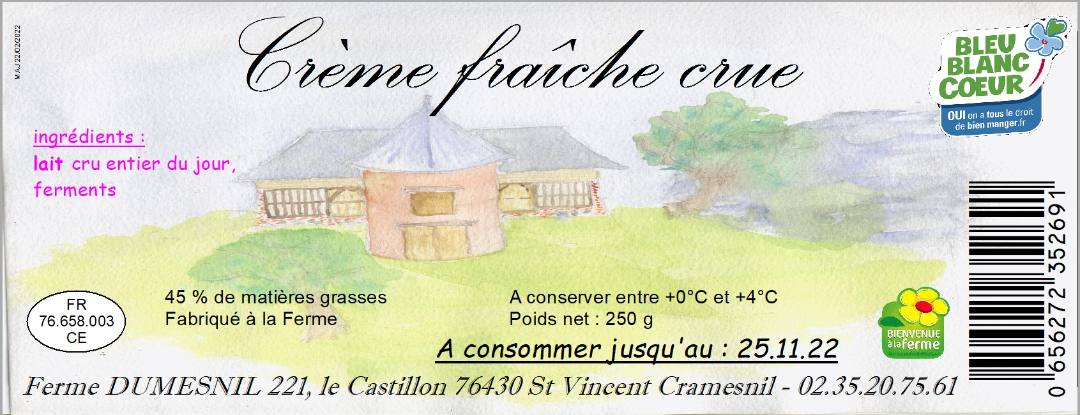
France – CREME CRUE (Raw) – Salmonella

Gov france

Identification information of the recalled product

  • Product category Feed
  • Product subcategory Milk and dairy products
  • Product brand name DUMESNIL FARM
  • Model names or references RAW CREAM 250 g LA FERME DUMESNIL RAW CREAM 500 g LA FERME DUMESNIL
  • Identification of products
    GTIN Lot Date
    0656272117474 batch number: 25/11/22 for the 500 g cream Use-by date 25/11/2022
    0656272352691 batch number: 25/11/22 for the 250 g cream Use-by date 25/11/2022
  • Packaging transparent pot of 250 g egg of 500 g
  • Marketing start/end date From 08/11/2022 to 10/11/2022
  • Storage temperature Product to be stored in the refrigerator
  • Health markFR.76.658.003 CE
  • Geographic area of ​​sale Departments: EURE (27), SEINE-MARITIME (76)
  • Distributors CROSSROADS MARKET SAINT ROMAIN DE COLBOSC; CHAPON GAEC; THE DUMESNIL FARM; O’DELICE DE MAELIA; BARN CHICKEN COOP; GOURMET PATH; SHED 0; L’ESPERANCE RESTAURANT; DAD & FIRST; FLAX AND BUTTERFLY; FIRST OF THE PLACE
  • List of points of salelist_of_points_of_sale_cream_04nov2022_v2.pdf

Practical information regarding the recall

  • Reason for recall presence of salmonella
  • Risks incurred by the consumer Salmonella spp (causative agent of salmonellosis)

Research – Microbiological and physicochemical properties of farm bulk tank milk and antimicrobial resistance of its dominant bacteria

Wiley Online

Abstract

This study determined the antibiotic resistance of the dominant bacteria in the 85 farm BTMs according to the guidelines recommended by the epidemiological cutoff values in the EUCAST. In addition, some physicochemical and microbiological properties of farm BTMs were investigated. The milk samples were divided into two groups according to their SCC values. The milk samples with higher SCC than 400,000 cells mL−1 were further examined bacteriologically, and the antibiotic resistance of isolates was determined. The average TAMB value was 6.34 log CFU/mL in farm BTM. It was found that high-SCC values did not affect other physicochemical properties of BTM samples, such as fat, protein and total solids, except for lactose content. Seventy-two strains were isolated from 45 bulk milk samples. The most prevalent bacteria were Enterococcus spp. (23.61%). The other isolates were Citrobacter spp. (12.5%), Staphylococcus spp. (12.51%), Serratia spp. (11.12%), Klebsiella spp. (9.72%), Bacillus spp. (9.72%), and Enterobacter spp. (8.33%). In antibiotic resistance analysis, 52.6% of Enterobacterales isolates showed cefoxitin resistance, and nine Enterobacterales isolates were determined as the presumptive ESBL producers. None of them was confirmed as ESBL producers. Moreover, MDR was detected in 83.3% of Enterobacter spp. isolates and all Bacillus spp. isolates. The over and inappropriate use of antibiotics in mastitis treatment may cause antibiotic-resistant microorganisms in milk. It was found that 52.7% of the isolated bacteria were MDR, which could pose a risk to public health and food safety, with the consumer’s increasing interest in consuming raw milk.

RASFF Alerts – Listeria monocytogenes – Smoked Salmon – Smoked Swordfish – Colommiers Cheese

RASFF

Coulommiers with raw milk – Listeria monocytogenes – from France in the Netherlands and Belgium

RASFF

Listeria monocytogenes in smoked swordfish from Spain in Italy

RASFF

Listeria monocytogenes in smoked salmon from Poland, raw material from Norway

RASFF Alert – STEC E.coli -Raw Milk Cheese

RASFF

STEC in raw milk cheese from the Netherlands in Germany

Research – The Ability of Shiga Toxin-Producing Escherichia coli to Grow in Raw Cow’s Milk Stored at Low Temperatures

MDPI

Despite the lack of scientific evidence, some consumers assert that raw milk is a natural food with nutritional and immunological properties superior to pasteurized milk. This has led to the increased popularity of unpasteurized cow milk (UPM) and disregard for the risks of being exposed to zoonotic infections. Dairy cattle are healthy carriers of Shiga toxin (Stx)-producing E. coli (STEC), and contaminated UPM has caused STEC outbreaks worldwide. The association between STEC, carrying the eae (E. coli attachment effacement) gene, and severe diseases is well-established. We have previously isolated four eae positive STEC isolates from two neighboring dairy farms in the Southeast of Norway. A whole genome analysis revealed that isolates from different farms exhibited nearly identical genetic profiles. To explore the risks associated with drinking UPM, we examined the ability of the isolates to produce Stx and their growth in UPM at different temperatures. All the isolates produced Stx and one of the isolates was able to propagate in UPM at 8 °C (p < 0.02). Altogether, these results highlight the risk for STEC infections associated with the consumption of UPM.