Category Archives: Pathogen

USA – 25 Sickened Home Made Raw Milk Cheese – Salmonella

MDH

At least 25 Minnesotans have been sickened with salmonellosis linked to eating a raw Mexican-style cheese, queso fresco, state health officials said. The outbreak illustrates the dangers of consuming unpasteurized dairy products.

The Minnesota Department of Health (MDH), the Minnesota Department of Agriculture (MDA) and the City of Minneapolis have been investigating the outbreak and the source of the raw milk used to make the cheese since the first cases were detected in late April.

Russia – Cream Puffs – Salmonella Outbreak

UPi.comSalmonella

CHELYABINSK, Russia, May 20 (UPI) — About 66  pounds of cream puffs were removed from stores in the Russian Urals city of  Chelyabinsk on Monday after a salmonella outbreak was reported there.

“The police have found 12 outlets selling these products. About 30 kilograms  [about 66 pounds] of cream puffs were removed from sale. A working group has  been set up to find other outlets. An investigation is under way,” a spokeswoman  for the Chelyabinsk region police department told ITAR-Tass.

ITAR-Tass said 36 people, including eight children, were hospitalized with  salmonella poisoning in Chelyabinsk, two in serious condition.

Local news sources said as many as 41 people have been sickened, ITAR-Tass  reported.

Read more:  http://www.upi.com/Top_News/World-News/2013/05/20/Salmonella-outbreak-reported-in-Chelyabinsk/UPI-40751369073409/#ixzz2TuXyckc7

Eygpt – Salmonella Mass Poisoning Al-Azhar University

AHRAMONLINESalm

Egypt’s Health Minister Mohamed Hamed said that salmonella bacteria was behind the second mass poisoning incident in Al-Azhar University in Cairo.

Hamed said in a press statement on Friday that the final report on the incident revealed that the bacteria contaminated the food, which left 180 students hospitalised on 29 April after eating in the dormitory.

The minister also stressed the importance of the personal hygiene of staff members involved in food preparation.

Earlier, on 1 April, over 500 students were hospitalised with food poisoning after eating on campus, which sparked protests.

Ireland – 6,000 People Affected by Cryptosporidium

The Irish Sun763px-Cryptosporidium_parvum_01

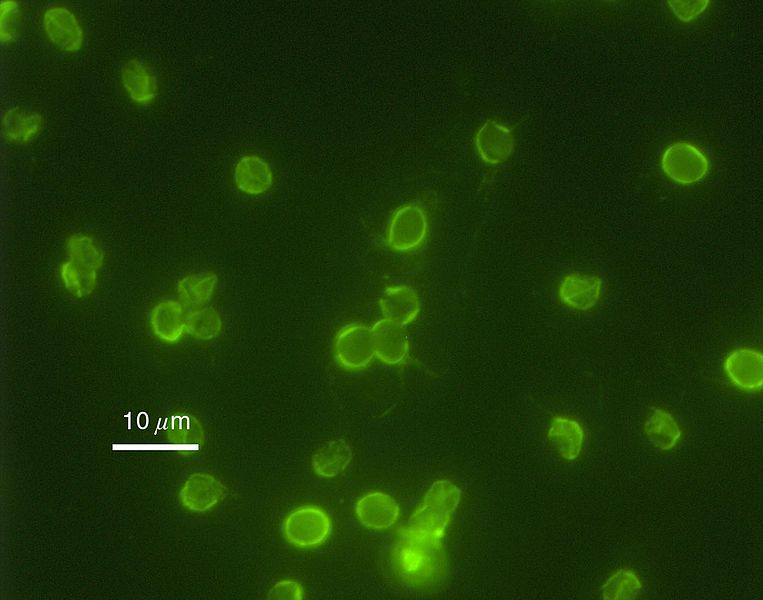
CONTAMINATED water has left 13 people with stomach  illnesses after two outbreaks of the parasitic disease crypto-sporidiosis.

Up to 6,000 people in Roscommon town and its surrounds have been affected by  the bug in the local water supply.

A “boil water notice” has been in place since April 25. The contamination can  lead to a gut infection caused by a parasite, which results in a diarrhoea-type  illness.

People living and working in the area have been advised by Roscommon County  Council and the HSE to boil all water for drinking, preparation of salads and  for use in brushing teeth.

Both bodies have set up an Incident Response Team to minimise the risk to the  public.

Sales of bottled water have shot up in the area amid concerns that the boil  water restriction could remain in place until the system gets the all-clear,  which could take several weeks.


UK – Prom Night – Norovirus

SKY Tyne and WearNorovirus

Two Northumbria University students who became ill after their graduation ball have tested positive for vomiting bug, norovirus.

Around 30 people complained of sickness after the event at the Assembly Rooms on May 10.

Experts from the North East Public Health England Centre are working with environmental health colleagues at Newcastle City Council to investigate the outbreak of diarrhoea and vomiting.

A spokesperson for Public Health England said: “Approximately 30 students who attended an event in Newcastle on 10 May have reported symptoms of illness.

“Two samples taken from students who were ill have tested positive for norovirus (also known as the winter vomiting bug) which is the most common cause of gastro-enteritis in England and Wales.”

Canada – Norovirus Top Food Poisoning Bug in Canada

Food Poisoning BulletinNorwalk_Caspid

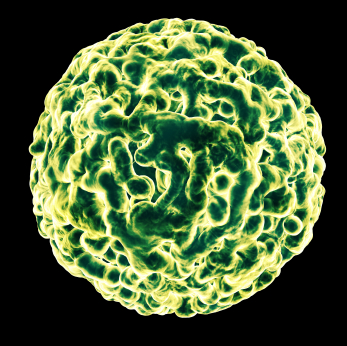
Norovirus causes about one fourth of all food poisoning cases in Canada each year, according to a new study published in the May issue of the journal Foodborne Pathogens and Disease. About 4 million Canadians, one in every eight, are sickened  by food poisoning each year, according to the study. Norovirus is also the leading cause of food poisoning in the U.S. where one in six people, or about 48 million, are stricken by foodborne illness each year.

The Canadian study looked at illnesses reported from a variety of sources including: the Canadian Notifiable Disease Surveillance System, the National Enteric Surveillance Program, enhanced national listeriosis surveillance, the provincial reportable disease surveillance system, national studies on gastrointestinal illness and C-EnterNet surveillance. Most of the illnesses reported, about 60 percent of them, were from unspecified agents.

RASFF Alerts – Hepatitis A Oysters and Berries- ASP in Scallops- Enterococci in Dessciated Coconut

RASFF – Amnesic Shellfish Poisoning (ASP) toxins in chilled scallops from France

RASFF – Hepatitis A virus in chilled oysters from France and the Netherlands

RASFF – Hepatitis A virus in frozen berry mix from Italy, with raw material from Bulgaria in Italy

RASFF – Faecal streptococci (17000 CFU/g) in desiccated coconut from Indonesia, via Malaysia in Italy

RASFF Alerts – Aflatoxin – Ochratoxin – Rice Bran – Millet – Dried Figs – Grape Concentrate – Chilli Powder- Pistachios – Peanut Butter

RASFF – Aflatoxins (B1 = 27 / B1 = 11 / B1 = 44 / B1 = 49 µg/kg – ppb) in rice bran for horses from Sweden

RASFF – Aflatoxins (B1 = 4.8 µg/kg – ppb) in millet flour from Senegal in Italy

RASFF – Aflatoxins (B1 = 15.1; Tot. = 34 µg/kg – ppb) in dried figs from the Netherlands in Germany

RASFF – Ochratoxin A (6.6 µg/kg – ppb) in aseptic grape must concentrate from Iran in Italy

RASFF – Aflatoxins (B1 = 16.8; Tot. = 17.3 µg/kg – ppb) in chilli hot powder from India in Ireland

RASFF – Aflatoxins (B1 = 7.7 µg/kg – ppb) in crushed chilli from India in Bulgaria

RASFF – Aflatoxins (B1 = 38.8; Tot. = 97.3 µg/kg – ppb) in roasted pistachios from Turkey in Germany

RASFF – Aflatoxins (B1 = 5.2; Tot. = 6.1 µg/kg – ppb) in peanut butter from India in the UK

RASFF Alerts – E.coli – Lamb Meal – Beef – Clams – Centella

RASFF – Too high count of Enterobacteriaceae (300;510;470;370;340 CFU/g) in lamb meal from the Netherlands, with raw material from New Zealand in Belgium

RASFF – Shigatoxin-producing Escherichia coli (presence /25g) in boneless beef meat  (Bos taurus) from Uruguay in Spain

RASFF – Too high count of Escherichia coli (9200 MPN/100g) in clams from Italy

RASFF – high count of Escherichia coli (2600 CFU/100g) in centella (Centella asiatica) from Sri Lanka


RASFF Alerts – Salmonella – Chicken – Salami – Basil – Black Pepper-Paan Leaves – Spinach – Dog Chews

RASFF – Salmonella Heidelberg (presence /25g) in frozen salted chicken breast fillets from Brazil in the Netherlands

RASFF – Salmonella spp. (presence /25g) in salami without garlic from Belgium

RASFF – Salmonella (present /25g) in holy basil fresh leaves from Thailand in Denmark

RASFF -Salmonella spp. (presence /25g) in black pepper from Vietnam infested with moulds (2.2 %) in Poland

RASFF – Salmonella spp. (1 out of 5 samples /25g) in paan leaves (betel/pan) from Bangladesh in the UK

RASFF – Salmonella Stendal (presence /25g) in frozen chicken livers from Brazil in Bulgaria

RASFF – Salmonella Weltevreden in spinach from Sri Lanka in Norway

RASFF – Salmonella typhimurium (presence /25g) in frozen chicken meat (Gallus gallus) from Brazil in Portugal

RASFF – Salmonella enteritidis (1 out of 5 samples /25g) in frozen whole chicken hen from Poland, with raw material from the Czech Republic in Poland

RASFF – Salmonella in dog chews from Germany