Archives
-
Join 346 other subscribers
KSWFoodWorld
Blog Stats
- 445,738 Views
Category Archives: Microbiology
Singapore – SUSPENSION OF MYCHJ380–MENG KEE POULTRY (M) SDN BHD (FARM 6) – Salmonella
Please note that the following farm has been suspended for import of live chicken broilers into Singapore with immediate effect. Country Malaysia
Farm Code MYCHJ380
Farm Name MENG KEE POULTRY (M) SDN BHD (FARM 6)
Malaysia
This is due to isolation of Salmonella Enteritidis in samples collected from their imported consignment.3The complete list of farms approved to export live chicken broilers is available on our website at http://www.sfa.gov.sg
RASFF Alerts – Animal Feed – Salmonella – Post Extraction Soya Meal – Brewers Yeast
Salmonella in brewer’s yeast from Russia in Poland, Lithuania and Austria
Salmonella Senftenberg in post extraction soya meal from Ukraine in Poland
France Research – Acute gastroenteritis: review of the 2020-2021 and 2021-2022 winter seasons
Every year, an increase in acute gastroenteritis (AGE) is observed caused mainly by the circulation of noroviruses and rotaviruses. Noroviruses are responsible for AGE in people of all ages, while rotaviruses mainly affect children under 5 years of age.
During the winter season, Public Health France monitors, with its network of partners , the epidemiological evolution of acute gastroenteritis and publishes weekly national and regional epidemiological bulletins on its website . These data are also made available as open data on Géodes .
Santé publique France is today publishing the winter monitoring report covering the 2020-2021 and 2021-2022 seasons in mainland France and recalls the simple actions to take to limit the risk of contamination.
What are the highlights of the last two seasons?
2020-2021: a season marked by a historically low level of activity
The low level of activity observed from March 2020 (end of the 2019-2020 season), in the context of the COVID-19 pandemic, continued during the 2020-2021 season. In city medicine or in hospital emergency departments, activity remained relatively stable and lower than the years prior to the COVID-19 pandemic in all metropolitan areas.
A return to activity comparable to pre-COVID seasons during winter 2021-2022
The activity levels recorded throughout the 2021-2022 season were again comparable to those observed during the pre-COVID seasons. In hospital emergencies, activity for acute gastroenteritis remained close to historical maximums, from December 2021 to April 2022. Consultations at SOS Médecins were similar to the data observed before the COVID-19 pandemic.
Posted in COVID-19, Decontamination Microbial, Food Micro Blog, Food Microbiology, Food Microbiology Blog, Food Microbiology Research, Food Microbiology Testing, gastroenteritis, microbial contamination, Microbial growth, Microbiological Risk Assessment, Microbiology, Microbiology Investigations, Microbiology Risk, Norovirus
Research – Legionella pneumophila Risk from Air–Water Cooling Units Regarding Pipe Material and Type of Water

Abstract
Legionellosis is a respiratory disease related to environmental health. There have been manifold studies of pipe materials, risk installations and legionellosis without considering the type of transferred water. The objective of this study was to determine the potential development of the causative agent Legionella pneumophila regarding air–water cooling units, legislative compliance, pipe material and type of water. Forty-four hotel units in Andalusia (Spain) were analysed with respect to compliance with Spanish health legislation for the prevention of legionellosis. The chi-square test was used to explain the relationship between material–water and legislative compliance, and a biplot of the first two factors was generated. Multiple correspondence analysis (MCA) was performed on the type of equipment, legislative compliance, pipe material and type of water, and graphs of cases were constructed by adding confidence ellipses by categories of the variables. Pipe material–type of water (p value = 0.29; p < 0.05) and legislative compliance were not associated (p value = 0.15; p < 0.05). Iron, stainless steel, and recycled and well water contributed the most to the biplot. MCA showed a global pattern in which lead, iron and polyethylene were well represented. Confidence ellipses around categories indicated significant differences among categories. Compliance with Spanish health legislation regarding the prevention and control of legionellosis linked to pipe material and type of water was not observed.
Posted in Contaminated water, Cooling Towers, Decontamination Microbial, Food Micro Blog, Food Microbiology Blog, Food Microbiology Research, Legionella, Legionnaires’ disease, microbial contamination, Microbial growth, Microbiological Risk Assessment, Microbiology, Microbiology Investigations, Microbiology Risk, Water, water microbiology, Water Safety
USA – FDA Core Outbreak Table – Update
What’s New
- A new outbreak of hepatitis A virus infections (ref # 1143) linked to a not yet identified product has been added to the table. FDA has initiated traceback.
- For the outbreak of Listeria monocytogenes (ref # 1123), FDA has initiated an onsite inspection, sample collection, and analysis. This investigation is ongoing and additional information will be provided as it become available.
- The outbreak of Salmonella Typhimurium (ref # 1137) linked to alfalfa sprouts has ended and the FDA investigation is closed.
Posted in Decontamination Microbial, FDA, food bourne outbreak, Food Illness, Food Micro Blog, Food Microbiology, Food Microbiology Blog, Food Microbiology Research, Food Microbiology Testing, Foodborne Illness, foodborne outbreak, foodbourne outbreak, Hepatitis A, Illness, Listeria, Listeria monocytogenes, microbial contamination, Microbial growth, Microbiological Risk Assessment, Microbiology, Microbiology Investigations, Microbiology Risk, outbreak, Salmonella
USA – Persistent Strain of E. coli O157:H7 (REPEXH01) Linked to Multiple Sources
REPEXH01
REPEXH01 is a persistent strain of Shiga toxin-producing E. coli O157:H7 bacteria that has caused illnesses and outbreaks in the United States.
Illness caused by this strain was first reported to PulseNet in 2017. Illnesses caused by this strain occur year-round but are less common in winter.
In the past, the REPEXH01 strain has spread to people through contaminated food and contaminated recreational water.
This strain is relatively diverse genetically. Bacteria in this strain are within 21 allele differences of one another by whole genome sequencing, which is more diverse than typical multistate foodborne outbreaks where bacteria generally fall within 10 allele differences of one another.
| Identified outbreak sources*
*Confirmed sources were implicated by epidemiologic |
|
|---|
Posted in Bacterial Toxin, Decontamination Microbial, E.coli O157, E.coli O157:H7, Food Micro Blog, Food Microbiology, Food Microbiology Blog, Food Microbiology Research, Food Microbiology Testing, microbial contamination, Microbial growth, Microbiological Risk Assessment, Microbiology, Microbiology Investigations, Microbiology Risk, STEC, STEC E.coli, Toxin
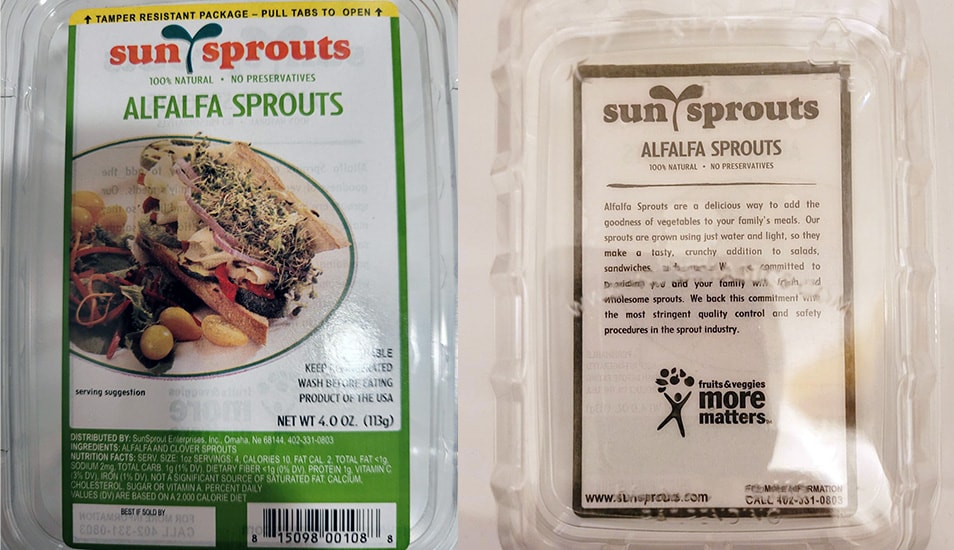
USA – Salmonella Outbreak Linked to Alfalfa Sprouts – Outbreak is Over

Fast Facts
- Illnesses: 63
- Hospitalizations: 10
- Deaths: 0
- States: 8
- Recall: Yes
- Investigation status: Closed
Outbreak Investigation Summary
Data showed that alfalfa sprouts made people in this outbreak sick.
- Of the 50 people interviewed, 35 (70%) reported eating alfalfa sprouts.
- Eight of the people who got sick in this outbreak confirmed they had purchased Sun Sprouts brand alfalfa sprouts from their local grocery store.
On December 29, 2022, SunSprout Enterprises recalled four lots of raw alfalfa sprouts.
Posted in Decontamination Microbial, food bourne outbreak, Food Illness, Food Micro Blog, Food Microbiology, Food Microbiology Blog, Food Microbiology Research, Food Microbiology Testing, Foodborne Illness, foodborne outbreak, foodbourne outbreak, Illness, microbial contamination, Microbial growth, Microbiological Risk Assessment, Microbiology, Microbiology Investigations, Microbiology Risk, outbreak, Salmonella
USA – Florida – Salmonella Outbreak linked to Oysters
The Florida Department of Health (DOH) and the state health departments of Georgia and Alabama have detected a Salmonella outbreak associated with the consumption of raw oysters harvested from shellfish harvesting area FL-3012 in Cedar Key, Florida. To date, there have been 8 cases linked to this outbreak within Florida, Georgia, and Alabama.
On February 24, 2023, the Florida Department of Agriculture and Consumer Services closed shellfish harvesting area FL-3012 for the harvest of wild oysters and initiated a recall of these wild oysters harvested from December 16, 2022, to February 24, 2023.
Posted in food bourne outbreak, Food Illness, Food Micro Blog, Food Microbiology, Food Microbiology Blog, Food Microbiology Research, Food Microbiology Testing, Foodborne Illness, foodborne outbreak, foodbourne outbreak, Illness, microbial contamination, Microbial growth, Microbiological Risk Assessment, Microbiology, Microbiology Investigations, Microbiology Risk, outbreak, Salmonella
Research – Isolation of Salmonella species of public health concern from commonly fed dried meat dog treats
Abstract
Background
Dried non-heat-treated meat treats, such as ears, skin and tails, are popular supplementary dog foods. Previous studies have demonstrated Salmonella spp. contamination on treats, particularly in pig ears and chicken products. This small, exploratory, cross-sectional study investigated Salmonella spp. presence in dried treats available in the UK.
Methods
A selection of dried treats from local pet shops and online retailers underwent bacterial culture for Salmonella spp. and subsequent antimicrobial susceptibility testing, with Salmonella serotype determined by whole genome sequencing.
Results
Eighty-four samples were tested, with 16% being Salmonella spp. positive. Five Salmonella serotypes were identified, each associated with specific treat types. An antimicrobial-resistant phenotype was identified in 39% of isolates. All serotypes identified are known to cause human infection.
Limitations
This study was limited by a small sample size and limited number of retail sources.
Conclusion
Salmonella spp. of public health concern were present in some dried dog treats in this study. Dog owners, pet food retailers and veterinary professionals should be aware of the potential zoonotic disease risk associated with these treats, and appropriate hygiene measures, including thorough hand washing, should be utilised if they are fed.
Posted in Food Micro Blog, Food Microbiology, Food Microbiology Blog, Food Microbiology Research, Food Microbiology Testing, microbial contamination, Microbial growth, Microbiological Risk Assessment, Microbiology, Microbiology Investigations, Microbiology Risk, Pet Food, Pet Food Enterobacteriaceae, Pet Food Salmonella, Pet Food Testing, Salmonella
USA – FDA investigates cases of Legionnaires disease on cruise ships
FDA Warning Letters
American Cruise Lines
Guilford, CT
American Cruise Lines is on notice from the Food and Drug Administration (FDA) after an inspection of their American Star and American Heritage vessels. According to the warning letter, the FDA continues to have concerns with the potential exposure of passengers and crew members to Legionella onboard American Cruise Lines’ vessels.
In Jan. 24, 2023, warning letter, the FDA described an April 30 through June 17, 2022, an inspection of American Cruise Lines’ American Star and American Heritage vessels.
The warning letter includes information about failed water tests for a sink in the galley and hand-washing sinks for wait staff. The FDA also found that disinfection was ineffective.
American Star
Presence of Legionella Onboard the Vessel
On April 30, 2022, FDA investigators collected 10 biofilm swabs and 14 bulk one-liter potable water samples from various locations on the vessel. The Maryland Department of Health laboratory recovered Legionella from:
Biofilm Swabs with 60 percent of samples positive:
American Heritage
Presence of Legionella Onboard the Vessel
On June 15, 2022, FDA investigators collected 24 biofilm swabs and 29 bulk one-liter potable water samples from various locations on their vessels. The Maryland Department of Health laboratory recovered Legionella from:
Biofilm Swabs with 8 percent of samples positive:
Posted in Decontamination Microbial, Food Micro Blog, Food Microbiology, Food Microbiology Blog, Legionella, Legionnaires’ disease, microbial contamination, Microbial growth, Microbiological Risk Assessment, Microbiology, Microbiology Investigations, Microbiology Risk, Water, water microbiology, Water Safety