Category Archives: Microbiology

Infographics -Did you know that superbugs can be found in food?

WHO

Information – World Food Safety Day 2020

WHO

The second World Food Safety Day (WFSD) will be celebrated on 7 June 2020 to draw attention and inspire action to help prevent, detect and manage foodborne risks, contributing to food security, human health, economic prosperity, agriculture, market access, tourism and sustainable development.

Following the success of the first celebration in 2019, this year again WFSD reinforces the call to strengthen commitment to scale up food safety made by the Addis Ababa Conference and the Geneva Forum in 2019 under the umbrella of “The Future of Food Safety”.  WHO, in collaboration with the Food and Agriculture Organization of the United Nations (FAO) is pleased to facilitate Member States efforts to celebrate the World Food Safety Day.

Under the theme “Food safety, everyone’s business”, the action oriented campaign will promote global food safety awareness and call upon countries and decision makers, the private sector, civil society, UN organizations and the general public to take action.

Food safety is a shared responsibility between governments, producers and consumers.  Everybody has a role to play from farm to table to ensure the food we consume is safe and will not cause damages to our health.  Through the World Food Safety Day, WHO pursues its efforts to mainstream food safety in the public agenda and reduce the burden of foodborne diseases globally.

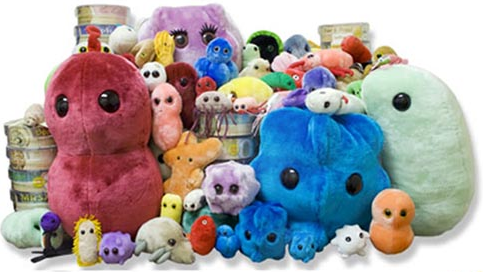
Interesting ?? – E.coli Earrings :)

Giant Microbes

E. coli earrings cardboard back


Australia – Kimchi Company Kimchi 600g and 300g – Recall –

FSANZ

Product information

The Kimchi Company Pty Ltd is conducting a recall of The Kimchi Company Kimchi 600g and 300g jars.  The product has been available for sale at Harris Farm Markets in NSW.

Date markings

Exp Date 22.09.2020

Kimchi Company Kimchi

Problem

The recall is due to Potential microbial contamination due to under-allocation of salt.

Food safety hazard

Food products with the potential for microbial contamination may cause illness if consumed.

Country of origin

South Korea.

What to do​

Any consumers concerned about their health should seek medical advice and should return the products to the place of purchase for a full refund.

For further information please contact:

The Kimchi Company Pty Ltd
Ph: 0449 051 894
www.kimchicompany.com.au

Related links:

Research – Food Safety and Invasive Cronobacter Infections during Early Infancy, 1961–2018

CDC

Abstract

Invasive Cronobacter infections among infants are associated with severe neurologic disabilities and death. Early Cronobacter reports typically featured hospitalized and preterm infants and recognized contaminated powdered infant formula (PIF) as a transmission vehicle. To clarify recent epidemiology, we reviewed all cases of bloodstream infection or meningitis among infants that were reported to the Centers for Disease Control and Prevention and in the literature (1961–2018; n = 183). Most infants were neonates (100/150 [67%]); 38% (42/112) died, and 79% (81/102) had reported recent PIF consumption. In the final quarter of the study period (2004–2018), case counts were significantly higher (global average 8.7 cases/year); among US cases, significantly higher proportions occurred among full-term (56% [27/48]) and nonhospitalized (78% [42/54]) infants. PIF contamination, most commonly from opened containers, was identified in 30% (21/71) of investigations. Our findings reaffirm the need to promote safer alternatives for infant feeding, particularly among neonates.

Research – New dual-action coating keeps bacteria from cross-contaminating fresh produce

Science Daily

Over the course of their journey from the open fields to the produce displays at grocery stores, fresh vegetables and fruits can sometimes become contaminated by microorganisms. These items can then spoil other produce, spreading the contamination further and increasing the number of food items that can cause illnesses.

To prevent cross-contamination between fresh produce, researchers at Texas A&M University have created a coating that can be applied to food-contact surfaces like conveyor belts, rollers and collection buckets. In addition to being germicidal, the researchers have designed their coating to be extremely water-repellent. The researchers said without water, bacteria can’t stick or multiply on surfaces, thereby drastically curbing contamination from one piece of produce to another.

“Consuming contaminated raw foods causes hundreds of people to get sick annually, and so food contamination is not only a huge health concern but is also a significant economic burden,” said Mustafa Akbulut, associate professor in the Artie McFerrin Department of Chemical Engineering. “In our study, we show that our new dual-function coating — one that can both repel and kill bacteria — can greatly mitigate bacterial spread, averting cross-contamination.”

The results of the study are in the February issue of the journal ACS Applied Materials & Interfaces

Research – Mycotoxin Analysis: 90% of samples show presence of DON

All About Feed

Trouw Nutrition, a Nutreco company, recently release findings from the 2019 Global Mycotoxin Risk Analysis in a live webinar. The analysis includes more than 21,000 ingredient and finished feed samples collected from 38 countries across Europe, North America, South/Central America, Middle East/Africa and Asia.

90% of samples showed presence of DON

The analysis shows that of the global crop samples collected in 2019, more than 90% had a quantifiable presence (>100 ppb) of DON, with between 80 and 90% of samples showing FUMO, AFLAOTA and ZEA T-2 levels were lowest, at about 70%. (Figure 1). The 2019 mycotoxin risk analysis includes analysis for individual ingredients, complete feeds and silages including small grains (wheat and barley) which tested at as high as 88% for DON, to 59% for AFLA. Among byproducts, concentrations in DDGS were significantly higher than in maize, with levels approaching 5,000 ppb. Looking at protein meals, concentrations of mycotoxins were relatively low compared to cereal grains. However, soybean meal is used at about 25-30% of monogastric diets, and hence can contribute significantly to concentration of toxins in final feed. Sunflower meal showed the greatest concentration of FUMO while levels of DON, AFLA and ZEA were lower. Among silages, 100% of maize and grass silage samples showed mycotoxin contamination with concentrations that can cause toxicity in ruminant animals.

Research – Researchers look at resistance to Campylobacter in chickens

Food Safety News

Transplanting gut microbes from chickens more resistant to Campylobacter into birds that are susceptible does not improve resistance, according to researchers.

To determine the types and numbers of microbes present, scientists from the Roslin Institute at the University of Edinburgh in Scotland analyzed the genetic makeup of gut microbiota from chicken lines with different resistance to the bacteria.

Transplanted gut bacteria only survived in the susceptible chickens for a limited time and those chickens became even more susceptible to Campylobacter.


Information – France allows changes to raw milk regulations because of coronavirus

This is very interesting in the light of this week RASFF Alert recall for raw milk cheese with Listeria monocytogenes present.

Food Safety News Raw Milk Food Safety KSW Foodworld

French authorities have eased rules around the sale of raw milk because of the coronavirus pandemic.

The country’s Ministry of Agriculture has temporarily adopted measures making it easier for producers to market their unpasteurized, raw milk for direct sale. The agency also made it clear it was the operator’s responsibility to ensure the safety of any product placed on the market.

Sale of raw milk directly to the consumer can happen by completing an online declaration. Normally, the cow, goat or sheep milk producer must request authorization from authorities to be able to sell raw milk and then be subject to an inspection. At the end of the coronavirus crisis, the producer will have to apply if they wish to keep this status.

RASFF Alert – Animal Feed – Sunflower Seeds

RASFF-Logo

RASFF – sunflower seed meal from Russia infested with moulds in Poland