Category Archives: Microbiology

Ireland – Five Enforcement Orders Served on Food Businesses in September

FSAI

The Food Safety Authority of Ireland (FSAI) today reported that four Closure Orders and one Prohibition Order were served on food businesses during the month of September for breaches of food safety legislation, pursuant to the FSAI Act, 1998 and the European Union (Official Controls in Relation to Food Legislation) Regulations, 2020. The Enforcement Orders were issued by environmental health officers in the Health Service Executive (HSE) and officers of the FSAI.

Two Closure Orders were served under the FSAI Act, 1998 on:

  • La Cave Restaurant (Area closed: dry goods store of La Cave Restaurant), 28 Anne Street, Dublin 2
  • David Kra (Production Unit) (retailer), Unit 25, Midleton Enterprise Park, Dwyers Road, Midleton, Cork

Two Closure Orders were served under the European Union (Official Controls in Relation to Food Legislation) Regulations, 2020 on:

  • Mrs Crogh’s Bar (Closed Area: The food preparation area: preparation, cooking and service of food), 4 Parnell Street, Thurles, Tipperary
  • Domenico Take Away, Newcastle, Tipperary

One Prohibition Order was served under the FSAI Act, 1998 on:

  • Brazuca Market, 145 Parnell Street, Dublin 1

During the month September, two prosecutions were taken by the FSAI and the HSE in relation to:

  • Peter J Lyons, Ratoath, Meath
  • High Nelly’s Pub, Knocklonagad, Garryhill, Carlow

Some of the reasons for the Enforcement Orders in September include; flies noted throughout the premises; mice faeces noted in a room used to store burger buns; build-up of food debris and grease; a poor standard of personal hygiene by a food handler; raw foods stored above cooked foods in a fridge; food stored at unsafe temperatures; no evidence of regular hand washing; no pest control systems in place; completely inadequate food preparation surfaces; no facilities for disinfecting of crockery or utensils; food was wrapped in a freezer with a dead insect on its wrapping; food was being prepared cooked and served in an area where timber was also being chopped with an axe; a food worker had not received any training in food hygiene matters; a failure to provide traceability documentation.

Commenting, Dr Pamela Byrne, Chief Executive, FSAI, said that all food businesses must take their legal responsibility seriously to ensure they protect the health of consumers by complying with food law.

“It is a continuous disappointment that each month food inspectors find serious non-compliances in food businesses that can put consumers’ health at risk. Businesses failed to comply with food safety, hygiene and proper food storage and handling standards that are in place to protect consumers’ health. Food businesses also need to ensure that their premises have the right food safety management procedures in place to ensure pest control and best hygiene practice at all times”.

“Also, it is the responsibility of all food business owners to ensure that their food business is registered and operating in line with the legal requirements under food law. Failure to do so will not be tolerated. This was evident in September where a prosecution was taken in relation to an unregistered food business involved in the transportation of beef. It followed an investigation by the FSAI in conjunction with veterinary inspectors from Offaly County Council, South Dublin County Council, Meath County Council and Longford County Council,” added Dr Byrne.

Details of the food businesses served with Enforcement Orders are published on the FSAI’s website. Closure Orders and Improvement Orders will remain listed in the enforcement reports on the website for a period of three months from the date of when a premises is adjudged to have corrected its food safety issue, with Prohibition Orders being listed for a period of one month.

Enforcement Reports

Research – Microbiome population dynamics of cold smoked sockeye salmon during refrigerated storage and after culture enrichment 

Journal of Food Protection

Cold smoked salmon is a ready-to-eat seafood product of high commercial importance. The processing and storage steps facilitate the introduction, growth and persistence of foodborne pathogens and spoilage bacteria. The growth of commensal bacteria during storage and once the product is opened also influence the quality and safety of cold smoked salmon. Here we investigated the microbial community through targeted 16s rRNA gene and shotgun metagenomic sequencing, as means to better understand the interactions among bacteria in cold smoked salmon. Cold smoked salmon samples were tested over 30 days of aerobic storage at 4℃ and cultured at each timepoint in buffered Listeria enrichment broth (BLEB) commonly used to detect Listeria in foods. The microbiomes were comprised of Firmicutes and Proteobacteria namely, Carnobacterium , Brochothrix , Pseudomonas , Serratia , and Psychrobacter . Pseudomonas species were the most diverse species with 181 taxa identified. Additionally, we identified potential homologs to 10 classes of bacteriocins in microbiomes of cold smoked salmon stored at 4°C and corresponding BLEB culture enrichments. The findings presented here contribute to our understanding of microbiome population dynamics in cold smoked salmon, including changes in bacterial taxa during aerobic cold storage and after culture enrichment.  This may facilitate improvements to pathogen detection and quality preservation of this food.

Research – A pilot-scale evaluation of using gaseous chlorine dioxide for decontamination of foodborne pathogens on produce and low-moisture foods

Wiley Online

Small-scale studies have shown that chlorine dioxide gas, ClO2(g), was effective for decontamination of produce, nuts, and spices. This study conducted a pilot-scale evaluation to identify effective ClO2(g) treatment parameters for commercial-scale applications. The gas was produced by a generator utilizing sodium chlorite and chlorine gas for decontamination of Shiga toxin-producing Escherichia coli (STEC), Listeria monocytogenes, and Salmonella inoculated on tomatoes, blueberries, baby-cut carrots, almonds, and peppercorns. Inoculated samples and 45 kg tomatoes in a 1,246-L treatment chamber were exposed to various ClO2(g) concentrations (mg/L) and times 9 (hr) at 70–95% RH to determine the treatment effects on the pathogen reductions. Results showed that the treatment caused higher reductions on produce. A ClO2(g) treatment of 1 mg/L-3 hr at 70% RH reduced 4.9–6.8, 5.1–5.6, and 4.2–6.3 log CFU/g of STEC, L. monocytogenes, and Salmonella, respectively, on produce, with the highest reductions on baby-cut carrots. For almonds and peppercorns, ClO2(g) treatments under higher RH caused higher reductions. The treatment of 2 mg/L-9 hr or 3 mg/L-4 hr at 95% RH reduced >4.0 log of STEC and Salmonella on almonds, and 1 mg/L-5 hr at 85% RH achieved >5.0 log reductions on peppercorns. Applying moisture to the surfaces of almonds caused >4.0 log reductions using 1 mg/L-5 hr at 95% RH. This study identified effective ClO2(g) treatment parameters for achieving >4.0 log reductions of common pathogens on tomatoes, blueberries, baby-cut carrots, almonds, and peppercorns and showed that ClO2(g) generator is suitable for large-scale decontamination. These findings can be used for pilot-scale ClO2(g) decontamination of these products and for testing using ClO2(g) for commercial-scale decontamination trials.

Research – Inactivation of Salmonella enterica serovar Typhimurium and Staphylococcus aureus in rice by radio-frequency heating 

Journal of Food Protection

The objectives of this study were to determine the effect of the milling degree (MD) of Oryza sativa L. (Korean rice) on the heating rate, pathogen inactivation (Salmonella Typhimurium and Staphylococcus aureus), and color change resulting from radio-frequency (RF) heating. Rice samples inoculated with pathogens were placed in a polypropylene jar and subjected to RF heating for 0-75 s. The heating rate of rice with a 2% MD was the highest during RF heating, followed by those with a 0, 8, and 10% MD, and the reduction of pathogens showed the same trend. The reduction of the levels of pathogens in rice with a MD 0 and 2% was significantly higher than that observed for rice with a MD of 8 and 10% under the same treatment conditions. For example, log reductions of S. Typhimurium in rice by 55 s RF heating were 3.64, 5.19, 2.18, and 1.80 for milling degree of 0, 2, 8, and 10%, respectively. At the same treatment conditions, log reduction of S. aureus were 2.77, 5.08, 1.15, and 0.90 for milling degree of 0, 2, 8, and 10%, respectively. The color of rice measured according to L*, a*, and b* was not significantly altered after RF heating, regardless of the MD. Therefore, the MD of rice should be considered before RF heating is applied to inactivate foodborne pathogens.

Research – Emergence of Vibrio cholerae O1 Sequence Type 75, South Africa, 2018–2020

CDC

Abstract

We describe the molecular epidemiology of cholera in South Africa during 2018–2020. Vibrio cholerae O1 sequence type (ST) 75 recently emerged and became more prevalent than the V. cholerae O1 biotype El Tor pandemic clone. ST75 isolates were found across large spatial and temporal distances, suggesting local ST75 spread.

The seventh cholera pandemic, caused by Vibrio cholerae O1 biotype El Tor (7PET), arrived in Africa during 1970 and became endemic in many countries on the continent (1). Cholera was first reported in South Africa in 1974 (2). However, South Africa is not considered a cholera-endemic area; outbreaks typically are associated with importation, particularly from neighboring countries. The last cholera outbreak in South Africa was triggered by imported cases from an outbreak in Zimbabwe during 2008; South Africa reported 12,706 cases during November 2008–April 2009 (3).

Globally, 7PET isolates are genetically homogeneous and linked to the Bay of Bengal in South Asia (4,5). Most 7PET isolates are multidrug-resistant sequence type (ST) 69 (6). Rarely, 7PET has a single-locus variant, ST515, in isolates from Africa belonging to lineage T10 (7). As of September 2021, all cholera isolates from South Africa have been characterized as 7PET ST69 by multilocus sequence typing (MLST).

South Africa actively surveils for cholera. Since the 2008–2009 outbreak, few cases have been identified: 5 during 2010–2014, most of which were imported, and none during 2015–2017. During 2008–2009, large outbreaks occurred in 3 provinces, Mpumalanga, Limpopo, and KwaZulu-Natal (3), but all were caused by imported cases from neighboring Zimbabwe and Mozambique. Therefore, given their experience, healthcare workers and laboratorians in these provinces typically will test for cholera in all cases of acute watery diarrhea.

In South Africa, the National Institute for Communicable Diseases (NICD) is notified of suspected cholera cases. NICD’s Centre for Enteric Diseases supports case investigations and receives all human and environmental V. cholerae isolates for further investigation. The case definition for confirmed cholera is isolation of V. cholerae O1 or O139 from a person with diarrhea. We investigated the molecular epidemiology of V. cholerae in South Africa during 2018–2020.

Research – Transfer of Salmonella from inert food contact surfaces to wheat flour, cornmeal and NaCl.

Journal of Food Protection

Salmonella contamination in a dry processing facility frequently requires removal methods that are non-aqueous. Removal of pathogens from food processing systems with a purge of uncontaminated dry food materials has been proposed, however, little is known with the respect to efficacy. In this study, survival of Salmonella on inert contact surfaces and transfer of Salmonella from inert contact surfaces to low-moisture foods was evaluated. Six stainless steel and polymeric food contact material types, in bead form, were contaminated at 11 log CFU/mL and then stored at two temperatures, 25°C and 4°C for six months. Simultaneously, three dry food materials/ingredients were used to remove Salmonella from contaminated beads. Wheat flour, cornmeal, and NaCl (1 g each) were mechanically mixed with 3 beads of each material type. The rate of microbial transfer from contaminated beads to food materials was measured. Further experimentation using multiple transfers were applied on two representative beads types, 316 stainless steel and polypropylene, representing common surface contact materials used in processing equipment. Survival of Salmonella on beads depended on storage temperature, surviving longer at 4°C compared to 25°C (p<0.05), but was not influenced by type of bead material. Transfer of Salmonella from stainless steel beads to flour was significantly greater than from plastic (p<0.05). Transfer rates from stainless steel to wheat flour, cornmeal, and NaCl were measured as -0.5713, -0.2592, and -1.4221 Log CFU Salmonella removed/cm 2 /g clean material used. Transfer rates for polypropylene to whole wheat flour, cornmeal, and NaCl were more than 10-fold lower at -0.0156, -0.0148, and -0.0129 Log CFU Salmonella removed/cm 2 /g clean material used. These results indicate that while material type may not influence Salmonella survival during storage, Salmonella is more easily removed from stainless steel than polyethylene.

Research – Evaluation of steam-ultrasound decontamination on naturally contaminated broilers through the analysis of Campylobacter, total viable count, and Enterobacteriaceae

Journal of Food Protection

Combined steam-ultrasound process was investigated for decontamination of freshly slaughtered broilers. Combined steam-ultrasound was delivered simultaneously through specially designed nozzles. The nozzles were installed inside of a constructed machine that allowed for continuous processing. The aim of this study was to evaluate the decontamination effect of the steam- ultrasound application with a capacity of 10,500 birds/hour on naturally contaminated broilers, using three different skin sampling areas for microbial analysis (back, breast and the neck skin). Microbial analysis of Campylobacter , Enterobacteriaceae and Total Viable Count (TVC), was performed pre- and -post steam-ultrasound treatment. A total of 648 skin samples were analyzed for Campylobacter and a total of 216 samples were analyzed for Enterobacteriaceae and TVC. R esults showed significant (p<0.001) Campylobacter reductions of 0.8 log, 1.1 log and 0.7 log, analyzed from skin samples taken from the back, breast and the neck, respectively. Significant reductions of Enterobacteriaceae (p<0.001) by 1.6 log, 1.9 log and 1.1 log and significant reductions of TVC (p<0.001) by 2.0 log, 2.4 log and 1.3 log were found on back, breasts and neck, respectively. Refrigeration effect on Campylobacter numbers pre- and post- steam-ultrasound treatment and incubation at 4°C for eight days was determined in a small trial with 12 samples. Results showed significant (p<0.01) reductions of 0.9 log analyzed on breast skin samples, and 0.7 log reduction (p<0.05) on neck skin samples. Results in this study showed that significant bacteria reduction was achieved on three different surface areas on broilers at a slaughter-speed of 10,500b/h with temperatures over 80°C. The rapid treatment of less than 1.5s exposure time per bird chamber, makes this technology potentially suitable for modern and fast poultry processing lines.

Hong Kong – Do Not Eat Raw Freshwater Fish to Avoid Harmful Bacteria and ParasitesRaw Freshwater Fish toAvoid Harmful Bacteria and Parasites

Click to access Bacteria_and_Parasites_e.pdf

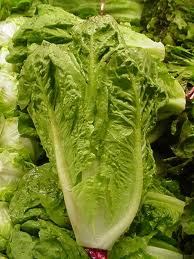
USA – FDA Releases Report on Findings from Sampling of Romaine Lettuce in Yuma, AZ

FDA

Eurofins Food Testing UK

October 7, 2021

The FDA is releasing the findings of a sampling assignment for which FDA collected and tested romaine lettuce from commercial coolers in Yuma County, Arizona during February and March 2021. The agency tested the lettuce for Shiga toxin-producing Escherichia coli (STEC), specifically enterohemorrhagic Escherichia coli (EHEC), and Salmonella spp. This assignment was part of the FDA’s ongoing surveillance following multistate E. coli O157:H7 outbreaks of foodborne illness in recent years linked to or potentially linked to romaine lettuce.

The agency’s goal in conducting this assignment was to determine whether the target pathogens and specific strains may be present in romaine lettuce from the Yuma agricultural region, to help prevent foodborne illness when possible. If product that tested positive for EHEC or Salmonella was found, the Agency planned to work with industry and state regulatory partners to identify the cause (e.g., farm follow-up investigation) to inform future regulatory and/or research efforts and to develop strategies that could help preventive additional outbreaks.

The FDA collected 504 romaine samples for EHECs and Salmonella spp., with the testing performed by an independent laboratory on contract, as part of a pilot project. Each sample consisted of 10 subsamples, and each subsample was made up of at least 300 grams of romaine lettuce (whole heads, hearts or individual leaves).  Collecting and testing samples composed of multiple subsamples increases the probability of detecting pathogens if present, since microbial hazards may not be uniformly present.

During the assignment the FDA detected E. coli O130:H11 in one sample.  The isolate was found to be moderate to high risk and could be capable of causing severe illness in humans, though it was not linked to any known human illnesses, and no product ever reached consumers. The owner of the product did not harvest the remaining crop from the field where it was grown.

In response to the finding, FDA conducted an investigation at the farm to identify possible sources and routes of contamination. The FDA was able to collect romaine lettuce from the field, multiple samples of soil, water, sediment, and animal fecal material. FDA also assessed farm equipment and other surfaces. Only one of the total 24 samples yielded STEC (specifically, E. coli O116:H-). This sample came from the outer leaves of romaine lettuce. The strain was further characterized as low risk to human health, and FDA’s analysis indicated the strain was not linked with any past known foodborne illness outbreaks.

Helping to ensure the microbiological safety of leafy greens continues to be a priority of the FDA. Romaine lettuce and other leafy greens are among the most widely consumed vegetables in the United States and are an important part of a healthy diet. The agency is working on several fronts to help prevent microbial contamination of leafy greens and to prevent outbreaks of foodborne illness. Chief among these efforts is the FDA’s Leafy Greens STEC Action Plan (LGAP), which features public health approaches related to response, prevention and addressing knowledge gaps. The FDA continues to collaborate with industry, states, academia and other stakeholders through activities outlined in the LGAP to address this important public health issue.

Denmark – Gas evolution in potato salad – Microbial Contamination

DVFA

BY Lantz is recalling organic potato salad with carrots due to gas evolution in the packages, indicating unwanted growth of microorganisms. Updated 08.10.2021 with new best before date.

Recalled Foods , Published: September 27, 2021

Modified October 8, 2021

What food:
Organic Potato salad with carrots
Net content: 350g
Best before-dates: 09.29.2021, 10.06.2021 and 20.10.2021
EAN bar code number: 5710871004605

Sold in:
Irma Shops Zealand

Company withdraws:
BY Lantz, Hovedvagtsgade 8.5 , 1103 København K

Cause:
The company has found gas development in some of the packages, which indicates unwanted growth of microorganisms.

Risk: The
evolution of gas and the possible growth of microorganisms make the product unfit for human consumption. Consumer

Advice:
Consumers are advised to return the product to the store where it was purchased or to discard it.