Category Archives: Microbiology Investigations

Research – Cryptosporidiosis – Annual Epidemiological Report for 2018

ECDC

Executive summary

  • For 2018, 20 European Union/European Economic Area (EU/EEA) countries reported 14 299 cryptosporidiosis cases, of which 14 252 were confirmed.
  • The notification rate was 4.4 confirmed cases per 100 000 population.
  • Four countries accounted for 76% of all confirmed cases, with the United Kingdom (UK) alone accounting for 41%.
  • As in previous years, most of the cases were reported in autumn (peak in September), but in 2018 a smaller peak was also observed in spring (April).
  • Children aged 0–4 years had the highest notification rate of 15.8 cases per 100 000 population.

Click to access CRYP_AER_2018_Report.pdf

USA – More than 1,200 customers of Monterey Water Company told to boil water before use

NM Political Report

More than 1,200 water users in Valencia County have been asked to boil their water after E. coli bacteria was discovered in a routine sample.

These customers receive their water from Monterey Water Company. The New Mexico Environment Department instructed the utility to issue a boil water advisory on Oct. 2, according to a press release.

E. coli is commonly found in the intestines of both humans and other animals and NMED states that the bacteria’s presence in water indicates that it may have been in contact with sewage or animal waste.

A sample that tests positive for the bacteria can indicate the presence of dangerous strains of E. coli or other organisms that can cause water-borne illness, the press release states. Symptoms of water-borne illnesses include gastrointestinal problems and, in rare instances, these illnesses can be deadly. Sensitive populations including children, senior citizens and people with compromised immune systems have increased risk of contracting these illnesses.

When a boil water advisory is issued, the customers in the affected area are encouraged to boil their water for three minutes prior to drinking it or using it to make coffee, tea, other drinks or ice. The water should also be boiled before using it for cooking, washing fruits and vegetables or brushing teeth. Additionally, residents should boil the water before using it to prepare infant formula or to provide drinking water to pets.

The boil water advisory only affects customers who receive water from Monterey Water Company. Other surrounding areas are not impacted.

Boil water advisories usually last for a few days. For example, residents in the Lovington area were under a boil water advisory for approximately three days in January after E. coli was found in the Lovington Municipal Water Supply.

Monterey Water Company is a privately-owned water utility that has been serving customers in Valencia County since the 1980s. The company was formed to provide water to Monterey Mobile Home Estates and Monterey Park units two and three. These subdivisions are located southeast of Los Lunas.

The utility has two active wells that it uses for groundwater and does not use any surface water.

This is not the first time that E. coli has been detected in the Monterey Water Company’s system. According to the New Mexico Drinking Water Bureau’s Drinking Water Watch databaseE. coli was also detected in 2020 and in 2014.

UK – Derby school fined £20,000 after pupil caught E. coli

Derby Telegraph

A Derby school has been fined more than £20,000 for a health and safety breach which was uncovered after a four-year-old pupil caught E. coli.

Wyndham Spencer Academy, which is in Alvaston, was investigated by environmental health officers after the child was hospitalised with the disease in May 2018.

This inquiry revealed that the school, which is part of the Spencer Academies Trust, did not have robust enough risk assessments in place for the variety of farm animals that are kept on the site.

The trust was subsequently charged by the Health and Safety Executive (HSE) for failing to discharge its general health and safety duty to someone who was not an employee.

In court both the HSE and the trust agreed the E. coli case and subsequent hospitalisation could not be linked to the school.

A hearing at Southern Derbyshire Magistrates’ Court on Monday, October 4, was told that while the case could not be linked to a farm at the school which contained goats, pigs and hens, some breaches came to light in the investigation.

Research – Here’s why it’s dangerous to let your dog lick your plate

Country Living

Should you let your dog lick your plate? While many owners share table scraps with their furry friends, one vet has warned of the possible health dangers if your dog shares food directly from your plate.

According to Team Dogs, plates licked by dogs can harbour hidden bacteria such as salmonella which cannot be destroyed by dishwashing. As well as this, many foods still lingering on human plates can be poisonous to dogs, resulting in your pup becoming poorly.

New research by Wren Kitchens found that one in six (15%) of households in the UK let their dogs lick their plates, meanwhile Twitter findings by Team Dogs discovered that 61.5% of voters said they don’t let their dogs lick the plate. It might seem like a harmless dinnertime treat, but owners should keep dog and human dishes separate at all times.

USA – Laboratory Guidebook Notice of Change – Listeria monocytogenes Methodatory GuidebookNotice of Change

Click to access MLG-8.13.pdf

USA – Rochester Institute of Technology update on Norovirus Outbreak

Food Poison Journal

norovirus-1080x655

The Monroe County Department of Public Health has determined norovirus — a contagious family of viruses — is likely responsible for recent illnesses on RIT’s Henrietta campus.

The vast majority of cases were resolved within 24-36 hours without medical treatment. However, some RIT students did need care in the Student Health Center, and a few received care in a local emergency department. In response to these cases, we have substantially increased our already stringent deep cleaning and sanitization efforts on high-touch surfaces in residence halls, dining areas, restrooms, and other spaces across campus.

Even with the number of cases declining in the past few days, we all must take steps to stay safe. If you are ill, please stay home and do not attend class or go to work. Remember to wash your hands often, stay in your residence when sick, and avoid preparing food for others.

Canada – Notice not to consume smoked salmon sold by the fishmonger Marché Pêche Pêche

MAPAQ

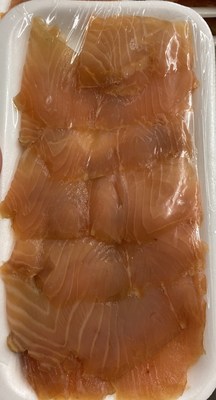
Smoked salmon (CNW Group / Ministry of Agriculture, Fisheries and Food)

WARNING TO THE POPULATION

QUEBEC, 1 st October 2021. / CNW Telbec / – The Ministry of Agriculture, Fisheries and Food (MAPAQ), in collaboration with the Division of Food Inspection of the City of Montreal and the fish Marché Pêche Pêche, located at 11686, boulevard de Salaberry, in Dollard-des-Ormeaux , advises the population not to consume the product indicated in the table below, because it has not been packaged in such a way as to ensure its safety. .

Product name

Format

Targeted lot

“SMOKED SALMON”

Variable

Units sold until September 30, 2021

The product that is the subject of this advisory has been offered for sale until September 30, 2021, and only at the establishment listed above. The product was packaged in white styrofoam trays covered with clear plastic wrap and was offered chilled. The product did not have a label.

The operator is voluntarily recalling the product in question. He agreed with the MAPAQ and the Food Inspection Division of the City of Montreal to disseminate this warning as a precautionary measure. In addition, people who have this product in their possession are advised not to consume it. They must return it to the establishment where they bought it or throw it away. Even if the affected product does not show any signs of spoilage or a suspicious odor, its consumption may represent a health risk. It should be noted that no case of illness associated with the consumption of this food has been reported to MAPAQ so far.

South Africa – South African oysters linked to illness in Hong Kong

Food Safety News

Oysters from South Africa have been linked to cases of food poisoning in Hong Kong.

The Centre for Food Safety (CFS) in Hong Kong ordered the suspension of imports of raw oysters produced by Zwembesi Farm Limited in South Africa this past week.

Six food poisoning clusters have been identified after consumption of raw oysters at one restaurant in Mong Kok and another in Tsim Sha Tsui. It is not clear what the infectious agent is or how many people are sick.

The Centre for Health Protection (CHP) previously reported it was investigating two clusters involving 11 illnesses in people that had dinner at a restaurant in Mong Kok.

New Singapore Standards for Cold Chain Management of Chilled and Frozen Food to Assure Food Safety and Quality

Click to access esg-ssc-sdo-sfa-media-release—new-singapore-standards-for-cold-chain-management-of-chilled-and-frozen-food-to-assure-food-safety-and-quality.pdf

France- FLOWER CREAM 30% 38CL – Microbial Contamination

Gov france

Identifying information for the recalled product

  • Product category Food
  • Product sub-category Milk and dairy products
  • Product brand name Yoplait
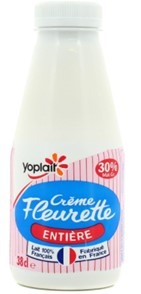
  • Names of models or references FLOWER CREAM 30% 38CL
  • Product identification
    GTIN Lot Dated
    3329770062740 12-10 G1 Use-by date 10/12/2021
  • Packaging Plastic bottle – 38cl
  • Start date / End of marketing From 08/25/2021 to 09/20/2021
  • Storage temperature Product to be stored in the refrigerator
  • Health mark FR 89.263.001 CE
  • Geographical sales area Loire (42)
  • Distributors Francky Destockeur, 6 Rue Lagrange, 42270 Saint-Priest-en-Jarez

Practical information regarding the recall

  • Reason for recall Risk of microbiological contamination which may lead to alteration of sensory characteristics (odor)
  • Risks incurred by the consumer Organoleptic modifications