Category Archives: Microbiology Investigations

Research – The Use of Organic Acids (Lactic and Acetic) as a Microbial Decontaminant during the Slaughter of Meat Animal Species: A Review

MDPI

Wild ungulate species provide a much-needed protein source to many communities in developed and developing countries. Frequently, these game meat animals are slaughtered, and the meat is unknowingly contaminated by microorganisms and released to the unsuspecting public. This review investigates the global usage of organic acids (lactic and acetic acids) as microbial decontamination strategies during slaughter. The results show that there is a more open-minded approach to adopting possible decontamination plans as a tool to improve meat safety during slaughter. Developed countries continue to adopt these strategies, while developing countries are lagging behind. While decontamination of carcasses can lead to a reduction of microbial load on these carcasses, this strategy must not be seen as a replacement of hygiene management during the animals’ slaughter. View Full-Text
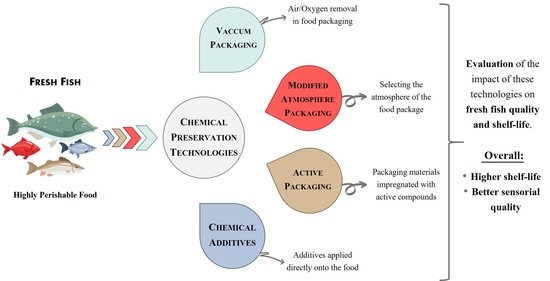
Research – Chemical-Based Methodologies Approaches to Extend the Shelf Life of Fresh Fish—A Review

MDPI

Due to its characteristics, fresh fish is a highly perishable food with a very short shelf-life under refrigeration. Several methods have been introduced to slow down its deterioration, such as by means of oxygen depletion of the food package (vacuum packaging), or by changing the natural atmosphere that is in contact with the fresh fish (modified atmosphere packaging), or by the use of chemicals generally recognized as safe: such compounds can be directly applied (by dipping or spraying) or incorporated into packaging materials and slowly migrate to the product, exerting a hurdle effect against microbial development and lipid oxidation (active packaging). This review aims to cover the most recent advances in chemical-based approaches for fresh fish preservation, applied either singly or in combination. Vacuum packaging, modified atmosphere, and active packaging preservation methodologies are presented, along with the inclusion of chemical additives, such as organic acids and natural extracts, and their combination with icing systems. Advantages and disadvantages of these methodologies and their impact on fresh fish quality and shelf-life are discussed, reaching the conclusion that both are positively influenced overall. Indeed, the contribution of chemical-based strategies for fresh fish preservation is undeniable, and is expected to be a research topic of increasing interest in the future. View Full-Text

Research – Listeria monocytogenes in a Cheese Processing Facility – Learning from Contamination Scebnarios over Three Years of Sampling

Academia Edu

The aim of this study was to analyse the changing patterns of Listeria monocytogenes contamination in a cheese processing facility manufacturing a wide range of ready-to-eat products. Characterization of L. monocytogenes isolates included genotyping by pulsed-field gel electrophoresis (PFGE) and multi-locus sequence typing (MLST). Disinfectant-susceptibility tests and the assessment of L. monocytogenes survival in fresh cheese were also conducted. During the sampling period between 2010 and 2013, a total of 1284 environmental samples were investigated. Overall occurrence rates of Listeria spp. And L. monocytogenes were 21.9% and 19.5%, respectively. Identical L. monocytogenes genotypes were found in the food processing environment (FPE), raw materials and in products. Interventions after the sampling events changed contamination scenarios substantially. The high diversity of globally, widely distributed L. monocytogenes genotypes was reduced by identifying the major sources of contamination. Although susceptible to a broad range of disinfectants and cleaners, one dominant L. monocytogenes sequence type (ST) 5 could not be eradicated from drains and floors. Significantly, intense humidity and steam could be observed in all rooms and water residues were visible on floors due to increased cleaning strategies. This could explain the high L. monocytogenes contamination of the FPE (drains, shoes and floors) throughout the study (15.8%). The outcome of a challenge experiment in fresh cheese showed that L. monocytogenes could survive after 14 days of storage at insufficient cooling temperatures (8 and 16 °C). All efforts to reduce L. monocytogenes environmental contamination eventually led to a transition from dynamic to stable contamination scenarios. Consequently, implementation of systematic environmental monitoring via in-house systems should either aim for total avoidance of FPE colonization or emphasize first reduction of L. monocytogenes to sites where contamination of the processed product is unlikely. Drying of surfaces after cleaning is highly recommended to facilitate the L. monocytogenes eradication.

Research – Biofilm Formation Ability of Arcobacter-like and Campylobacter Strains under Different Conditions and on Food Processing Materials

MDPI

kswfoodworld biofilm

Campylobacter jejuni is the most frequent cause of bacterial gastrointestinal food-borne infection worldwide. The transmission of Campylobacter and Arcobacter-like species is often made possible by their ability to adhere to various abiotic surfaces. This study is focused on monitoring the biofilm ability of 69 strains of Campylobacter spp. and lesser described species of the Arcobacteraceae family isolated from food, water, and clinical samples within the Czech Republic. Biofilm formation was monitored and evaluated under an aerobic/microaerophilic atmosphere after cultivation for 24 or 72 h depending on the surface material. An overall higher adhesion ability was observed in arcobacters. A chi-squared test showed no association between the origin of the strains and biofilm activity (p > 0.05). Arcobacter-like species are able to form biofilms under microaerophilic and aerobic conditions; however, they prefer microaerophilic environments. Biofilm formation has already been demonstrated at refrigerator temperatures (5 °C). Arcobacters also showed higher biofilm formation ability at the temperature of 30 °C. This is in contrast to Campylobacter jejuni NP 2896, which showed higher biofilm formation ability at temperatures of 5–30 °C. Overall, the results demonstrated the biofilm formation ability of many strains, which poses a considerable risk to the food industry, medical practice, and human health. View Full-Text

Research – The Influence of Environmental Conditions on the Antagonistic Activity of Lactic Acid Bacteria Isolated from Fermented Meat Products

MDPI

The aim of this study was to determine the impact of environmental conditions on the antimicrobial properties of 21 lactic acid bacteria strains in the selected indicator bacteria. To assess the antimicrobial activity of the whole bacteria culture (WBC), the agar well diffusion method was used. The interference of LAB strains with the growth of the selected indicator bacteria was evaluated by incubating co-cultures in the food matrix. Based on the conducted research, it was found that environmental conditions have a significant impact on the antimicrobial activity of lactic acid bacteria strains. The highest antimicrobial activity was recorded under optimal conditions for the development of LAB, the incubation time being different depending on the indicator strain used. The tested LAB strains were characterized by a high ability to inhibit indicator strains, especially in the food matrix. These results led us to further characterize and purify the antimicrobial compound produced by lactic acid bacteria taking into account changing environmental conditions. View Full-Text

Research – USA – Novel Outbreak-Associated Food Vehicles, United States

CDC

Novel outbreak-associated food vehicles (i.e., foods not implicated in past outbreaks) can emerge as a result of evolving pathogens and changing consumption trends. To identify these foods, we examined data from the Centers for Disease Control and Prevention Foodborne Disease Outbreak Surveillance System and found 14,216 reported outbreaks with information on implicated foods. We compared foods implicated in outbreaks during 2007–2016 with those implicated in outbreaks during 1973–2006. We identified 28 novel food vehicles, of which the most common types were fish, nuts, fruits, and vegetables; one third were imported. Compared with other outbreaks, those associated with novel food vehicles were more likely to involve illnesses in multiple states and food recalls and were larger in terms of cases, hospitalizations, and deaths. Two thirds of novel foods did not require cooking after purchase. Prevention efforts targeting novel foods cannot rely solely on consumer education but require industry preventive measures.

USA – Core Investigation Table Update

FDA

USA – 417 with Salmonella in 35 States

Food Poison Journal

Cilantro still looks suspicious, but NCIB dendrogram now says “mixed produce.”

Illinois, Maryland, Minnesota, Oklahoma, Texas and Virginia hardest hit.

The CDC reports today that since the last update on September 23, 2021, 140 more people were added to this outbreak. As of September 29, 2021, 419 people infected with the outbreak strain of Salmonella Oranienburg have been reported from 35 states. Illnesses started on dates ranging from June 19, 2021, to September 14, 2021.

USA – Norovirus responsible for illness at Rochester Institute of Technology’s Henrietta campus

Outbreak News Today

Norovirus Food Safety kswfoodworld

The Monroe County Department of Public Health has determined norovirus  is likely responsible for recent illnesses on Rochester Institute of Technology’s (RIT) Henrietta campus.

The vast majority of cases were resolved within 24-36 hours without medical treatment. However, some RIT students did need care in the Student Health Center, and a few received care in a local emergency department.

In response, the school has increased deep cleaning and sanitization efforts on high-touch surfaces in residence halls, dining areas, restrooms, and other spaces across campus.

Norway – Salmonella Outbreak Linked to Snakes

Outbreak News Today

The National Institute of Public Health has investigated a national outbreak with Salmonella Enteritidis infection. So far, 13 confirmed cases of infection have been found over 3 years (2019-2021), and the last time in a sample taken in September 2021.

The samples are completely genome-sequenced and show the same genotype. The same genotype of  S. Enteritidis has also been found in a sample from a snake that the Veterinary Institute has analyzed.  

Those who have snakes, or other reptiles as a hobby or pet, should take extra precautions and always wash their hands after handling and feeding the animals to avoid getting sick with salmonellosis. 

The National Institute of Public Health has so far interviewed 12 of the 13 people who were infected with  Salmonella  and eight of these have had either direct or indirect contact with snakes, while four of them have not had contact with snakes / reptiles.  

Epidemiological investigations and whole genome sequencing have confirmed the connection between the  Salmonella outbreak in humans and contact with reptiles, says senior adviser Heidi Lange at the National Institute of Public Health.