Category Archives: Microbiology Investigations

Research – Emergence of Vibrio cholerae O1 Sequence Type 75, South Africa, 2018–2020

CDC

Abstract

We describe the molecular epidemiology of cholera in South Africa during 2018–2020. Vibrio cholerae O1 sequence type (ST) 75 recently emerged and became more prevalent than the V. cholerae O1 biotype El Tor pandemic clone. ST75 isolates were found across large spatial and temporal distances, suggesting local ST75 spread.

The seventh cholera pandemic, caused by Vibrio cholerae O1 biotype El Tor (7PET), arrived in Africa during 1970 and became endemic in many countries on the continent (1). Cholera was first reported in South Africa in 1974 (2). However, South Africa is not considered a cholera-endemic area; outbreaks typically are associated with importation, particularly from neighboring countries. The last cholera outbreak in South Africa was triggered by imported cases from an outbreak in Zimbabwe during 2008; South Africa reported 12,706 cases during November 2008–April 2009 (3).

Globally, 7PET isolates are genetically homogeneous and linked to the Bay of Bengal in South Asia (4,5). Most 7PET isolates are multidrug-resistant sequence type (ST) 69 (6). Rarely, 7PET has a single-locus variant, ST515, in isolates from Africa belonging to lineage T10 (7). As of September 2021, all cholera isolates from South Africa have been characterized as 7PET ST69 by multilocus sequence typing (MLST).

South Africa actively surveils for cholera. Since the 2008–2009 outbreak, few cases have been identified: 5 during 2010–2014, most of which were imported, and none during 2015–2017. During 2008–2009, large outbreaks occurred in 3 provinces, Mpumalanga, Limpopo, and KwaZulu-Natal (3), but all were caused by imported cases from neighboring Zimbabwe and Mozambique. Therefore, given their experience, healthcare workers and laboratorians in these provinces typically will test for cholera in all cases of acute watery diarrhea.

In South Africa, the National Institute for Communicable Diseases (NICD) is notified of suspected cholera cases. NICD’s Centre for Enteric Diseases supports case investigations and receives all human and environmental V. cholerae isolates for further investigation. The case definition for confirmed cholera is isolation of V. cholerae O1 or O139 from a person with diarrhea. We investigated the molecular epidemiology of V. cholerae in South Africa during 2018–2020.
Research – Transfer of Salmonella from inert food contact surfaces to wheat flour, cornmeal and NaCl.

Journal of Food Protection

Salmonella contamination in a dry processing facility frequently requires removal methods that are non-aqueous. Removal of pathogens from food processing systems with a purge of uncontaminated dry food materials has been proposed, however, little is known with the respect to efficacy. In this study, survival of Salmonella on inert contact surfaces and transfer of Salmonella from inert contact surfaces to low-moisture foods was evaluated. Six stainless steel and polymeric food contact material types, in bead form, were contaminated at 11 log CFU/mL and then stored at two temperatures, 25°C and 4°C for six months. Simultaneously, three dry food materials/ingredients were used to remove Salmonella from contaminated beads. Wheat flour, cornmeal, and NaCl (1 g each) were mechanically mixed with 3 beads of each material type. The rate of microbial transfer from contaminated beads to food materials was measured. Further experimentation using multiple transfers were applied on two representative beads types, 316 stainless steel and polypropylene, representing common surface contact materials used in processing equipment. Survival of Salmonella on beads depended on storage temperature, surviving longer at 4°C compared to 25°C (p<0.05), but was not influenced by type of bead material. Transfer of Salmonella from stainless steel beads to flour was significantly greater than from plastic (p<0.05). Transfer rates from stainless steel to wheat flour, cornmeal, and NaCl were measured as -0.5713, -0.2592, and -1.4221 Log CFU Salmonella removed/cm 2 /g clean material used. Transfer rates for polypropylene to whole wheat flour, cornmeal, and NaCl were more than 10-fold lower at -0.0156, -0.0148, and -0.0129 Log CFU Salmonella removed/cm 2 /g clean material used. These results indicate that while material type may not influence Salmonella survival during storage, Salmonella is more easily removed from stainless steel than polyethylene.

Research – Evaluation of steam-ultrasound decontamination on naturally contaminated broilers through the analysis of Campylobacter, total viable count, and Enterobacteriaceae

Journal of Food Protection

Combined steam-ultrasound process was investigated for decontamination of freshly slaughtered broilers. Combined steam-ultrasound was delivered simultaneously through specially designed nozzles. The nozzles were installed inside of a constructed machine that allowed for continuous processing. The aim of this study was to evaluate the decontamination effect of the steam- ultrasound application with a capacity of 10,500 birds/hour on naturally contaminated broilers, using three different skin sampling areas for microbial analysis (back, breast and the neck skin). Microbial analysis of Campylobacter , Enterobacteriaceae and Total Viable Count (TVC), was performed pre- and -post steam-ultrasound treatment. A total of 648 skin samples were analyzed for Campylobacter and a total of 216 samples were analyzed for Enterobacteriaceae and TVC. R esults showed significant (p<0.001) Campylobacter reductions of 0.8 log, 1.1 log and 0.7 log, analyzed from skin samples taken from the back, breast and the neck, respectively. Significant reductions of Enterobacteriaceae (p<0.001) by 1.6 log, 1.9 log and 1.1 log and significant reductions of TVC (p<0.001) by 2.0 log, 2.4 log and 1.3 log were found on back, breasts and neck, respectively. Refrigeration effect on Campylobacter numbers pre- and post- steam-ultrasound treatment and incubation at 4°C for eight days was determined in a small trial with 12 samples. Results showed significant (p<0.01) reductions of 0.9 log analyzed on breast skin samples, and 0.7 log reduction (p<0.05) on neck skin samples. Results in this study showed that significant bacteria reduction was achieved on three different surface areas on broilers at a slaughter-speed of 10,500b/h with temperatures over 80°C. The rapid treatment of less than 1.5s exposure time per bird chamber, makes this technology potentially suitable for modern and fast poultry processing lines.

Hong Kong – Do Not Eat Raw Freshwater Fish to Avoid Harmful Bacteria and ParasitesRaw Freshwater Fish toAvoid Harmful Bacteria and Parasites

Click to access Bacteria_and_Parasites_e.pdf

USA – FDA Releases Report on Findings from Sampling of Romaine Lettuce in Yuma, AZ

FDA

Eurofins Food Testing UK

October 7, 2021

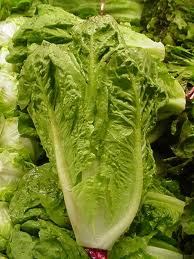
The FDA is releasing the findings of a sampling assignment for which FDA collected and tested romaine lettuce from commercial coolers in Yuma County, Arizona during February and March 2021. The agency tested the lettuce for Shiga toxin-producing Escherichia coli (STEC), specifically enterohemorrhagic Escherichia coli (EHEC), and Salmonella spp. This assignment was part of the FDA’s ongoing surveillance following multistate E. coli O157:H7 outbreaks of foodborne illness in recent years linked to or potentially linked to romaine lettuce.

The agency’s goal in conducting this assignment was to determine whether the target pathogens and specific strains may be present in romaine lettuce from the Yuma agricultural region, to help prevent foodborne illness when possible. If product that tested positive for EHEC or Salmonella was found, the Agency planned to work with industry and state regulatory partners to identify the cause (e.g., farm follow-up investigation) to inform future regulatory and/or research efforts and to develop strategies that could help preventive additional outbreaks.

The FDA collected 504 romaine samples for EHECs and Salmonella spp., with the testing performed by an independent laboratory on contract, as part of a pilot project. Each sample consisted of 10 subsamples, and each subsample was made up of at least 300 grams of romaine lettuce (whole heads, hearts or individual leaves).  Collecting and testing samples composed of multiple subsamples increases the probability of detecting pathogens if present, since microbial hazards may not be uniformly present.

During the assignment the FDA detected E. coli O130:H11 in one sample.  The isolate was found to be moderate to high risk and could be capable of causing severe illness in humans, though it was not linked to any known human illnesses, and no product ever reached consumers. The owner of the product did not harvest the remaining crop from the field where it was grown.

In response to the finding, FDA conducted an investigation at the farm to identify possible sources and routes of contamination. The FDA was able to collect romaine lettuce from the field, multiple samples of soil, water, sediment, and animal fecal material. FDA also assessed farm equipment and other surfaces. Only one of the total 24 samples yielded STEC (specifically, E. coli O116:H-). This sample came from the outer leaves of romaine lettuce. The strain was further characterized as low risk to human health, and FDA’s analysis indicated the strain was not linked with any past known foodborne illness outbreaks.

Helping to ensure the microbiological safety of leafy greens continues to be a priority of the FDA. Romaine lettuce and other leafy greens are among the most widely consumed vegetables in the United States and are an important part of a healthy diet. The agency is working on several fronts to help prevent microbial contamination of leafy greens and to prevent outbreaks of foodborne illness. Chief among these efforts is the FDA’s Leafy Greens STEC Action Plan (LGAP), which features public health approaches related to response, prevention and addressing knowledge gaps. The FDA continues to collaborate with industry, states, academia and other stakeholders through activities outlined in the LGAP to address this important public health issue.

Denmark – Gas evolution in potato salad – Microbial Contamination

DVFA

BY Lantz is recalling organic potato salad with carrots due to gas evolution in the packages, indicating unwanted growth of microorganisms. Updated 08.10.2021 with new best before date.

Recalled Foods , Published: September 27, 2021

Modified October 8, 2021

What food:
Organic Potato salad with carrots
Net content: 350g
Best before-dates: 09.29.2021, 10.06.2021 and 20.10.2021
EAN bar code number: 5710871004605

Sold in:
Irma Shops Zealand

Company withdraws:
BY Lantz, Hovedvagtsgade 8.5 , 1103 København K

Cause:
The company has found gas development in some of the packages, which indicates unwanted growth of microorganisms.

Risk: The
evolution of gas and the possible growth of microorganisms make the product unfit for human consumption. Consumer

Advice:
Consumers are advised to return the product to the store where it was purchased or to discard it.

Denmark – Gas evolution in hummus- Microbial Contamination

DVFA

Mozami A / S is recalling organic hummus spicy due to gas development in the packages, which indicates unwanted growth of microorganisms.
Updated 08.10.2021 with new best before dates.

Recalled Foods , Published: September 22, 2021

Modified October 8, 2021

What food:
Organic hummus spicy
Net weight: 200g
Best before-dates: 09.26.2021, 10.10.2021, 24.10.2021 and 31.10.2021

Sold in:
Meny, Spar, My Grocery, Løvbjerg and Easy-Buy in the country.

Company recalling:
Mozami A / S, Ved Milepælen 4, 8361 Hasselager

Cause:
The company has found gas development in some of the packages, which indicates unwanted growth of microorganisms.

Risk: The
evolution of gas and the possible growth of microorganisms make the product unfit for human consumption. Consumer

advice:
Consumers are advised to return the product to the store where it was purchased or to discard it.

RASFF Alert – Animal Feed – Salmonella – Tuna Flour

RASFF

Presence of Salmonella enterica in Tuna Flour from Spain in Italy and Greece

EU – EU-funded project targets produce safety

Food Safety News

A sensor is being developed by an EU-funded consortium to check for pesticides or bacteria in fruits and vegetables.

The project, called GRACED, is coordinated by the Cyprus Research and Innovation Centre and includes experts from across Europe.

The detector uses light particles to spot traces of pesticide or bacteria. From preparing a sample to detection, the system can give a result in 30 minutes.

It uses laser light to detect chemical or biological analytes. Called a plasmo-photonic bimodal multiplexing sensor, it can spot bacteria or pesticides without having to use chemicals or dyes as a marker.

Current safety checks on fruit and vegetables are made in random batches then sent to a laboratory for testing, a process that can take two to three days to get a result. Analyzing data from these checks can be time consuming and costly.

Research – Ongoing Outbreak of Extensively Drug-Resistant Campylobacter jejuni Infections Associated With US Pet Store Puppies, 2016-2020

Jama Network

Key Points

Question  Are pet store puppies a source of extensively drug-resistant Campylobacter jejuni infection in the US?

Findings  This survey study identified 168 cases from public health reports of Campylobacter infections with an epidemiologic or molecular link to pet store puppies from 2011 to 2020; 97% of patients reported contact with a dog, of whom 88% reported contact with a pet store puppy. Isolates were resistant to 7 antibiotic classes, including all recommended treatment agents.

Meaning  Extensively drug-resistant C jejuni strains have emerged as a cause of illness among pet store customers, employees, and visitors; infections caused by these strains cannot be treated with commonly recommended oral antibiotics.

Abstract

Importance  Extensively drug-resistant Campylobacter jejuni infections cannot be treated with any commonly recommended antibiotics and pose an increasing public health threat.

Objectives  To investigate cases of extensively drug-resistant C jejuni associated with pet store puppies and describe the epidemiologic and laboratory characteristics of these infections.

Design, Setting, and Participants  In August 2017, health officials identified, via survey, patients with C jejuni infections who reported contact with puppies sold by pet stores. In conjunction with state and federal partners, the Centers for Disease Control and Prevention investigated cases of culture-confirmed C jejuni infections in US patients with an epidemiologic or molecular association with pet store puppies between January 1, 2016, and February 29, 2020. Available records from cases occurring before 2016 with genetically related isolates were also obtained.

Main Outcomes and Measures  Patients were interviewed about demographic characteristics, health outcomes, and dog exposure during the 7 days before illness onset. Core genome multilocus sequence typing was used to assess isolate relatedness, and genomes were screened for resistance determinants to predict antibiotic resistance. Isolates resistant to fluoroquinolones, macrolides, and 3 or more additional antibiotic classes were considered to be extensively drug resistant. Cases before 2016 were identified by screening all sequenced isolates submitted for surveillance using core genome multilocus sequence typing.

Results  A total of 168 patients (median [interquartile range] age, 37 [19.5-51.0] years; 105 of 163 female [64%]) with an epidemiologic or molecular association with pet store puppies were studied. A total of 137 cases occurred from January 1, 2016, to February 29, 2020, with 31 additional cases dating back to 2011. Overall, 117 of 121 patients (97%) reported contact with a dog in the week before symptom onset, of whom 69 of 78 (88%) with additional information reported contact with a pet store puppy; 168 isolates (88%) were extensively drug resistant. Traceback investigation did not implicate any particular breeder, transporter, distributer, store, or chain.

Conclusions and Relevance  Strains of extensively drug-resistant C jejuni have been circulating since at least 2011 and are associated with illness among pet store customers, employees, and others who come into contact with pet store puppies. The results of this study suggest that practitioners should ask about puppy exposure when treating patients with Campylobacter infection, especially when they do not improve with routine antibiotics, and that the commercial dog industry should take action to help prevent the spread of extensively drug-resistant C jejuni from pet store puppies to people.